Poverty

Ukip is in the middle of the most cynical political repositioning ever

From our UK edition

[audioplayer src="http://traffic.libsyn.com/spectator/TheViewFrom22_16_Oct_2014_v4.mp3" title="Lord Pearson and Damian Green discuss Ukip and the Tories" startat=81] Listen [/audioplayer]I think I’ve cracked it. If you want to springboard your minor political party into the mainstream and take British politics by storm, then all you need to do is go on and on about helping the poor. You don’t need to do much else. You certainly don’t need to modify your policies so that they actually help the poor. This would be overkill. Nor, frankly, do you even need to be 100 per cent up to speed on who the poor are. Feel free to conflate them with the elderly or the skilled working class or people who aren’t from London, or pretty much anybody, really.

The nun who took down an Isis flag – and stands up for east London’s Muslims

From our UK edition

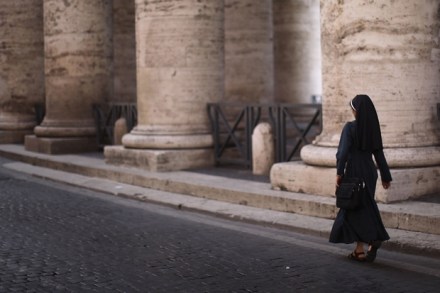
Not so long ago disaffected youngsters would take to a life of crime and hard drugs, a trajectory which would often kill them. These days, some young men from our Muslim community sign up instead to the so-called Islamic State, and the dream of a distant Caliphate. Why? Well, forget theology or even the prestige which comes from being a warrior — if Sister Christine Frost is right, it all comes down to housing. Sister Christine has worked on the Will Crooks Estate in Poplar, east London, for over 40 years. She accidentally got into the news in early August when she removed the black flag of radical Islam which was flying over the entry to the estate, and the press were fascinated that a small, lone woman aged 77, would take such a risk.

Why Britain is poorer than any US state, other than Mississippi

From our UK edition

Now and again, America puts its inequality on display to the world. We saw it after Hurricane Katrina and we have seen it again in the unrest in Ferguson, Missouri. A white police offer shoots dead a black man, after having stopped him for jaywalking. Britain’s police don’t have guns, so these scenes are unthinkable to us. But American-style inequality? We have plenty of that too, we’re just better at hiding it – as I say in my Telegraph column today. I came across a striking fact while researching this piece: if Britain were to somehow leave the EU and join the US we’d be the 2nd-poorest state in the union. Poorer than Missouri. Poorer than the much-maligned Kansas and Alabama.

Let’s have more work and lower costs to raise living standards – the Living Wage won’t help

From our UK edition

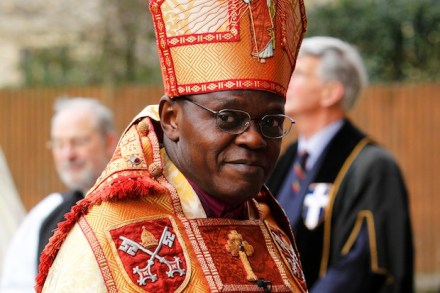
In the latest in a long-line of Commissions or studies into the roll-out of a ‘Living Wage’, today the Archbishop of York Dr John Sentamu has called for the introduction of a wage rate of £7.65 per hour (or £8.80 in London) in sectors that ‘could afford it’. In reality this means the public sector and a host of other industries where there aren’t many low paid individuals, such as accountancy, consultancy, banking and construction. Though not as damaging as an economy wide roll-out, if adopted this could still have a host of unintended consequences.

If you thought this World Cup was weird, take a look at Brazil 1950

From our UK edition

Old world Brazil has struggled to get ready for the World Cup, even though it hosted it before, in 1950. Some oddities of that tournament: — There was no final, as such. The winner was to be decided by a second group stage. But it came down to the last match, Brazil vs Uruguay, in which Brazil needed a draw and Uruguay a win. Uruguay won 2-1. — That match, at Rio do Janeiro’s Maracana stadium, still holds the record of the best-attended match in World Cup history, with 199,954 spectators. — Only 13 out of 16 teams who qualified turned up. Scotland could have gone but stuck to their manager’s promise that they would only attend if they beat England in qualifying. India withdrew supposedly because banned from playing barefoot.

How green policies hurt the poor

From our UK edition

[audioplayer src="http://traffic.libsyn.com/spectator/TheViewFrom22_3_April_2014_v4.mp3" title="Matt Ridley and Fraser Nelson discuss the IPCC's latest report" startat=67] Listen [/audioplayer]Advocates against global warming often frame the issue in terms of helping the poor. ‘You’re right, people dying thanks to climate change is some way off...’ ran one fairly typical advert recently, ‘about 5,000 miles, give or take.’ Indeed, the United Nations agrees that, looking toward the future, climate change ‘harms the poor first and worst’. And the logic stacks up: the poorer you are, the less able you’ll be to afford the resources to adapt to a changing climate. However, climate policies also have a cost, and these predominantly hurt the poor.

Is Hamas finally losing its grip on Gaza?

From our UK edition

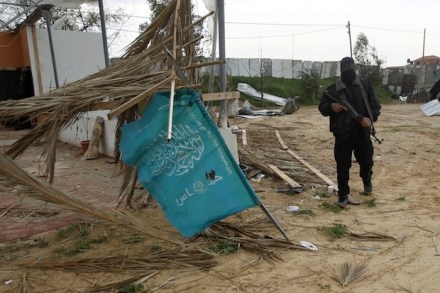
 Gaza City Tattered green Hamas flags still flap above the streets in central Gaza and posters of its martyrs hang in public spaces. But these are tough times for the Hamas government, and not just due to the recent flare-up in tensions with Israel. In December last year, they cancelled rallies planned for the 26th anniversary of their founding, an occasion celebrated ever since they seized power here in 2007, and though usually secretive about their financial affairs, they revealed a 2014 budget of $589 million, with a gigantic 75 per cent deficit. So, what’s gone wrong for Hamas? Just a year ago, it seemed to be enjoying a honeymoon here.

The Spectator: on popes and poverty since 1828

From our UK edition

A year ago, a relatively unknown Argentine cardinal, Jorge Mario Bergoglio was elected Pope. A few days later he announced he would take the name Francis, after Saint Francis of Assisi, because, he said, he had particular concern for the poor. In the 1880s, Pope Leo XIII also drew the attention of his clergy to St Francis’s teachings on poverty. The Spectator approved, and recommended it to Protestants as well as Catholics, but it took issue with the Pope’s argument that the spectacle of rich people joyfully embracing holy poverty would be enough to encourage the poor not to mind being poor.

Letters: Charles Saatchi’s challenge to Taki, and the battle over Benefits Street

From our UK edition

On Benefits Street Sir: Fraser Nelson asserts that people in charities do not want to talk about what life is like on poverty (‘Britain’s dirty secret’, 18 January). To those of us who have experienced poverty or supported others stuck in it, there is no secret. We didn’t need a sensationalist pseudo-documentary to know that life with no money is grinding, miserable and soul-destroying. However, few answers to the problems of the poor are offered by low-paid workforces combined with flawed markets deciding the value of essential goods and services. The real means to help people out of this poverty trap would be to reduce rents, utilities and childcare costs while creating a much more generous withdrawal rate of benefits when people start work.

Does it matter if Tories don’t know what it’s like to be poor?

From our UK edition

I have this theory that the reason why the British public is so hugely in favour of cutting welfare to the bone, and the British media so hostile, is that many (maybe most) journalists still depend on financial support from their parents well into their 30s. Since most media folk come from the sort of backgrounds where home ownership is expected, and yet work in an industry where the typical salary makes living anywhere near London extremely difficult, they feel too ashamed to opine on ‘scroungers’ because, well, they are scroungers. Anyway, maybe that’s what’s called projection. Most people in politics, like those in the media, tend to come from fairly privileged backgrounds, and this seems to be the crux of Labour’s counter-attack on welfare.

Joy to the world | 12 December 2013

From our UK edition

Pessimism sells. It shifts books and newspapers, sends ratings soaring. It fills lecture halls, wins research grants, makes political careers. We are fed this constant diet of doom, predicting anything from meteorological Armageddon to a tyranny of austerity, and so it is little wonder that we tend to miss the bigger story. A cold, dispassionate look at the facts reveals that we are living in a golden era. and that, if you use objective measures, 2013 has been the best year in human history. As a public service - and one which is rarely provided in broadcast or print - The Spectator will below provide evidence for these assertions. We can start from crude figures: $73.5 trillion, the world’s economic output this year.

Our enemy is not global warming. In Britain, people are dying of the cold

From our UK edition

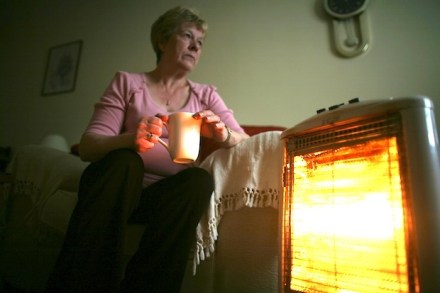
Fanciful predictions of all the deaths that will result from climate change, decades into the future, are regularly thrown into public debate. Less attention has been given to a real statistic from the here and now, released by the Office of National Statistics this week, which shows the effects of one of the policies designed to tackle climate change: high energy prices. It emerged this week that there were 31,000 ‘excess’ deaths in England and Wales last winter, almost a third more than the previous year. Almost all were, in effect, British pensioners who died of the cold. It’s odd: Britain is a rich country with a massive welfare state — and we know how to heat and insulate houses. We also send millions away in overseas aid.

Venezuela: a shining example of how not to help the poor

From our UK edition

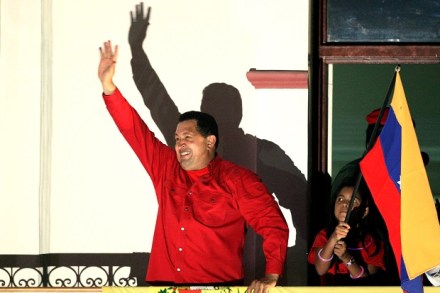
No serious person today views the Cuban Revolution as anything other than an impoverished tyranny – up to and including the leaders of that Revolution, who have been hastily turning toward capitalism since learning in 2009 that the island was on the brink of insolvency. It remains much easier to find useful idiots willing to defend Venezuela’s so-called ‘Bolivarian revolution’, however, which until recently was supposed to promise something better than its ossified Caribbean neighbour. Not for much longer, perhaps; for Venezuela is on the brink of a social explosion after 15 years of economic incompetence by Islington’s favourite petrocrat. It was reported this week that, absurdly, the most oil rich country in the world is facing food shortages.

Why can’t Ed Miliband accept that Labour voters want welfare reform?

From our UK edition

David Cameron, it has been argued this week, has become detached from the views of Conservative voters on Europe. Amid the noise on the EU referendum, however, comes more evidence that it is Ed Miliband who has the greater problem of detachment from the views of his party’s supporters. While the Labour leader continues to battle on against welfare reform, a report from the Joseph Rowntree Foundation reveals just how far his voters have moved away from the idea of a redistributive welfare system as a force for good. Miliband’s problem is that he seems to believe he will be facing Mrs Thatcher at the next election. His strategy is built around fighting a Conservative party that is perceived to be harsh on the poor.

Do we need George Orwell Day?

From our UK edition

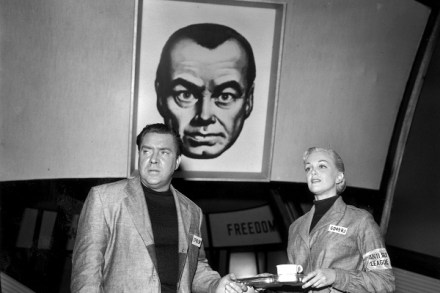
I doubt that George Orwell needs ‘George Orwell Day’. Aldous Huxley, Henry Green, J.G. Ballard, each of those dead writers might benefit from a bit of sponsorship, and so might we. But Orwell? His spirit pervades our times, and with good reason. Orwell may have recognised some of the ill that our politics and era are producing, a point that Fraser reiterated in a Coffee House post earlier today. The ‘snooping bill’, CCTV, politically correct language – one might see fictional antecedents of those unpleasant realities in the pages of 1984. And perhaps social division caused by polarised wealth and the privations brought by economic decline can be seen in the pages of Down and Out in Paris and London and The Road to Wigan Pier.

A coalition of the complacent

From our UK edition

I don’t like to think that I am rich. In theory, I know that in comparison to the vast majority of the world’s population, I am. But perhaps because of my politics, or perhaps because of journalists’ perennial pretence that we are tribunes of the people, I cannot see myself as wealthy, and would protest if others said that was just what I was. And in everyday dealings with others, I don’t feel as if I’m rich. I don’t have a car. My wife and I watch what we spend at the shops. I wish I could wine and dine every night, but, alas, I cannot. So I go on thinking that I am an ordinary member of the British middle class, until I start talking to people who are 25 years younger than me. I have learned to be careful about what I say.

George Monbiot joins the bourgeoisie

From our UK edition

They always manage to pull something special out of the hat at Christmas, over at the Guardian. Last year it was that fantastic woman, an editor at The Ecologist, who agonised over what to buy her son for Christmas that was green, ethical, sustainable and non-materialistic, if you remember, when her son Dimitri just wanted a Nintendo DS and a mini car to drive to school in. This time it is George Monbiot’s special Boxing Day tale of how he came to be terrified by some poor people who were a bit rough looking and had tattoos and dirty fingernails. Utterly hilarious stuff from this supposed leftie; Moonbat (Stowe, Brasenose, scion of a Tory dynasty) was quite appalled and a little frightened.

Marriage tax breaks would alleviate child poverty, Mr Duncan Smith

From our UK edition

The problem about relative poverty is precisely its relativity. The child poverty index, which measures whether a family’s income is below 60 per cent of the average, is a case in point; when incomes go down, bingo, so does child poverty. Which means that one sure fire if controversial way to improve the Government’s child poverty record would be to drive down everyone’s earnings. Iain Duncan Smith, Work and Pensions Secretary, made just this point yesterday when he made a speech about whether the definition should be rather wider than it is. ‘As we saw last year,’ he observed, ‘when the child poverty level dropped by two per cent – a fall in the median income may lift a family out of poverty on paper.

The Tories Vs Scotland

From our UK edition

Interesting comments from Ruth Davidson, the chairthing of the Scottish Conservative Party, about her fellow countrymen. Only twelve per cent of Scots, she says, contribute more to the exchequer than they take out in the form of benefits. “The rest lie around on filthy sofas in subsidised homes, watching daytime television while farting, mainlining heroin and stuffing their sad grey faces with pies full of regurgitated sheep gizzards and Windolene.” Actually, I paraphrase a bit there. She didn’t say all that stuff. She just said almost nine out of ten Scots take more in benefits than they generate in wealth. This is, she says, shocking, and the Scots have too great a sense of entitlement.

Saving the children? Another child poverty report misses the bigger picture

From our UK edition

Yesterday’s reshuffle isn’t the only story in town. Save the Children, a global charity, has today started to fundraise for children in Britain whom it says are affected by the government’s cuts. It is now run by Justin Forsyth, an ex-aide to Gordon Brown, who will have understood the political implications of the research: that coalition policies are making child poverty worse. The problem is that this analysis mistakes the nature of poverty in Britain, and – worst of all – the ways of alleviating that poverty. The root problem is a confusion of low income as a cause of these issues, rather than the symptom of wider social failings it often represents. This basic failure has characterised political programmes and grand government schemes for years.