Poverty

Ignoring struggling families will be politically costly

From our UK edition

More bad news for Britain’s families: new research shows that the cost of bringing up a child is an eye-watering £143,000. This piles more pressure on a government that already knows it has to do better to show it’s on the side of families struggling to make ends meet. Based on what parents say is essential, our report shows the minimum required to raise a child until the age of 18 today is £143,000 (including housing and childcare costs), which averages out at about £150 a week. The report also reveals that this cost is rising faster than inflation. The rising price of food, water and fuel contribute to this but it is the high cost of childcare in the UK that is the most significant driver of this above-inflation increase.

The hunger Games

From our UK edition

One million children at risk of starvation in Niger; global food inflation last year of approximately 6 per cent; political instability linked to food price rises; drought in the US forcing corn prices up by 23 per cent; and more trouble down the road with Russia possibly banning wheat exports after failed harvests. Food is a very hot topic. The Prime Minister is right to use the Olympics to focus on global hunger. But while the main focus of this summit must be to address the problem in poor countries, it's important to remember that food poverty exists in every country – rich and poor – in the UK as well as Somalia. Food banks are emerging in our cities, and charities like Fair Share are becoming part of daily life in our most deprived communities.

Troubled families policy deserves cross-party support

From our UK edition

The report published this week by Louise Casey, the Government’s 'Troubled Families' Tsar, has attracted a fair amount of criticism, but what it does illustrate is the chaotic lives these families lead – and the implausibility of thinking that their problems can be solved by the kind of flagship social policies traditionally favoured by either Conservatives or Labour. As Isabel put it, Conservative 'reform of the welfare system will pass many of the families by. In these stories there is no calculated decision to opt out of the labour market because of generous benefits, more an endless failure to cope with life and the way it has worked out'.

A more ambitious approach to fighting poverty

From our UK edition

‘You attack poverty by knowing what you do changes the lives of those people.’ In that phrase on this morning’s Today programme, Iain Duncan Smith summed up the difference between his approach to combating poverty and Gordon Brown’s. As Fraser has put it, Brown saw poverty as ‘a statistical game… his great spreadsheet puzzler’. The aim of the game? To reduce the number of people living in households below the ‘poverty line’ — set at 60 per cent of median income. The easiest way to achieve this is to move people from just below the line to just above it by giving them a bit of extra cash (in the form of tax credits). Brown called this ‘lifting people out of poverty’.

Inflation: cock-up, not conspiracy

From our UK edition

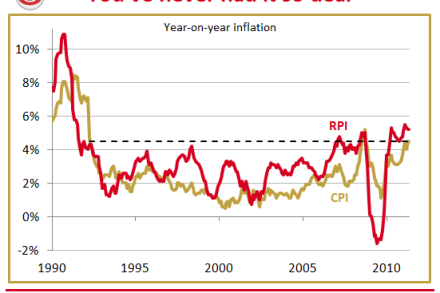
Britain has the worst inflation in Western Europe; this is today's story. CPI is 4.5 per cent and RPI is 5.2 per cent. This masks even worse rises which, as the IFS says today, hit the poor hardest. The price of a cauliflower is up 38 per cent to £1.26, potatoes are up 13 per cent to £1.54 a kilo. For millions, these are the most important metrics. Historically, it's pretty bad. You'd think a Bank of England legally mandated to keep CPI inflation at 2 per cent would be horrified at this, and start vowing to tame the cost of living. After all, this isn't just a statistic: it means everyone's savings and salary is worth 4.5 per cent less than it was a year ago. Inflation is, as Reagan said, as deadly as a hit man and as violent as a mugger.

A diplomatic racket

From our UK edition

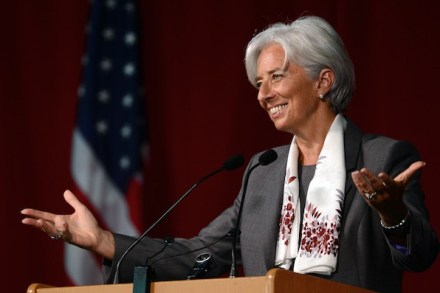
In my Observer column on Sunday I mentioned in passing that in a crisis, elites have to be able to show that they are sharing the plight of the masses. Asking for 'equality of suffering' is too much, you will never have that, but there has to be a sense that — to coin a phrase — we are all in this together. Christine Lagarde had just lectured the Greeks on why they must pay their taxes. She was in no way inhibited by the knowledge that as an official of the IMF she was a 'diplomatic agent' and hence exempt from taxes under the terms of the 1961 Berne Convention. The inevitable accusation from the Greeks that she was a hypocrite so lost in a world of privilege she could no longer know a double-standard when she saw it, took her and her colleagues aback. But not all of them.

Sadly, protest music is alive and well

From our UK edition

There is plenty of nostalgia around in this Jubilee Weekend. Any look back on 60 years brings temptation to think that the past was better than the present. This is what Woody Allen calls ‘golden age’ fallacy, which is defined (in his Midnight in Paris) as an age-old and ‘erroneous notion that a previous time period is better than the one one’s living in.’ This disorder was on show during BBC 2’s Review Show last night, where guests were bemoaning the death of protest music.   The panel (dominated by Kirsty Wark and music critic Paul Morley) were discussing BBC 4’s 3 part documentary, Punk Britannia. The first part of this series is available on i-Player and it is worth watching as a piece of cultural – and political – history.

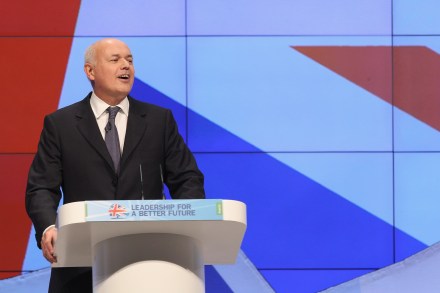
IDS’s important call for ‘social value’

From our UK edition

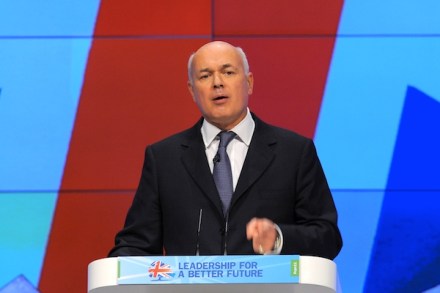
It's the same for celebrities and policymakers: talking about marriage gets you headlines. Hence why the newspapers have concentrated on Iain DuncanSmith's remarks today that ‘marriage should be supported and encouraged’ by the state. But there were two other parts of IDS's speech — and the ‘social justice strategy’ document behind it — that I found more arresting. The first was his incisive attack on the Gordon Brown approach to fighting poverty (define it statistically and then massage the statistics so that they work in your favour), which deserves repeating: ‘First, we have seen a social policy overwhelmingly focussed on moving people above the income poverty line. A laudable ambition surely?

Storm in an Indian teacup

From our UK edition

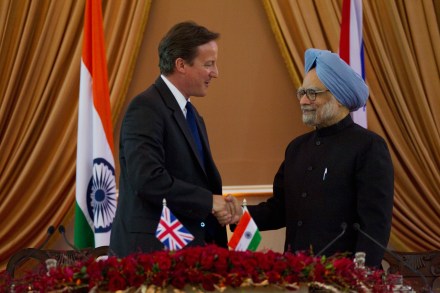
So, does India want the UK’s aid or not? If you believe the Indian finance minister, Pranab Mukherjee, the funds are unnecessary, ‘peanuts’ even. The Daily Telegraph reports that British ministers ‘begged’ the Indian government to take the money. The story is likely to garner attention, especially as aid to a growing power like India is a contentious proposition. But before taking the Indian Finance Minister's word — and the Telegraph's reporting — as truth, it is worth looking at a few facts. First, Mukherjee made the statement in 2010, as reported in the Financial Times at the time.

Can Home Rule Solve Scotland’s Problems?

From our UK edition

This is not a Question To Which the Answer Must Be No. I too saw the headline Now 51% Back Independence and thought, "Well, that's interesting but implausible". Then I noticed it was a Sunday Express splash and revised my appraisal to "That's obviously cobblers". And so it is, making it mildly foolish for SNP types to boast of a breakthrough on the back of a sample of 200 Scots that's harldy more dispositive than polling, say, my Facebook pals. Nevertheless, Fraser's post yesterday won't quite do either. For instance, the boss writes: My hunch is that Cameron’s intervention will not have helped Salmond.

It’s poverty, not race, that ought to concern us more

From our UK edition

My Daily Telegraph column today is about how poverty is a greater problem in Britain than racism, which I describe as an ‘almost-vanquished evil’. This has drawn some criticism, not least from those asking (understandably) what a white guy like me can know about racism. Not much, but plenty of academics have done a hell of a lot of work into racism in Britain (including two brilliant, young academics, Matt Goodwin and Robert Ford). And their studies present a far brighter picture than we're used to. The abject failure of the BNP is not just down to Nick Griffin being a plumb — it’s because he tried to hawk a racist message to the most tolerant country on earth. CoffeeHousers may be interested on why I think this is so. Here are five points: 1.

Sifting through the rubble from the riots

From our UK edition

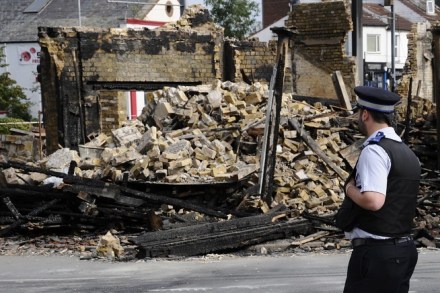
Not many folk are aware of it, but there is an official riots inquiry and it has delivered its interim report today. Its conclusions are pretty clichéd and not really worth studying; David Lammy’s book is infinitely more instructive and readable. But it does produce a few figures about the rioters — or, I should say, those arrested mainly because they didn’t think to cover their face. I looked at this for my Telegraph column last week. Here’s my summary of today's report:   1. Broken Britain. Some 46 per cent of those arrested live in the lowest ‘decile’. These guys are not working class, but welfare class.

Right to reply: The truth behind the poverty figures

From our UK edition

This morning, Fraser published a piece criticising the Institute for Fiscal Studies’ definition of poverty. Here is a counterpunch from Julia Unwin, Chief Executive of the Joseph Rowntree Foundation, which is the organisation that funds the IFS. This article is the latest post in our Right to Reply series.  Do we really need another debate about the usefulness of a poverty measure? Of course, no definition is perfect. One of the hardy perennials of the poverty debate is the question of measurement. I wonder what it says about us as a country: why do we spend so much effort thinking about definitions of poverty, and so little responding to the reality? All measures of poverty have their uses — and, yes, their flaws.

The poverty of the poverty measure

From our UK edition

‘400,000 children will fall into relative poverty by 2015, says IFS’ we read on The Guardian’s front page today — yes, one of the most pernicious ideas of recent years is back. It’s the definition of ‘poverty’ as being figures on a spreadsheet, households deemed to fall beneath an arbitrary threshold. It’s almost entirely meaningless, and diverts energy and resources away from a real fight against poverty. I really do believe that, as ideas go, this one has damaged Britain more than almost any other over the last two decades — and it’s high time it was confronted.

The Winter Fuel Allowance is indefensible

From our UK edition

Freed from the shackles of elected office, Steve Norris remains an electrifying speaker. He is also refreshingly honest. So, when I met the 66-year-old former mayoral candidate at a Tory conference fringe on the future of London, he was only too happy to admit how spent his Winter Fuel Allowance: "I'm amazed by the Chancellor's annual gift. I spend it on Claret," he said. In fact, he said that when paid to the wealthy, the allowance is "a complete waste of money" and "a bribe to older voters". I mention this only because the Allowance was referred to again in a different context this week: during David Cameron's own address.

In response to CoffeeHousers | 13 August 2011

From our UK edition

CoffeeHousers have been generous in their response to my post on the need for an inquiry. I thought I’d respond in a post, rather than the comments. 1) Why rush to think that poverty is the problem? Rhoda Klapp raises this very good point. In 1996, American academics looked at various riots round the world since the war – I’d urge CoffeeHousers with a serious interest to read the report here). They found “little evidence that poverty in the community matters” – ie, there are much poorer cities, where people don’t riot. Other factors matter, mainly risk versus reward. I used this study as when writing the leader for this week’s magazine.

Mitchell rejects allegation that UK aid is going to Islamists

From our UK edition

Yesterday, Andrew Mitchell was the toast of the broadcasters. They have turned on him to an extent today. The news that portions of the £52.25 million given in emergency aid to the starving masses in the Horn of Africa will be distributed in areas controlled by al-Shabaab has forced Mitchell onto the defensive. “We shall have no dealings with al-Shabaab,” he said, and then added that the aid will reach its intended recipients by means other than collusion with the jihadists. This is an embarrassing moment for Mitchell and, of course, it is vital that money and supplies do not fall into the hands of well-fed fighters. However, it is worth pointing out that Mitchell has always intended to distribute aid in al-Shabab controlled areas of Somalia.

IDS’ great expectations

From our UK edition

There is no rest for IDS. Yesterday he was in Madrid talking about youth unemployment and immigration and today he turns his attention to child poverty. Of all life's accidents, the accident of birth is the most decisive. It is said that a child’s prospects are determined by the age of five, and numerous other statistics and factoids lead to a similar conclusion. IDS rehearses some in a piece in today’s Guardian. IDS and Labour MP Graham Allen have conducted a report into these matters, and have concluded that early intervention in a child from a deprived or broken family is vital if the poverty gap is to be closed, and for opportunity and prosperity to be extended.

Cameron’s easy ride

From our UK edition

Having u-turned on two more policies in the last two days, one would have expected David Cameron to have a hard time today at PMQs. But he didn’t. Ed Miliband never got going, turning in one of his worst PMQs’ performances. Cameron pithily summed up Miliband’s performance when he joked that ‘the best thing that can be said about his performance is he wasn’t thinking about politics on his honeymoon.’ Miliband’s performance today will add to the low-level grumbling about him among some Labour MPs and members of the shadow Cabinet. Miliband has a big speech coming up on Monday and he needs it to deliver a rationale for his leadership, to give it a purpose.

The green consensus in action

From our UK edition

A couple of days ago, I wrote about the deleterious effects of political consensus on energy policy. A good example of this has emerged today. According to Politics Home, Luciana Berger and Caroline Lucas are seeking an amendment to the Green Deal to impose a target for domestic carbon reduction. A number of salient points emerge from this. First, it’s a fine instance of the obsession with targets; itself an indication that this area of policy is largely a top down initiative – driven by targets, taxes and penalties. The Green Deal, as it currently stands, is one of the few areas that put incentive before directive. The idea was to ‘nudge’ consumers into improving domestic energy efficiency.