Possessions

Cooking up a storm of memories – Bee Wilson’s kitchenalia

When Bee Wilson’s husband abruptly called time on their 23-year marriage, she was left with a house full of memories embedded in the everyday objects around her. Two months after his departure, the heart-shaped tin of the title – in which she’d baked their wedding cake – clattered to the floor for no apparent reason. Symbolic or what? That leap inspired another, sending Wilson on a quest to explore our relationship to objects, specifically kitchenalia. After years of use, all possessions hold symbolic memories and actual DNA, and kitchen tools are handled more than most household items, from wooden spoons and cooking pans to salt shakers and china.

Spooky season’s religious revival

From our US edition

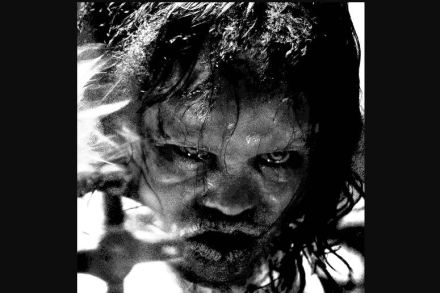
One of the most anticipated films to hit theaters this October is The Exorcist: Believer, a direct sequel to one of the greatest horror movies of all time, The Exorcist, which is celebrating its fiftieth anniversary this year. Coincidentally, the original film’s director, William Friedkin, passed away just a couple of months ago. In the wake of Friedkin’s death, Matthew Walther reexamined The Exorcist in a guest essay for the New York Times. He posited that the film hinges on the acknowledgment of supernatural evil and the use of longstanding Catholic theology and tradition in defeating it.

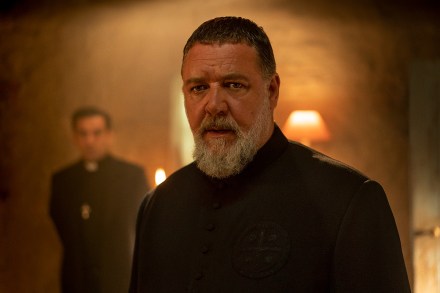
The Pope’s Exorcist isn’t scary enough

From our US edition

All worthwhile horror films are products of their culture. They distill its neuroses and fears, forcing protagonists to make value judgments with life-or-death stakes. And that’s why the genre continues to compel: beyond the adrenaline rush of jump scares, watching old chillers is like opening a metaphysical time capsule. They show how past generations understood their world. The exorcism subgenre tracks that pattern — only its questions tend to be explicitly religious. William Friedkin’s 1973 classic, arriving at the height of modernist theology, directly foregrounded the question of faith within a liberal world order.

Pope’s Exorcist

The history of Nazism in small objects

‘I can’t cook,’ writes the historian Karina Urbach, ‘which is probably why it took me so long to realise that we had two cookbooks on our shelf at home with the same title’ – a 1938 edition by her grandmother Alice and one from the following year attributed to Rudolf Rösch. When she did notice, however, it provided a key to unlocking some fascinating family history and a little known strand of Nazi persecution. In 1920 Alice Urbach was living in her native Vienna, ‘a 34-year-old widow with no money’. Her husband had proved a feckless gambler and her father, disappointed by her lack of ambition, had virtually cut her out of his will. Yet she found a way of turning her life round.