Pop

Morals and mortality

From our US edition

There is a moment in the first episode of Dolly Parton’s America when you think the sainted songstress may have made the worst mistake of her career. ‘Do you think of yourself as a feminist?’ asks host Jad Abumrad. ‘No, I do not,’ Dolly says. There is a pause as wide as the gap between those who have four-year degrees and those who don’t. After Dolly says she thinks feminism means hating men, Abumrad cuts to an interview with feminist, Heartland author and Dolly superfan Sarah Smarsh. They grasp for a reason why Dolly would think so non- progressively. The interview starts to feel like a wake.
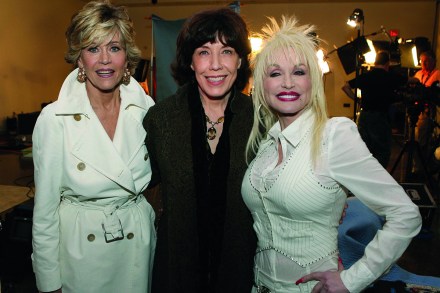
dolly parton

The sound of pop eating itself and throwing up: A.G. Cook’s Apple reviewed

Grade: A The future, then. The sound of pop eating itself, throwing up into a bag and then getting a spoon and digging in. A mash-up of everything — largely very sickly EDM, but also trance, house, power ballads, industrial techno, soft rock, winsome acoustic guitar. Meticulous to the point of almost derangement, endlessly inventive both musically and rhythmically, full of arch puns. Such as the album’s title here — Apple. Mr Cook is the boss of the record label PC Music. Geddit? Sides splitting? That’s the other thing — the future also promises to be very irritating. What you cannot doubt is A.G.

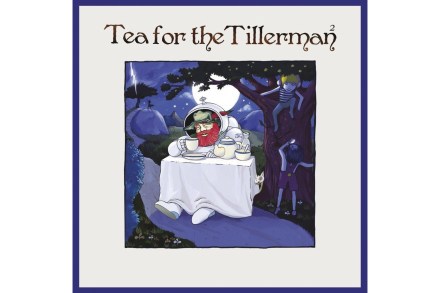
More mimsy soft rock from Cat Stevens: Tea for the Tillerman 2 reviewed

Grade: B– Time has been kind to Cat Stevens’s reputation — his estrangement from the music business and rad BAME credentials bestowing upon him an edginess which his mimsy fragile-voiced soft rock never really deserved. It’s the kind of retrospective benediction usually only death from some bad skag at the age of 27 can provide. Never mind anything else, I’d have barred him entry to the US just for calling an album Teaser and the Firecat. This one, meanwhile, is described as ‘his 1970 masterpiece’. Really? I don’t think so, although in its original incarnation it was pleasant enough on the ears, tinkling away on the turntable in the infant school staffroom. This is the album ‘reimagined’ by Yusuf.

Virtuosic but slight – always prog’s problem: The Pineapple Thief’s latest reviewed

Grade: B– Of all the various subdivisions in that wheezing and crippled phenomenon that we call rock music, prog has fared better than most, spawning its own devilish offspring in math rock and post-rock. Why? Maybe we are more amenable to bombast and pretension these days. Or perhaps new studio technology lends itself to the genre — hell, you can hear prog time signatures in top ten hits. Maybe more to the point, prog offers a broader avenue than, say, heavy metal or punk. Prog is often what bands end up doing even if that’s not what they think they’re doing: Radiohead, Muse — even Arcade Fire or the National. This is the 14th album from Somerset band the Pineapple Thief (prog is very much a West Country thing).

There’s scarcely a dull track: Deep Purple’s Whoosh! reviewed

Grade: B+ Less deep purple than a pleasant mauve. Ageing headbangers will note a lack of the freneticism that distinguished Fireball and ‘Highway Star’. But by the same token they may be relieved that there are no six-minute drum solos, songs about the devil, or Jon Lord demonstrating that he can hammer the organ fairly quickly for an unimaginably long time. Instead you have extremely well played 1980s arena rawk — think Guns N’ Roses with a touch of prog thrown in. And decent tunes that do not outstay their welcome — Ian Gillan always was a catchy mofo, however ludicrously vaudevillian his vocals may be.

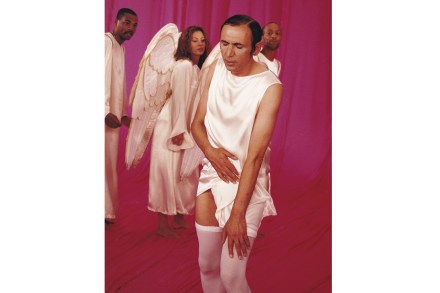
‘Cocaine addiction is time-consuming’: the rise and fall of Kevin Rowland and Dexys

When Dexys Midnight Runners reached No. 1 in the singles charts in spring 1980 with the song ‘Geno’, the band had to travel to London for their coronation appearance on Top of the Pops. For the first time they could afford the train fare. But Kevin Rowland — their singer, leader, creative director, boss, whatever you want to call him — insisted they continue to jump the barriers at Birmingham New Street. ‘I said, “Come on lads, we’re still going to bunk the trains.” And they went, “What?” “Come on, the inspector’s coming. We’ve got to get in the toilets.” And the drummer said, “Kev. We’re No. 1 in the charts and we’re bunking the trains…”. “GET IN!

The people who were idiots at gigs in early March are still idiots

Is the world ready for the return of live rock music? On the evidence of the first gig in London since lockdown, no. The people who were arseholes at gigs in early March are still arseholes at gigs, but there’s rather more than an obstructed sightline at stake now. Miles Kane was the guinea pig for the experiment, playing to 150 people who’d applied for tickets and who stood in a summer downpour watching him play acoustically. More on Kane later, but his presence was the least important thing here. The gig was the first in a series of small shows in Camden Market, and the organisers had taken care: masks were compulsory and the ground was marked with green dots to ensure everyone stood where they were supposed to.

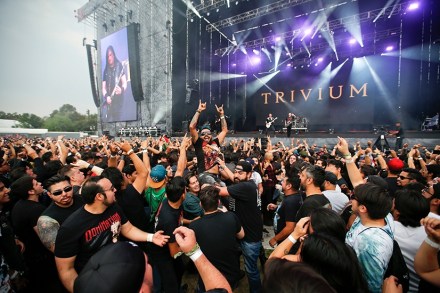
The problem with livestreaming heavy metal? No moshpits

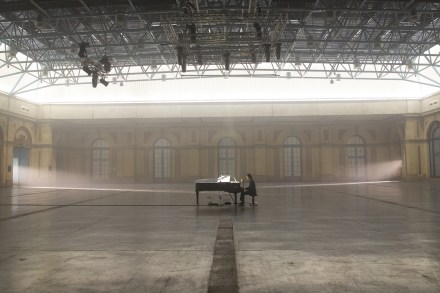
There was only so long anyone could put up with the live musical performances of the early days of lockdown: musicians in their living rooms, performing stripped-back versions of their songs in broadcasts that froze or stuttered. The time would come, inevitably, when everyone wanted more. Viewers would want something more closely approximating a full show; musicians would want to be paid. Laura Marling was early through the gates: last month, she promoted her latest album with two concerts at the Union Chapel in London, played to an empty hall but streamed for UK and US audiences.

Ranges from the slight to the first-rate: Neil Young’s Homegrown reviewed

Grade: B+ Neil Young has been mining his own past very profitably for a long time now, disinterring a seemingly endless catalogue of stuff which, at the time it was recorded, failed to see the light of day. And people like me fork out each time. I remember looking forward to this album in 1975 — but just before the release date he shelved it in favour of Tonight’s the Night, easily the finest rock album of the 1970s (or, to my mind, since). This doesn’t come close but, as it’s from Young’s most rewarding period, it holds a certain interest. Five songs have been released elsewhere, including the lovely ‘Star of Bethlehem’ (on Young’s underrated American Stars ’n’ Bars).

Dysfunctional music for dysfunctional people: The Public Image is Rotten reviewed

A star is born, but instead of emerging into the world beaming for the cameras, he spits and snarls and announces his intention to destroy the establishment via the medium of rock records. But who is it? Is it Bob Geldof or John Lydon? Citizens of Boomtown: The Story of the Boomtown Rats — another in the ongoing trend of the BBC screening films that are fundamentally ads for a band’s new album — made the case for Geldof, suggesting he and his bandmates singlehandedly dragged Ireland into the modern age (the Daily Telegraph’s chief rock critic popped up to say they were the first roar of the Celtic Tiger).

The festivalisation of TV

The Glastonbury festival has undergone a series of metamorphoses in the 31 years since I first attended as a 15-year-old fence hopper (as, indeed, have I, thank heavens). One of the most significant changes, to pillage Gil Scott-Heron’s famous prophecy, is that the evolution has been televised. Back in 1989, if your boots weren’t on the ground — often a quagmire, though not that year — you missed out on all the fun. This has not been the case for aeons. Television coverage of Glastonbury began on Channel 4 in 1994, switching to the BBC three years later.

Contains the loveliest new song I’ve heard in decades: Bob Dylan’s new album reviewed

Grade: A ‘Rough’ in terms of the mostly spoken vocals, but only ‘rowdy’ if you’re approaching your 80th birthday, which of course Dylan is. This is a sometimes playful and often self-deprecating Nobel Laureate at work, the lyrics (like the vocals) carrying a whiff of late Leonard Cohen, the arrangements of some of the slower, if not funereal, songs a nod to Tom Waits. In ‘I Contain Multitudes’, the grizzled old boomer has given us his best song since ‘Idiot Wind’; like many on here, the delicate melody is implied by the chord changes rather than explicitly stated.

In defence of Prince’s late style

In 1992 Prince released a single called ‘My Name Is Prince’. On first hearing it seemed appropriately regal. Cocky, even. Only in hindsight did it appear somewhat needy, a litany not of what Prince was going to do, but of the things he had already done. On it, he pulled rank on his status — ‘I’ve seen the top and it’s just a dream / Big cars and women and fancy clothes’ — called out young rappers for their potty mouths, and declared himself ‘fresh and funky for the 90s’. Context is everything. By 1992, Prince was still funky – but fresh? He had been, indisputably, pop’s premier agitator throughout the previous decade; as David Bowie was to the 1970s, so Prince was to the 1980s.

The power of cheap music: pop podcast round-up

Noël Coward was so right that his words have become a cliché: it is indeed extraordinary how potent cheap music can be. Its potency, however, is not innate. Amanda Prynne, from Coward’s Private Lives, would not have been especially struck by ‘Some day I’ll Find You’ had it been playing on a wireless in a shop; its impact came from hearing it as she again encountered her ex-husband. For cheap music to be potent, context is everything. Without a wider meaning, a cheap little pop song is just notes and chords. With meaning, the most throwaway frippery can become an object of fascination. That’s often true of the best known of songs.

As a lyricist, Ian Dury had few equals in the 20th century

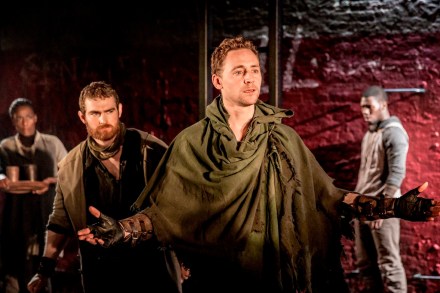
The National Theatre’s programme of livestreamed shows continues with the Donmar’s 2014 production of Coriolanus starring Tom Hiddleston. The play is not a favourite. The story concerns a victorious Roman general who accepts the role of consul but when his political career falters he takes revenge by befriending his defeated enemy, Aufidius, and marching on his own city. There’s too much bitterness and aggression here, and no romantic sentiment at all. The only significant male/female relationship is between the great conqueror and his preening, pushy mother, Volumnia, who boasts about her son’s triumphs as if they were scouting badges or gold stars won for laying out the nature table. Coriolanus is an unsatisfactory tragic hero.

Skates on the edge of parody: The 1975’s Notes on a Conditional Form reviewed

Grade: B+ Just what you wanted. An opening track that matches banal piano noodling to an address by Greta Thunberg. Followed by a hugely unconvincing stab at tuneless industrial metal on a song called ‘People’, in which the aforementioned — me and you, not them, of course — are cautioned to ‘WAKE UP!!’ Leafy Wilmslow’s middle-class skag-head prophet, Matty Healy, is back, then, with a series of injunctions for us all, spread over interminable length and always skating on the very edge of parody. The 1975 are probably Britain’s biggest ‘rock’ band — those quote marks are needed — and this vast slab of pretentious, gullible, vacuous commendations to us all went straight in at number one.

The problem with mystery podcasts like Wind of Change

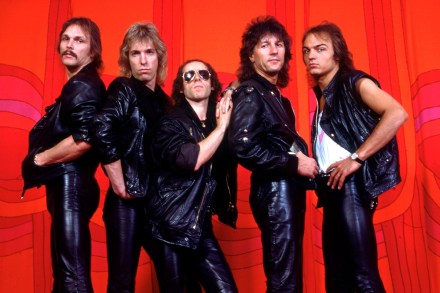
Did the US secretly write a power ballad in order to bring down the Soviet Union? That’s the question behind Wind of Change, a serial documentary that has topped the podcast charts. It’s the work of an investigative journalist called Patrick Radden Keefe who claims to have once received a tip-off, from an intelligence contact, that the song ‘Wind of Change’ — recorded by the hair metallers Scorpions — was actually a CIA campaign to encourage anti-Soviet uprisings. Now he wants to prove it. This week’s episode, the fourth of eight, takes Keefe to a collectors’ convention in Ohio in pursuit of an internet user called ‘Lance Sputnik’ who creates customised versions of GI Joe action figures.

Joyous and very, very funny: Beastie Boys Story reviewed

The music of the Beastie Boys was entirely an expression of their personalities, a chance to delightedly splurge out on to record everything that amused them. And early on, in their teens-get-drunk debut album, Licensed To Ill, that resulted in obnoxiousness. But mostly they were kinetic and colourful, which is why the new Apple TV+ film about them works so well. The format suits the story. Beastie Boys Story simply documents a stage show where winningly they talk the audience through their personal history. It’s much like Netflix’s Springsteen on Broadway. But since the third Beastie, Adam Yauch, died in 2012, the band no longer perform, so where Springsteen punctuated his memories with songs, the Beasties do it with film clips.

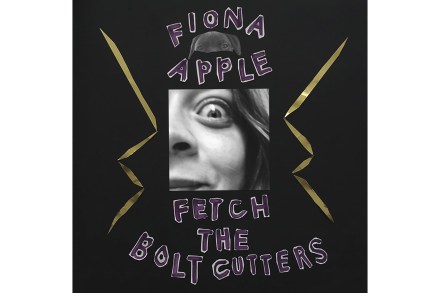
Beautiful voice, pretentious album: Fiona Apple’s Fetch the Bolt Cutters reviewed

Grade: C+ Where did they all come from, the quirky yet meaningful rock chicks who don’t have a decent song between them yet put out albums by the bucketload? Back in the day it was just Joni Mitchell, who had four good songs, Laura Nyro who had two and Dory Previn who had one. Now there are thousands of these creatures, flaunting their intemperance without showing much brilliance. And all slavered over by the (still male) music press. Years of oppression, of being disregarded, they would argue. But disregarded for very good reasons, in almost all cases. Yeah, Carole King is ten times the songwriter James Taylor ever was. I will give you that. We got that wrong. But that doesn’t mean we have to be tormented for eternity by the likes of Laura flipping Marling, does it?

Livestream-hopping is just as irritating as being at a real festival

The ghost of Samuel Beckett oversaw the Hip Hop Loves NY livestream last Thursday night. Time and time again its host, the veteran hip-hop TV presenter Ralph McDaniels — known to all his guests, unnervingly, as ‘Uncle Ralph’ — tried to connect to some Golden Age legend. Time and time again, his attempts at a straightforward interview went wrong. We saw Uncle Ralph, on one half of the screen, ask a question about Covid-19, nod along to the answer, then say, ‘Thank you, doctor.’ But we didn’t have a doctor on screen, or on our audio. We had Ice T. ‘I ain’t no doctor,’ Ice-T said. Cut to Nas. But Nas was inaudible, and his picture was breaking up. ‘I see Chuck D!’ He did, but we didn’t.