Pop music

The history of a Britney Spears masterpiece

From our US edition

The year was 2007. The Bush administration was launching bombs in the Middle East, the economy was collapsing and pop songstress Britney Spears was standing in a recording booth at Sony’s New York City office. As Spears waited to lay down vocals, producers Ezekiel Lewis and Christian “Bloodshy” Karlsson discussed the latter’s condo in Bangkok, Thailand. “Oh, Thailand,” Spears said, according to Lewis’s recollection. “Why don’t we go and do the songs in Thailand? Let’s go to Thailand. I have the plane coming tonight.” Lewis looked across the studio at Karlsson and mouthed, “What the fuck? Is she serious?” She was dead serious. “Well, why don’t we get this one down first, and then maybe let’s think about it tomorrow?” he said.

spears

Why the Monkees were never considered ‘a real group’

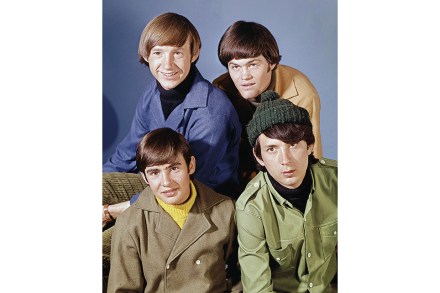
Among those of a certain age, no pop group of the 1960s provokes a debate quite like the Monkees – neither the Beatles, who now represent the establishment they once threatened to overturn; nor the Rolling Stones, whose shock value resides in a shameless career of cultural appropriation rather than the pursuit of sex, drugs and rock’n’roll; nor the Who, half of whose members died before they got old, but who kept touring regardless. These arguments about the Monkees can grow heated. The Rock and Roll Hall of Fame – the music industry-funded mausoleum located in Cleveland, Ohio – stubbornly refuses to recognise the contribution of ‘the Prefab Four’ on the spurious grounds that the hit-making combo was not ‘a real group’ but one put together for a television show.

The problems of being a Bee Gee

For quite some time, the prospect of death has held a fresh terror. The British Heart Foundation’s step-by-step guide to cardiopulmonary resuscitation advises performing chest compressions ‘to the beat of “Stayin’ Alive” by the Bee Gees’. This means that the last sound some of us will ever hear is ‘Stayin’ Alive’, with our chests as the drums: Feel the city breakin’ and everybody shakin’And we’re stayin’ alive, stayin’ alive!Ah! ah! ah! ah!Stayin’ alive! Stayin’ alive! Despite their success, the Bee Gees have always been regarded as naff. They are to pop music what Fanny Cradock was to cookery or Julian Fellowes is to the world of letters. Bob Stanley is on a mission to rescue their reputation.

& Juliet and Titanique: two newly minted cult classics

From our US edition

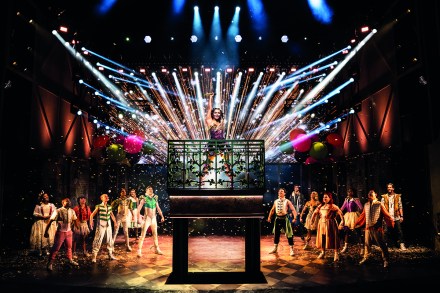
Fears that the new pop-parody musical & Juliet would be a vehicle for steamrolling Shakespeare are understandable but unfounded. It’s true that, on Broadway as in the rest of the arts, holding dead white males up for flagellation is now almost a cherished ritual — a recent example being last season’s Six, a glitzy feminist paean danced on the grave of Henry VIII. There’s a healthy dose of girl power in & Juliet, too, and I don’t doubt that a few heedless theatergoers came with tomatoes in hand, hoping to find the Bard pilloried. Let me tell you a secret: the theater world still adores Shakespeare, even in 2023. To renounce him is to swear off your mother’s milk.

Juliet

James Bond and the Beatles at war for Britain’s soul

‘Better use your sense,’ advised Bob Dylan: ‘take what you have gathered from coincidence.’ John Higgs is a master of taking what he can gather from coincidence – or, as he would insist, synchronicity. From the filigree of connections and echoes in the KLF (Discordianism through the lens of 1990s pop provocateurs) to the psychogeography of Watling Street to more recent deep dives into William Blake, he confronts the modern Matter of Britain: who wields power, and who resists it? Love and Let Die starts with another perfect coincidence, namely that it was 60 years ago – to be precise, 5 October 1962 – that saw the first Beatles single appear in shops and the first James Bond film appear in cinemas.

What happens to rockers who don’t die young?

What do the following individuals have in common: a political activist from Suffolk; a chartered psychologist from Oxfordshire, who enjoys playing golf at weekends; a funeral celebrant from Liverpool; the Birmingham-based chairperson of the Ladder Association Training Committee (‘When it’s right to use a ladder, use the ladder, and get trained to use it safely’); a pop star from LA? The answer is that all of them were pop stars, with the obvious exception of the pop star from LA who still is one. But even Robbie Williams used to be bigger.

How we laughed: the golden days of Bananarama

Saying you don’t like Bananarama is like saying you don’t like summer or Marilyn Monroe — a sure sign of a misanthropist who thinks that being a wet blanket makes them interesting. OK, they never had a blazing talent — their three small, sweet pipings barely adding up to one decent voice — but they were one step beyond even the glorious girls of the Human League: Have-a-Go-Heroines dancing round their handbags, a karaoke of themselves. Keren Woodward and Sara Dallin meet at infant school in Bristol. Their roustabout quality is evident when, as pre-teens, they engage in throwing bricks at each other’s ankles in a bid to skive off school — just think, they were behaving like that even before they were ever drunk!

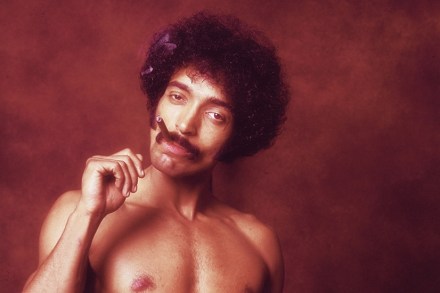
One of the more disturbing films I’ve seen: Arena’s The Changin’ Times of Ike White reviewed

Arena: The Changin’ Times of Ike White (Monday) had an extraordinary story to tell — but one that, halfway through the documentary, already seemed to be complete. So, you might well have thought at that point, how would it fill the rest of the time? The answer, it transpired, was by taking an even more jaw-dropping turn. In the 1970s, Ike White was serving life for murder in a Californian prison when reports of his musical talent reached the record producer Jerry Goldstein. A prodigy on guitar, bass, drums and keyboards, White had until then been making most of his music in the prison’s gas chamber, which he was allowed to use as a rehearsal room.

Ignore Lily Allen’s sub-adolescent politics – her new album is brilliant

Grade: B+ Here we go again, then, I thought — another gobbet of self-referential, breast-beating respec’ me bro sputum against a backdrop of the usual overproduced r&b pop schlock. What used to be called ‘indie’ singer-songwriters are always moaning about how utterly useless they are, taking Radiohead’s ‘Creep’ as a kind of self-flagellating worldview. Chart singer-songwriters, meanwhile, can’t stop telling everyone how absolutely bloody marvellous they are, despite being traduced, which fits right in with the extraordinary narcissism of our current youth culture, its bovine #MeToo grandstanding and exquisite sensitivities. I don’t mind Allen, despite her irritating sub-adolescent Corbynista politics.