Political correctness

Zero tolerance for anti-Zionists? The right is now as PC as the left

From our UK edition

So now we know: the right and the respectable left are just as good at PC purges as potty, radical students are. In fact they’re better. The effective exiling of Ken Livingstone from polite society; yesterday’s almost hourly toppling of Labour councillors who once tweeted or Facebooked something ugly about Israel; the scouring of social media in search of Zionist-haters we might expose and shame and crush… all this zealous speech-policing, this crusading against people who said the unsayable, has made the intolerant, No Platforming student left look like amateurs in comparison. The right is out-PCing the left.

Dreadlocks

From our UK edition

‘Why are you filming this?’ ‘For everyone’s safety.’ Those are the last words in a 46-second video that was watched by more than three million people on YouTube last week. The question was asked of the unseen cameraman by a black woman who had been haranguing a white youth at San Francisco State University for wearing dreadlocks (or the best he could manage with his weedy hair). I’ve written about being safe in universities before, but this incident focused on cultural appropriation, which is a new crime discovered by people who think it in fact misappropriation to adopt the cultural expression of another ethnic group. Search me. Of course the wearing of dreadlocks has a meaning, even if few can agree on it.

Letters | 23 March 2016

From our UK edition

PC and abortion Sir: It is heartwarming that Simon Barnes’s son should not suffer the stigma experienced by those with Down’s syndrome in earlier generations (‘In praise of PC’, 19 March). But is it not ironic that in this kinder, more generous and respectful age, over 90 per cent of fetuses diagnosed with Down’s are aborted? Rather than hiding the children away, we now ensure that most of them are not even born. If political correctness had really become sane, surely our kindness, generosity and respect would extend to the womb as well? Matthew Hosier Poole, Dorset Naming conditions Sir: Simon Barnes, makes a couple of assumptions which do not bear scrutiny.

Safe space in ancient Athens

From our UK edition

Brilliant Oxford undergraduates argue that it is right to prevent us saying things they object to, because speech they do not like is the equivalent of actions they do not like. They had better not read classics, then. There is no safe space there. Greeks made a clear distinction between logos (‘account, reckoning, explanation, story, reason, debate, speech’, cf. ‘logic’ and all those ‘-ologies’) and ergon (‘work, deed, action’). For a Greek, to reject logos was to reject the expression of thought; and so to close down any possibility of people giving an account or reason for why they were thinking and acting as they did; and therefore to prevent any way of combating them — except, of course, by force.

The Spectator Podcast: Why political correctness is a good thing, George Osborne’s Budget, and the end of the rave

From our UK edition

Is political correctness a good thing or a bad thing? As Simon Barnes writes in this week's magazine, he used to think that people should be free to use whatever words they wanted to, in pursuit of truth and meaning. But having a son with Down’s syndrome has changed his mind. Now, he has seen the benefits that political correctness bring to society. On this week's podcast, he and Isabel Hardman discuss whether being PC is a good thing with Tom Slater, Deputy Editor of Spiked. Yesterday's Budget held a few surprises – but not that many. What it did do, as James Forsyth argues in his column this week, was bring the political focus back to the UK again.

Bored of the dance

From our UK edition

[audioplayer src="http://rss.acast.com/viewfrom22/thespectatorpodcast-politicalcorrectness-budget2016andraves/media.mp3" title="The Spectator Podcast: The end of raving" startat=1080] Listen [/audioplayer]At 19, I dropped out of university to pursue a career as a rave promoter. I went into business with a schoolfriend. We rose through the ranks of party promotion, founded a record label, and started an annual dance music festival. After more than ten years, though, we’ve regretfully decided to close down. And here’s why: young people these days just don’t know how to rave. They are too safe and boring. Rave, like all youth movements, was meant to be about freedom, rebellion and pissing off your parents.

In praise of PC

From our UK edition

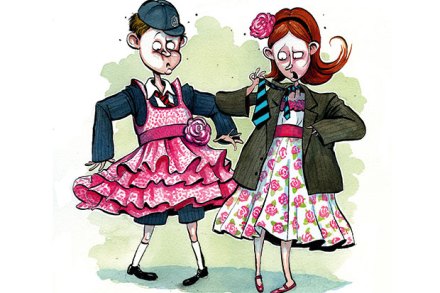
[audioplayer src="http://rss.acast.com/viewfrom22/thespectatorpodcast-politicalcorrectness-budget2016andraves/media.mp3" title="The Spectator Podcast: Is PC a good thing?"] Listen [/audioplayer]Here’s another stock joke for your collection: Pembroke College, Cambridge, has cancelled a fancy dress party themed on Around the World in Eighty Days to ‘avoid the potential for offence’. One college has objected to the serving of sushi as ‘cultural appropriation’; another cancelled yoga lessons for the same reason. There is an inevitable backlash to this kind of puritanism — to ‘political correctness gone mad’. And it’s true: prissily expressed PC attitudes do often look silly. The problem is that, broadly speaking, they’re also right.

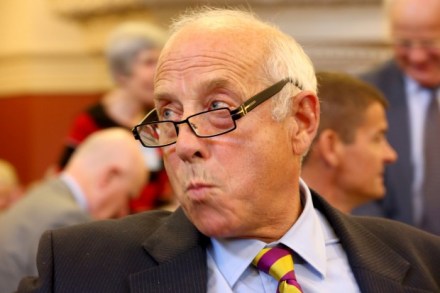
Godfrey Bloom puts his foot in it over Emma Thompson row

From our UK edition

Yesterday saw a turn in fortune for the Out campaign after Emma Thompson declared her intention to vote to remain in the EU. The Nanny McPhee actress managed to upset those on both sides of the debate when she explained that without Europe, Britain is simply 'a cake-filled misery-laden grey old island'. Quite rightly a number of Brexit activists called her out on her negative comments, while even supporters of the In campaign seemed less than thrilled by the declaration. Alas, one Eurosceptic appears to have gone a step too far.

High life | 11 February 2016

From our UK edition

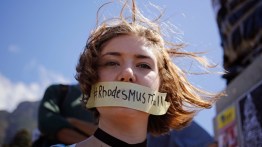
Gstaad I had the rather subversive idea of offering a six-figure sum to Oriel College, Oxford. On one condition: that the college immediately withdraw the Rhodes scholarship from the South African Ntokozo Qwabe, the hypocrite who led the campaign to remove the statue of Cecil Rhodes, and from any other recipients of Cecil’s munificence who are blackening his name a century later. It is the least these hypocrites deserve. Oxbridge has become a joke in the way it tries to emulate the LSE in radicalism and other such ludicrous poses. The group that called Jihadi John ‘a beautiful young man’ should be allowed to speak at Oxford, according to the jerk that is the warden of Wadham College, Oxford, yet Germaine Greer is banned.

A lesson in self-censorship

From our UK edition

According to my former colleagues, history teachers in an urban English state school, anyone who votes for the Conservative party is ‘thick’, the British Empire was ‘unambiguously evil’ and capitalism leads to ‘mass inequality and misery for the vast majority of working people’. The only answer was, you guessed it, socialism. Yes, the cliché of the Little Red Book-carrying schoolteacher is alive and well. As the only right-of-centre teacher in the history department, I found lunchtime particularly galling. My colleagues would sit around denouncing the British empire, Michael Gove’s changes to the national curriculum and the government’s ‘ideologically driven’ attempts to cut the nation’s deficit.

In defence of gender

From our UK edition

[audioplayer src="http://rss.acast.com/viewfrom22/whysexmatters-thedeathofsportandistheeusinkingwhetherbrexithappensornot-/media.mp3" title="Melanie Phillips and Jacqui Gavin, a trans activist and civil servant, discuss gender"] Listen [/audioplayer]Once upon a time, ‘binary’ was a mathematical term. Now it is an insult on a par with ‘racist’, ‘sexist’ or ‘homophobic’, to be deployed as a weapon in our culture wars. The enemy on this particular battleground is anyone who maintains that there are men and there are women, and that the difference between them is fundamental. This ‘binary’ distinction is accepted as a given by the vast majority of the human race. No matter. It is now being categorised as a form of bigotry.

Tell the truth about benefit claimants and the left shuts you down

From our UK edition

Next month sees the release of Trumbo, a biopic about Dalton Trumbo, the screenwriter who was blacklisted by the Hollywood studios after refusing to testify before the House Un-American Activities Committee in 1947. Trumbo continued to work under a variety of pseudonyms and won two Academy Awards for his screenplays, neither of which he was able to receive. He wasn’t rehabilitated until 1960, some 13 years later. I’ve seen Trumbo and it isn’t much good, but Bryan Cranston has been nominated for numerous awards for his portrayal of the tortured martyr, including a Bafta. People who work in the film industry are, of course, almost universally liberal, and recognising Cranston’s performance is a way of signalling their disapproval of McCarthy-ism.

High life | 31 December 2015

From our UK edition

This is going to be one hell of a year, hell being the operative word. It will be the year the greatest Greek writer since Homer turns 80 (but we’ll keep quiet about that for the moment). Our world is so stuck in reverse that a woman who was stabbed in Miami during the Art Basel shindig, and was bleeding and begging for help, was mistaken for an artwork and ignored. The woman survived but will art? Conceptual art must be the biggest con since Bernie Madoff and then some. And speaking of con artists, I’ve never had any respect for Mark Zuckerberg, someone who is reputed to have copied the idea for Facebook from a couple of ex-classmates, and who now pledges the majority of his $45 billion fortune to charity thereby generating a public relations bonanza.

Why ‘safe’ is Dot Wordsworth’s word of the year

From our UK edition

‘Makes me feel sick,’ said my husband, referring not to the third mince pie of the morning (in Advent, supposedly a penitential time of preparation), nor to accepting a glass of champagne after having earlier accepted a glass of whisky at another house. No, what made him feel sick was the seasonal greeting: ‘God bless, and be safe.’ For once, I agreed with him. It was bad enough to be exhorted to drive safely or even stay safe during periods when terrorists had eased off a bit (after peak IRA, but before 2001). But now, with a fashion for shooting civilians in unexpected places, to be told to be safe makes no more sense than to be told to be rich. Yet safe is the word of 2015.

Letters: There is plenty of forgiveness in the Quran

From our UK edition

Forgiveness in the Quran Sir: Canon Andrew White (‘God’s man in Baghdad’, 21 November) said he could not find any forgiveness in the Quran, and asks to be informed if anyone finds any mention of it. I would be delighted to assist. Any reader of the Quran would note that 113 of its 114 chapters begin with a pronouncement of God’s limitless mercy and beneficence. In fact ‘forgiveness’ and ‘mercy’ are mentioned roughly 100 and 200 times respectively. An entire chapter of the Quran is devoted to the quality of mercy (Surah Rahman). The living embodiment of such values was the Prophet Muhammad. Did he not demonstrate the pinnacle of clemency when he forgave Wahshi, the criminal who murdered and mutilated his uncle Hamza?

How we ended up ‘cisgender’

From our UK edition

‘That’s not how you spell “system”,’ said my husband triumphantly, pointing with his whisky glass at a placard inveighing against the ‘Cistem’, held up by a transgender protester on television. ‘No, darling,’ I said, not even assuming a patient tone. ‘It’s a play on words.’ Among people who like using the word gender outside its grammatical homeland, cis- as a prefix is tacked on, to make cisgender: ‘someone whose sense of personal identity corresponds to the sex and gender assigned to him or her at birth’, as the Oxford English Dictionary puts it carefully. Note that it is not held to be a question of being the same sex as you were born, but the sex and gender assigned to you.

I went to Pedro’s Tex Mex Cantina to claim my racist sombrero

From our UK edition

Pedro’s Tex-Mex Cantina is a fantastical shack near a ring road in Norwich. It was recently asked to stop handing out sombreros at the University of East Anglia Freshers’ Fair, because anti-racist activists (henceforth known as ‘morons’) at the UEA Freshers’ Fair reckon the sombrero is racist, and gave the staff of Pedro’s Tex-Mex Cantina a lecture about ‘cultural appropriation’, which they took well; that is, they did not set fire to the UEA Freshers’ Fair, which is what I would have done. This is where we are with progressive politics, Spectator reader, although I think you knew that anyway.

Why are students now cheering about the massacre at Charlie Hebdo?

From our UK edition

I witnessed something genuinely disturbing at Trinity College Dublin last night: trendy, middle-class, liberal students cheering and whooping a man who had just given the closest thing I have yet heard to a justification for the massacre at Charlie Hebdo. It was as part of a debate on the right to offend. I was on the side of people having the right to say whatever the hell they want, no matter whose panties it bunches. The man on the other side who implied that Charlie Hebdo got what it deserved, and that the right to offend is a poisonous, dangerous notion, was one Asghar Bukhari of the Muslim Public Affairs Committee.

How to defend the arts using liberal values

From our UK edition

This is a version of a speech I made to the No Boundaries conference at the Bristol Watershed Theatre on how censorship affects the arts, museums and libraries. The organisers asked me to talk about political correctness and the arts; a touchy subject which requires enormous sensitivity to the feelings of others, and long, thoughtful discussions of whether we should use the term 'political correctness' at all. Unfortunately, they continued, you have only 10 minutes and there will be no time for any of that. You will just have to get on with it. So forgive me if I belt out arguments like a machine gun, but I must get on. Politically correct culture presents four problems for writers and artists. 1. Political correctness is not politically correct.

The Australian way

From our UK edition

 Sydney Most ordinary Australians are shocked that our immensely civilised country is reviled in polite society here and abroad, when the world has so many blatant human rights abusers. The latest accusation comes from a New York Times article complaining that our policies on asylum-seekers are harsh, insensitive, callous and even brutal, and urges European nations not to copy them. Yet the policies on border protection of Tony Abbott and John Howard before him should be a lesson to Britain. At the heart of the matter is a firm but fair post-war policy that mass migration is conditional on government control over ‘who comes to this country and the circumstances in which they come’, as Mr Howard famously put it.