Poland

Poles apart | 18 July 2019

From our UK edition

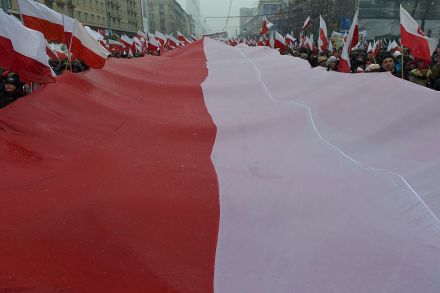
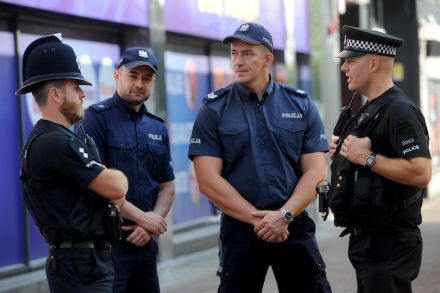
Have you ever seen a Pole on British television? Poles are the biggest immigrant group in Britain, numbering between 900,000 and one million, so you might think they would be all over the TV. But no, there are hardly any. There is a Polish character on Coronation Street, who might turn out to be a sex-trafficker. There was also a Polish character on EastEnders, although the actor who played him left the show to become the Pole on Coronation Street. As a British person living in Poland, I have spoken to many Poles who have lived in the UK. They have told me eye-widening stories about exploitation, crime, poverty and xenophobia, but also about dedication, luck, success and self-discovery.

Bibi blows up Israel’s Central European alliance

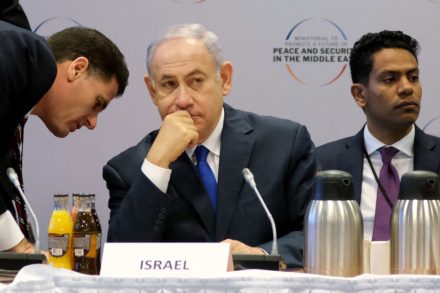
Nationalism is a supremely powerful force in politics, but it’s perennially difficult to forge lasting alliances between competing nationalisms – as this week’s news demonstrates yet again. No country has benefited more from the growing split between Brussels and the European Union’s formerly Communist member states than Israel. In Warsaw, Budapest, Prague, and Bratislava, Prime Minister Benjamin Netanyahu found receptive European audiences, which Israel needed as the EU has soured on Israel’s occupation policies towards the Palestinians and increasingly aggressive rhetoric towards Iran. Netanyahu invested in these new relationships, which were based in more than mere convenience.

bibi warsaw

Cold War is a true work of art

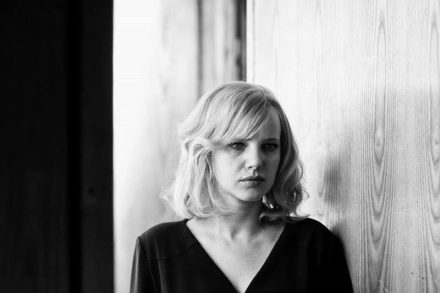
Socialists dismiss liberal democracy as false consciousness, but no one falsifies consciousness like a socialist. Socialist history is false history, the march of workers who want to work harder. Socialist economics is false economics, where the numbers never add up, but it’s always someone else’s fault. Socialist art is false art, because it is always propaganda. The socialist individual begins as an impossible fiction, and ends as an enemy of the state, because the aim of socialism is to subordinate individual desires to collective duties. This corruption of human relationships — denouncing your parents, spying on your wife, fearing your children — is not an accident, but an operating principle.

cold war

Poland is trying a new approach with capitalism. Will it work?

From our UK edition

After communism collapsed in 1989, Poland wiped its hands of socialism. Capitalism swept in, bringing fast-food chains and shopping malls. Today, the country is the EU’s sixth-biggest economy. GDP per capita has overtaken Greece’s and is catching up with Portugal’s. Yet despite this outward success, many Poles feel left behind. In response, the Polish government proposes “solidarism” – capitalism with a social face, involving more social support, especially for families – as a sort of third way. This doesn't mean that the Polish cabinet is made up of a bunch of Corbynistas. Far from it.

Donald Trump is wrong about Germany being a ‘captive’ of Russia

From our UK edition

"What good is Nato if Germany is paying Russia billions of dollars for gas and energy?" tweeted Donald Trump on 11 July. Trump was surely referring to Nord Stream 2, the controversial deal between Russia and Germany, whereby Russia will pump natural gas direct to Germany through a new pipeline across the Baltic Sea. Trump reckons such arrangements make Germany a 'captive' of Russia. Is he right? America isn't the only country that's getting hot and bothered about Nord Stream 2. Denmark and the Baltic States have also voiced concerns. The most vociferous opponent of the scheme is Ukraine.

Crisis of conscience

From our UK edition

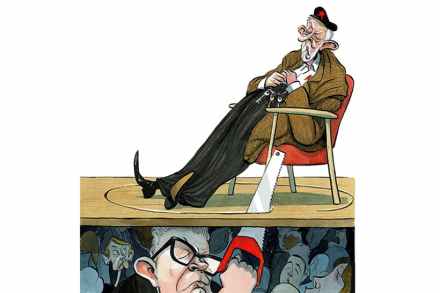
In 1989, the year Soviet communism collapsed, John O’Sullivan, Margaret Thatcher’s former speechwriter, gave the world O’Sullivan’s First Law of Politics. ‘All organisations that are not actually right wing,’ he pronounced, ‘will over time become left wing.’ No one who watched Amnesty International’s descent from austere principle to cultural relativism can deny he spoke with a little truth. Yet if you listened carefully, you also caught notes of self-satisfaction and self-regard. Subversives corrupt impartial organisations, O’Sullivan continued. They rig the system and impose their prejudices against ‘private profit, business, making money, the current organisation of society and, by extension, the Western world’.

The Spectator Podcast: The fight for Europe

From our UK edition

On this week’s episode, we look at the emerging ambitions of the Visegrád Four in a new Europe. We also look at whether there’s a way out of the government’s current drift, and celebrate 70 years of radio’s finest quiz. This week’s cover story looks at growing friction between two European factions. On one side, the Macron and Merkel led federalists are looking for greater integration, whilst, on the other, the Visegrád Four are starting to reassert their anti-immigration stance. Will the alliance hold, asks John O’Sullivan in the magazine, and can it arrest the momentum of the EU project?

Crime and prejudice

From our UK edition

Nothing spoke of the fractious atmosphere in the aftermath of the Brexit referendum more than the death of 40-year-old Arek Jozwik in a shopping centre in Harlow, Essex in August 2016. What might, on any other weekend, have been passed over as just another grubby Saturday-night incident on Britain’s drunken high streets became elevated into a symptom of Brexit-induced racial hatred. James O’Brien, an LBC radio talk-show host, declared that certain Eurosceptics had ‘blood on their hands’ as did ‘anybody who has suggested speaking Polish in a public place is in any way undesirable’. This was the premise of almost all reporting on the story: a man seemed to have been murdered for being Polish.

What Brexit means to Poland

From our UK edition

‘Just think of America; there’s so much of everything there! And Australia, too,’ said the passenger beside me, a Pole with an impressive white moustache, as we flew east from London. He had laughed when I asked if Brexit keeps him awake at night, with the uncertainty over the future of EU citizens living in Britain. As we flew over sleeping Berlin, this man, who has been working at a London hotel for the past decade, was full of optimism. He had, he said, paid his taxes to HMRC over the years and braved the damp of Victorian-era lodgings. Britain was home now. Forget French cheese and wine; the riches of the Commonwealth await. Things could only get better, he thought, for his family in London and for Britain.

Worthy, but wordy

From our UK edition

Milan Kundera’s novel Immortality wryly depicts Goethe preparing for immortality — neatly laying out his life in Dichtung und Warheit and arranging for Johann Eckermann to record his conversation. He is, says Kundera, designing a handsome smoking jacket, posing for posterity. He wants to look his best. Then along comes the young Bettina von Arnim, a platonic flirtation from his past, with an alternative, memorably ridiculous version, ostensibly admiring, in which Goethe’s wife Christiane is portrayed as ‘the crazy, fat sausage’. There is immortal egg on the facings of that smoking jacket. In the case of Czesław Miłosz, we have a variant on this paradigm.

Fragments of the future

From our UK edition

Science fiction is not the first thing one thinks of in connection with the Polish poet Czeslaw Milosz, though the Nobel Prize for Literature has in fact been awarded for science fiction poetry — Harry Martinson’s Aniara was an epic about a spaceship. Then again, many English speakers probably don’t primarily associate Milosz with poetry either, but with The Captive Mind, his damning critique of the moral crisis of artists under authoritarian regimes.

High life | 9 March 2017

From our UK edition

A lousy fortnight if ever there was one. Two great friends, Lord Belhaven and Stenton and Aleko Goulandris, had their 90th birthday celebrations, and I missed both shindigs because of this damn bug. Lord Belhaven’s was in London, at the Polish Club, but flying there was verboten. Robin Belhaven is an old Etonian, served as an officer in Northern Ireland, farmed in Scotland, and has four children, eight grandchildren and one great-grandchild. He spent 35 years in the House of Lords when that institution was a responsible arm of the government and not a cesspool full of smarmy lawyers.

Brexit isn’t to blame for the Polish exodus

From our UK edition

I guess the hate crime epidemic that gripped Britain after Brexit hasn't put that many people off, with new figures showing net migration of 273,000 in the three months to September 2016. That represents a decline of 49,000, of which 12,000 is due to an increase in eastern Europeans heading home (39,000, as opposed to 27,000 the previous year), which I imagine is less to do with any hostile atmosphere in Britain than the booming economy in Poland. No doubt that's the way it will be presented, though - 'Poles fleeing the Brexit terror'.

The Baron is back

From our UK edition

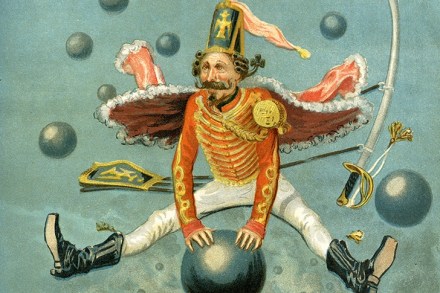
Sigizmund Krzhizhanovsky was born in the wrong place at the wrong time. Had his Polish ancestor not been exiled to Siberia, he might have become a figure in European literature; living in Soviet Russia he was, in his own words, ‘known for being unknown’. His fiction and plays, written in the 1920s–1930s, remained mostly unpublished — unpublishable — till 1989. That he can now be read in English is thanks to the translator Joanne Turnbull, who in collaboration with Nikolai Formozov has brought him out of obscurity. What Krzhizhanovsky lacks in popularity he makes up for in the fame of his hero, Baron Munchausen, an incorrigible fantasist created by the 18th-century author Rudolf Erich Raspe.

Trump and Fillon mean that Britain matters far more to Eastern Europe

From our UK edition

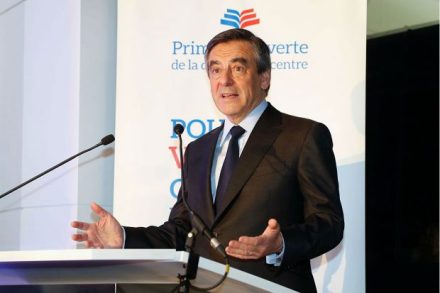
By next summer, Britain could be the only one of the three major Western military powers unequivocally opposed to the idea of Russian domination of its near neighbours. For François Fillon, the Republican candidate for the French Presidency and the favourite to win, has -- as UK security sources point out -- pretty much the same view of Russia as Donald Trump does. Fillon favours allying with Russia in Syria and seeking Vladimir Putin’s help to defeat both Islamic State and the broader Islamist terrorist threat. Fillon also wants EU sanctions on Russia, imposed because of its annexation of Crimea and broader interference in Ukraine, lifted. This shift in world affairs has profound implications for Britain.

Warrant for alarm

From our UK edition

A concerted effort is under way to make sure that, when it comes to the European Arrest Warrant, Brexit does not mean Brexit. The Police Federation, for example, will hear no ill spoken of the system. And the same might be said of the Prime Minister, who as home secretary praised it to the skies. As she put it in October 2014, without the European Arrest Warrant, ‘British criminals would be able to hop on to the Eurostar or fly to Spain, safe in the knowledge we wouldn’t be able to get them back to prosecute them.’ Without it, the UK would become ‘a honeypot for all of Europe’s criminals on the run from justice’. The statistics appear to back her.

Letters | 11 August 2016

From our UK edition

The hate is real Sir: It is clearly an exaggeration to call Britain a bigoted country (‘We are not a hateful nation’, 6 August), but downplaying the recent wave of xenophobic and racist incidents across the UK as ‘somebody shouting something nasty on a bus’ is equally wrong. Verbal abuse in itself is worthy of condemnation, yet the character of recorded harassment is actually much more serious. In the past few weeks, Poles in this country were shocked by vulgar graffiti (West London; Hertfordshire; Portsmouth) and hurtful leaflets (Cambridgeshire) urging them to ‘go home’ in most offensive ways possible, while a family in Plymouth fell victim to an arson attack.

The Timothy Garton Ash prize for European writing – winner announced

From our UK edition

In this week's issue of The Spectator, Timothy Garton Ash announces the winner of the prize founded in his name for European writing. Below is the extract from his diary, as well as the winning entry.  I’m delighted to learn that a former student of mine, Annabelle Chapman, is the first winner of The Spectator’s Timothy Garton Ash Prize — and especially so because she writes about Poland and eastern Europe. Nice though it is to have a prize offered in my name, it does make me feel vaguely, well, deceased. I recall a bibulous Spectator lunch many years ago when the question came up if so-and-so was dead. Alexander Chancellor memorably responded, ‘Er, I don’t think he is… completely.

Poles apart | 19 May 2016

From our UK edition

Bono has a new opponent: Liroy, a tattooed Polish rapper whose hits include ‘Jak Tu Sie Nie Wkurwic’ (‘How can I not get pissed off?’). He was outraged when the U2 singer recently claimed that Poland is succumbing to ‘hyper-nationalism’. In an open letter Liroy wrote: ‘Your knowledge on this subject must be based on a rather questionable source and is far from the truth. Both as a musician and a Polish MP I would like to invite you to Warsaw to discuss the subject… and see for yourself the current vibe of Poland.’ It’s obvious where Bono got the idea. Everyone in western Europe seems convinced that Polish democracy is on the verge of extinction at the hands of a right-wing nationalist party that seized power last October.

Death metal

From our UK edition

With its loud guitar riffs and even louder fashion, heavy metal has always been ripe for ridicule. In its mid-1980s heyday, it was epitomised by the fictional rock group Spinal Tap prancing on stage next to an 18-inch polystyrene model of Stonehenge while clad in ball-crushingly tight trousers and floor-length capes. In some parts of the world, however, metal is no laughing matter. In the Middle East, for instance, the potential punishment for wearing all black while wielding an electric guitar is death. These days, against a backdrop of authoritarian suppression in countries such as Iran and China, heavy metal’s trademark theatrics and widdly guitar solos have become less an opportunity for gentle mockery than a rallying cry for artistic freedom.