Poland

Why is America determined to pick a fight with Poland?

Until very recently it was hard to find more stalwart allies of America in Europe than the Poles. Poland was an early supporter of Washington’s policy to expand Nato and actively pushed for a stronger US role in central and eastern Europe. The Poles also stood up as an enthusiastic member of every US-led military coalition, taking leading roles in Afghanistan and Iraq. It was to Warsaw that US President Joe Biden traveled – twice – in the wake of Putin’s invasion of Ukraine to give barnstorming speeches affirming that America would stand by Kyiv.  All the more surprising, then, that the recently-appointed US ambassador to Warsaw chose to pick a diplomatic fight that threatens to snowball into a profound rupture between the two onetime allies.
Poland’s Nawrocki heralds a more mature populism

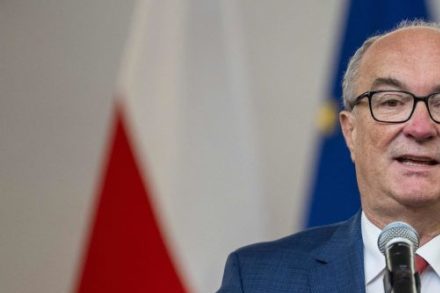
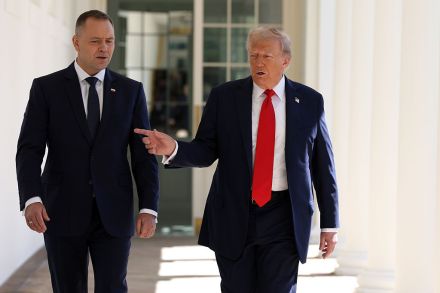
Yesterday, September 3, President Trump welcomed Karol Nawrocki, the newly inaugurated president of Poland to the White House. It was a stirring occasion, replete with a surprise military fly-over of F-16 and F-35 fighter jets flying in “missing man” formation to honor  Major Maciej “Slab” Krakowian, the Polish pilot who died in a crash in Radom, Poland, last Thursday.  Nawrocki, who narrowly won the presidency in June, is often described as “the Polish Trump.” It’s an accurate epithet. Nawrocki is as much a “Poland First” president as Trump is an “America First” president. The 42-year-old historian (Nawrocki holds a PhD in history) supports a list of policy initiatives that could have come right out of the MAGA playbook.

Nawrocki Trump

True winners steal from children

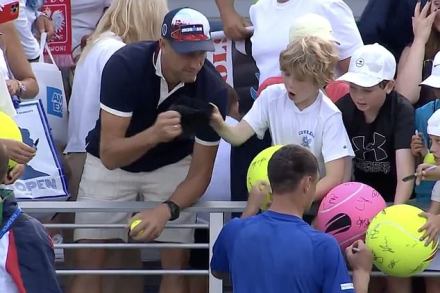
“Sack of garbage,” “common thief,” “shameful jerk” – but a few of the choice words tennis fans had for the man who swiped an autographed hat from a child at the US Open over the weekend. Sure, the alleged thief is no saint. But now that he’s reportedly been identified as a self-made millionaire, I’d rather just call him a shark. The video of the courtside incident quickly went viral, showing a grown man snatch the hat away as Polish tennis star Kamil Majchrzak passed it up to a boy who pleaded in vain. The internet did as it wont, and identified the alleged thief as pavement plutocrat and fellow Pole, Piotr Szczerek. What is this world coming to? A man can’t even steal from a child anymore without having his whole life dissected by an internet mob.

Kamil Majchrzak

The problem with putting US nukes in Poland

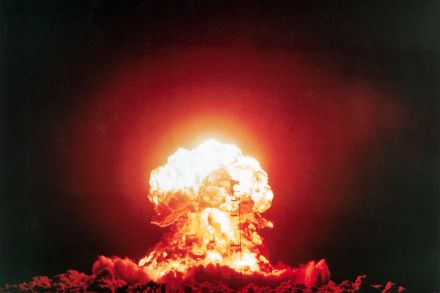
Nuclear weapons are becoming a major issue for Poland. One way or another, both the Polish president and prime minister want their country to host tactical nuclear weapons as a deterrent against President Putin’s Russia. In the latest — but by no means the first — statement on this issue, President Andrzej Duda revealed that he recently discussed stationing American tactical nuclear weapons in Poland with Keith Kellogg, the US special envoy for Ukraine. In an interview with the Financial Times, Duda said: “I think it’s not only that the time has come, but that it would be safer if those weapons were already here.

The powerful, brutal story of Polish resistance fighter Elżbieta Zawacka

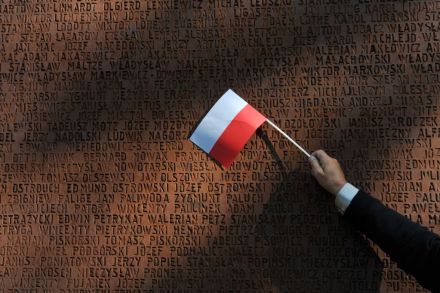
In May 1942, Agent Zo was in the home stretch after a long and risky mission that had placed her in Berlin, at the heart of Nazi Germany. As usual, she picked up a small stone and threw it at the second-floor window of her sister’s apartment in a grimy industrial city in occupied Poland, south of Warsaw. But no one in the flat turned on a light, the agreed signal. She threw another. Nothing happened. With a mounting sense of unease, she knocked at the door of a first-floor apartment, and a pallid face appeared. The terrified neighbor told her that the Gestapo had appeared two days ago and arrested the occupants. “Get away, by God. They are here!” she urged.

Zo

The Regime is bad eastern European pastiche

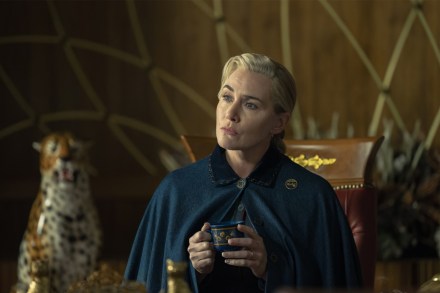
When you tire of trying to find the humor in The Regime, HBO’s new satire set in an unnamed “middle European” country, you can keep yourself occupied by trying to identify all of the historical references. The series was shot in Austria and the interiors have a dilapidated imperial feel, so perhaps we’re meant to think of one of the Visegrád countries — Czechia, Slovakia, Poland and Hungary — that inherited the heartlands of the Habsburg monarchy. The government, however, is led by a capricious and occasionally brutal authoritarian. Alexander Lukashenko of Belarus, often called Europe’s last dictator, immediately comes to mind. Chancellor Elena Vernham, played by Kate Winslet, is said to have studied medicine in Paris.

regime

Poland and Hungary learn different lessons from history

For decades, the European Union was dominated by a combination of French élan and German economic clout. By the late 2010s, a conservative Budapest-Warsaw alliance seemed poised to challenge this arrangement. The ideological firepower was supplied by Hungarian prime minister Viktor Orbán, who emerged as an unlikely spokesman for the international right, while Poland’s booming economy and large population lent the partnership some much needed heft. The Polish elections in mid-October not only marked the end of the Law and Justice party’s near-decade of conservative rule; they offered another blow to a Polish-Hungarian relationship already fraying over the war in Ukraine.

poland

The Polish miracle

Poland’s Third Republic entered the world in 1989, after a dark period of occupation and oppression at the hands first of the Nazis and then the Soviets. As democracy was taking its first tentative steps in Warsaw, the USSR still had two years left to live and Germany was not yet unified. Yet somehow, over the next thirty-four years, Poland went from a poor post-communist state to a rapidly rising economic powerhouse and serious geopolitical force. Nothing about this rise was inevitable. Human agency, unforeseen events and providence play into every historical development — and Poland’s remarkable progress is no exception. It took leadership, will and luck. A central desire of the Polish people since long before 1989 has been to become a part of the West’s vision of Europe.

poland

Why the US shouldn’t underestimate Poland as an ally

Polish Prime Minister Mateusz Morawiecki is finishing up his three-day trip to the United States on Thursday, almost two months after President Biden’s trip to Poland. The visit is a good opportunity to showcase the solidity of the US-Poland alliance, which, as Morawiecki said, is “an absolute foundation of our [Poland’s] security.” The Poles are truly enamored with the United States, with 91 percent of the populace viewing the US positively. Contrast that with the United Kingdom at 64 percent, and the scale of Poland’s affinity for America becomes clear. Warsaw also has one of the highest levels of confidence in American reliability as a partner at 86 percent, more than any other European country except for the Netherlands.

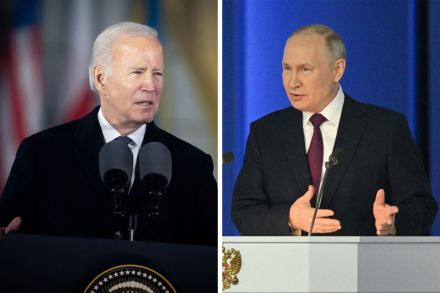
The contrast between Biden’s and Putin’s speeches

The contrast between the two presidents could hardly be starker. One is dwelling in his own dream palace, indulging fantasies about a return to superpower status while transforming his dismal fiefdom into a larger North Korea. The other is on a roll, creating a new grand alliance to prevent his foe from claiming suzerainty over Ukraine and engaging in further territorial predation. In his state of the nation address on Tuesday, Vladimir Putin served up his usual nauseating soup of anti-Western conspiracy theories, complete with references to Ukraine’s “neo-Nazi regime” and a Western “totalitarian” mission. If anyone knows anything about totalitarian impulses, it’s Putin himself.

leader loser

What the US can do about Germany’s hardball on Ukraine

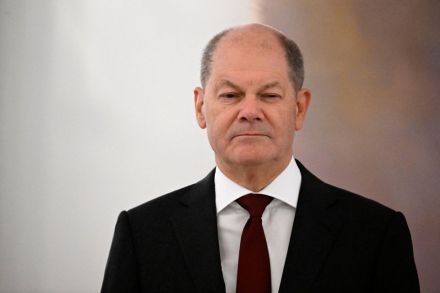
Once again, German Chancellor Olaf Scholz has crushed the hopes of NATO allies and, most of all, the millions of Ukrainians suffering under Russia’s assault. Originally, he refused to send tanks to Ukraine for fear that Russia would escalate the war. More recently, Scholz has said he'd only consider sending tanks if it was part of a coalition, not just Germany acting alone. Last week, the United Kingdom announced it would be sending Challenger 2 main battle tanks (MBT) to Ukraine, making it the first nation to supply modern, Western MBTs to Kyiv. Poland, Finland, and Denmark have also indicated that they would be willing to send their own Leopard 2 tanks. Those are German-origin weapons, so they first require a nod of approval from Berlin in order to export.

Poland is Europe’s next great military power

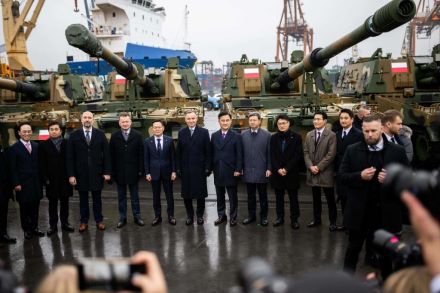
As Russia’s war in Ukraine rages into its eleventh month, there is one country that can truly be said to have learned its lesson: Poland. By the mid-2030s, when the majority of its equipment purchases have been delivered, Warsaw will command one of the most modern, well-equipped armies in Europe. It’s not cheap, but Poland is taking decisive action to be able to face the threats of tomorrow. Poland's $20.5 billion 2023 defense budget is a huge increase over the previous year, and is over 3 percent of gross domestic product (well above the NATO-suggested 2 percent). Aside from equipment, this money will be used to help expand the manpower that Poland can bring to bear, upping its active-duty forces from 140,000 to 300,000 troops.

The West should follow Eastern Europe’s lead on foreign policy

Few countries know Russia’s brutal imperialism better than Poland and the Baltic states. These nations are among a handful in the West to have responded to Putin’s invasion of Ukraine with the decisiveness and clarity of vision that the security environment demands. This is why the United States, as it faces a dual threat of China and Russia, should look to Eastern Europe for inspiration. Poland has undergone the most dramatic transformation of the bunch, increasing its defense budget and boosting the size of its military, in addition to supplying Ukraine with a vast array of materiel. Warsaw has pledged to raise defense spending to 3 percent of gross domestic product (GDP) within a year, up from 2.2 percent, which will be nearly on par with the United States.

NATO acquits itself well in the Poland missile crisis

Mid-afternoon Tuesday, a missile struck the town of Przewodow in eastern Poland close to the Ukrainian border, killing two. The incident immediately set off alarm bells around NATO and the world, as Poland, a member of the military alliance, could invoke Article 5 of the North Atlantic Treaty, bringing all 30 members to its defense. The Polish government is considering invoking Article 4 of the treaty, which allows any member state to call a meeting of all members to discern if "territorial integrity, political independence or security… is threatened." NATO was due to meet on Wednesday anyway, but the tragedy in Poland has superseded the gathering’s planned lineup.

How many refugees can Eastern Europe take?

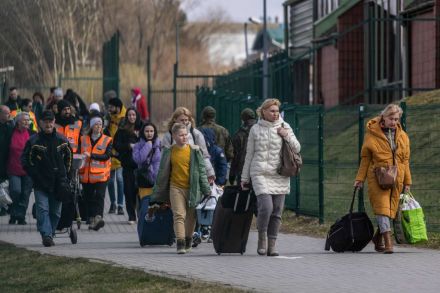
Hundreds of thousands of Ukrainian refugees have already streamed into Slovakia, Hungary and the Czech Republic. Head north to Poland, and the numbers go from the unprecedented to the jaw-dropping: two and a half million refugees have entered the country with a total population of 38 million since the war in Ukraine began. In the Czech Republic, where I live, official estimates put the current number of refugees at over 300,000, a figure expected to rise to between 500,000 and 600,000 in the coming months. In a country of less than eleven million, that’s five percent of the population. In Poland, a proportion closer to ten percent is possible. At the moment, most of the Czech Republic’s refugees are concentrated in Prague.

Has Biden lost his mind on Ukraine?

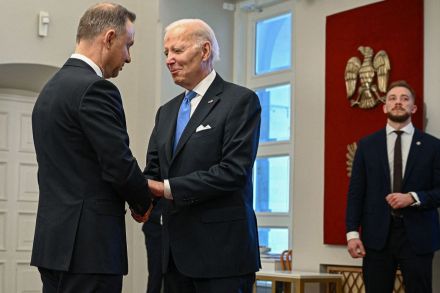
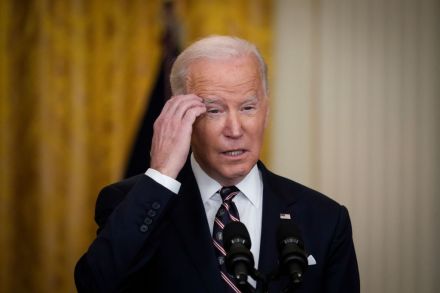
Has Joe Biden gone loco over Ukraine? In Warsaw, Biden proclaimed of Russian president Vladimir Putin, “For God’s sake, this man cannot remain in power.” Biden also called Putin a "butcher." Then, in a meeting with the Polish president, Biden said the US regards NATO’s Article 5 as a “sacred commitment.” Biden called Warsaw a “sacred place” in the history of Europe and in “humankind’s unending search for freedom.” Biden went on to describe the conflict in Ukraine as "a battle between democracy and autocracy, between liberty and repression, between a rules-based order and one governed by brute force.

biden ukraine
biden

Biden’s ad-libs are making the world less safe

Joe Biden, by his own admission, is a man who sometimes goes off script. Whereas some presidents seek to bottle up their emotions and remain reserved for the cameras, Biden wears his emotions on his sleeves. The president proved that yet again during his visit to Poland over the weekend, where he let loose on Russian president Vladimir Putin at the conclusion of a speech: “For God’s sake, this man cannot remain in power.” Many in the West would privately agree with Biden’s assessment.

regime change

Why Biden’s slip-up is so revealing

The White House might have issued the fastest correction of a sitting US president’s remarks in history this weekend. But it doesn’t matter one bit. The bottom line is Joe Biden — and most of the civilized world — wants to see Vladimir Putin out of power in Russia. More to the point: they want to see his regime changed and him most likely Gaddafi'd for his sins. And, to be frank, who can blame them? There is just one problem: getting rid of Vlad means World War Three. And I can tell you from gaming out such a conflict countless times in simulators, such a conflict leaves tens of millions of people dead. But let’s step back for a moment. I'm going to cut the president a little bit slack for saying out loud what we are all thinking.

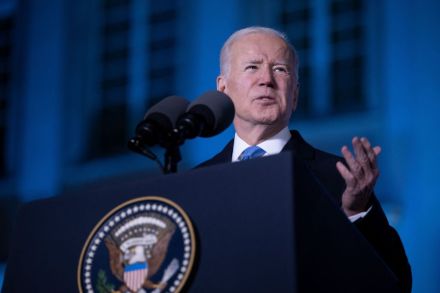
Biden’s Warsaw speech was both baffling and moving

Poland “Biden fell asleep.” Perhaps a thousand jokesters posted this and similar jibes in the livestream comments as we waited for the president to speak from Warsaw. Thousands of Poles, and doubtless many Ukrainian refugees, were gathered around the Royal Castle in the center of the Polish capital to wait. Biden trotted out — old but amiable and very much awake. In fact, after spending two days meeting refugees, Ukrainian representatives and Polish politicians, he looked surprisingly sprightly. God help me for saying this but I have a soft spot for the president.

warsaw

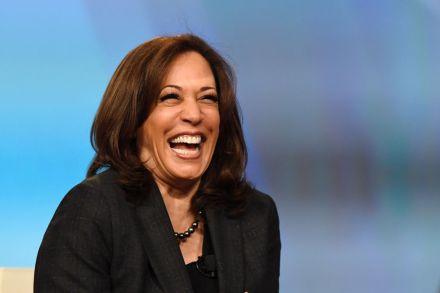
Kamala Harris laughs at a war

It’s nice to be prescient. On Thursday, in a column titled “Kamala Invades Poland,” I introduced the world to “cackle diplomacy.” “Silly partisan hyperbole!” I nearly heard as the social media-ites had their say. But then the vice president of the United States did me proud. Just a few hours after my column posted, there she was, holding a press conference with Polish President Andrzej Duda. Some say the people who run our government sent Kamala Harris to Eastern Europe in order to give her a chance to shine in the sphere of international relations. Watch her performance and tell me what you think. “I am here, standing here. On the northern flank...on the eastern flank...talking about what we what we have in terms of the eastern flank and our NATO allies.