Piano

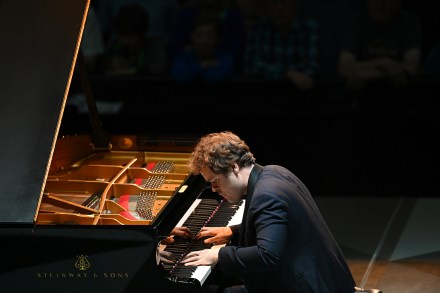
Fresh, original Mozart

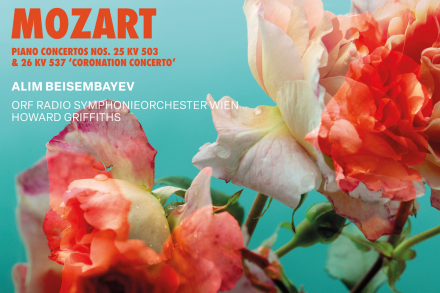
It’s spring in Vienna; well, OK, it’s early summer but it’s a gray day when Mozart doesn’t make you feel younger and I reckon this new release from Alim Beisembayev will do just that. In a world of infinite entertainment possibilities, Beisembayev has done the hard bit – the choosing – for you. Here we have two late piano concertos (Mozart wrote them between the ages of 30 and 32, as his own solo career wound down) charged with a grandeur, a playfulness and an endless smiling compassion that will come as a glorious corrective to anyone whose last experience of Mozart involved bodily fluids and confectionery in Sky’s hellish remake of Amadeus.

mozart

Fresh, original Mozart

Grade: A It’s spring in Vienna; well, OK, it’s early summer but it’s a grey day when Mozart doesn’t make you feel younger and I reckon this new release from Alim Beisembayev will do just that. In a world of infinite entertainment possibilities, Beisembayev has done the hard bit – the choosing – for you. Here we have two late piano concertos (Mozart wrote them between the ages of 30 and 32, as his own solo career wound down) charged with a grandeur, a playfulness and an endless smiling compassion that will come as a glorious corrective to anyone whose last experience of Mozart involved bodily fluids and confectionery in Sky’s hellish remake of Amadeus.

The magic ears of Hyperion

From our UK edition

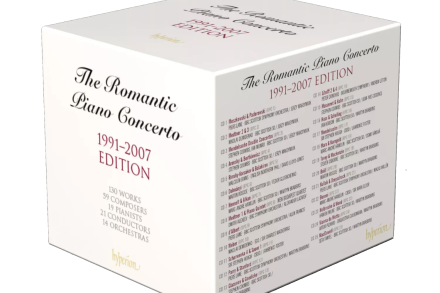
How do we evaluate Hyperion’s Romantic Piano Concerto series, which over a period of 35 years recorded more than 200 works for piano and orchestra? Was it one of the glories of the catalogue or a repository of works whose ambitions exceeded their achievement? The answer, of course, is that it was both. The paradox is unavoidable. You can’t assemble a giant collection of mostly forgotten concertos on the assumption that they all deserve to be famous – which, to be fair, Hyperion doesn’t claim: the liner notes often concede that a piece ‘perhaps understandably failed to secure a place in the repertoire’ or some such euphemism. But they may deserve to be recorded. Keyboard pyrotechnics can be their own reward, compensating for vapid melodies or structural lumps.

Why the Goldberg Variations fill me with dread

From our UK edition

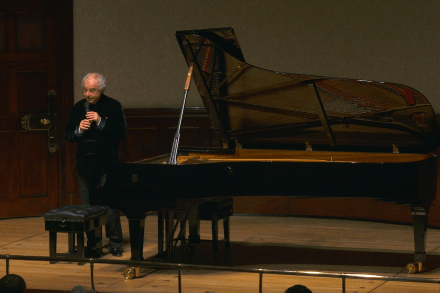
Is Sir Andras Schiff becoming the Ken Dodd of the piano? In his later years, you’ll recall, the Yorick of Knotty Ash took to delivering marathon one-man routines that finished long after midnight. A couple of years back, Schiff expressed a similar wish: why should he have to tell us in advance what he was going to perform? And fair enough, because even with no advertised programme, the Wigmore Hall was sold out. Clearly, a lot of people will gladly pay to hear Schiff play anything at all, and part of me hoped he’d launch into Chopsticks or Richard Clayderman’s Ballade pour Adeline. But no, Schiff had a far crueller joke up his sleeve. He walked out without a word and began the ‘Aria’ from Bach’s Goldberg Variations. A purr of happy recognition ran through the room.

My addiction to playing the piano is driving everyone mad

From time to time, I’ve given some famous pianists a bit of a kicking in the arts pages of this magazine. You may be a Bach specialist, but that’s no excuse for sleepwalking through all six keyboard partitas in a marathon recital. Your Beethoven Diabelli Variations may be renowned, but don’t expect a rave review if you trap me in an intimate concert venue while you pound the keys like a pneumatic drill. You’d think, though, that a journalist who snipes at world-class soloists would have the sense to keep his own amateur playing to himself. And if he’s idiot enough to post a recording on social media, he should learn to take what he dishes out. Alas, I never learn. The older I get, the more addicted I become to playing an instrument that I have no hope of mastering.

The Neapolitan Horowitz

From our UK edition

‘You play Bach your way, and I’ll play it his way.’ That remark by the Polish harpsichordist Wanda Landowska is often described as an ‘infamous put-down’, but it was really just a playful quip directed at Pablo Casals after they disagreed about trills. Anyway, the line has been running through my head all week because I’ve been listening to a recording of the Goldberg Variations – Wandowska’s signature piece – by a pianist who was quite determined to play them her way, not Bach’s. Maria Tipo was born in 1931 and died last year – the same dates as Alfred Brendel, though it’s hard to think of two pianists with less in common. In her heyday she was promoted as ‘the Neapolitan Horowitz’.

Why piano competitions strike a controversial note

From our UK edition

The USA’s Eric Lu has beaten more than 600 other pianists to win the 19th International Chopin Piano Competition. Held every five years in Warsaw around the anniversary of the Polish composer’s death on 17 October, this is one of several piano tournaments that often launch major careers, along with Moscow’s Tchaikovsky Competition, the Van Cliburn in Texas and the Leeds International. Unlike any of those, however, the Chopin competition requires contestants to perform the music of just one composer. Lu, 27, didn’t exactly need this win. He took first prize at the Leeds International in 2018 and has already released two records on the Warner Classics label. After his victory in Warsaw, he will take home a cash prize of €60,000 (£52,000).

Alfred Brendel was peerless – but he wasn’t universally loved

From our UK edition

In middle age Alfred Brendel looked disconcertingly like Eric Morecambe – but, unlike the comedian in his legendary encounter with André Previn, he played all the right notes in the right order. OK, so perhaps I’m selling the maestro a bit short: I do think Brendel, who died on 17 June at the age of 94, was a peerless interpreter of the Austro-German repertoire, and for a time in the 1970s had a better claim than any other pianist to ‘own’ the Beethoven and late Schubert piano sonatas. But some of the media tributes have been embarrassingly uncritical, implying that Brendel was universally loved. He wasn’t, and he didn’t want to be.

Astonishing ‘lost tapes’ from a piano great

From our UK edition

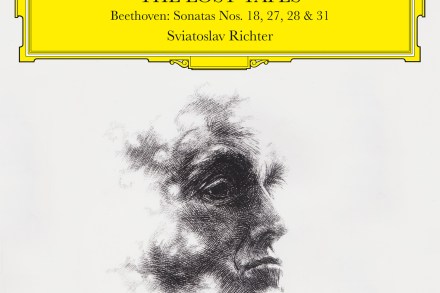
These days the heart sinks when Deutsche Grammophon announces its new releases. I still shudder at the memory of Lang Lang’s 2024 French album, in which he drooled over Ravel’s Pavane pour une infante défunte; when I reviewed it I suggested that if the poor girl wasn’t dead when he started, then she certainly was by the time he’d finished. Now she’s been killed again, this time by the guitarist Robin Scherpen, whose Ravel Reimagined offers us ‘a peaceful and serene soundscape’. Then there’s Rêverie from Nemo Filou, a trio whose cocktail-lounge noodling allows ‘the listener to drift off into bliss’, and Sleep Circle, a ‘re-recorded version of the 2012 project Sleep’ by DG’s in-house snoozemeister Max Richter.

The filthy side of Dame Myra Hess

From our UK edition

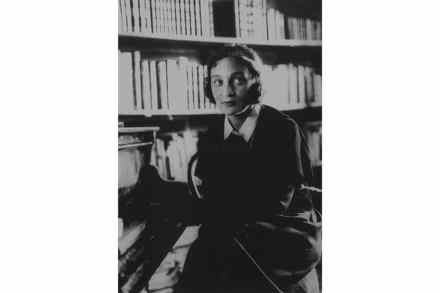
The photograph on the cover of Jessica Duchen’s magnificent new biography of Dame Myra Hess shows a statuesque lady sitting at the keyboard, hair swept back into the neatest of buns. Add a pair of half-moon spectacles and she could be Dr Evadne Hinge, accompanist to Dame Hilda Bracket. This isn’t to imply that Dame Myra looked like a man in drag, but then neither did the ‘Dear Ladies’ played by George Logan and Patrick Fyffe, some of whose fans thought the singing spinsters actually were women. In their 1980s heyday Hinge and Bracket were national treasures – and so, on a far grander scale, was Dame Myra, who lifted Londoners’ spirits with her National Gallery concerts during the second world war.

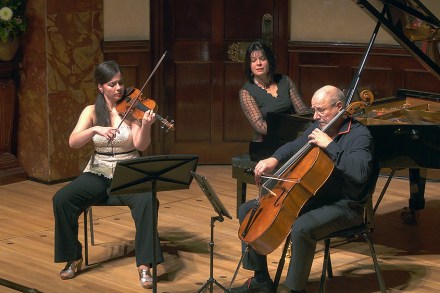
The stupidity of the classical piano trio

From our UK edition

It’s a right mess, the classical piano trio; the unintended consequence of one of musical history’s more frustrating twists. When the trio first evolved, in the age of Haydn, the piano (or at any rate, its frail domestic forebear) was the junior partner, and the two string instruments, violin and cello, were added to make the silly thing audible. Then the piano started to evolve, while its partners – give or take the odd tweak – really didn’t, much. The end result, by the second half of the 19th century, completely reversed the original balance of power, leaving the two string instruments thrashing for dear life against the onslaught of that glossy, black, all-devouring monster, the modern concert grand.

Dazzling: Marc-André Hamelin’s Hammerklavier

From our UK edition

Grade: A When Beethoven’s Hammerklavier Sonata was published in 1818, pianists were confronted with a mixture of ‘demonic energy and a torrent of dissonances’, as Charles Rosen put it. Only the most freakishly gifted virtuosos could tackle it. The first recording was by Artur Schnabel, whose heroic assault on the finale sent wrong notes scattering in all directions. Today, technique has improved so dramatically that most students can steer Beethoven’s juggernaut without obvious mishaps. Even so, some great masters wait decades before taking the plunge. In this sonata above all, getting the notes in the right order is no guarantee that you have anything to say. Marc-André Hamelin is now in his early 60s, which might seem to be pushing his luck. Not a bit of it.

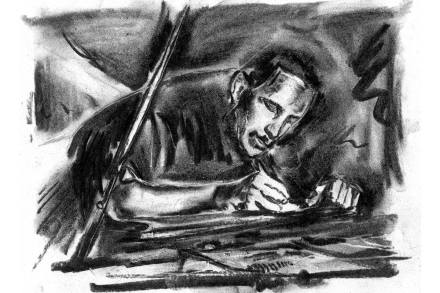
Bud Powell should be a household name

Late one January night in 1945, a young black man stumbled drunkenly toward Broad Street Station in Philadelphia. He was exhausted after playing a long set in a grotty club half a mile away. The naturally nervous musician often used alcohol to settle his unbearable over-excitements and debilitating despairs. On this occasion he had one too many. His awkward gait caught the attention of two policemen. They went to shoo him away, but instead of escorting him peacefully along, something about the twenty-year-old vexed the pair and they began to bash him about the head repeatedly with their truncheons. When the seriousness of his injuries became apparent, after he’d been slung into a frozen cell, he was taken to a hospital to recuperate.

Powell

Thank goodness Busoni’s Piano Concerto is returning to the Proms

From our UK edition

On 5 August, Ferruccio Busoni’s Piano Concerto will be performed at the Proms for only the second time. It should have been the third time, but a Musician’s Union strike in 1980 forced the cancellation of the concert at which Martin Jones had been booked to give the première. Jones is a fearless virtuoso, still recording in his eighties, but one can’t help wondering whether his disappointment back then was tinged with relief. In one place, the soloist’s fingers must wrap themselves around 128 notes in a single bar Garrick Ohlsson, a long-time champion of the work, describes its difficulties as ‘absolutely immense, and 25 per cent of this piece is the most cruelly difficult writing in any piano concerto’.

Yunchan Lim’s Chopin isn’t as good as his Liszt or Rach

From our UK edition

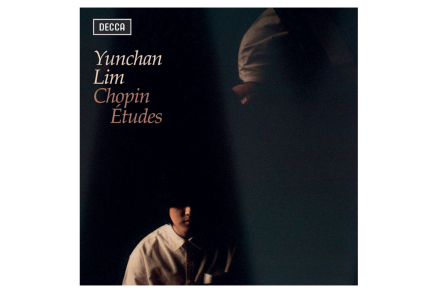
Grade: B- In 2022 the South Korean pianist Yunchan Lim became, at 18, the youngest winner of the Van Cliburn competition, displaying a virtuosity that stunned the judges. You could see conductor Marin Alsop’s astonishment as he bounded through the finale of Rach 3, combining accuracy and swirling fantasy at daredevil speed. It’s been viewed nearly 15 million times on YouTube. In truth, though, he’d have had to screw up badly not to win, because he’d already dispatched Liszt’s fiendish Transcendental Études with perfect articulation and mercurial wit; in places he out-dazzled even the current master of this repertoire, Daniil Trifonov. Decca snapped him up and here’s his first studio album: both sets of Chopin’s Études.

The greatest female composer you’ve never heard of

From our UK edition

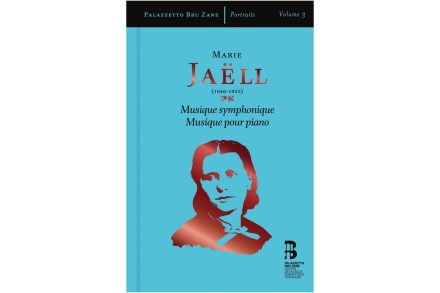
One of the most intriguing piano concertos of the late 19th century is unknown to the public – and no wonder: so far as I can work out, it has only been recorded once, on a speciality label devoted to neglected French repertoire. As I write this, there are only 11 copies available from Amazon and I recommend that you grab one quickly, because the Second Piano Concerto of Marie Jaëll (1846-1925) demands repeated listening. If you want proof women of the era could move beyond well-carpentered clichés, listen to Marie Jaëll The concerto’s harmonic language is superficially conventional: sweeping tunes decorated by arm-swinging arpeggios.

Musings on harmony, melody and rhythm

From our UK edition

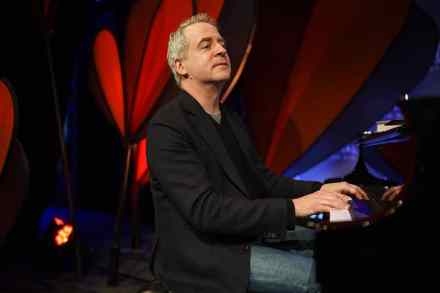
Every Good Boy Does Fine – a banal phrase that also just happens to be the key to limitless wonder. You may have learned it, like Tom Stoppard, as Every Good Boy Deserves Favour, or perhaps as the rather more tension-fraught Every Good Boy Deserves Food (whose sinister implication haunted more of my childhood than I ever confessed to my parents). Whichever it is, this mnemonic for the notes that fall on the lines of the stave in the treble clef is where music begins for most of us: the key that turns hieroglyphs into sound and, eventually, meaning. So it was for Jeremy Denk.

The musical note that can trigger cold sweats and sightings of the dead

From our UK edition

Imagine that all the frequencies nature affords were laid out on an extended piano keyboard. Never mind that some waves are mechanical, propagated through air or some other fluid, and other waves are electro-magnetic and can pass through a vacuum. Lay them down together, and what do you get? The startling answer is a surprisingly narrow piano. To play X-rays (whose waves cycle up to 30,000,000,000,000,000,000 times per second), our pianist would have to travel a mere nine metres to the right of middle C. Wandering nine and a half metres in the other direction, our pianist would then be able to sound the super-bass note generated by shockwaves rippling through the hot gas around a supermassive black hole in the Perseus cluster – a wave that cycles just once every 18.

Playing until her fingers bled: the dedication of the pianist Maria Yudina

From our UK edition

The 20th century was an amazing time for Russian pianists, and the worse things got, politically and militarily, the more great pianists thrived, despite the extreme danger and discomfort in which they lived and in which some of them died. If we think immediately of Richter, the greatest of them all, and Gilels, there are at least 20 more that we could add without exaggeration. One of the most important was without question Maria Yudina, born in 1899, who astonishingly survived until 1970. She was not just a sovereign artist but an eccentric of the kind and degree that only Russia seems able and willing to supply.

The best recordings of the Goldberg Variations

From our UK edition

I sometimes think the classical record industry would collapse if it weren’t for the Goldberg Variations. Every month brings more recordings of Bach’s monumental, compact and rhapsodic keyboard masterpiece. And that’s impressive, given that nowhere else does the composer demand such sustained technical brilliance from the performer, who must execute dizzying scales and trills that wouldn’t sound out of place in one of Liszt’s fantasies. If the Goldberg Variations are an ordeal for harpsichordists, they’re a bloody nightmare for pianists, because they have to tackle music written for two manuals on just one. Their fingers tumble perilously over each other; it looks a bit like high-speed knitting.