

‘You play Bach your way, and I’ll play it his way.’ That remark by the Polish harpsichordist Wanda Landowska is often described as an ‘infamous put-down’, but it was really just a playful quip directed at Pablo Casals after they disagreed about trills. Anyway, the line has been running through my head all week because I’ve been listening to a recording of the Goldberg Variations – Wandowska’s signature piece – by a pianist who was quite determined to play them her way, not Bach’s.
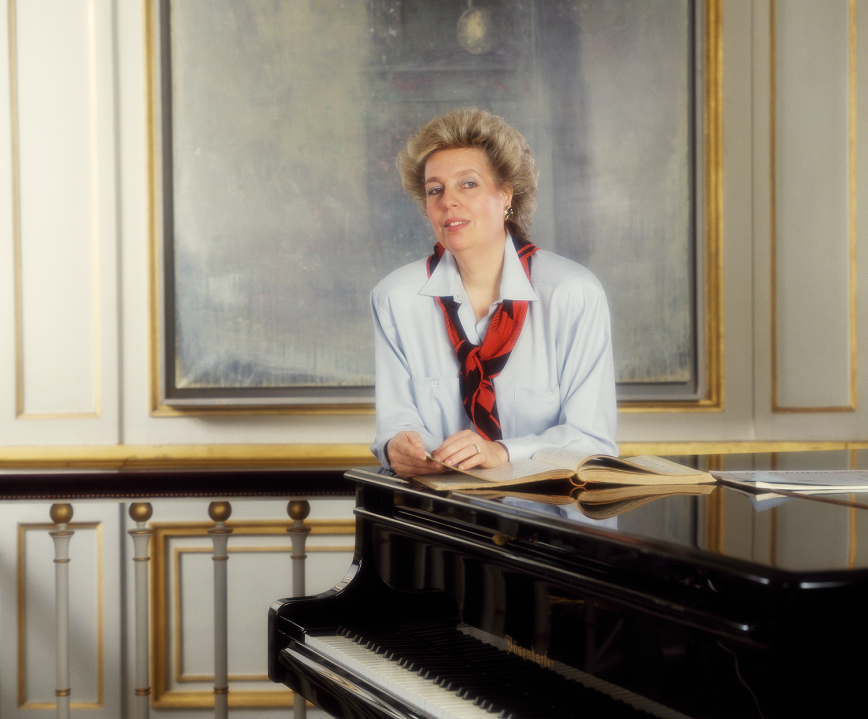
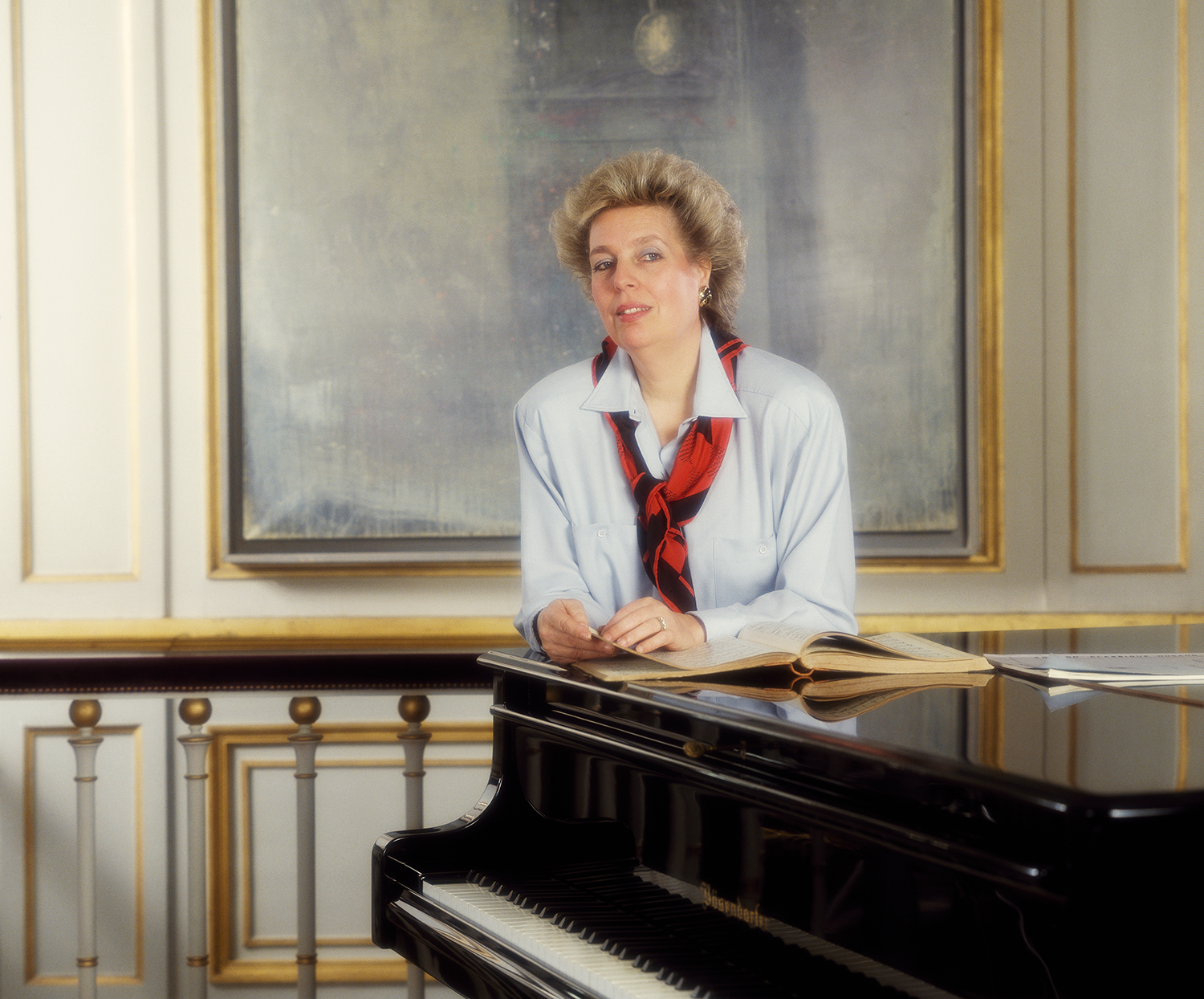
Maria Tipo was born in 1931 and died last year – the same dates as Alfred Brendel, though it’s hard to think of two pianists with less in common. In her heyday she was promoted as ‘the Neapolitan Horowitz’. That wasn’t quite so wide of the mark, since both artists were celebrated for their quicksilver virtuosity, but the truth is that nobody in recorded history sounded like Tipo. And if that strikes you as a back-handed compliment, well, she had only herself to blame.
Nobody in recorded history sounded like Maria Tipo
In January 1955 the New York Times critic Harold Schonberg reported that a ‘blonde, sultry-looking 24-year-old Italian pianist’ had startled a Town Hall audience with the clarity and vivacity of her playing. In 1991 he wrote a profile of her in advance of her first New York solo recital for 32 years. He wondered what had kept her away. Tipo talked vaguely of wanting to concentrate on her European career and Schonberg didn’t press the point. ‘When she makes up her mind, her chin juts forward, steel comes into her eyes, and she is immovable. Period. Subject closed.’
Perhaps it had something to do with the snootiness of American critics. Tipo’s 1986 Goldbergs were dismissed as a gloopy anachronism on one side of the pond while winning the Diapason d’or on the other. But then she was a puzzling artist. She could certainly sound old-fashioned. I first encountered her in some Bach-Busoni transcriptions that slipped down as smoothly as tiramisu. Then I was blown away by a disc of Scarlatti sonatas whose fingerwork – flawlessly transparent at the speed of light – was unsurpassed by any of her rivals, including Horowitz.
Tipo’s Scarlatti, wrote Schonberg, was ‘very un-Horowitzian’. Her clean, détaché fingering created ‘a bracing rhythmic vitality far removed from the fluctuations of tempo that were the Horowitz trademark.’ That makes Tipo’s approach sound modern, so why the reputation for anachronism? The answer lies in her phenomenal but idiosyncratic control of dynamics: perfect for her fellow Neapolitan Scarlatti but not so well suited to the master of Leipzig.
Scarlatti’s sonatas offer us a lopsided, relentlessly surprising universe in a grain of sand. It’s a paradox that music written for an instrument with fixed dynamics acquires such explanatory power when subjected to tricks of texture on a concert grand. And no one mastered more of those tricks than Maria Tipo, though she preferred to conjure with volume rather than tempo.
You’d think that Tipo’s knack of bringing out inner voices would pay similar dividends in Bach’s Goldberg Variations. The problem is that she applies it unsystematically, which is fatal when you’re grappling with the ultimate masterpiece of musical symmetry. In places the sforzandi rain down randomly while those inner voices play peek-a-boo – and this, together with her habit of omitting second-half repeats, infects some variations with the spirit of Scarlatti. Others are strung together as loosely (and pedalled as generously) as Beethoven bagatelles; the ‘Black Pearl’ could almost be a Chopin nocturne.
And yet… I’d rather hear the miscalculations of an inspired maverick than another disc of pyrotechnics from the competition circuit. To mark the anniversary of her death, Warner is issuing a boxed set of Tipo’s Erato recordings. If you still play CDs I’d advise snapping it up, if only because streaming services have uploaded a mangled copy of her exhilarating Beethoven Piano Sonata Op. 109 and I don’t trust them to fix it.
As you’d expect, it’s a mixed legacy. There are lots of piano sonatas by Clementi that, shall we say, make the best possible case for the music. There are also Mozart concertos with the Vienna Symphony Orchestra in which Tipo employs all manner of quirky devices in an attempt to jump-start the accompaniment. Luckily she succeeds and they end up as a joyous affairs with, inevitably,
idiosyncratic cadenzas.
We won’t hear the likes of Maria Tipo again. Whether you think that’s a good or a bad thing is a matter of taste – though surely only the most purse-lipped purists could fail to respond to her Scarlatti. Personally I’m delighted to have the opportunity to dip into the discography of an artist who never failed to discover unanticipated beauties in a score – even, or perhaps especially, if they weren’t there in the first place.
Maria Tipo: The Complete Warner Classics Recordings is out on 6 February.



Comments