Philosophy

Plato, Socrates and Glaucon’s Fate

The astronomer Nicolaus Copernicus studied Plato’s writings in the original Greek, and found in him a kindred spirit. In his main work, On the Revolutions of the Heavenly Spheres, Copernicus draws on what the philologist František Novotný describes as Plato’s ‘metaphysical heliocentric argument from the Republic’ — his characterization of the sun as the god and ruler of the visible sphere and image of the Good, the unifying source and highest principle of reality.

plato glaucon

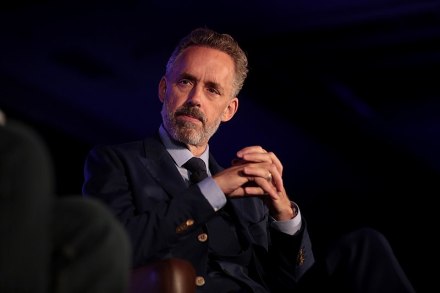
Has Jordan Peterson lost his spark?

From our UK edition

For the poor souls who paid to live-stream the Jordan Peterson and Slavoj Žižek debate, the $15 ticket price must now seem like an act of grand larceny. In what was rather cringingly billed as the ‘debate of the century’—premature in 2019, if nothing else—the psychologist and bestselling author of 12 Rules for Lifeshared a stage in Toronto with the world’s most idiosyncratic philosopher and critic. The topic was ‘Happiness: Capitalism vs. Marxism’. Of course, neither Peterson nor Žižek are strangers to crowds.

A moral hypochondriac

From our UK edition

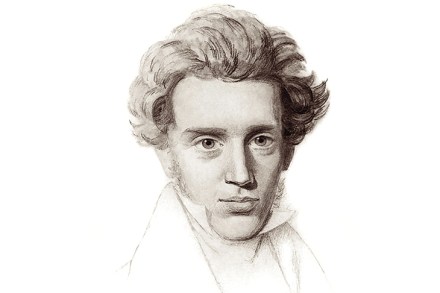
Surely God, if He existed, would find a major source of entertainment down the ages in the activities of theologians, reaching their climax perhaps in the 19th century, when they involved Him with German idealism, and then the descent from that to the present day, when the sheer naivete of anyone who thinks that God is ‘out there’ or actually exists, in some sense we can understand, provokes genial and condescending ridicule from the professionals. Central to the development of thought about Christianity is the work of the melancholy Dane Søren Kierkegaard, who in the course of his short life — he died, aged 42, in 1855 — wrote more books and notebooks than many of us succeed in reading in a longer lifetime.

What’s wrong with ā€˜cultural Marxism’?

It’s cultural Marxism week at Spectator USA. The dialectic of Enlightenment, prodded by the Angel of History, has forced us to confront the false consciousness of late capitalism and to choose between Eros and Civilization, socialism and fascism. Yay! If that sounds like drivel, it’s because it is. The meaningless bits in the previous paragraph are meaningful phrases in the mad Marxist dreamland of laugh-a-minute lefties Herbert Marcuse, Walter Benjamin, Erich Fromm, Theodore Adorno, and that other one that Adorno wrote The Dialectic of Enlightenment with.

cultural marxism jordan peterson

How character counts with Donald Trump

Whatever my differences with Jonah Goldberg, I appreciate his taste in thinkers. He enlists serious sources, both ancient and modern, to buttress his arguments. In a recent syndicated column criticizing President Trump’s character, he drew on the wisdom of one of the classical world’s pre-eminent minds, the pre-Socratic philosopher Heraclitus, who said, ‘man’s character is his fate.’ To Goldberg, this means Trump is certain to fail as a president.

character

‘The Green Room’ Podcast from Spectator USA: the virtue of nationalism, with philosopher Yoram Hazony

From our UK edition

‘Patriotism is the exact opposite of nationalism,’ French president Emmanuel Macron said at last weekend’s Armistice Day ceremonies. ‘Nationalism is a betrayal of patriotism. In saying ‘our interests first, whatever happens to the others,’ you erase the most precious thing a nation can have, that which makes it live, that which causes it to be great and that which is most important: its moral values.’ You’d have to be a philosopher to make sense of that. My guest this week on The Green Room, Spectator USA’s Life & Arts podcast, is one: I’m casting the pod with the Israeli philosopher Yoram Hazony, an expert on the philosophies of both religion and politics.

Searching for God in the twilight

From our UK edition

My friend Jonathan Gaisman recently gave rise to a profound philosophical question concerning wine. Jonathan is formidably clever. He has a tremendous reputation at the Commercial Bar. Although he brushes aside any compliments from the unqualified, there was a recent case — Excalibur — where his performance won the awed approval of lawyers to whom even he might concede quasi-peer status. They aver that his preparation was exemplary, his cross-examination ruthless and relentless; his triumph total. That said, he is anything but a monoglot lawyer. Not only a music lover but a musicologist, modesty alone would prevent him from claiming that Nihil artium a me alienum. Among the minor arts, he is a practised oenologist.

Life ā€˜n’ Arts Podcast: Knight of the Living Philosophers

From our UK edition

In this week’s Spectator USA Life ‘n’ Arts podcast, I’m casting the pod with Sir Roger Scruton, the knight of the living philosophers. Of course, Scruton is more than a philosopher. He has written widely and well on subjects as various as wine and Wagner, fox-hunting and free trade, and he has three new books out this month. The philosopher has Conservatism: An Invitation to the Great Tradition. The musician — there are two pianos at hand in Scruton’s study — has an essay collection, Music as an Art. And the fiction writer has his second collection of short stories, Souls in the Twilight.

The soldier savant

From our UK edition

Descartes is most generally known these days for being the guy who was sure he existed because he was thinking. But before he devoted himself to metaphysical meditations, he had spent a decade as a soldier-scholar travelling the hotspots of Europe. How might a greater understanding of this period affect our view of the great man? This is a fascinating if dry kind of pre-intellectual biography, which hopes to hint at how the philosophy grew out of the action. René Descartes was born to a family of minor nobility in 1596, and educated by Jesuits. He studied some mathematics in Paris and then acquired a degree in law, after which he ‘set out to study the art of war’.

Snowy days in Saratoga Springs

From our UK edition

Alan Querry, the central figure in James Wood’s second novel, is someone who, in his own words, doesn’t ‘think about life too much’. His peculiar surname may recall the brooding, godforsaken Querry of Graham Greene’s A Burnt-Out Case, but this Querry — who lives in ‘the poshest part of Northumberland’ — isn’t much troubled by God’s presence or absence: ‘he had a notion that “the question of God” might all have been more or less sorted out in his lifetime, like Cyprus or polio.’ Called upon to visit his daughter Vanessa in upstate New York, Alan stops along the way to meet his younger daughter, Helen, and they make the journey together to snowy Saratoga Springs.

A time for reflection | 8 March 2018

From our UK edition

The precarious stasis of late pregnancy offers the narrator of Jessie Greengrass’s exceptional first novel a space — albeit an uncomfortable one — for reflection. She sifts through her own immediate and past experience: caring for her dying mother in her early twenties; her relationship with her partner Johannes; her childhood; the birth of her first child. This fragmented narrative is intercut with the stories of Wilhelm Conrad Röntgen, the inventor of the X-ray; Sigmund and Anna Freud; and the 18th-century anatomist, surgeon and empiricist John Hunter — along with other brief cameos from the history of science, from the Lumière brothers to the engraver Jan van Rymsdyk.

Help over the hump

From our UK edition

Losing our way in life’s trackless forest, whither should we turn for solace and advice? Wisdom used to be the special province of our elders, though for no better reason than that old people were less common than they are now. Aristotle had their measure: ‘As they have a lot of experience,’ he wrote, ‘they are sure about nothing, and under-do everything.’ Now the old are as common as grass, and we draw the truth about life experience as much as possible from the source. If you want to know how a child feels, ask a child. If you want a considered opinion about Muslim dress codes, stop opining into a bucket, drunk on your own echo, and ask a Muslim. There’s much virtue in this attitude, but some obvious drawbacks.

An appeal to the masses

From our UK edition

As the Tories struggle to find a policy which might appeal to their traditional supporters and not simply ape those of Jeremy Corbyn, how about a reprise of Solon’s law against idleness? In 594 bc Solon was made arkhôn in Athens to deal with a number of problems, including debt. Solon ruled, for example, that if fathers did not find a trade for their sons, their sons would not have to support them in old age; and to boost trade and jobs, encouraged foreigners to settle in Athens with their families, and facilitated Athenian commerce abroad. He also passed a law (we are told) against idleness: every year every family had to account for how they made their living, and face penalties if they could not.

Books Podcast: The art of losing control

From our UK edition

Is Enlightenment rationalism overrated? Do we spend too much time thinking and not enough time letting our conscious thoughts scatter to the winds? My guest in this week's Books Podcast is the philosopher Jules Evans, who argues that we human beings have a deep need to get out of our heads. We talk about his new book The Art of Losing Control: A Philosopher's Search for Ecstatic Experience - in which he explores everything from extreme meditation to tantric swinging parties, from the sublime in Romantic art to the latest findings in psychedelic drug use. Learn what a near-death experience feels like (Jules has had one) - and wonder, with me, why so many people on DMT report visions of mechanical elves...

When will we ever learn?

From our UK edition

In 2012, sugar became more dangerous than gunpowder. According to the historian Yuval Noah Harari, of the 56 million people who died that year, 620,000 did so by the hand of their fellow humans: 120,000 in war and 500,000 from crime. By contrast, 1.5 million died from diabetes. Harari’s wry observation adds weight to Steven Pinker’s assertion in The Better Angels of Our Nature (2011) that humans are on a trajectory towards peace and non-violence. But wars in the Middle East, Afghanistan, across the Sahel and Yemen; Russian and Chinese irredentism; nuclear threats from North Korea; Trump’s belligerency, not to mention the asymmetry of terrorism, render urgently relevant the continued study of war. In War: An Enquiry, the philosopher and ethicist A.C.

A unique literary phenomenon

From our UK edition

The Argentinian writer César Aira is a prodigy: at the age of 68 he has published, according to a ‘partial bibliography’ on Wikipedia, 67 novels (plus non-fiction, plays and translations into Spanish from four languages). It’s a record made only slightly more believable by the fact that the novels are mostly around 100 pages long. ‘Automatic writing’ is often mentioned in the books themselves (Aira supposedly doesn’t revise much, or at all). In 1992, for example, he published five novels — a personal best which he nonchalantly repeated in 2011. Certainly, he glides through — or over —his stories, with the light irony and digressive versatility of Ovid, poet of the Metamorphoses.

Books podcast: Daniel Dennett and the evolution of minds

From our UK edition

In this week's podcast I'm talking to the philosopher Daniel Dennett -- whose new book takes on one of the biggest and most intriguing problems of all: consciousness itself. In From Bacteria to Bach and Back, Prof Dennett makes the case that consciousness itself is a sort of illusion -- and that the same evolutionary mechanisms that gave us opposable thumbs can account for our ability to do maths, compose music, wonder what would have happened had Germany won the Second World War, and think about the idea of thinking. This superbly lucid explicator tells us, too, about how "post-truth" is not just a political fad, but a threat to the basis of civilisation itself. You can listen to our conversation here: And if you enjoyed that, do subscribe on iTunes for a new episode every Thursday.

Conning the connoisseurs

From our UK edition

Rogues’ Gallery describes itself as a history of art and its dealers, and Philip Hook, who has worked at the top of Sotheby’s for decades, is well versed in his subject. Sadly for the prurient, this is not an exposé of the excesses of the market from one of its high priests; and Hook says that where possible he has avoided writing about the living. It is hard not to feel a bit disappointed. For an alarming moment in the introduction, it seemed as if he was preparing to write an academic treatise about how dealers influence art and taste.

Light in the East

From our UK edition

Christopher de Bellaigue, a journalist who has spent much of his working life in the Middle East, has grown tired of people throwing up their hands in horror at Isis, Erdogan and Islamic terror, and declaring that the region is backward and in need of a thorough western-style reformation. As he argues in this timely book, the Islamic world has been coming to terms with modernity in its own often turbulent way for more than two centuries. And we’d better understand it, because it’s an interesting story, and often a positive one — the way vast crowds streamed onto the streets of Cairo, Istanbul and Tehran in demonstrations against authoritarian rule over the past decade, for example. Western-style participatory democracy remains the dream of the man and woman in the souk.

Thoughts on the human condition

From our UK edition

This past autumn has felt more uncomfortable than usual to be a woman looking at men looking at women. From Hillary Clinton’s ‘overheating’ episode (‘Does she have Parkinson’s? Is she wearing a catheter?!’) to Donald Trump’s assessment of female limbs as if they were building materials, election season finished with the male members of our new first family peering over the voting booth to check on their wives. Siri Hustvedt has long been interested in how the way we look at the world privileges certain political, gendered, artistic and scientific agendas, while excluding others. These dynamics are at play between a reader and a writer, a doctor and a patient, a neuroscientist and the brain she studies.