Philosophy

The Enneagram: a remarkably efficient way to handle a room full of people

To paraphrase Tolstoy, all happy people are alike but every unhappy person is unhappy in one of exactly nine ways. Thus contends the Enneagram, a personality-typing system popular among millennial Christians and lifestyle bloggers. Bestselling books and popular social-media accounts clarify and affirm each of the Enneagram’s nine ‘types’. There are Enneagram coaches, consultants and devotionals, and podcasts ranging from the whimsical (Say Enneathing) to the vaguely mystical (The Wisdom of the Enneagram). The Enneagram is frivolous, self-indulgent and indefensible before science or theology. But I would say that: a Type 6 is skeptical. The truth is, I love the Enneagram.

enneagram

The sinister attempts to silence gender critical academics

From our UK edition

Academic freedom is vital in a functioning and healthy democracy. But when it comes to questioning and debating ideas around gender identity and sex, many of my colleagues in academia do not appear to agree. The latest glaring example of this came last week. An open letter, signed by over 600 of my colleagues, primarily in academic philosophy, suggested I was personally responsible for ‘transphobic fearmongering’, helping to ‘restrict trans people’s access to life-saving medical treatment’, and serving ‘to encourage the harassment of gender-non-conforming people’. Their pretext was my OBE for services to higher education and academic freedom, awarded in the New Year’s Honours List.

The insidious attacks on scientific truth

From our UK edition

What is truth? You can speak of moral truths and aesthetic truths but I’m not concerned with those here, important as they may be. By truth I shall mean the kind of truth that a commission of inquiry or a jury trial is designed to establish. I hold the view that scientific truth is of this commonsense kind, although the methods of science may depart from common sense and its truths may even offend it. Commissions of inquiry may fail, but we assume a truth lurking there even if we don’t have enough evidence. Juries sometimes get it wrong and falsehoods are often sincerely believed. Scientists too can make mistakes and publish erroneous conclusions. That’s all regrettable but not deeply sinister.

What will a Biden administration do? Ask Rousseau

There is an endless stream of commentary on what a Biden administration will do in foreign and domestic policy. Some writers seem prescient, others seem like gossip and speculation. However, you need not be a Beltway policy wonk to understand the moral, spiritual and ethical outlook of the Establishment elites who will be on Biden’s staff — and therefore to know what their policy prescriptions will entail.Classical political philosophy understood that all political problems are downstream from moral and spiritual problems. And, in the 18th century, Jean-Jacques Rousseau destroyed the West’s understanding of morality and spirituality, setting the stage for our current confusions.

rousseau

Four German-speaking philosophers in search of a theme

From our UK edition

How do you write a group biography of people who never actually formed a group? Such is the challenge Wolfram Eilenberger sets himself in a book about the philosophers Martin Heidegger, Ludwig Wittgenstein, Walter Benjamin and — the surprisingly unstarry fourth subject — Ernst Cassirer, an urbane and now nearly forgotten neo-Kantian who might have deserved the made-up title of ‘symbologist’, thus far reserved for the heroes of Dan Brown’s novels. What these men have in common is that they spoke German and were philosophically active during the 1920s, but that is about it.

Macron is preparing for intellectual battle against Islamism

From our UK edition

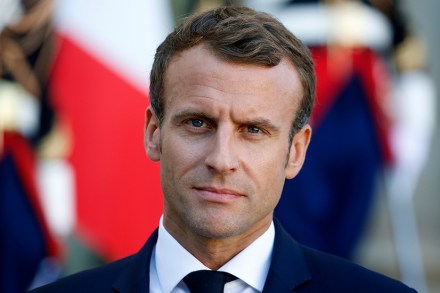
It’s easy to see why so few western leaders have come to Emmanuel Macron’s defence: when they scrutinise extremists, they are accused of being ‘Islamophobes’. Since the French President’s speech last month about Islam in the West, he has been accused — by populist Muslim politicians such as Recep Tayyip Erdogan and Imran Khan, as well as publications that should know better, such as the New York Times — of being anti-Muslim. Yes, he was frank about the dangers of Islamism, but his speech was also a defence of what he called the ‘Islam of the Enlightenment’. Rarely for a political leader, he was able to point not just to the problem but to the alternative too. He understands that Muslims have faced these internal enemies before and won.

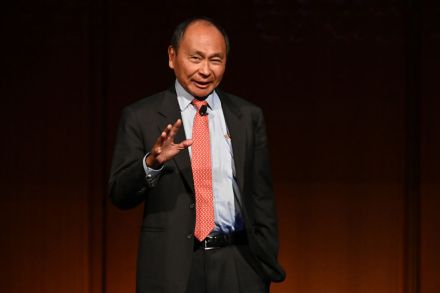
Francis Fukuyama does not read your tweets

Francis Fukuyama never reads the comments. He is a benign presence on social media, whether it’s on Twitter, or Instagram. Now I know why. Unlike many public thinkers, Fukuyama is not that interested in joining the digital fray. He reckons that a third of comments on his posts ‘are going to be stupid references to The End of History — “this is not the end of history, is it” — so I’ve avoided the temptation to get into fights.’ I’ve called Dr Fukuyama — permanently assured of a place in the history of ideas since his essay “The End of History?” appeared in 1989 — to talk about his hobbies. Great minds need to rest. Socrates enjoyed dancing. Diogenes was a keen sunbather. Immanuel Kant was a dedicated pipe smoker.

francis fukuyama
burke

Burke’s work

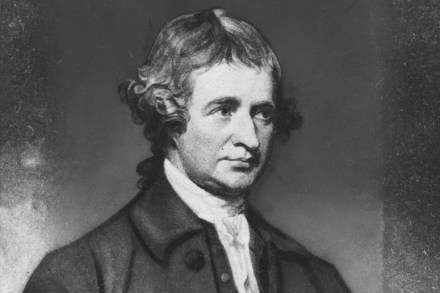
Edmund Burke wrote the authoritative Western defense of cultural traditionalism in modernity, Reflections on the Revolution in France. How could he also compose a tract called Thoughts and Details on Scarcity, in which the same writer provided steadfast support for Enlightenment, market-based principles that were perceived by contemporaries as a threat to settled social conventions?Burke’s opposition to state intervention in the domestic agricultural economy bursts through in his very first statement in Thoughts and Details. ‘Of all things, an indiscreet tampering with the trade of provisions is the most dangerous,’ he writes, ‘and it is always worst in the time when men are most disposed to it: that is, in the time of scarcity.

The truth according to social justice

We have reached a point in history where the ideas that sustain the liberalism and modernity at the heart of western civilization are at great risk. The precise nature of this threat is complicated. It arises from at least two overwhelming pressures, one revolutionary and the other reactionary, that are at war over which illiberal direction our societies should be dragged. Far-right populist movements claim to make a last desperate stand for liberalism and democracy against a rising tide of progressivism and globalism. They are increasingly turning toward leadership in dictators and strongmen who can maintain and preserve ‘western’ sovereignty and values.

social justice

How time vanishes: the more we study it, the more protean it seems

From our UK edition

Some books elucidate their subject, mapping and sharpening its boundaries. The Clock Mirage, by the mathematician Joseph Mazur, is not one of them. Mazur is out to muddy time’s waters, dismantling the easy opposition between clock time and mental time, between physics and philosophy, between science and feeling. That split made little sense even in 1922, when the philosopher Henri Bergson and the young physicist Albert Einstein (much against his better judgment) went head-to-head at the Société française de philosophie in Paris to discuss the meaning of relativity. (Or that was the idea. Actually they talked at complete cross-purposes.) Einstein won. At the time, there was more novel insight to be got from physics than from psychological introspection.

Our post-liberal moment

Can we still say that we live in a liberal age? We live, now, in the age of an epidemic. Calling for a political order that can effectively respond to such a disease is starting to sound a lot like calling for a post-liberal order. In the pages of the Atlantic, Adrian Vermeule has made something of the same point: the order that we have been living under is clearly unequipped to deal with crises of the nature of this epidemic. The common libertarian conservative position that any government action on this is a violation of the rights of the individual, shows the fundamental insanity of libertarianism. My father used to quote Voltaire to me: 'My right to punch you in the nose ends where your nose begins.

liberalism post-liberal

We all need to be let alone —not just Greta Garbo

From our UK edition

‘You’re never alone with a Strand,’ went the misbegotten advertisement for a new cigarette in 1959. What the copywriter didn’t realise is that smokers often smoke to be alone. As Mass Observation had reported a decade earlier: In an increasingly gregarious world, where fewer and fewer habits and pastimes are entirely individual, the cigarette remains for most people a pleasure that, whatever its social significance, can be enjoyed in entire solitude, and a pleasure that remains entirely individual. At the time, 80 per cent of British men and 40 per cent of women were regular smokers. Smoking was not just a means of inhaling death and of escaping the dead hand of others’ sociability, but briefly put the unbearableness of life behind a smoky veil.

Constrained by freedom: what do post-liberals want?

Any attempt to expound post-liberalism must begin by taking a view of what liberalism is. And liberalism can be viewed as a philosophy that enshrines freedom as its foundational principle. Freedom from what, though? That is a moving target. The pioneers of liberalism, whether they be John Locke or the Founding Fathers, wanted to be free from the tyranny of the minority, that is, from power exercised arbitrarily by a political sovereign. Two hundred years later, following J.S. Mill’s disdain for the craven conformism of late-Victorian social mores, liberals realized they wanted to be free from an empowered majority. That is, even if a majority want democratically to decide gambling should be made illegal, for liberals the practice should remain legal as long as one gambler remains.

post-liberals

After liberalism

We’re entering the post-liberal moment. From Trump to Brexit, Ireland to Brazil, we’ve seen a number of revolts at the ballot box that point to a mass vote of no-confidence in the economic and cultural status quo — in other words, in 21st-century liberalism. The liberals aren’t taking it lying down. They’re doing their best to define post-liberalism in language they are most comfortable with, calling it ‘fascist’ or ‘communist’ — and sometimes the criticism is spot-on. But other times it is wholly inaccurate. One of the glaring paradoxes of the post-liberal moment is that many of the people involved in it want to rescue liberalism from itself.

liberalism post-liberal

Let’s leave philosophers to puzzle over the reality of numbers

From our UK edition

The reality (or lack thereof) of numbers is the kind of problem some philosophers consider overwhelmingly important, but it’s of no consequence to just about everyone else. It does not make a wink of difference to your life whether the figures in your bank account or the digits on your clock are, in a philosophical sense, really real, so long as they work as expected. The mathematician Paolo Zellini’s book, now translated by Simon Carnell and Erica Segre from the 2016 Italian original, does not exactly elevate the number-reality problem to a matter of concern to non-philosophers, and certainly does not explain the problem in a way that will make it tractable to them.

What the new nationalism means

This article is in The Spectator’s March 2020 US edition. Subscribe here. For most of the past 200 years, the left, whether revolutionary or liberal, derived power and popularity from being on the side of freedom. If you resented the economic, social and political privileges enjoyed by hereditary aristocrats and landowners, you were on the left. If you chafed against the restraints imposed on what you could read, write, say, think or do by established churches or majoritarian cultural Christianity, you had reason to support one left-wing movement or another — philosophes and Jacobins in the 18th century, liberals in the 19th century, the American Civil Liberties Union in the 20th.

email

Academics are trying to get my paper retracted — and some of them haven’t even read it

‘You’re about to learn why people generally avoid fucking with me.’ Thus spake Nietzsche scholar and Macquarie University philosophy professor Mark Alfano in a tweet directed at me.I’ll start from the beginning. In late December I published a paper in the academic journal Philosophical Psychology defending the study of race differences in intelligence. This topic arouses strong emotions. But I am a philosopher, and the job of philosophers is to confront issues dispassionately, guided only by reason and evidence. This activity may lead us to question orthodoxies and challenge taboos, but that is what philosophy is all about. Or at least it’s supposed to be.

nathan cofnas philosophers

Roger Scruton’s death impoverishes us all

As Douglas Murray says, Sir Roger Scruton was as scintillating in conversation as he was on the page. It was typical of Roger’s generosity that in September 2018, a month in which he had no less than three books coming out, he gave up an afternoon to recording a Spectator USA podcast at his home, Sunday Hill Farm in Wiltshire. We originally published it under the headline ‘Knight of the Living Philosophers’. His death at 75 impoverishes us all. Scruton was more than a philosopher. He wrote widely and well on subjects as various as wine and Wagner, fox-hunting and free trade. That month, Scruton the philosopher had published Conservatism: An Invitation to the Great Tradition.

Sir Roger Scruton

It’s a dull world in which children don’t challenge their parents

From our UK edition

On the Shoulders of Giants consists of 12 essays that the late Umberto Eco gave as lectures at the annual Milanesiana festival of culture between 2001 and 2015. Judging from the book, seeing him deliver them must have been like going to a concert these days by Van Morrison or Bob Dylan. Sometimes he’s on top form, all the old magic thrillingly intact; quite often he seems to be rather going through the motions. And while he can always be relied on for a generous smattering of his greatest hits — conspiracy theories, William of Ockham, the Rosicrucians, Pseudo-Dionysius the Aeropagite — these too are performed with noticeably varying amounts of feeling and effort.

Is this Mencius Moldbug’s moment?

The return of Mencius Moldbug is a timely one. Across Europe, after all, people have begun to share his anti-democratic sentiments. British liberals have spent years attempting to undermine the result of the 2016 referendum on Britain’s membership of the EU. American liberals have spent years looking for excuses to impeach Donald Trump and countermand the results of the 2016 Brexit referendum. Yes, it is somewhat ironic that three-and-a-half years after the retirement of Mencius Moldbug from blogging, anti-democratic sentiments tend to be heard from the left and populist sentiments tend to be heard from the right.The brief flourishing of neoreaction, otherwise known as NRx, otherwise known as the Dark Enlightenment, feels like a world away.

mencius moldbug