James Mumford

James Mumford's new book, Shrunk - How Therapy Diminishes Us, is forthcoming with Little Brown.

What does it do to one’s soul to swipe?

From our UK edition

For me, discovering dating apps was like happening upon crack cocaine. The starting pistol for my ‘dating’ was the decree absolute. I guessed it from the envelope. Still, it was stark seeing it on paper. For so long it had been pencilled, now it was in ink: ‘The marriage solemnised on…  has legally ended.’   My first instinct was to crack open a six-pack. Of Cadbury’s Creme Eggs. I ripped off the foil, bit open the chocolate shell and licked out the fondant. My second response was even more gluttonous: setting up a dating app profile.
The tragedy of selective abortion in Britain

From our UK edition

Late last year, Heidi Crowter, a 27-year-old woman with Down syndrome, lost her court of appeal challenge over late-term abortions on grounds of serious foetal abnormalities. Abnormalities such as hers, that is.  The law in England, Wales and Scotland makes an exception to the 24-week time limit for abortion, permitting abortion all the way up to birth if there is ‘a substantial risk that if the child were born it would suffer from such physical or mental abnormalities as to be seriously handicapped’. That includes unborn children who have Down syndrome.  This rule, Heidi argued, ‘tells me that I am not valued and of much less value than a person without Down syndrome’. She’s right.

A diary of divorce

From our UK edition

I’m living in the interstices between smokes. I fill the gaps ruminating, on the unretrievable past and the foreclosed future. I can’t concentrate enough for any one of my thousands of books to be a distraction. I wake up and count the hours until I’ll be tired enough to go back to sleep (or, on the weekends, until Match of the Day). My wife is gone. She’s gone for ever. Sometimes I hear the voices of reassurance. Be grateful for the time you had with her. I’m idealising our marriage. There are other fish in the sea. Thoughts which seem momentarily plausible. Until, as C.S. Lewis writes in A Grief Observed, ‘then comes the sudden jab of red-hot memory and all this “commonsense” vanishes like an ant in the mouth of a furnace’.

Don’t let the assisted-suicide lobby hijack ‘dignity’

From our UK edition

The assisted-suicide debate begins with a contest over language, a war over a word. That word is ‘dignity.’ The Swiss assisted suicide clinic, where every eight days one Briton travels to die, is called Dignitas. In 2006, the Voluntary Euthanasia Society changed its name to Dignity in Dying. And Oregon’s 1998 liberalising law – the model for the legislation Baroness Meacher is proposing in this country – was called the Death with Dignity Act. The effect of co-opting the word ‘dignity’ is to imply if you have a terminal illness and want to maintain dignity at the end of your life you will choose assisted suicide. The disastrous implication of this is illness can be undignified.

The fightback: can the West take on China?

From our UK edition

38 min listen

Can the West take on China? We may need some kind of economic Nato (00:50). Are Mormons misunderstood, by Netflix and everyone else? (14:15) And what does it really mean to be Spiritual But Not Religious? (27:45).With James Forsyth, The Spectator's political editor; Iain Duncan Smith, former leader of the Conservative Party; Damian Thompson, host of the Spectator's Holy Smoke podcast; James Holt, a Mormon theologian; author James Mumford; and Mary Wakefield, The Spectator's Commissioning Editor.Presented by Lara Prendergast.Produced by Cindy Yu, Max Jeffery and Sam Russell.

‘Spiritual but not religious’: the rise of consumerism in church

From our UK edition

I was raised Christian and the more I’ve thought about it, the more curious something about my upbringing seems. My church was constantly denying it was ‘religious’. By any objective social--scientific measures, the community was decidedly religious. Maybe we weren’t that organised (there was no website), but we recited historic creeds, we submitted to the authority of a sacred text and we practised ancient rituals. We identified with the worldwide institutional expression of the body of Christ, yet we still liked to say we weren’t ‘religious’. Throughout my childhood I was reminded in sermon after sermon that we were ‘-Spiritual but not Religious’.

Constrained by freedom: what do post-liberals want?

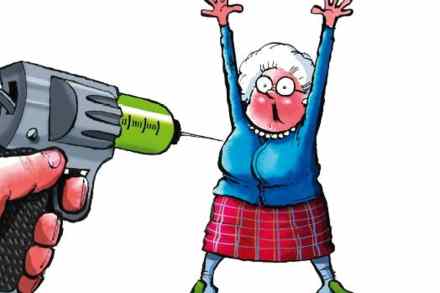
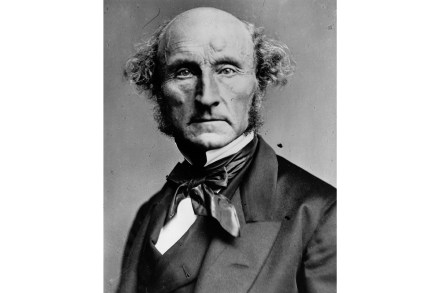
Any attempt to expound post-liberalism must begin by taking a view of what liberalism is. And liberalism can be viewed as a philosophy that enshrines freedom as its foundational principle. Freedom from what, though? That is a moving target. The pioneers of liberalism, whether they be John Locke or the Founding Fathers, wanted to be free from the tyranny of the minority, that is, from power exercised arbitrarily by a political sovereign. Two hundred years later, following J.S. Mill’s disdain for the craven conformism of late-Victorian social mores, liberals realized they wanted to be free from an empowered majority. That is, even if a majority want democratically to decide gambling should be made illegal, for liberals the practice should remain legal as long as one gambler remains.

post-liberals

Family is the key for breaking the reoffending cycle

From our UK edition

Lord Farmer’s review on prison reform, launched this week at the Centre for Social Justice think tank, is ground-breaking for a number of reasons. For starters, it gets family. In an incontestably broad consultation, comprising hundreds and hundreds of interviews with prisoners across Britain, the resounding message that came back was about family. ‘If I don’t see my family I will lose them, if I lose them what have I got left?’, one prisoner told Lord Farmer. The statistics bear this out: the odds of reoffending are 39 per cent lower for prisoners who receive family visits than for those who don't. To be left bereft by the family sucks away the motivation so critical to rehabilitation.

How to reform the care home system

From our UK edition

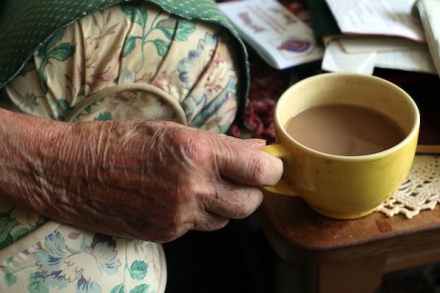
The care home residents had been left on the landing in wheelchairs. That was the sight that greeted me as I walked up the stairs of the nursing home I was visiting in Wembley, north London. From above, sawdust fell as builders blithely went about their business, fixing the roof. Apart from the drilling there was no noise. No one cried for help. No one complained. It was as if no one expected anything different. The abandonment of the elderly in residential care was driven home recently by revelations of the full extent of failing homes. This year, forty per cent – yes, forty per cent – were found wanting by the regulator, the Care Quality Commission (CQC). Of a whopping sample of 5,300, 2,000 care homes were found inadequate or in need of improvement.

What we must learn from the tragic case of Charlie Gard

From our UK edition

I teach bioethics, and the abiding temptation is always to design classes around rare, fiendishly complex cases. That’s how you grab the attention of bored undergraduates; the fodder you throw to budding lawyers. You jump from Tony Bland to Terry Schiavo to Karen Ann Quinlan. You ask your students to put themselves in the shoes of the respective decision-makers. What would you have done? What factors would you have considered? How would you have applied the relevant principles? It seems hasty, callous even, to reflect upon the shadow that will be cast by the Charlie Gard case. But the scale of the public outcry, the pitch of the debate, means we must think now about the future. What might the fall-out be? What consequences can we envisage? What ramifications are possible?

In defence of offence

From our UK edition

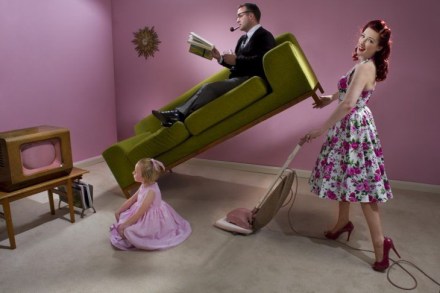
On Tuesday the Advertising Standards Authority (ASA) announced a crackdown on gender stereotyping. Adverts suggesting men are useless around the house – racing out of the door, leaving the stove bubbling over and the dishes unwashed – could be censored because they ‘reinforce and perpetuate traditional gender roles.’ Images of beautiful mothers mopping spotless floors will be able to be banned. How do the ASA define gender stereotypes? ‘Gender stereotypes relate to body image, objectification, sexualisation, gender characteristics and roles, and mocking people for not conforming to gender stereotypes.’ Well, that’s pretty much everyone. The ASA will have the power to make billboards bare.

A truly liberal society would tolerate the Anglican church’s views on sexuality

From our UK edition

Given how apocalyptic the predictions were, Anglicanism’s make-or-break meeting about issues of human sexuality last week proved something of a damp squib. The Anglican Communion was supposed to be rent asunder. Upheaval was imminent. Schism was certain. Conservative African Archbishops were going to be tripping over their cassocks in the rush for the door. In the end, however, unity prevailed and the status quo was (boringly) upheld as the 36 primates gathered here together voted overwhelmingly to stick to the church’s traditional view of marriage. Nothing really changed: Anglican HQ merely recognised formally the break its American division has been boasting about for over a decade. So the summit ended not with a bang but with a whimper.

The best albums of 2013

From our UK edition

As the new year beckons, James Mumford counts down the best albums of 2013. Arcade Fire, Vampire Weekend, and David Cameron's favourite - Haim, all make the list. But Coffee House readers - what would be on your top ten? 10: Phoenix, Bankrupt! The revival of the 1980s is the clear theme of my top-ten. The success of Phoenix is a fascinating story, they being in some ways the band that should-never-have-been. Not only are they French, they are also in their thirties. For many years they were an obscure act before their 2006 album It’s Never Been Like That went stratospheric. Bankrupt! is unadulterated high-octane synth-heavy pop. ‘Entertainment’ is awesome, particularly when it drops to half-time.

The sickeningly talented Johnny Flynn

From our UK edition

‘I am walking in some mountains’. That’s the out-of-office that pops up when I email Johnny Flynn to request an interview. The folk star and West End actor is on holiday. But he’s not doing the Three Peaks Challenge. No, he’s tracing St Paul’s third missionary journey across southern Turkey, a 30th birthday present from Bea, his wife and teenage sweetheart. ‘I’m obsessed with pilgrimages,’ Flynn says. He’s also done the Way of St James, which finishes in Santiago de Compostela. ‘I love following old routes, imagining the consciousness of those who walked them.’ When he’s come down from the mountains we sit down to talk about the recent release of his third album, Country Mile.

The fight for your life is now raging

From our UK edition

Beneath your noses, a great change in this country is being planned. Secret polls have been taken, and a private member’s bill has been tabled. The euthanasia lobby is limbering up for the fight of its life: to change the law for once and for all. The Assisted Dying Bill, introduced by former Lord Chancellor Lord Falconer, is the fourth such to come before the House of Lords in the last decade. Since it is almost identical to the last bill, which sought to let doctors supply lethal drugs to terminally ill patients and which Parliament rejected in 2006, why is this one being introduced? The answer has largely to do with the changed composition of the Lords.

A blank cheque to the baby boomers

From our UK edition

After more than a decade of wrangling, it seems that a deal is finally about to be struck on long-term care of the elderly, by adopting the package proposed by economist Andrew Dilnot.  George Osborne has apparently agreed to a proposal, to be announced as early as next month, to make sure no one pays more than £75,000 towards their care costs however wealthy they are. The threshold below which their equity is exempt will also be jacked up. The estimated cost of all this is £700 million - money that this government simply does not have. To offer this at a time of cuts to further education, aircraft carriers, local authorities and welfare would be extraordinary.

Politicians are avoiding the real problems with social care

From our UK edition

‘The smell would be even worse’, says Zoe, the social worker I’m shadowing for the week, ‘were it not for the clothes.’ Trying not to touch or breathe, I survey the mounds of sweaters and jeans and dresses interspersed across the bare floorboards. The place is a disaster — junk everywhere, filling the shelves, piling up the surfaces; the sound of broken taps from the kitchen; the living room a living ruin. I’m on a housing estate in one of the Home Counties and we’ve been called out to see about putting in place a ‘preventative measure’ for Mrs R, a 90 year-old woman at risk of falls.