Philip pullman

Why I love blowing up worms

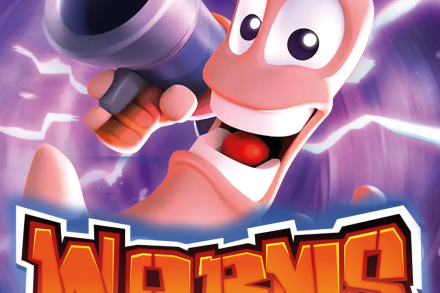
Grade: B+ War, as we all know, is hell. But if it involves small squeaky annelids blowing each-other up with bazookas, it is also hella fun. And so to the newest installment in the long-running turn-based strategy series Worms. Can it be a coincidence that Worms Across Worlds arrives on Apple Arcade just in time for the release of Philip Pullman’s final His Dark Materials book? Yes, it absolutely can. Nevertheless the latest Worms, like Pullman’s work, is set in a multiverse in which intrepid heroes travel through portals between worlds. The world of Worms, like the world of His Dark Materials, mingles science and experimental theology: you can see off rival worms with a nuclear strike or a holy hand grenade.
The magnetism of His Dark Materials

From our US edition

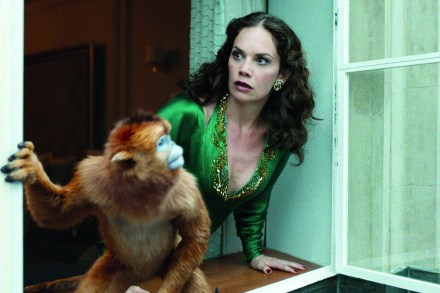
When I was in middle school back in the 1990s, there were two sets of books every boy seemed to have in his backpack. One was the Redwall series, Brian Jacques’s swashbuckling tales of heroic mice and tyrannical wildcats. The other was the His Dark Materials trilogy by Philip Pullman. It’s no coincidence, I think, that both Jacques and Pullman are British. What made these books intriguing, beyond their carefully wound plots, was that they were marketed to children yet addressed subject matter that was very much adult. In Redwall, it was the brutal violence. His Dark Materials had some of that too (in the first chapter of the first book, we witness an attempted killing; in the first chapter of the second book, we witness an accidental fatality).

his dark materials

Artless, crude and thuggish: Bridge Theatre’s Book of Dust reviewed

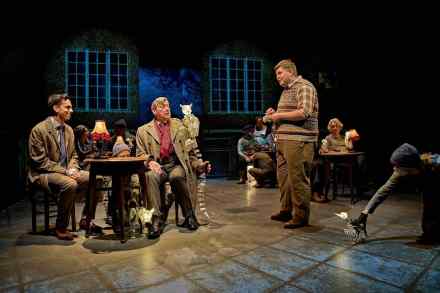
Philip Pullman’s The Book of Dust has been adapted at the Bridge. The yarn is set in Oxford, and the surrounding countryside, and the whole of the first act is devoted to exposition because Pullman’s fantasy world is impenetrably complicated. The chief character, a dim-witted child, wanders around the place and listens while terms like ‘magisterium’, ‘alethiometer’ and ‘daemon’ are explained to him. Meanwhile we’re introduced to Pullman’s range of human personalities. He can do two: first, the ooh-arr yokel who is thick but kind, and secondly, the posh academic who is clever but evil. These archetypes give rise to a total of 32 characters who are represented by 16 actors. A lot of simplification was needed here.