Peter grimes

In defence of Hindemith

There’s a photo of Paul Hindemith with the pianist Artur Schnabel on hands and knees, surrounded by model railway track. Huge railway enthusiast, Hindemith, you see: he laid sprawling networks through the rooms of his Berlin apartment (before the Nazis drove him out), and organised marathon operating sessions with friends. Anyway, for various reasons, this knowledge makes me warm to him in a way that his music only erratically manages. It’s not that it’s impossible to like (although this is a man whose idea of a crowd-pleaser is called Symphonic Metamorphoses of Themes by Carl Maria von Weber). But there can be few composers whose effect is so hard to anticipate.
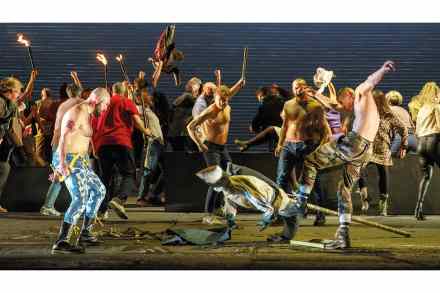
Devastating: WNO’s Peter Grimes reviewed

Britten’s Peter Grimes turns 80 this June, and it’s still hard to credit it. The whole phenomenon, that is – the sudden emergence of the brilliant, all-too-facile 31-year-old Britten as a fully formed musical dramatist of unignorable force. W.H. Auden had urged him to risk everything – to step outside his admirers’ ‘warm nest of love’ – and in the first moments of Peter Grimes, Britten does precisely that. The folk-opera bustle of the opening tribunal scene dissolves into the desolate bird cry of the first Sea Interlude and straight away, you’re in the presence of something unimaginably vaster and more true. It pins you to your seat. That was certainly the impression I had from Tomas Hanus, conducting the orchestra and chorus of Welsh National Opera.

‘That little venal borough’: a poet’s jaundiced view of Aldeburgh

‘To talk about Crabbe is to talk about England,’ E.M. Forster declared in a radio broadcast in May 1941, but few people today talk about this Suffolk-born poet or indeed read him. This makes Frances Gibb’s slender but thorough account of George Crabbe’s life and work all the more welcome. In his time he was considered a leading, though controversial, figure, who wrote with stark realism about the spiritually and morally impoverished lives of East Anglian villagers and townspeople, in particular the inhabitants of the ‘little venal borough’ of Aldeburgh, where he was born in 1754 and spent an unhappy youth.

Comes so close to greatness but succumbs to prejudice: Royal Opera’s Peter Grimes reviewed

No question, the Royal Opera is on a roll. Just look at the cast list alone for Deborah Warner’s new production of Britten’s Peter Grimes. Allan Clayton sings Grimes, Bryn Terfel is Captain Balstrode, and John Tomlinson is Swallow, with Mark Elder conducting. Even before you get to a supporting cast that includes premium names such as James Gilchrist, Jennifer France and Catherine Wyn-Rogers, you’ve basically got the three pre-eminent British male singers of their respective generations, singing their boots off in the greatest of all British operas under the baton of the conductor who (it’s naive, but let’s dream) really ought to succeed Antonio Pappano when he leaves the Royal Opera in 2024.

Where to start with the music of Ethel Smyth

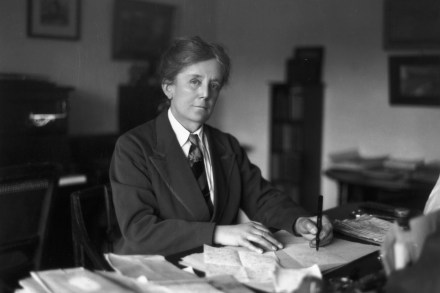
I’m reminded of an old Irish joke. A tourist approaches a local for directions to Dublin. The local, after much teeth-sucking and head-scratching, eventually replies: ‘Well, I wouldn’t start from here…’. The news that, 75 years after her death, English composer Ethel Smyth has won a Grammy Award for her last large-scale work The Prison is as excellent as it is unexpected. But it’s also frustrating because, well, if I were setting out into Smyth for the first time, I really wouldn’t start from there.