Paywall

Still painting after all these years

On March 14, 1847, Eugène Delacroix made a trip to the studio of his colleague and countryman Camille Corot. Later that day, Delacroix recorded in his journal a feeling of newfound appreciation for the painter’s landscapes: ‘Corot is a true artist. One has to see a painter in his own place to get an idea of his worth.’ The Corot paintings that Delacroix had recently viewed at the Paris Salon seemed to hold new meaning after his seeing the site of their creation. As to exactly what had changed, or what he saw that changed it, Delacroix does not — perhaps could not — tell us. Few modern painters can claim as close a kinship to the spirit of Corot as Paul Resika.


resika
dickie

Dickie and me

New York Hullo, readers. Many thanks for the kind notes and well-wishes. I’ve fully recovered from my bout with the plague and am only a little worse for wear. I’m desperate for a bit more time on the water, but I’m convinced my palate hasn’t yet recovered. I’ve been reduced to taking brandy in the evenings. Still, though far from splendid, isolation hasn’t been all bad. I’ve spent a great deal of time on the phone with my brother Richard. We’re not naturally expressive people, and I’m more than a bit embarrassed about the state of my marriage. But our respective sheltering-in-place, his in Boston and mine in New York, has turned us into talkers. Like the rest of the family, I’ve always called him Dickie.

The perception of doors

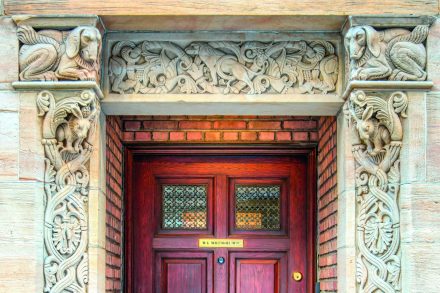
The architectural historian Andrew Alpern has for decades done the dirty work when it comes to pre-war New York apartments. Others have presented glossy coffee-table books full of newly commissioned professional photographs. Alpern has focused on the practical details of apartment design, especially floor plans, which tell us so much about how people actually live in their apartments, or at least were originally meant to. His Apartments for the Affluent (1975), Historic Manhattan Apartment Houses (1996) and New York Apartment Houses of Rosario Candela and James Carpenter (2002) are essential compendia; anyone with an interest in New York residential architecture, especially of the magnificent variety, must have them. The more industrious uptown real estate agents also find them useful.

doors
kshama sawant

Bad Kshama: meet Seattle’s worst socialist

Seattle In Max Frisch’s 1953 absurdist play The Fire Raisers, a well-off family in an unnamed town invites a man they suspect of being an arsonist to sleep in their home. A second such guest then appears, and before long the family’s attic is piled high with drums of gasoline. The man of the house gradually realizes that he has two active pyromaniacs under his roof, but believes that by displaying kindness, he will make his house immune to them. In the last scene of the play, the original arsonist asks for a box of matches and, again wishing to appear generous, his host gives him one. You can guess the rest. Somehow I’m put in mind of Frisch’s morality tale when examining the unresisted rise of the 46-year-old Seattle socialist politician Kshama Sawant.

stuart evers

Modern English

A decade ago — eheu fugaces labuntur anni — Stuart Evers’s debut story collection, Ten Stories About Smoking, was one of the first books I ever reviewed, and I’ve kept tabs on his career ever since, in that spirit of comradely competitiveness one feels for a writer of a similar age launching at the same time. I spoke warmly of his first novel If This Is Home and enjoyed his second collection, Your Father Sends His Love, when it appeared in 2015. But there was nothing in those earlier works to prepare me for the scale and ambition of The Blind Light. This extraordinary novel about Britain and Britishness spans six decades and uses the stories of two men and their families to delve revealingly into complex questions of class, fate and history.

Salamis tactics

The 2,500th anniversary of the Battle of Salamis — the decisive naval battle of 480 BC in which the Greek fleet, vastly outnumbered, devastated the invading Persian armada in the straits near Athens — fell on September 29. So we went to take another look at the nautical objects in the Piraeus Archaeological Museum. It is not exactly a small museum — it is housed in a high-ceilinged, two-story building in the port of Piraeus, next to the remains of a Hellenistic theater — but it receives few visitors. Even Piraeus taxi drivers don’t always know where to find it. Tourists usually give Piraeus a miss; they tend to be ‘museumed-out’ from the big museums up the road in Athens.

piraeus salamis

The next so-called civil war

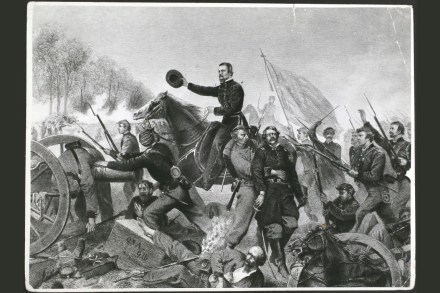
Batavia, New York On a brutally hot and wasp-swarming late summer mid-afternoon I walk our town’s old cemetery, as is my wont — hey, if I’m gonna live here for eternity I may as well get to know the neighbors. Walt Whitman swooned over one of this boneyard’s residents, and I have come to read the relevant passages to the boy who rests under the sod. His name was Stewart Glover, and he appears in Whitman’s diaristic Specimen Days to illustrate ‘the terrible and tender realities’ of war-death. Glover, Whitman tells us, grew up in Batavia with his father, John Glover, ‘an aged and feeble man’. (I dunno: his gravestone says Pop lived to the ripe age of 83, dying in 1873.

civil war
magical thinking

The Democratic art of magical thinking

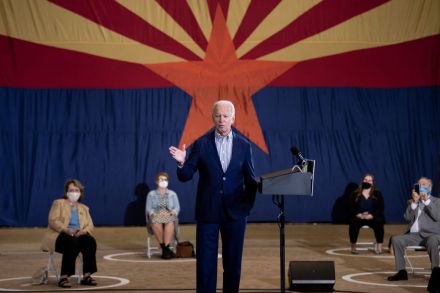
I should clear up one thing straight away. I do not believe that Joe Biden is guilty of magical thinking. Magical thinking, though specious, is a form of thinking. It is a truth universally acknowledged that Joe Biden is not guilty of thinking of any kind, ergo, Joe Biden is not guilty of magical thinking. Quod erat demonstrandum. But Biden’s supporters? Well, that is another matter altogether. There you see a wild efflorescence of magical thinking. What is magical thinking? It is the irrational belief, rampant among primitive peoples and those exposed to too many woke college seminars, that our thoughts influence or ‘constitute’ reality.

The hostages’ president

President Trump has tweeted that, among other things he’s best at, he is ‘the greatest hostage negotiator in the history of the United States’. He was supposedly quoting his special envoy for hostages, but then there was no record of the envoy ever voicing this precise opinion, so it was really just the usual Trump boasting. But that doesn’t mean he’s wrong. Trump really does seem to care about hostages. He certainly likes the Oval Office photo ops with Americans he’s helped to free, bathing in their gratitude and nodding along to the stream of compliments that such visits guarantee. He seems willing to do a deal with almost anyone, even ‘shithole countries’.

hostages

My debt to Royaumont

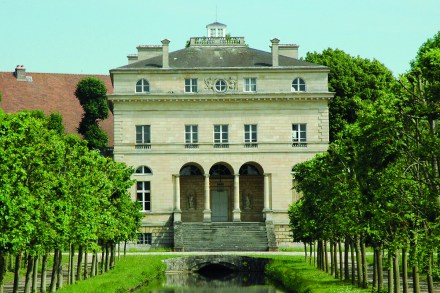
As ruins go, Royaumont is as good as any. French roads also being what they are, Royaumont is about 45 minutes from Saint-Denis, the cathedral in Paris where the kings of France are buried, and perhaps 20 minutes from Chantilly, where as much English as French is spoken on the racecourse. Beginning his reign in the 13th century, King Louis IX chose Royaumont as the site of one of the Cistercian abbeys he was building. Dying while on crusade in North Africa, he probably never saw what was reputed to be the most magnificent of all Cistercian abbeys in the whole country, the rival of Mont Saint-Michel or Fontevrault. Royalty notwithstanding, the Vatican singled him out for canonization.

royaumont
blm

Britain clambers aboard the BLM bandwagon

Middlesbrough, United Kingdom Gareth Southgate, the unctuous, horse-faced manager of the England soccer team, insisted that his players take the knee before their game against Denmark in the Nations League last month. They were at it before the match against Iceland, too, and the Icelanders joined in, bless them, despite the fact that there is only one black person in all of Iceland and he probably ended up there by mistake. It was important, Southgate ventured, to show support for Black Lives Matter. And so down they all went, as Portland burned and the looters, bullies, thugs and professional agitators ran amok across the US.

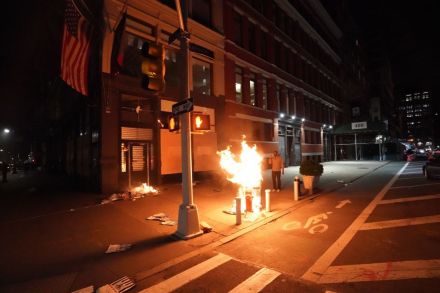
New York has turned ugly

New York City In grim times such as these, New Yorkers tend to flatter themselves for possessing special reserves of moxie, an outdated word that connotes courage, brio and a kind of raffish know-how. Think of Humphrey Bogart as Rick, a nightclub owner in the film Casablanca, when he jousts with Major Strasser, the German bully who thinks he can outsmart and intimidate him. Pressed to reveal his background and political beliefs, the poker-faced Rick replies: ‘I was born in New York City, if that’ll help you any.’ Asked if he could imagine the Germans occupying New York, Rick retorts, with a little extra moxie, ‘There are certain sections of New York, Major, that I would not advise you to try to invade.

new york
religion

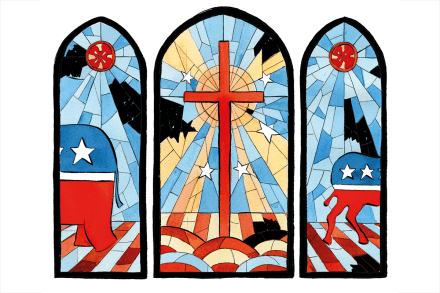
Godforsaken: religion is vanishing from American politics

The United States has always been the world’s leading religious marketplace. Even before independence, the American colonies were more fervently Protestant than any country in Europe. The Pilgrim Fathers turned Massachusetts into a witch-hunting Calvinist theocracy, and no sooner had Puritan power begun to wane than New England was seized by a ‘Great Awakening’ in which vast crowds declared their faith in Jesus with hysterical enthusiasm. But it was the Founding Fathers’ decision to deregulate religion completely that really set America apart from the Old World. In successive ‘awakenings’ lasting well into the 20th century, thousands of sects sprang up, some barely Christian but all of them 100 percent American.

The coming stitch-up

To look upon a freshly painted wall is to behold a smooth surface; to look at it through a magnifier is to see a rough and irregular landscape — but turn the magnification up sufficiently and see it become regular again, a geometric matrix of atoms held in molecular bonds. Keep magnifying and you enter the unimaginably messy realm of the subatomic, a weird place of eldritch geometries and smeared-out, probabilistic motion. The world is smooth and rough, orderly and messy, all at once, depending on how closely you look.

tangled web

The art of the presidency

The Obamas loved Hamilton. It was the biggest show to hit Broadway since Cats or Rent, with ticket prices reaching four digits. Michelle, who urgently needs to read Buddenbrooks or visit the Sistine Chapel, called Lin-Manuel Miranda’s musical the ‘best piece of art in any form that I have ever seen in my life’. Hamilton was present at the dawn and eclipse of the Obama years. Miranda first publicly shared material from the musical at the White House’s inaugural Spoken Word evening in 2009. Seven years later, Lin-Manuel joined Barack for a cringe-inducing freestyle rap in the Rose Garden.

art presidency

The new crusaders

In July, the world’s most powerful man tweeted the words ‘There Is A War On Christianity’. Donald Trump’s tweet referred, somewhat cryptically, to an interview on the One America News Network with a man the President identified as ‘Dr Taylor Marshall, author’. Marshall told the interviewer, Jack Posobiec, that the protests that erupted after the killing of George Floyd had spawned a movement seeking to ‘erase Christian civilization’ through mob violence. ‘The goodness that we have experienced in our nation emerged from a Christian culture,’ Marshall said. ‘And these atheists, these socialists, these Marxists, they know that and they are attacking it.’ Marshall is a prominent figure in the US Catholic online subculture.

churches

The most locked-down couple in Eastern Europe

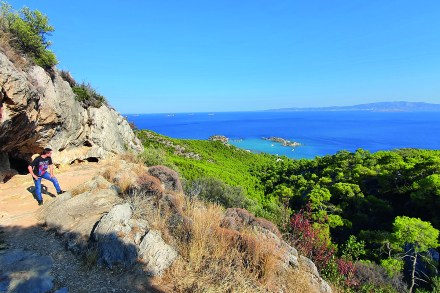
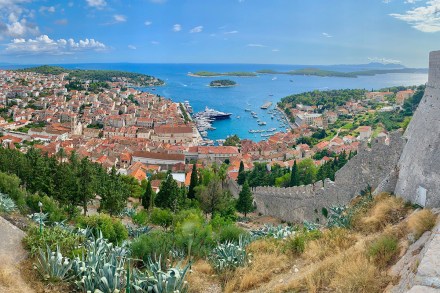
We had lost the habit of checking the national statistics of infections and deaths from COVID-19. They didn’t mean much in Budapest as the summer wound down and the city visibly revived, with heavier traffic and more restaurants open. But then there was a spike in cases in next-door Croatia, and the Hungarian government pondered closing the borders. That threatened our hope — desperation, really — for a beach vacation. We were the most locked-down couple in town. My wife had broken her heel and been confined to our apartment for four months, and I’d been stricken with sciatica and moved like a glacier. To our relief, the Croatian statistics were not too alarming and the Hungarians postponed restrictions. We still had to work out how to get to Hvar, though.

hvar

Dearborn beloved

Americans will drive anywhere, but only immigrants will drive eight hours for groceries. Our community of Syrians and Lebanese trek from western Pennsylvania to Dearborn, Michigan, where a handful of small Levantine groceries sell ingredients too obscure for a Rust Belt supermarket: Cortas rose water, Al Wadi tahini, bags of dried wildflowers for zhourat tea. Eight hours round-trip by the Ohio turnpike, Dearborn is my family’s culinary refuge, and home to America’s largest population of Arab Americans. Henry Ford, also an advocate of driving, was born here on the family farm. The burgeoning auto industry attracted Arabs from the Levant, and Ford gave his employees healthcare, English classes and a trade school.

dearborn

The danger this time

Unlike other magazines, The Spectator doesn’t feel compelled to tell people how to vote. We try not to endorse candidates in elections. Our writers adopt different positions and our readers are, on the whole, adults who can think for themselves. But The Spectator would like to make one appeal in this tumultuous year: for America to keep faith in democracy. No matter which candidate emerges triumphant, America looks certain to face a real crisis of democratic legitimacy after November 3. Donald Trump deserves some blame for this turn of events. While Trump has not been one-tenth of the tyrant his enemies accuse him of being, he has toyed with the idea of not accepting the results and even riffed wildly about sabotaging mail-in voting or moving the date of the election.

endorse
antifa

Antifa made me Christian

It’s a putrid August night in Brooklyn, with hazy orbs floating around the orange light from streetlamps lining a block of bars and restaurants. A dull murmur drifts up the avenue from young drunks limping along toward last call. For S. and me, chain-smoking over pints at our favorite pub, it’s a night like any other we’ve spent together over the past five years or so. S. is a Black Lives Matter stalwart and budding antifa sympathizer. He’s also burdened with severe angst and around this time of night the gloom really sets in. He becomes angry and only wants to talk about love, or, more accurately, heartache. It’s only in hindsight I realize that, back when I traveled in progressive circles, all my friends were as miserable as S.