Paul simon

None of McCartney’s new songs will trouble his setlist for long

On May 30, 1966, the Beatles released “Paperback Writer” – a fortnight after “Paint It Black” by the Rolling Stones and only days before Bob Dylan released “I Want You” as a single. Paul Simon wrote and recorded (with Art Garfunkel) “A Hazy Shade of Winter” not long after. Yes, yes, what bliss it was in that dawn etc. But anyone predicting back then that, 60 years later, all four artists would still be releasing new music and touring to large and appreciative audiences would have been laughed clean out of the Bag O’Nails. Even when glossy monthly music magazines such as Q started appearing in the 1980s, 40 was regarded as the dark side of the moon for the foundational pop stars of the 1960s.
paul mccartney

None of McCartney’s new songs will trouble his setlist for long

On 30 May 1966, the Beatles released ‘Paperback Writer’ – a fortnight after ‘Paint It Black’ by the Rolling Stones and only days before Bob Dylan released ‘I Want You’ as a single. Paul Simon wrote and recorded (with Art Garfunkel) ‘A Hazy Shade of Winter’ not long after. Yes, yes, what bliss it was in that dawn etc. But anyone predicting back then that, exactly 60 years later, all four artists would still be releasing new music and touring to large and appreciative audiences would have been laughed clean out of the Bag O’Nails. Even when glossy monthly music magazines such as Q started appearing in the 1980s, 40 was regarded as the dark side of the moon for the foundational pop stars of the 1960s.

The misery of working with Chuck Berry

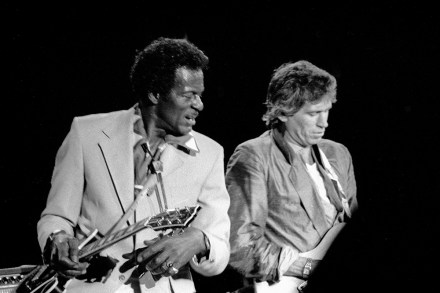
In Ian Leslie’s John & Paul, the creative relationship between the titular Beatles is treated as a platonic love story. Matt Thorne widens the paradigm with seven more pairings, variously rivalrous, amorous, respectful, disrespectful and occasionally frankly tenuous. The 11 American and three British musicians here have careers that collectively cover seven decades of popular music. There are three dynamics at play. First, there are the Thucydides tensions, where a waning power tangles with a rising one. Frank Sinatra invites Elvis Presley to join him on a television show; Keith Richards throws a filmed concert with Chuck Berry. (Richards, for once, is the younger partner.) The older player is not always generous.

Some uncomfortable truths about World Music

Joe Boyd’s masterly history of what some of us still defiantly call World Music – more on which later – takes its title from Paul Simon’s ‘Under African Skies’, but is really less about the roots of rhythm than its routes. A typical chapter will start with a song from a particular geography, then wind the clock back to the country’s history, then forward again to show how that history has contributed to the development of its music, and finally move outwards, following the trade winds as they carry the sounds around the world.

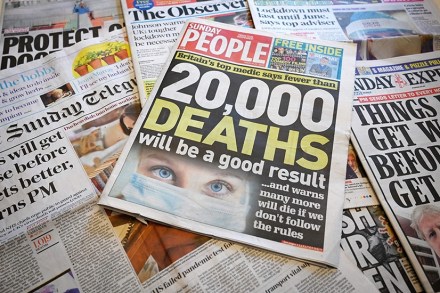
We’re all guilty of recruiting this virus to our cause

There must be a quote from Shakespeare for this, but so far I haven’t found it. It’s the way we all of us contrive to see in cosmic events the evidence, the signs and portents, for what we already believed even before the cataclysm had occurred. These are the days of miracle and wonder, sang Paul Simon… The way we look to a distant constellationThat’s dying in a corner of the skyThese are the days of miracle and wonderAnd don’t cry, baby, don’t cry, don’t cry… Somehow there never was a plague, earthquake, flood or epidemic that was not also a sign that the human race must mend its ways according to wisdom we had long recommended, even during less extraordinary times.

Paul Simon says farewell with a daring and inventive show

Early in 1987, a middle-aged woman approached me on the record counter of the Slough branch of Boots. ‘What do you have by Ladysmith Black Mambazo?’ she demanded. Nothing. Boots in Slough wasn’t big on South African isicathamiya choral music. ‘Well,’ she suggested, ‘you really ought to get their records in. They’re going to be huge.’ She was wrong, but I knew why she was so sure. Ladysmith Black Mambazo had been among the standout guests on Paul Simon’s Graceland, released a few months before. Graceland made Simon, by my reckoning, the first pop star who had emerged from the rock’n’roll era to make a major cultural impact across three decades. By the 1980s, the Stones had become just a touring machine.