Parents

How far would I go for oil?

The oil delivery man had way too much swagger and, as he waved his nozzle about, I realised that he might be expecting a little something. Oh dear, I thought, as he pushed the nozzle into my oil tank, pressed the button on his lorry and spent less than ten seconds giving me the amount of oil I could afford. Oh dear, what if the oil crisis is now at such fever pitch that desperate housewives in remote places are offering a little something on the side to get more oil? Ten seconds’ worth of oil did feel like the end of the world. Usually, I can afford to let

Problem parents: My Phantoms, by Gwendoline Riley, reviewed

Gwendoline Riley’s unsentimental fiction hovers on the edge of comedy and bleakness, and has drawn comparisons from Jean Rhys to Albert Camus. First Love, her fifth novel, put a toxic relationship under the microscope, winning the Geoffrey Faber Memorial Prize in 2017 and being shortlisted for five others, including the Women’s Prize for Fiction. Expanding on one of its strands, her sixth book zeroes in on child/parent dynamics. In My Phantoms, Bridget, an academic, reflects on her relationship with her late father and mother. Glimpses of her suburban upbringing reveal a mother miserably yet willingly shackled to convention. When Bridget asks Helen why she married the monstrous husband she left

I’m stuck in a house of madness

‘I want to learn Iranian,’ said my father, resolutely, as he watched the bombing on the television. ‘Farsi,’ I said, thinking I would talk to him about that very happily on the basis it was better than helping him contact the Ukrainian government so he can fight the Russians. ‘What’s that?’ he said. ‘Farsi,’ I repeated. ‘Parcel?’ he said. But it was pointless trying to explain, for he was up and looking out of the window and telling me to look in the parcel box. We were waiting for the special food I had ordered for the new cat someone irresponsibly rehomed to my parents and which already has a

Being kind to my parents means saying no to them

After a week in Coventry dealing with two parents with dementia, it would have felt like a nice spa break to go to Guantanamo Bay. The smallest cell at Gitmo and a pair of sensory deprivation earmuffs would have been sheer bliss. I got back from not picking up my father’s car from the garage and my mother was standing in the doorway crying. In the time it had taken me to drive three times the distance to the MOT test centre in a circle of unfathomable six-lane 30mph Midlands bypasses, because that was the way my father wanted to go, the garage had shut and his car was locked

Highs and lows: The Boys, by Leo Robson, reviewed

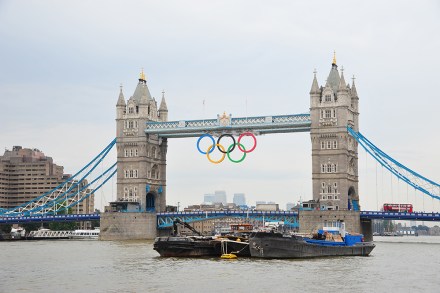
The Boys, the entertaining debut novel by the literary critic Leo Robson, is set in Swiss Cottage during the 2012 London Olympics. Johnny Voghel is ‘methodically lying about’, home on leave from an admin job in the West Midlands and grieving both for his mother, who died the previous year, and – by extension – his father, who died when he was a child. A typical day is spent ‘smoking badly rolled cigarettes, watching the ring-fenced patches of grass suffer in the heat, nodding at passers-by, tweezing grey hairs from my nostrils and popping the spots on my chin’, before walking into the centre to gaze at the BT Tower

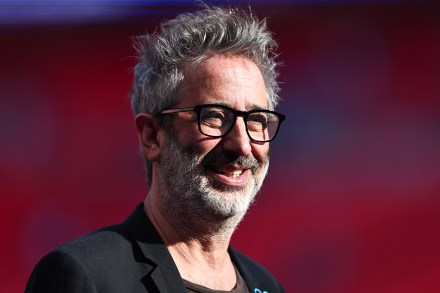
David Baddiel’s father and mother must be the most talked about parents in Britain

According to Clive James: ‘A life without fame can be a good life, but fame without a life is no life at all.’ In My Family: The Memoir, the famous comedian David Baddiel proves he’s also had a life. Or, at least, a family. For anyone who hasn’t been paying attention – and Baddiel, as he admits, craves attention – or who has never watched television or listened to the radio over the past 30 or 40 years, Baddiel is famous as a stand-up comedian specialising in a ‘sweary and often not-very-nice-Jewish-boy style of comedy’, as a TV chat show host with fellow comedian Frank Skinner, presenting Fantasy Football League

Are whole life orders becoming more common?

Bank on it Does the August bank holiday actually celebrate anything? – When bank holidays were first established in 1871, the August bank holiday fell at the beginning of the month, allegedly because it was an important week for cricket in Yorkshire, the home county of MP Sir John Lubbock, who introduced the parliamentary act creating bank holidays. – It was moved to the Monday after the last Saturday in August as an experiment in 1965, largely because early August coincided with the annual factory closure, and many workers were on holiday then anyway. – In 1968 and 1969 the holiday fell in September, so in 1971 it was fixed

What Miriam Cates gets right – and wrong – about declining fertility

Fulfil your civic duty. Get married. Have children. That was the message from Miriam Cates, the increasingly prominent Conservative backbencher, to guests at a drink reception earlier this week. In what even her fiercest critics would have to concede was an impressively bold speech, Cates suggested that many of her female constituents want to work less and spend more time with their children. She claimed that politicians belonged to a class that had been protected by marriage and family, insulated from family breakdown to such a degree that they fail to realise how important it is. Few politicians can ride out a Twitterstorm without some sort of retraction, and Cates is no

Marina Warner becomes her mother’s ‘shabti’

There comes a time after the death of parents when grief subsides, the sense of loss eases, and you, the child, are left wondering who those people were. What were they like? Not as you knew them as parents, but as people? For most of us, as the cliché goes, time is a healer, and these questions, thoughts, urges and memories lose their urgency. For others, and Marina Warner is clearly one, there is a more active, urgent, passionate and, yes, Proustian process at work — a need to bear witness — and it does not leave you alone until the questions are answered. For Warner, the questions relate in

Parents are being gaslighted about home-schooling

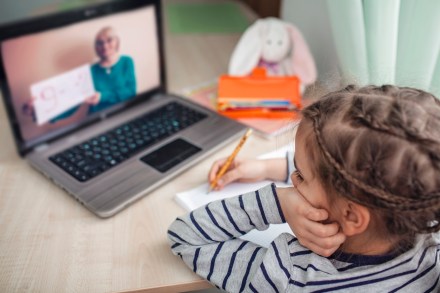
Forgive me, I’m not going to go through all the tragedies of the pandemic in this piece, not because I don’t care, but because I’ve got no time and I’m writing under very harried circumstances: the kids are still up, my deadline’s looming, and my wife keeps sending me WhatsApp messages about emailing the headteacher again. Oh boy. Things are very tense for parents. My wife’s been googling when she should be sleeping. I wake up to emails about my schedule or screenshots of government guidance, which is what this article’s about: we read this guidance, which is published for parents, and we listen to what politicians say, and we

The parent gap: what’s happened to mums and dads in Britain?

During a recent webinar with MPs, I learned that parents in Bradford were up in arms because their children had not received their free spectacles. On a visit to the optometrist, organised by the school, the children had been diagnosed with failing eyesight. Why had the school failed to follow up in providing these near-sighted children with the spectacles they were entitled to? I was not sympathetic. When my daughter was nine, I spotted that she was near-sighted because she kept squinting as she struggled to read the road signs in our new neighbourhood. Her (state) primary school had nothing to do with our visit to the optometrist, or with

How to survive the Eleven Plus: a parents’ foolproof guide

How is Britain seen by outsiders? What marks us out? Humour, self-deprecation, our changing weather, frequent cups of tea. But there’s something else that foreigners say after a spell here: the UK is a place where couples without children worry about where their unconceived children will go to school. As a Scot, I used to think this a bizarre English affectation — until my eldest son announced he’d like to join his friends and take the Eleven Plus set by grammars and private schools. Would I let him? Only then did it dawn on me why prep schools get their name: to prep children for this specific exam. To borrow

Do parents really matter?

Parenting does not have a large impact on how children turn out. An incendiary claim, to be sure, but if you can bear with me until the close of this article I think I might be able to persuade you — or at the very least chip away at your certainty about parental influence. First, what if later today the phone were to ring and the voice at the other end informed you that you have an identical twin. You would have lived your entire life up to that point not realising that you had a clone. The bearer of this news says arrangements have been made to reunite you