Painting

‘Innovation is not enough’: meet visionary English painter Roger Wagner

From our UK edition

In the side chapel of the church of St Giles’, at the northern apex of the historic Oxford thoroughfare, hangs a remarkable painting. ‘Menorah’ (1993) depicts the (now demolished) Didcot power station with its six massive cooling towers and central chimney stack as the setting for the crucifixion; Christ and the two thieves are set against the minatory bulk of the huge industrial buildings while other figures, lamenting and covering their faces, occupy the foreground. It is haunting and profound, an appalling vision but also a beautifully realised one – the work of a master of his craft. For Wagner, art should never be ‘one person thick’.

The rediscovery of the art of Simone de Beauvoir’s sister

From our UK edition

An exhibition of the art of Hélène de Beauvoir (1910-2001), sister of the great Simone, opened in a private gallery near Goodge Street last week. It was the first time Hélène’s work had been shown or received any attention in London, and young people in alternative clothing gathered to sip orange wine and listen, rapt, to the 75-year-old biographer and friend of the de Beauvoir sisters, Claudine Monteil, as her recollections helped elucidate Hélène’s abstract paintings. The reclamation of a new ‘lost’ artist was under way. De Beauvoir’s cubist self-portrait is quite good – but ‘Simone in red jacket’ must never be seen It is possible, these days, for gallerists to do good work – self-defining as allies and activists – while making a good fortune.

Was Brazil the real birthplace of modernism?

From our UK edition

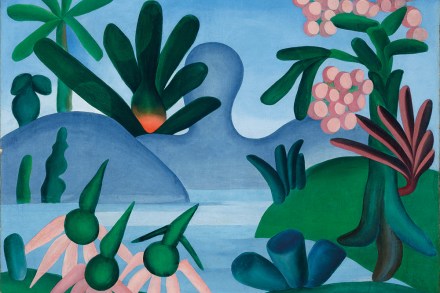
A paradox of art history: to understand the artists of the past, it helps to study how, and where, they conceived of the future. If today we foresee the future in the East, previous generations looked westward. In the last century, Europeans, having inherited a seemingly aged and decrepit civilisation, determined that the future of art was to be found in the New World. That much is well known. But this did not always mean America. Indeed, the true cognoscenti had a different country in mind: Brazil.

Tirzah Garwood just isn’t as good as her husband

From our UK edition

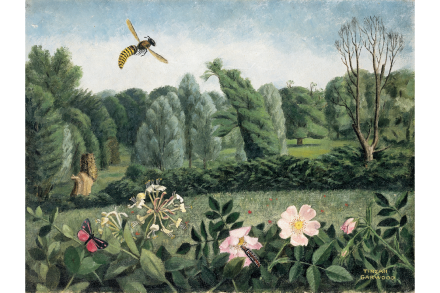
Tirzah Garwood, wife of the more famous Eric Ravilious, is having a well-deserved moment in the sun, benefiting from this era of equality in which artists’ and composers’ wives and sisters (such as Clara Schumann, Fanny Mendelssohn and Elizabeth Siddal) are having the spotlight shone on their under-appreciated works.

The otherworldly artist who made his name at The Spectator

From our UK edition

There is something otherworldly about Rory McEwen’s paintings of plants, leaves and fruit. They are indisputably beautiful, often breathtakingly so, but they are almost eerie in their self-possession. They are like planets vibrating to the music of the spheres – quivering with arrested energy. These images are super-real (rather than surreal) but they sometimes have a surreal edge that can be disturbing. ‘I paint flowers as a way of getting as close as possible to what I perceive as the truth’ Although best known for painting these botanical watercolours on vellum, Mc-Ewen (1932–82) was a man of many parts: an extraordinarily talented figure, a poet and broadcaster, a folk and blues musician as well as, for many, the greatest botanical painter of the past hundred years.

We’ve got Francis Bacon all wrong

From our UK edition

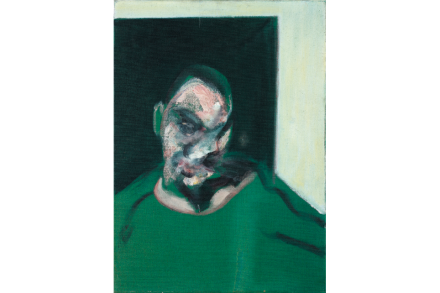
You have to hand it to the curators of this excellent survey of Francis Bacon’s portraits. Not only have they alighted at an obvious but under-explored vantage point from which to reconsider this most mythologised of postwar painters, securing some serious loans to make their point, they have also dared to open their show with what might be the single worst picture it contains. ‘Self Portrait’ (1987) speaks of everything that Bacon got wrong in his final decades: it’s recognisably the 78-year-old artist, dressing up as a younger version of himself.

How a single year in Florence changed art forever

From our UK edition

The story goes that one day early in the 16th century Leonardo da Vinci was strolling through Florence with a friend. Near the Ponte Santa Trinita they came across a group of gentlemen disputing a point in Dante’s Divine Comedy. Seeing Leonardo, they asked him to explain the passage. At that same moment, Michelangelo Buonarroti also happened to hurry by, and Leonardo beckoned the sculptor over to interpret it for them. But Michelangelo, feeling he was being mocked, rounded on Leonardo: ‘Explain it yourself, you who tried to cast a horse in bronze, and couldn’t do it, and had to abandon the project in shame!’ With that he turned on his heels and stalked off, leaving Leonardo standing in the street embarrassed and furious.

The triumph of surrealism

From our UK edition

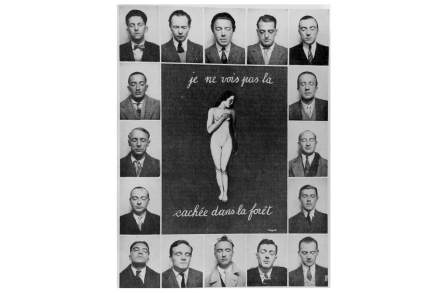
When Max Ernst was asked by an American artist to define surrealism at a New York gathering of exiles in the early 1940s, he pointed across the room at André Breton and said: ‘That is surrealism.’ Even today it can seem as if no other answer is available, so tenacious was his grip. A former student of neurology and psychiatry, with no qualifications other than an instinct for the coming thing (‘an astute detector of the unwonted in all its forms’, as he later described his fellow conspirator Louis Aragon), Breton encountered the early writings of Freud as a medical orderly on a trauma ward, during the first world war, and immediately recognised the significance of his work.

Fog, tea and full English breakfasts: Monet and London, at the Courtauld, reviewed

From our UK edition

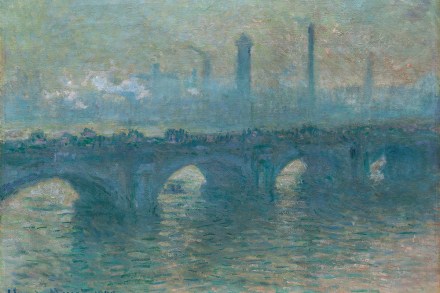
For the maids on the top floors of the Savoy, everything was in turmoil. The 6th had been commandeered by wounded Boer War officers, and since February 1900 a suite of rooms on the 5th had been taken over by a French painter, who was using one as a studio. The officers were nice enough, but the Frenchman spoke almost no English and you could smell the turps down the corridor. Whatever was the management thinking? ‘Without the fog, London wouldn’t be a beautiful city.

The art inspired by the 1924 Paris Olympics was a very mixed bag

From our UK edition

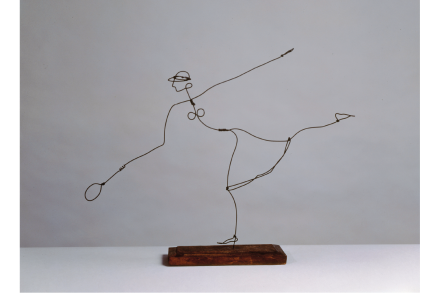
George Orwell took a dim view of competitive sport; he found the idea that ‘running, jumping and kicking a ball are tests of national virtue’ absurd. ‘Serious sport has nothing to do with fair play,’ he wrote in Tribune after scuffles broke out during the Russian Dynamo football team’s 1945 tour. ‘It is bound up with hatred, jealousy, boastfulness, disregard of all rules and sadistic pleasure in witnessing violence: in other words it is war without the shooting.’ Suzanne Lenglen’s loose-fitting knee-length tennis dresses inspired the new ‘style sportif’ of Coco Chanel Baron Pierre de Coubertin, visionary founder of the modern Olympics, took the opposite view: to him the three words ‘Faster, Higher, Stronger’ represented ‘a programme of moral beauty’.

Inside the mind of Vincent Van Gogh

From our UK edition

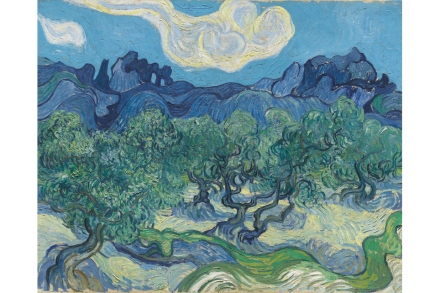
Van Gogh only got one major review in his career, and he was mystified by it. When the critic Albert Aurier described his six paintings in the 1890 Brussels exhibition of Les XX as the product of a ‘terrible and distraught genius’, the artist responded that, far from being a genius, he was ‘very secondary’ and that his sunflowers – now in the National Gallery – were no different ‘from so many pictures of flowers more skilfully painted’. If he were alive today he would probably have protested at the National Gallery making an exhibition of his work the high point of its bicentenary programme, but he would have liked its focus on his inspirations rather than his distress.

How Michael Craig-Martin changed a glass of water into a full-grown oak tree 

From our UK edition

‘Of all the things I’ve drawn,’ Michael Craig-Martin reflects, ‘to me chairs are one of the most interesting.’ We are sitting in his light-filled apartment above London, the towers of the City rising around us, and we are discussing a profound question, namely, what makes an object a certain type of thing? Or to put it another way, what makes a chair a chair? Craig-Martin’s career has been characterised by what he calls ‘my object obsession’. There will be chairs on view in the grand retrospective of his work which is about to open at the Royal Academy, but by no means only chairs. The galleries will be filled by a cavalcade of mundane bits and pieces, among them safety pins, filing cabinets, forks, smartphones, pliers, light bulbs and buckets.

The great French painter who had no time for France

From our UK edition

In 1855, Paul Gauguin’s widowed mother Aline returned to her husband’s family in Orleans after seven years in Peru. She brought back her daughter Marie, eight-year-old son Paul and her collection of pre-Columbian artefacts. They had no commercial value but those strange objects, sprouting the heads of birds and animals, had a power that the westernised world had lost touch with. They sank deep into the imagination of her wild, headstrong boy, who often described himself as ‘a savage from Peru’. After the sensory overload of South America, France and school were grey, cold and miserable. With education over, Gauguin insisted on going to sea and served in the navy in the Franco-Prussian war.

Why has Leonora Carrington still not had a big exhibition?

From our UK edition

‘It had nothing to endow it with the title of studio at all,’ was Edward James’s first impression of Leonora Carrington’s Mexico City workspace in 1946. ‘The place was combined kitchen, nursery, bedroom, kennel and junk store. The disorder was apocalyptic: the appurtenances of the poorest. My hopes and expectations began to swell.’ Carrington blended Egpytian, Mayan, Mesopotamian and Celtic legends learned at her nanny’s knee Over six decades in the creative chaos of this house on Calle Chihuahua, Carrington would paint some of her best-known works and write her quirky serio-comic novella The Hearing Trumpet, which is narrated by a 92-year-old woman.

The importance of copying

From our UK edition

The lunatics were once in charge of the asylum. The first six directors of the National Gallery were all artists: before art history became an academic discipline, artists were the leading authorities on art. Founded more as a teaching resource than a visitor attraction, until the mid-1940s the gallery was reserved for artists two days a week, when other visitors had to pay for entry. This stopped them getting in the way of artists copying from the masters, an essential part of an art education in the days before cheap colour reproduction. There’s something of the altarpiece in this image of an artist’s progenitors flanking a touchstone for his art It’s rare to see artists copying in the galleries now that they are so jam-packed with tourists.

Porcelain-painting during the French revolution

From our UK edition

People don’t accumulate stuff any more. When the late Victorian houses on our street change hands their interiors are stripped of all decorative features and the walls painted white, unrelieved by pictures: if their Victorian owners returned as ghosts, they would go snow-blind. The Victorians’ passion for accumulating stuff was close to an addiction, and no one accumulated it like the Rothschilds. But the Rothschilds didn’t stop at objects; they also collected exotic animals, especially birds. All the Rothschild chateaux and mansions boasted aviaries – and Baron Ferdinand de Rothschild’s Waddesdon Manor was no exception.

This British surrealist is a revelation

From our UK edition

When the 15-year-old Maggi Hambling arrived at Benton End in Hadleigh, Suffolk – home of the East Anglian School of Painting and Drawing – with two paintings to show the school’s founders, Cedric Morris and Arthur Lett-Haines, she was ushered into the dining room where Morris was having dinner. He made some criticisms but was very encouraging, then Lett-Haines came in and made the opposite criticisms but was encouraging too. As teachers, both believed in bringing out a student’s native talent – but as artists and characters, says Hambling: ‘They were polar opposites.

How a market town in Hampshire shaped Peggy Guggenheim

From our UK edition

On 24 April 1937 Marguerite Guggenheim – known as Peggy – of Yew Tree Cottage, Hurst was booked by a certain PC Dore for driving an unlicensed vehicle through nearby Petersfield. What was the founder of the famous Venice museum doing in a market town in Hampshire? It’s a long story, vividly told in an exhibition marking the 25th anniversary of the opening of Petersfield Museum on the site of the former police station and courthouse where she paid her £1 fine. ‘Peggy,’ said a friend, ‘is absolutely revolting about sex. Delicacy is unknown to her’ In the 1930s the Jewish-American heiress, who had lost her father Benjamin on the Titanic, was rattling around Europe with a fast crowd of writers and artists.

The beauty of pollution

From our UK edition

On the back of the British £20 note, J.M.W. Turner appears against the backdrop of his most iconic image. Voted the country’s favourite painting in 2005, ‘The Fighting Temeraire’ (1838) was Turner’s favourite too. It remained in his possession until his death; the 70-year-old artist swore in a letter of 1845 that ‘no consideration of money or favour can induce me to lend my Darling again’. But I suspect he would have approved of his darling’s current loan, along with that letter, to the Laing Art Gallery in Newcastle as part of the National Gallery’s bicentenary programme of loans of national treasures to regional museums.

The most original sea painter since Turner? Lowry

From our UK edition

In 1958 an elderly gentleman staying at the Castle Hotel in Berwick-upon-Tweed gave the receptionist a doodle he had made on the hotel’s notepaper. She kept it in a box and 43 years later, on the advice of Antiques Roadshow, sold it at auction for £8,000. ‘I don’t think anyone since Turner has looked at the sea with such an original eye’ A contemporary photograph shows that gentleman in his trademark trilby, dark suit and tie – no casual wear for L.S. Lowry – standing on the pier with Berwick in the background. Lowry (1887-1976) is not best known for his paintings of the sea, but there are 21 – including the receptionist’s sketch – in this interesting little exhibition in the Northumbrian town which he regular visited, and they cast him in an unaccustomed light.