Painting

The splendour of Edinburgh’s new Scottish galleries 

From our UK edition

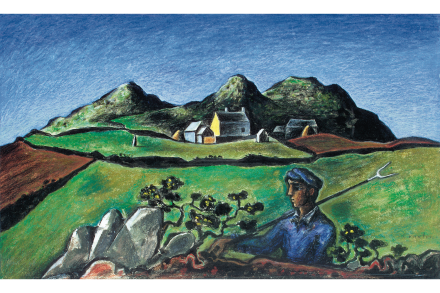
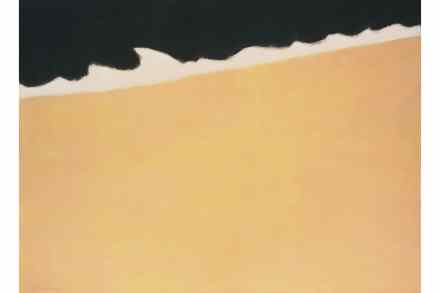
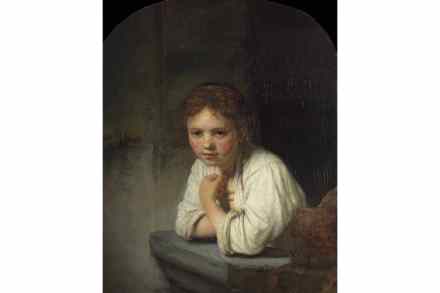
For nearly 50 years, the Scottish collection at Edinburgh’s National Galleries has been housed in a gloomy subterranean space beneath the main gallery, rarely visited, never celebrated. If you didn’t know it was there, don’t be ashamed. Just 19 per cent of visitors ventured into the bowels to find the jumble of Scottish paintings, dimly lit and hanging on colour-sucking, mucky green walls above a depressing brown carpet. Of those who did get there, lots immediately turned and fled back upstairs to the luminous comforts of Titian, Velazquez and Rubens. Safe to say, the space was not exactly showcasing Scottish art; a puzzling strategy for the country’s flagship gallery. The hang is uncluttered. Each painting has room to breathe But no more.
Why is Frans Hals still not considered the equal of Rembrandt?

From our UK edition

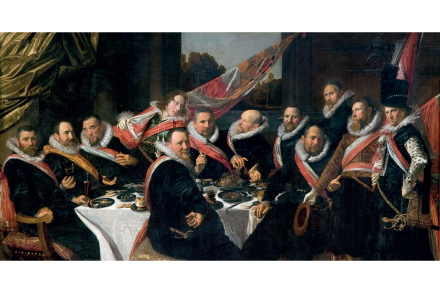
Who was Frans Hals? We know very little about him. He was baptised in either 1582 or 1583 in Antwerp. He died in 1666 at the age of 83 or 84. Approximately 220 works survive. One discredited narrative claimed Hals was a drunk – an inference probably based on his subject matter. There are several depictions of drinkers. On the other hand, there is his evident industry. Two streets in Haarlem, where he lived his entire life, have been identified, but not the actual houses. He was buried in St Bavo’s church in the Grote Markt, which was originally Catholic but became Protestant. There are two commemorative slabs next to each other in the chancel floor competing for authenticity. Which is appropriate, because there are two Frans Hals – the traditionalist and the innovator. They co-exist.

Lyrical and dreamlike: A World of Private Mystery – British Neo-Romantics, at the Fry Art Gallery, reviewed

From our UK edition

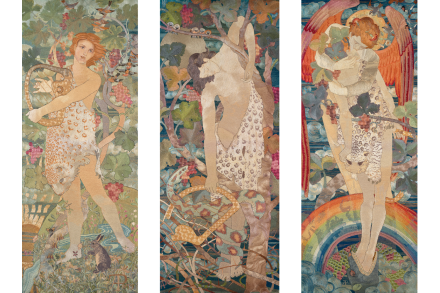
‘My daughter’s moving to Saffron Walden, away from all this,’ said the railway man at Stratford station, gesturing at the tower blocks overlooking the platform. ‘It’s like going back to the 1970s and ’80s.’ For the neo-romantics the pastoral mode was an escape from the grimness of everyday wartime reality Further back, in the case of Saffron Walden’s Fry Art Gallery. Purpose-built by a Victorian banker to house his collection, this gem of a gallery has since been devoted to collecting and showing artists who have lived and worked in north-west Essex, beginning with the group that congregated around Edward Bawden and Eric Ravilious in Great Bardfield from the 1930s.

The greatest artist chronicler of our times: Grayson Perry, at the Edinburgh Art Festival, reviewed

From our UK edition

The busiest show in Edinburgh must be Grayson Perry: Smash Hits which, a month into its run, still has people queuing at 10 a.m. His original title, National Treasure, was rejected because ‘national’ is a politically loaded term in Scotland. But Perry’s lens is resolutely fixed on England and Englishness. Seen from a Scottish perspective, this riot of rococo folkishness is familiar and exotic. Grayson Perry is the greatest artist chronicler of our times, with an omnificent style that’s all substance The exuberant exhibition, which is curated by the National Galleries of Scotland but showing at the Royal Scottish Academy and ends on 12 November, slaps the viewer around the face with its huge narrative tapestries, prints and pots.

An extraordinary woman: The Art of Lucy Kemp-Welch, at Russell-Cotes Art Gallery, reviewed

From our UK edition

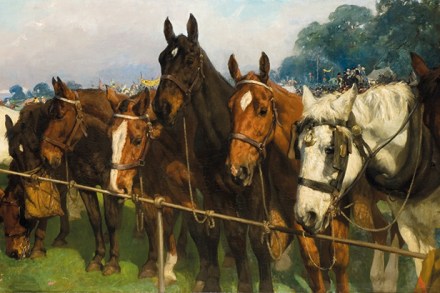
In March 1913 two horse painters met at the Lyceum Club to discuss the establishment of a Society of Animal Painters to raise the profile of their genre. Of the two, it was Alfred Munnings whose profile needed raising. Lucy Kemp-Welch had been a celebrity since her twenties when her 5x10ft canvas ‘Colt Hunting in the New Forest’ caused a sensation at the 1897 RA Summer Exhibition and was purchased by the Chantrey Bequest for the new National Gallery of British Art on Millbank. She threw herself into every activity she depicted, whether rounding up colts or hauling timber The daughter of a Bournemouth solicitor, Kemp-Welch had been riding and sketching horses since the age of five and had developed a photographic memory for catching them in action.

Move fast to snap up one of Elizabeth Blackadder’s sleek cats at the Scottish Gallery

From our UK edition

If there’s one thing the internet knows, it’s that cats sell. The Scottish painter Elizabeth Blackadder, who died in 2021 at the age of 89, knew it too. Her sinuous, characterful cat pictures, watercolours mostly but also oils and prints, helped cement her place as the nation’s favourite painter. She was an establishment favourite too, becoming the first woman to be elected to both the Royal Scottish Academy and the Royal Academy in London. In 1995, her cats adorned a set of Royal Mail stamps and, in 2001, she became the first woman to be appointed as Her Majesty’s Painter and Limner, a position unique to the Royal Household of Scotland, previously occupied by the likes of Henry Raeburn, David Wilkie and David Young Cameron.

Huge, impersonal canvases designed for the walls of billionaires: Tate Modern’s Capturing the Moment reviewed

From our UK edition

‘Photography has arrived at a point where it is capable of liberating painting from all literature, from the anecdote, and even from the subject. So shouldn’t painters profit from their newly acquired liberty, and make use of it to do other things?’ argued Picasso. The inventor of cubism took advantage of his liberty in ‘Buste de Femme’ (1938) to turn Dora Maar into a precursor of Peppa Pig, flaring her nostrils to form a snout. Perhaps he wanted to teach a photographer a lesson about paint by rubbing her nose in it. Picasso didn’t abandon the subject or the anecdote.

Inside the traditional art revolution

More and more often lately, people are rejecting tired modern art. They often find solace in the art of the past; online accounts admiring “traditional art” have amassed hundreds of thousands of followers, but they act as online repositories for a bittersweet recognition: what once was, no longer is. But the kind of art they seek, involving detail, meaning and skill, still exists, and it is growing. The cultural hegemony of contemporary, abstract art is slowly beginning to crack; through those cracks we can see new art surfacing. As I have become increasingly disillusioned with the state of politics, an observation from Ernst Jünger, the German philosopher and skeptic of the extreme politics of his day, rings true to me.

art revolution Milano Painting Academy

Fascinating forgeries: Art and Artifice – Fakes from the Collection, at the Courtauld, reviewed

From our UK edition

In 1998 curators at the Courtauld Institute received an anonymous phone call informing them that 11 drawings in their collection were fakes. The caller intimated that he was an associate of the notorious forger Eric Hebborn, who had claimed in his 1991 memoir, Drawn to Trouble, to have sold the institute a fake Rowlandson. The Sienese turned their training as restorers of Renaissance paintings to more profitable use The Courtauld had, in fact, already rumbled the Rowlandson before Hebborn boasted of putting one over on it; now it looked like it could be more than one. The other ten included three sketches by Tiepolo, three by Guardi and a drawing by Michelangelo.

Joshua Reynolds’s revival

From our UK edition

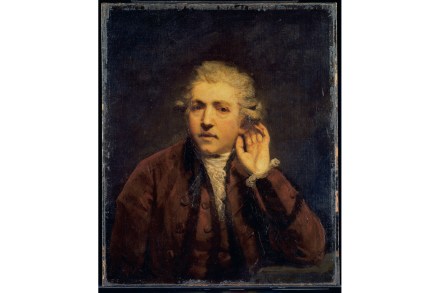
In front of the banner advertising the RA Summer Exhibition, the swagger statue of Sir Joshua Reynolds (1723-92) by Alfred Drury stands garlanded with flowers. But the Academy he founded won’t be marking his tercentenary with a retrospective, just a small display and a series of artists’ lectures. For an anniversary show, you have to travel to his native Devon. Ever since the Pre-Raphaelites dubbed him ‘Sir Sloshua’, Reynolds has been out of fashion Ever since the Pre-Raphaelites dubbed him ‘Sir Sloshua’, Joshua Reynolds has been out of fashion: blame the outmoded ideals of beauty he promoted in his Discourses and his role as portraitist to the Georgian establishment.

Georgia O’Keeffe wants you to take your time

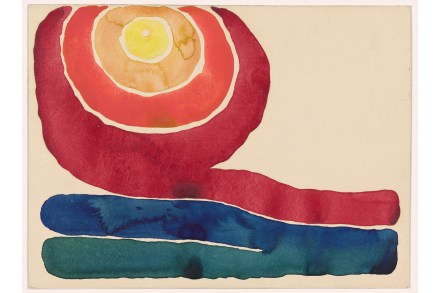
Georgia O’Keeffe is beloved for her oil paintings on canvas showing flowers and animal skulls: the first all soft, sensual openings; the second, spiky points and hardness.  Her works on paper are less well known. Yet, as MoMA’s exhibition, Georgia O’Keeffe: To See Takes Time, argues, paper played a key role in her early experimentation and art. As she told Alfred Stieglitz, the influential art gallerist and photographer who became her husband, “Why — it’s just like scrap paper. I throw it in the scrap heap and go on to something else.”  Paper is the beating heart of this retrospective, which shows 120 of O’Keeffe’s works from fifty-eight separate lenders, and which range from charcoal sketches to candy-colored pastels, rich watercolors to grainy graphite.

‘Evening Star No. III,’ 1917, by Georgia O’Keeffe (MoMa)

The quiet genius of Gwen John

From our UK edition

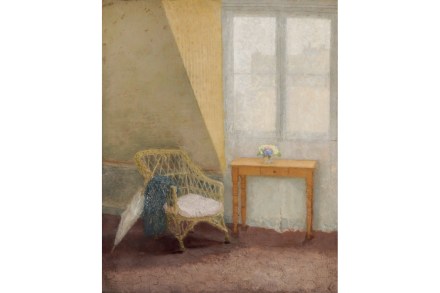
In the rush to right the historical gender balance, galleries have been corralling neglected women artists into group exhibitions: the Whitechapel Gallery rounded up 80 women abstract expressionists for its recent Action, Gesture, Paint show. But imbalances can’t be corrected retrospectively. Rather than elevating women artists who didn’t make it in a male-dominated world – not all of whose work, if we’re honest, helps the female cause – we should be celebrating the grit and talent of the few who did. And Berthe Morisot and Gwen John – currently the subjects of solo shows at Dulwich Picture Gallery and Pallant House – had both in spades.

Cape Town, the epicenter for African arts

In January of this year, I joined the yearly flight of "swallows" who descend on Cape Town. Thousands of pasty Europeans swap their own chilly hemisphere for a few weeks in technicolor paradise. A day in, I was sold. Mountains to climb, waves to surf, open-toe shoes, a completely unworn jacket. Everyone I met seemed to make this a yearly thing, and I could see why. I spent a few days gaping at the sublime natural beauty before something else caught my eye: the art scene. Cape Town is the epicenter for African arts. Boutique hotels and restaurants are beautifully appointed with painstakingly handmade creations everywhere you look. Museums and commercial galleries abound with exhibitions spanning the whimsical and politically charged.

cape town african arts

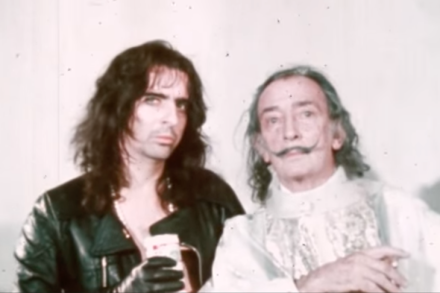
When Salvador Dalí met Alice Cooper

It was the ultimate summit between the two kings of pop-art camp, and one of the weirdest celebrity encounters even by the standards of 1970s New York. Salvador Dalí might have been the century’s most notorious modernist, but by the spring of 1973, when he was turning sixty-nine, his reign as the high priest of surrealism had descended into self-parody. Paintings such as his 1931 “The Persistence of Memory,” with its array of limp watches set in a barren landscape, had once sharply polarized critical opinion. For years, people saw Dalí either as a beacon of intellectual and emotional freedom, or as a madman who was more interested in money than art.

salvador dalí alice cooper

Do we need another Lucian Freud exhibition?

From our UK edition

Do we need another Lucian Freud exhibition? After years of exposure to his paintings of naked bodies posed like casualties of a car crash in a nudist camp, we might have reached the ‘move along, nothing to see here’ point. But it seems we can’t get enough of the monstre sacré. To mark the centenary of his birth in 1922, London is being treated to a Freud fest of no fewer than seven exhibitions, the most prestigious of which is at the National Gallery.

The unsettling business of painting the Queen’s portrait

From our UK edition

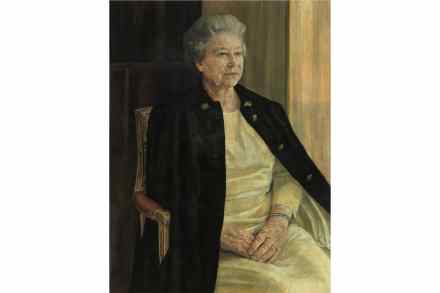
In March 1995, I entered the Royal Society of Portrait Painters annual exhibition with a portrait of the Right Revd Michael Adie CBE, Bishop of Guildford. A new prize had been created that year to be awarded to the best portrait in the show. Unusually, the reward was in the form of a commission to paint someone in public life. The identity of the sitter was a secret. The evening before the opening, I was informed, to my astonishment, that I had won and the sitter would be Her Majesty the Queen. I had to wait nearly six months before my first sitting. During that time there was very little I could do to prepare apart from think about how it might go.

There’s much more to Winslow Homer than his dramatic seascapes

From our UK edition

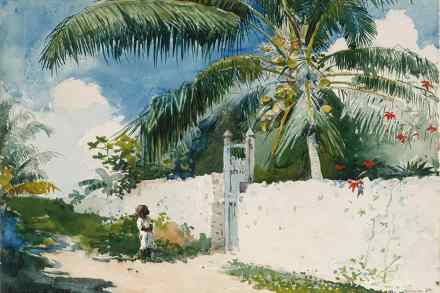
Until the invention of photography war reportage depended on old-fashioned illustration, and even after that the illustrated press took a while to catch up. Photographic reproduction didn’t work on cheap newsprint, which demanded a crispness of definition that early photography couldn’t provide. So reports on the American Civil War in the new illustrated periodicals aimed at the middle classes continued to rely on wood engraving, and it was as a print designer that the 25-year-old Winslow Homer was sent by Harper’s Weekly to cover the fighting in 1861. Apprenticed to a commercial lithographer at the age of 19, Homer had no formal training as an artist but he had a nose for the decisive moment that added drama to a reporter’s copy.

Guston is treated with contempt: Philip Guston Now reviewed

From our UK edition

Philip Guston is hard to dislike. The most damning critique levied against the canonical mid-century American painter is that he is too uncontroversial, his appeal too broad, his approach altogether too winsome. None of that stopped the team behind Philip Guston Now – a travelling mega-survey of his work, which will reach Tate Modern in 2023 – from announcing otherwise. In 2020, the year the show was due to open, the curators announced that in light of the ‘racial justice movement’, the artist’s works might now legitimately be read as racist, and the show could not go forward as planned. This was and is quite obviously nonsense. The works in question are marshmallow-like renderings of Klansmen in absurd, mundane scenes.

As cool and refreshing as a selection of sorbets: RA’s Milton Avery show reviewed

From our UK edition

‘I like the way he puts on paint,’ Milton Avery said about Matisse in 1953, but that was as much as he was prepared to say. Contemporary critics tried to ‘pin Matisse’ on him as if art criticism were a branch of police work. He resisted, and remains a slippery customer. Post-impressionist or abstract expressionist? Colour field painter with added figures? To those who view art history as the march of progress towards modernism, he looks like a backslider. Clement Greenberg thought as much, dismissing him in 1943 as ‘a “light” modern who can produce offspring of Marie Laurencin and Matisse that are empty and sweet with nice flat areas of colour…’ Ouch.

A showstopper is at the heart of this winning show: Dulwich Gallery’s Reframed – The Woman in the Window reviewed

From our UK edition

Themed exhibitions pegged to particular pictures in museum collections tend to be more interesting to the museum’s curators than to the general public. But with Reframed: The Woman in the Window Dulwich Picture Gallery is on to a winner, as not only is the particular picture a showstopper, but the theme opens up a whole can of feminist worms. Whether it’s her pensive pose, her idle fiddling with her necklace or the shy look in her shadowed eyes, Rembrandt’s ‘Girl at a Window’ (1645) is impossible to walk past. Scholars continue to bicker about her status. Serving wench? Kitchen maid? Prostitute? Rembrandt’s lover?