Painting

Europe’s eye-popping first glimpse of the Americas

From our UK edition

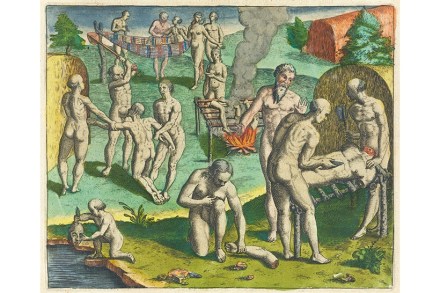
Coronavirus has cast a dampener over this year’s Mayflower 400 celebrations due to a hidden enemy with which the Pilgrim Fathers were all too familiar: within months of their arrival in America more than half of them had died of a disease whose principal symptom was violent coughing. There was no official artist on the Mayflower. Its ragtag party of Separatist Puritans had only been granted a charter on condition that their religious affiliation, banned in England, was not formally recognised.
William Boyd on the miraculous snaps of boy genius Jacques Henri Lartigue

From our UK edition

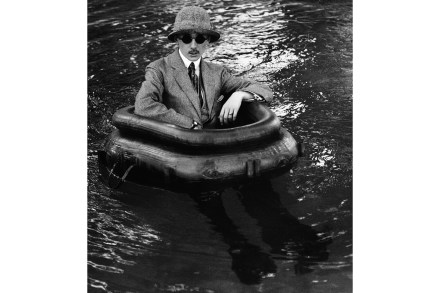
What must it be like for an artist to achieve success only at the end of a long, relatively ignored career? The word ‘bittersweet’ seems particularly apt. Yet, late recognition is better, I suppose, than dying in oblivion like Vincent van Gogh, Franz Kafka or John Kennedy Toole. One of my favourite photographers, Jacques Henri Lartigue (1894–1986), did manage to savour the sweet smell of success in his old age. Lartigue’s late flowering was down to New York’s Museum of Modern Art and its then director of photography, John Szarkowski. There’s a very good argument to be made that during Szarkowski’s tenure at MoMA (1962–91) his shows transformed 20th-century photography.

Sumptuous and saucy: Compton Verney’s Cranach show reviewed

From our UK edition

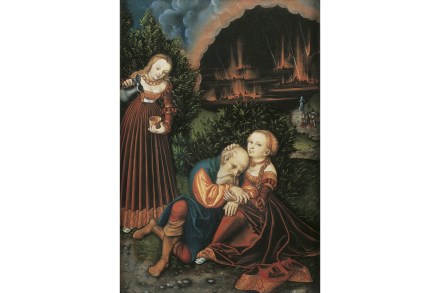
‘Naughty little nudes,’ my history of art teacher used to say of Cranach’s Eves and Venuses. Aren’t they just? Coquettish and compact. Kenneth Clark thought they had ‘chic’. Cranach’s nudes are rarely truly naked. They wear Ascot hats, golden chokers, filmy wisps of gossamer girdle. Take the goddess in the National Gallery’s ‘Cupid Complaining to Venus’ (c.1526–7). Don’t you long for her to take off her ostrich feather hat and tickle you with it? ‘Hallo, Jungs.’ See how she plays footsie with a branch of the tree. How she brushes the back of her hand against its trunk. Note the double necklace. Always accessorise.

From Middlemarch to Mickey Mouse: a short history of The Spectator’s books and arts pages

From our UK edition

The old masters: how well they understood. John Betjeman’s architecture column ran for just over three years in the mid-1950s. Yet during that short run he experienced the moment that comes, sooner or later, to every regular writer in The Spectator’s arts pages. ‘It is maddening the way people corner one and make one discuss politics at the moment,’ he wrote on 23 November 1956, clearly as bored of the Suez crisis as the rest of us were, until recently, by Brexit: Because I write in this paper, people assume that I share its Editor’s views about Suez… But I don’t know what the views of this paper about Suez are, because I never read the political stuff in front.

The life of Artemisia Gentileschi is made for Netflix, but it’s the art that really excites

From our UK edition

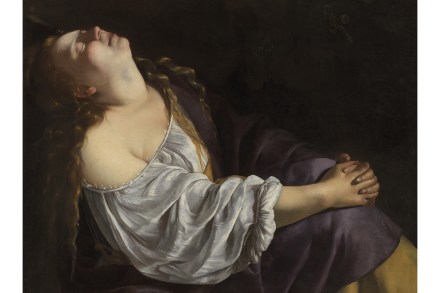
‘It’s true, it’s true, it’s true.’ Over and over she said it. ‘E vero, e vero, e vero.’ It’s true he raped me. It’s true I was a virgin. It’s true all I say. Even under judicial torture, even with cords wrapped around her fingers and pulled tight, she did not waver. ‘E vero.’ These words, spoken by the 17-year-old Artemisia Gentileschi, have come down to us in a trial transcript of 1612. This haunting document, never seen outside the state archives in Rome, will be shown for the first time in the National Gallery’s forthcoming Artemisia exhibition. Artemisia ought to have opened this month. Curator Letizia Treves has been through hell and high water. Italy in lockdown. American flights suspended.

To ‘review’ such supreme paintings is slightly absurd: Titian at the National Gallery reviewed

From our UK edition

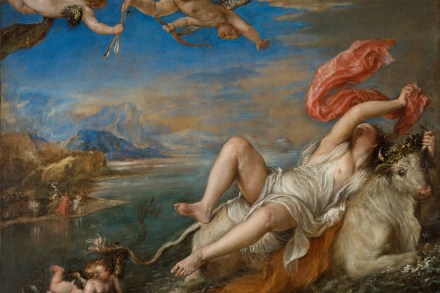
In 1576 Venice was gripped by plague. The island of the Lazzaretto Vecchio, on which the afflicted were crammed three to a bed, was compared to hell itself. In the midst of this horror Tiziano Vecellio, the greatest painter in Europe, died — apparently of something else. He was in his eighties and working, it seems, almost to the end. Titian: Love, Desire, Death, which was briefly on at the National Gallery, before it was closed down this week by our own plague, contained several of the greatest masterpieces of his old age — and also of European art. It comprises just seven canvases, all done for Philip II of Spain — a villain of English history, the man who launched the Armada, but as far as Titian was concerned his most discerning patron.

Mother nature is finally getting the art she deserves

From our UK edition

I guess that few would currently dispute that the world is in crisis. I’m not talking about Covid-19. Nor am I primarily addressing the issues arising from the 36 billion tonnes of carbon that the human project sends into our atmosphere every year. Climate chaos is a part of the issue, but I’m thinking principally of those things that most impact upon the biosphere as an ongoing live enterprise.

Why did David Bomberg disappear?

From our UK edition

David Bomberg was only 23 when his first solo exhibition opened in July 1914 at the Chenil Gallery in Chelsea. ‘I am searching for an Intenser expression,’ the brash young painter wrote in the introduction to the catalogue. ‘I hate… the Fat Man of the Renaissance.’ As if to advertise his radical intentions, the first work in the exhibition, the strikingly geometric ‘The Mud Bath’, was hung outside the gallery, facing the street. Bomberg was endowed with a self-belief bordering on conceit. Born in 1890, the fifth of 11 children of Polish-Jewish immigrants, he spent his childhood in the overcrowded slums of Birmingham and east London.

Martin Gayford visits the greatest one-artist show on Earth

From our UK edition

For a good deal of this autumn, I was living in Venice. This wasn’t exactly a holiday, I’d like to point out, but a suitable place to work while beginning a new book. The result was, though, that week after week, when I had finished writing, I went for a stroll around the neighbourhood, Dorsoduro, which very quickly came to feel like home. One thing I realised as I wandered around, between buying the groceries and admiring the view, was just how crammed the city was with works by Tintoretto. There must have been well over 70 within a few minutes of the apartment where I was staying. There are other painters who are rightly classed as ‘Venetian’ — Titian, Veronese, Giorgione and the Bellini family among them.

Meet Congo, the Leonardo of chimps, whose paintings sell for £14,500

From our UK edition

Three million years ago one of our ancestors, Australopithecus africanus, picked up a pebble and took it home to its cave, most likely because the pattern of lines and holes on its surface looked beguilingly like a face. Perhaps this was the birth of art. Or perhaps not. Maybe art arrived in this world later. One day in 1940 Marcel Ravidat was walking in the Dordogne when his dog, Robot, fell into a hole. Robot had stumbled across the entrance to a network of caves containing more than 600 wall and ceiling paintings of horses, deer, aurochs, ibex, bison and cats dating from 17,000 to 15,000 BCE. The discovery of Lascaux’s caves in the era of the Holocaust and Hiroshima resonated for many.

The forgotten masterpieces of Indian art

From our UK edition

As late as the end of the 18th century, only a handful of Europeans had ever seen the legendary Mughal capital of Delhi, which, within living memory, had been the largest, richest and most spectacularly beautiful city on earth, twice the size of London and Paris combined. But after a century of anarchy, Delhi was not what it once was. By 1805, it lay half-ruined and sparsely populated, ruled by a blind Emperor from a crumbling palace. Delhi’s ruins bewitched the young artist James Baillie Fraser when he arrived in the 1810s from Calcutta. Fraser was already planning two series of aquatints, one on Calcutta, the other of the Himalayas.

To fill a major Tate show requires a huge talent. Dora Maar didn’t have that

From our UK edition

Dora Maar first attracted the attention of Pablo Picasso while playing a rather dangerous game at the celebrated left-bank café Les Deux Magots. She ‘kept driving a small pointed penknife between her fingers into the wood of the table’. From time to time she missed, and a drop of blood appeared on her gloves. This alarming form of digital Russian roulette was the basis for an early work by the performance artist Marina Abramovic, who will be featured at a major show at the Royal Academy next autumn. There is nothing so arresting in the large exhibition devoted to Maar’s work at Tate Modern as the images of the artist herself, and not only those by Picasso. There are some individuals who have an impact on the arts through sheer force of personality.

Remarkable and imaginative: Fitzwilliam Museum’s The Art of Food reviewed

From our UK edition

Eating makes us anxious. This is a feature of contemporary life: a huge amount of attention is devoted to how much we eat, when we eat it, where it comes from, to toxic foods, organic and inorganic ones, environmentally damaging groceries, those that tot up too much mileage or cause damage to the rainforest. Some of these worries are relatively novel, but preoccupation with the nourishment we consume is not. A remarkable and imaginative exhibition at the Fitzwilliam Museum, Cambridge, Feast & Fast: The Art of Food in Europe, 1500–1800, documents just how obsessed our ancestors were with every aspect of their meals. At its heart are a series of recreations by Ivan Day, a specialist on the subject of what can only be described as edible art.

The pleasures and perils of talking about art on the radio

From our UK edition

‘I like not knowing why I like it,’ declared Fiona Shaw, the actress, about Georgia O’Keeffe’s extraordinary blast of colour, ‘Lake George, Coat and Red’. O’Keeffe was inspired by the lake in upstate New York but there’s no discernible lake on the canvas and no coat, although there is plenty of red. When Shaw is asked to describe the painting for us, her listeners, by Alastair Sooke, the presenter of The Way I See It, she puts her head in her hands. It’s almost like an amateur painting, Shaw concludes, and yet ‘it absolutely isn’t’. It’s an early work from 1919 when O’Keeffe was 32.

Free of Lucian Freud — Celia Paul’s road to fulfilment

From our UK edition

I was looking the other day at a video of the artist Celia Paul in conversation with the curator of her recent exhibition at the Huntington Library in California. The image projected there of a reserved and quietly-spoken woman, hesitant, diffident and patently ill at ease in the spotlight, left me very unprepared for the raw honesty and openness of this memoir. Two early stories give an idea of what lies ahead. The first is of her five-year-old self, the youngest so far in a family of four daughters of a missionary father in India, making herself seriously ill with jealousy on the arrival of a fifth sister.

Leonardo in Paris

ParisThe Louvre’s Leonardo da Vinci is the latest Renaissance master in a procession of epic anniversary retrospectives — after 2017’s hugely popular Michelangelo: Divine Draftsman and Designer at the Metropolitan Museum of Art in New York City, before next year’s inevitably popular marking of the cinquecentenary of the death of Raphael at the National Gallery in London. This year, with Leonardo’s posterity passing the same necroversary, the Louvre is augmenting its five Leonardo oils –– more than any other museum, thanks to the light fingers of legendary art critic Napoleon Bonaparte –– with a further six loans.

leonardo

The enduring allure of ‘er indoors

From our UK edition

‘She’s only a bird in a gilded cage, a beautiful sight to see. You may think she’s happy and free from care; she’s not though she seems to be.’ When the British lyricist Arthur J. Lamb first offered the lyrics of ‘A Bird in a Gilded Cage’ to the Tin Pan Alley tunesmith Harry Von Tilzer, he was told to go back home and clean them up. Lamb had made the subject of his song a rich man’s mistress; for mass-market appeal she needed to be married. In its revised version ‘A Bird in a Gilded Cage’ shot to the top of the 1900 sheet-music charts. For some strange reason the idea of the kept woman, married or unmarried, continues to exert a fascination on both sexes.

The beauties of the universe are revealed in the paintings of Pieter de Hooch

From our UK edition

In the early 1660s, Pieter de Hooch was living in an area of what we would now call urban overspill surrounding the commercial boom town of Amsterdam. It wasn’t the best of neighbourhoods. Nearby was a little street nicknamed ‘whorehouse alley’ (het hoerenpad). Tanners plied their trade thereabouts, which involved soaking hides in urine. But smells and sounds are not necessarily recorded in pictures, and in this 17th-century version of affordable housing, De Hooch painted images of utter domestic tranquillity. One such picture, ‘A Mother’s Duty’ (c.1658–60), is among the star exhibits in a delightful little exhibition of De Hooch’s work at the Museum Prinsenhof, Delft.

Pilferer, paedophile and true great: Gauguin Portraits at the National Gallery reviewed

From our UK edition

On 25 November 1895, Camille Pissarro wrote to his son Lucien. He described how he had bumped into his erstwhile protégé, Paul Gauguin, who had explained to him how artists in the future would ‘find salvation by replenishing themselves’ from the works of remote peoples and places. Pissarro was not convinced. Gauguin, he grumbled, was always ‘poaching’ from someone. Once it had been Pissarro and his fellow impressionists, now it was the native peoples of Oceania. Plus ça change… Over the succeeding century and a quarter, Gauguin (1848–1903) has frequently been condemned.

The rare gifts of Peter Doig

From our UK edition

‘My basic intention,’ the late Patrick Caulfield once told me, ‘is to create some attractive place to be, maybe even on the edge of fantasy — warm, glowing, but often, by use, rather seedy.’ He frequently succeeded, as you can see from a beautifully mounted little exhibition at the Waddington Custot Gallery. It is a reminder of what a witty and inventive artist Caulfield (1936–2005) could be. Four screen prints from 1971, ‘Interior: Morning, Noon, Evening and Night’, give a virtuoso display of the visual legerdemain he could work using the simplest of props. These all have the same basic design: a window frame, consisting of thick, black lines, with a lampshade dangling in front of it.