Painting

Antony Gormley: why sculpture is far superior to painting

From our UK edition

Antony Gormley: In the beginning was the thing! The reason I chose sculpture as a vocation was to escape words, to communicate in a physical way. It was a means of confronting the way things were, of getting to know them in material terms. The origins of making physical objects go back to before the advent of Homo sapiens, earlier even than the appearance of our Neanderthal cousins. Sculpture emerges from material culture. At the beginning there was an urge to make objects and you could argue that making them was the catalyst for the emergence of the modern mind.

Entertaining – but there’s one abomination: National Gallery’s Sin reviewed

From our UK edition

Obviously, we’re living through an era of censorious puritanism. Granted, the contemporary creeds are different from those of the 16th century. But the imperious self--righteousness is much the same — which gives the entertaining little exhibition at the National Gallery entitled Sin an unexpectedly contemporary edge. Personally, I’ve always thought that the doctrine of original sin has a great deal of explanatory power (it explains why history can’t ‘end’ and plenty of things will always go wrong — because that’s the way people are). Arguably, the medieval list of deadly failings — anger, pride, sloth, etc — provides a better summary of human nature than many later attempts.

A high-end car-boot sale of the unconscious: Colnaghi’s Dreamsongs reviewed

From our UK edition

In 1772 the 15-year-old Mozart wrote a one-act opera set, like The Magic Flute, in a dream world. Il sogno di Scipione was based on an account in Cicero’s Republic of a dream experienced by the Roman general Scipio Aemilianus while serving in North Africa in 148 BC. In the dream the younger Scipio is visited by his adoptive grandfather Scipio Africanus, who foretells his destruction of Carthage, dishes out advice on dealing with populist politics and shows him ‘the stars such as we have never seen them from this earth’. Scipio’s is a recurring dream: it inspired Dante’s vision of Heaven and Hell and it returns to haunt us in Colnaghi’s latest exhibition Dreamsongs.

Still painting after all these years

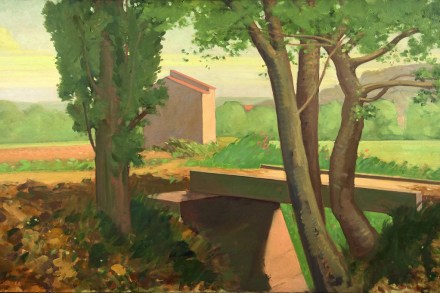
On March 14, 1847, Eugène Delacroix made a trip to the studio of his colleague and countryman Camille Corot. Later that day, Delacroix recorded in his journal a feeling of newfound appreciation for the painter’s landscapes: ‘Corot is a true artist. One has to see a painter in his own place to get an idea of his worth.’ The Corot paintings that Delacroix had recently viewed at the Paris Salon seemed to hold new meaning after his seeing the site of their creation. As to exactly what had changed, or what he saw that changed it, Delacroix does not — perhaps could not — tell us. Few modern painters can claim as close a kinship to the spirit of Corot as Paul Resika.

resika

The mediums who pioneered abstract art

From our UK edition

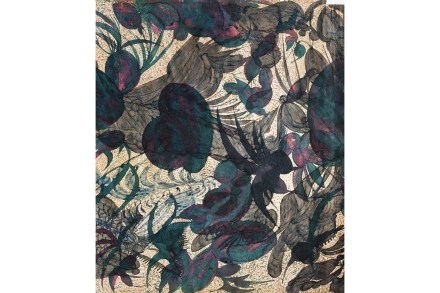
In the 1850s Britain was hit by an epidemic likened by The Illustrated London News to a ‘grippe or the cholera morbus’. It came from America rather than China and afflicted the mind rather than the body. The craze for table-turning was sparked in Hydesville, New York, in 1848 after two young sisters, Maggie and Kate Fox, claimed to hear mysterious rappings in the floor of the family home and attributed them to a spirit called Mr Splitfoot. Epidemics are by nature democratic, respecting neither education nor class. Eminent naturalists, scientists, novelists and social reformers were gripped by the grippe. When unseen forces such as electromagnetic waves were being discovered, who was to say they might not include channels for communication with the dead?

The beautiful upside-down world of Georg Baselitz

From our UK edition

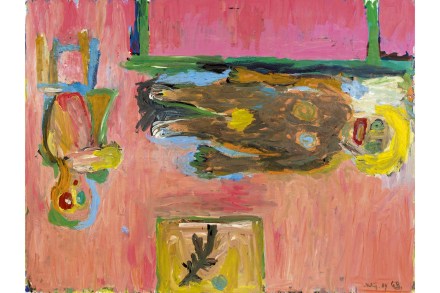
The hand is one of the first images to appear in art. There are handprints on the walls of caves in southern France, Indonesia and Argentina, made up to 50,000 years ago, which, although no doubt an illusion, seem to be waving at us across a vast gulf of time. The gigantic paintings of golden hands by Georg Baselitz at White Cube Mason’s Yard don’t quite do that, but the effect is still solemn and primeval. They dangle in front of you, fingers extended downwards, cut off at the wrist, each one the size of a whole body and glittering on a background of brownish black. There are also some drawings and sculptures of hands on view, but the star turns are the big canvases. They look like altarpieces dedicated to a cult of the hand and what it can do.

Liberty and death: Jacob Lawrence’s struggle for freedom

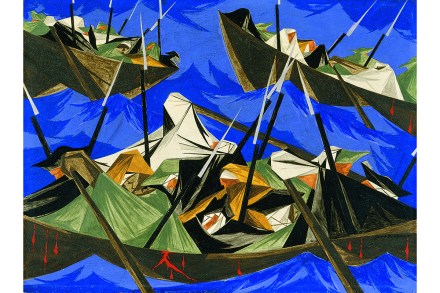
Few artworks could be more responsive to the current upheaval than Jacob Lawrence’s 1954-56 series ‘Struggle...From the History of the American People’. Painted during the dawn of the Civil Rights movement, the cycle of 30 panels tells a history of the American Founding through punchy modernist vignettes, engaging with timely and timeless topics such as brutality, race, memory, justice and our shared national heritage. At the Metropolitan Museum of Art, 24 of the original panels have been reunited for the most complete exhibition of the series since its original showing more than six decades ago. The exhibition will travel to Birmingham, Seattle and Washington, DC from New York.

jacob lawrence

Imagine being married to Stanley Spencer

From our UK edition

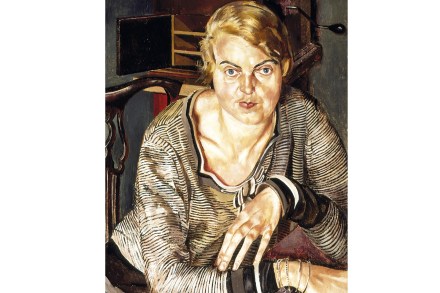
It sometimes rains in Cookham. It rained all day when I visited the Stanley Spencer Gallery to see the exhibition Love, Art, Loss: The Wives of Stanley Spencer. But it rarely rained for Spencer, or at least never in his pictures of his hallowed birthplace, where even when skies are grey the red brick of the houses is warmed by the eternal summer sun of childhood. Not in the winter of 1937, though. That winter saw the 46-year-old artist rattling around his seven-bed family home, divorced from first wife Hilda Carline and separated from second wife Patricia Preece, painting pictures of grotesquely ill-matched couples who seemed unaccountably happier than him.

Figurative painting is back – but how good is any of it?

From our UK edition

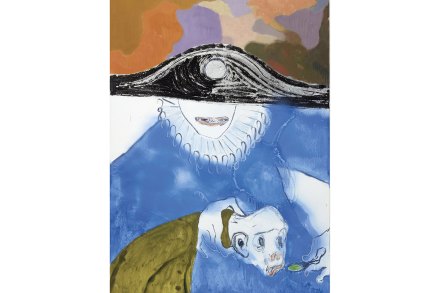
An oxymoron is a clever gambit in an exhibition title. The Whitechapel Gallery’s Radical Figures: Painting in the New Millennium is designed to trigger the reaction: ‘Radical? Figures?’ before revealing quite how radical the figure can be. But like all good marketing, it is deceptive. Figurative art may have been consigned to history by Clement Greenberg 80 years ago, but history since — neo-romanticism, school of London, neo-expressionism — has repeatedly proved him wrong. The ten painters in this exhibition aren’t a school: the only thing their work has in common is its statement-making scale.

I didn’t expect to be so moved – galleries reopen

From our UK edition

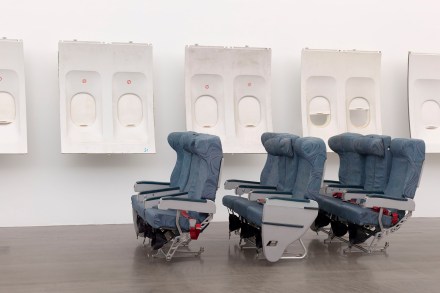
I’m in Mayfair and I’m boarding an airplane. Or rather, I’m boarding an approximation of an airplane. In the centre of Hauser & Wirth, there are airplane seats, organised into a formation that resembles a section of economy, and dislocated windows, hung on the walls where paintings might normally be. The seatbacks are stuffed, and a spring/summer 2012 edition of Sky Shop magazine is splayed across one of the seats. We are frozen in time and space. Like most of us in recent months, this plane — an installation by German artist Isa Genzken — isn’t going anywhere. It remains perpetually rooted. Its windows open on to white walls.

From Hogarth to Mardi Gras: the best art podcasts

From our UK edition

If you study History of Art, people generally assume you’re a nice, conscientious, plummy-voiced girl. Sometimes, people are right. It is the only subject I can think of that requires a student to describe what is already printed on the exam sheet. ‘In the foreground of the picture is a tree — in full leaf! — and on the horizon, a tower.’ It feels a little basic. But with art history podcasts description is everything. And to do it well is a real art in itself. The presenters of the Art Newspaper’s The Week in Art podcast were superb last week in their exploration of a portrait by William Hogarth.

How John Constable got masterpiece after masterpiece out of a tiny corner of rural Suffolk

From our UK edition

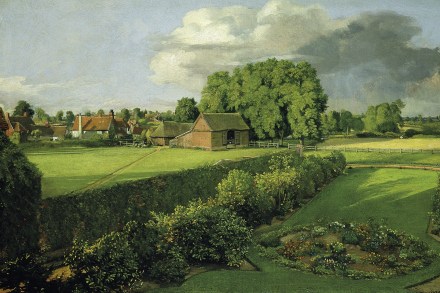
Before his marriage John Constable returned regularly in early summer to his native village of East Bergholt. When he wrote from there to his wife-to-be, Maria Bicknell, he almost always exclaimed that Suffolk was ‘in great beauty’. His enthusiasm was never more eloquent than on 22 June 1812, when he declared: ‘Nothing can exceed the beautiful appearance of the country at this time, its freshness, its amenity — the very breeze that passes the window is delightful, it has the voice of Nature.’ I often think about Constable (1776–1837) as I pace across the water meadows on my daily constitutional — partly because this too is an East Anglian landscape not unlike the one he was writing about: flat, leafy, watery, abounding in willows.

Europe’s eye-popping first glimpse of the Americas

From our UK edition

Coronavirus has cast a dampener over this year’s Mayflower 400 celebrations due to a hidden enemy with which the Pilgrim Fathers were all too familiar: within months of their arrival in America more than half of them had died of a disease whose principal symptom was violent coughing. There was no official artist on the Mayflower. Its ragtag party of Separatist Puritans had only been granted a charter on condition that their religious affiliation, banned in England, was not formally recognised.

William Boyd on the miraculous snaps of boy genius Jacques Henri Lartigue

From our UK edition

What must it be like for an artist to achieve success only at the end of a long, relatively ignored career? The word ‘bittersweet’ seems particularly apt. Yet, late recognition is better, I suppose, than dying in oblivion like Vincent van Gogh, Franz Kafka or John Kennedy Toole. One of my favourite photographers, Jacques Henri Lartigue (1894–1986), did manage to savour the sweet smell of success in his old age. Lartigue’s late flowering was down to New York’s Museum of Modern Art and its then director of photography, John Szarkowski. There’s a very good argument to be made that during Szarkowski’s tenure at MoMA (1962–91) his shows transformed 20th-century photography.

Sumptuous and saucy: Compton Verney’s Cranach show reviewed

From our UK edition

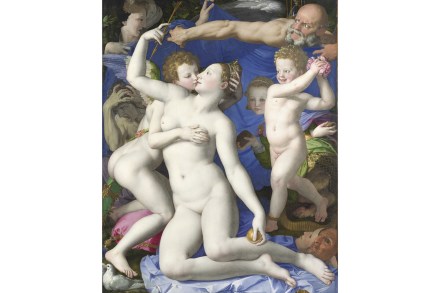
‘Naughty little nudes,’ my history of art teacher used to say of Cranach’s Eves and Venuses. Aren’t they just? Coquettish and compact. Kenneth Clark thought they had ‘chic’. Cranach’s nudes are rarely truly naked. They wear Ascot hats, golden chokers, filmy wisps of gossamer girdle. Take the goddess in the National Gallery’s ‘Cupid Complaining to Venus’ (c.1526–7). Don’t you long for her to take off her ostrich feather hat and tickle you with it? ‘Hallo, Jungs.’ See how she plays footsie with a branch of the tree. How she brushes the back of her hand against its trunk. Note the double necklace. Always accessorise.

From Middlemarch to Mickey Mouse: a short history of The Spectator’s books and arts pages

From our UK edition

The old masters: how well they understood. John Betjeman’s architecture column ran for just over three years in the mid-1950s. Yet during that short run he experienced the moment that comes, sooner or later, to every regular writer in The Spectator’s arts pages. ‘It is maddening the way people corner one and make one discuss politics at the moment,’ he wrote on 23 November 1956, clearly as bored of the Suez crisis as the rest of us were, until recently, by Brexit: Because I write in this paper, people assume that I share its Editor’s views about Suez… But I don’t know what the views of this paper about Suez are, because I never read the political stuff in front.

The life of Artemisia Gentileschi is made for Netflix, but it’s the art that really excites

From our UK edition

‘It’s true, it’s true, it’s true.’ Over and over she said it. ‘E vero, e vero, e vero.’ It’s true he raped me. It’s true I was a virgin. It’s true all I say. Even under judicial torture, even with cords wrapped around her fingers and pulled tight, she did not waver. ‘E vero.’ These words, spoken by the 17-year-old Artemisia Gentileschi, have come down to us in a trial transcript of 1612. This haunting document, never seen outside the state archives in Rome, will be shown for the first time in the National Gallery’s forthcoming Artemisia exhibition. Artemisia ought to have opened this month. Curator Letizia Treves has been through hell and high water. Italy in lockdown. American flights suspended.

To ‘review’ such supreme paintings is slightly absurd: Titian at the National Gallery reviewed

From our UK edition

In 1576 Venice was gripped by plague. The island of the Lazzaretto Vecchio, on which the afflicted were crammed three to a bed, was compared to hell itself. In the midst of this horror Tiziano Vecellio, the greatest painter in Europe, died — apparently of something else. He was in his eighties and working, it seems, almost to the end. Titian: Love, Desire, Death, which was briefly on at the National Gallery, before it was closed down this week by our own plague, contained several of the greatest masterpieces of his old age — and also of European art. It comprises just seven canvases, all done for Philip II of Spain — a villain of English history, the man who launched the Armada, but as far as Titian was concerned his most discerning patron.

Mother nature is finally getting the art she deserves

From our UK edition

I guess that few would currently dispute that the world is in crisis. I’m not talking about Covid-19. Nor am I primarily addressing the issues arising from the 36 billion tonnes of carbon that the human project sends into our atmosphere every year. Climate chaos is a part of the issue, but I’m thinking principally of those things that most impact upon the biosphere as an ongoing live enterprise.

Why did David Bomberg disappear?

From our UK edition

David Bomberg was only 23 when his first solo exhibition opened in July 1914 at the Chenil Gallery in Chelsea. ‘I am searching for an Intenser expression,’ the brash young painter wrote in the introduction to the catalogue. ‘I hate… the Fat Man of the Renaissance.’ As if to advertise his radical intentions, the first work in the exhibition, the strikingly geometric ‘The Mud Bath’, was hung outside the gallery, facing the street. Bomberg was endowed with a self-belief bordering on conceit. Born in 1890, the fifth of 11 children of Polish-Jewish immigrants, he spent his childhood in the overcrowded slums of Birmingham and east London.