P. g. wodehouse

Where will the vogue for censoring our best-loved authors lead?

From our US edition

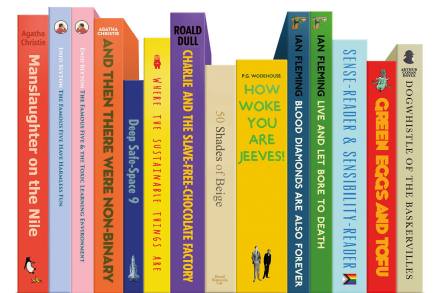
It was recently announced in the Daily Telegraph that the novels of P.G. Wodehouse — much beloved by millions, including me, for their combination of wit and soufflé-light evocation of an England that never really existed but which almost might have done — are the latest to fall foul of that new scourge of writers the world over, the “sensitivity reader.” New editions of Wodehouse’s masterly works Right Ho, Jeeves and Thank You, Jeeves have been reissued with the craven disclaimer “Please be aware that this book was published in the 1930s, and contains language, themes and characterizations which you may find outdated. In the present edition, we have sought to edit, minimally, words that we regard as unacceptable to present-day readers.

authors

In the soup

From our US edition

Ah, autumn, season of mists and mellow soupfulness, as the poet Keats didn’t quite say. In southern England, where Keats was inspired to write his famous ode to summer’s red-and-golden aftermath, fall mists may stick around all day; but in New England, they burn off with the morning sun, giving way late in the day to heady breezes that blow clean through the soul. It was Geoffrey Chaucer who brought the word autumn into the English language. As sure as ‘Aprill with his shoures soote’ leads ‘folk to goon on pilgrimages’, so October cries out for vigorous outdoor activity followed by autumnal soup.

soup

Ask Jeeves: who first came out with ‘What ho’?

In the First Act of Othello, just as things are getting interesting, the audience hears someone calling from offstage: ‘What ho, what ho, what ho!’ It is not Bertie Wooster but a sailor with news about the Turks (or Ottomites, as they are sometimes referred to). Yet Bertie made ‘what ho’ his own. In Jeeves and the Unbidden Guest, Lord Pershore, known as Motty, has been billetted on Bertie, who goes to see how he is the morning, after returning spifflicated from a night out. He is sitting up in bed. ‘What ho!’ I said.‘What ho!’ said Motty.‘What ho! What ho!’‘What ho! What ho! What ho!After that it seemed rather difficult to go on with the conversation.

It’s all in a name: the stories behind book dedications

From our US edition

Don’t skip over the dedications in books. They can be as illuminating as the stories they precede and shine an intriguing light on the author’s private life and loves: Jane Austen and Edmund Spenser [caption id="attachment_9876775" align="alignnone" width="739"] Family portrait of Jane Austen[/caption] The dedication to Jane Austen’s Emma reads: ‘To His Royal Highness The Prince Regent, This Work Is By His Royal Highness’s Permission, Most Respectfully Dedicated, By His Royal Highness’s Dutiful And Obedient Humble Servant, The Author.’ The Prince Regent was George Augustus Frederick, uncle of Queen Victoria and the eldest of George III’s children. He was self-indulgent and excessive.

book dedications