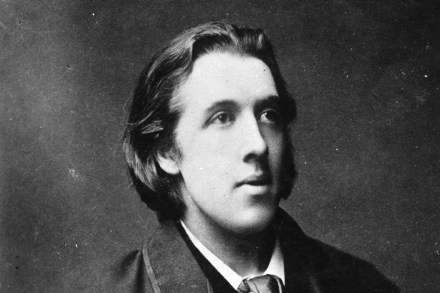
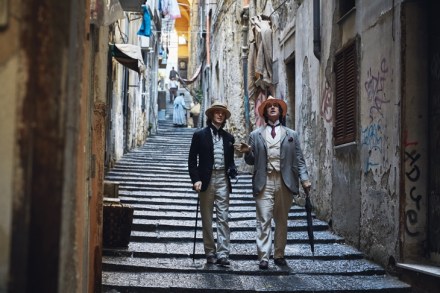
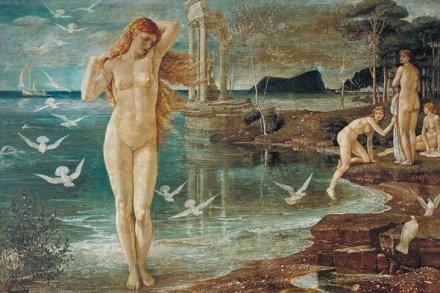
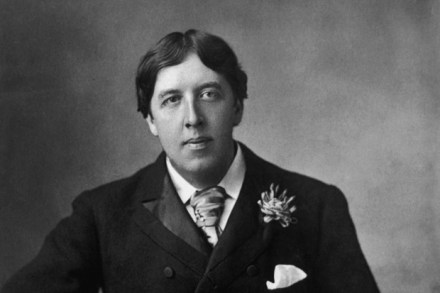
Oscar wilde

No fear | 21 June 2018

From our UK edition

Hereditary is the horror film that has been described as a ‘ride of pure terror’ and likened to The Exorcist and Rosemary’s Baby and The Shining, to which I can say only: in its dreams. Given I’m such a wuss when it comes to anything frightening — the child-catcher from Chitty Chitty Bang Bang still scares the living daylights out of me — I’m rather thankful, but I’m perplexed as to why it received such rave reviews. Ride of pure terror? I’ve had more terrifying rides on the teacups at the fair. I saw it at the paying cinema with my adult son and his girlfriend, who were also bored out of their minds and could only conclude that ‘all other critics are idiots’.

The good, the indifferent and the simply awful

From our UK edition

‘There is only one thing worse than homosexual art,’ the painter Patrick Procktor was once heard to declare at a private view in the 1960s. ‘And that’s heterosexual art.’ It would have been intriguing to hear his views on Queer British Art at Tate Britain. All the more so since it includes several of his own works, including a fine line-drawing study of the playwright Joe Orton, completely naked except for his socks — which he kept on because he felt they were sexy — and reclining somewhat in the manner of Manet’s Olympia. In fact, many of those included might have had reservations — Oscar Wilde, for example, one of whose characters observed, ‘The only artists I have ever known who are personally delightful are bad artists.

Love at first bite

From our UK edition

Legends cling to Bram Stoker’s life. One interesting cluster centres on his wife, Florence. She was judged, in her high years, a supreme London beauty. She preserved her Dresden perfection by denying her husband conjugal access. Bram consoled himself with warmer but more dangerous ladies of the night; such satisfactions came at greater cost than a few sovereigns. According to David J. Skal, a quarter of men of Stoker’s bohemian class (including all of those central to his book) were infected with syphilis. And Bram? Skal thinks so too. Florence Balcombe, when a young Dublin beauty, was courted by Oscar Wilde as well as Bram. Oscar she was not inclined to — because of his ‘curly teeth’ quite possibly.

Why didn’t I celebrate Oscar Wilde’s birthday?

From our UK edition

On Wednesday 19 October at the Grosvenor House Hotel on Park Lane in London, a reception was held to celebrate Oscar Wilde’s birthday. Invited by the excellent Gyles Brandreth, I arrived in good time. But as I approached the doors of the reception room, something stopped me. These are the facts. But what is the explanation? A few months ago Boris Johnson wrote two newspaper columns, one in favour of a proposition, one against. As an exercise in clearing one’s mind, the approach has much to commend it. So, to clear my own mind, let me try the same plan. There follow two alternative submissions of the diary item that could follow the first two paragraphs above. Version One [CONTINUES] [NEW PAR] I struggle to explain.

The laureate of repression

From our UK edition

In 1927, while delivering the lectures that would later be published as Aspects of the Novel, E.M. Forster made a shy attempt to get to know his Cambridge neighbour, the classical scholar A.E. Housman. At first all appeared to be going well. After one lecture the two men dined together, and Housman told Forster ‘with a twinkle’ that he enjoyed visiting Paris ‘to be in unrespectable company’. Emboldened by this confession, Forster ‘ventured to climb the forbidding staircase’ that led to Housman’s rooms in Trinity College. The door was firmly closed against him. He left a visiting card; it was equally firmly ignored. What might have been the start of a long and happy friendship turned out to be the academic equivalent of a one-night stand.

Comic relief | 7 April 2016

From our UK edition

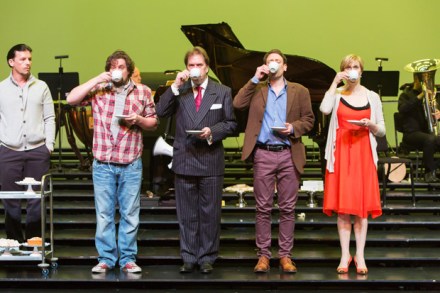
Comic opera is no laughing matter. Seriously, when was the last time you laughed out loud in the opera house? The vocal slapstick of Gianni Schicchi, laid on six banana skins deep? The farcical plot convulsions of Il barbiere? What about the arrival of Mozart’s ‘Albanians’ in Così? (Oh, those moustaches! Oh, those naughty boys!) It’s all about as spontaneous as a health-and-safety briefing, and almost as funny. Thank goodness, then, for Gerald Barry’s The Importance of Being Earnest — an opera that’s dangerously, anarchically hilarious. The project sounds like a joke in itself. Have you heard the one about the Irish composer who tried to improve on Oscar Wilde?

Modernist cul-de-sac

From our UK edition

The intransigence of Maxwell Davies, Boulez and Stockhausen is coming home to roost. Here were three composers, famous if not exactly popular, who called many shots by the time they died yet whose works were little loved in their lifetimes by the concert-going public and stand little chance of performance now they are dead. How was such imbalance possible? The intransigence had a lot to do with it. People thrill to a bold stance, and they don’t come much bolder than Boulez and Stockhausen in the Sixties. To be fair, Max was a very British version of this attitude. When Boulez died, the French press focused on a national hero whose main achievement, it seemed, had been to impress generations of foreigners while building monuments in Paris, as a true Frenchman should.

Among the snobs, slobs and scolds

From our UK edition

The author of this jam-packed treasure trove has been a film critic at the New York Times since 2000 and is also professor of film criticism at Wesleyan University. As if these platforms weren’t enough, he’s now written a book about the tangled worlds of films, books, music, paintings and criticism, dragging in Aristotle, Pope, Plato, Matthew Arnold, Isaiah Berlin and millions of others — but not, alas, my former next-door neighbour, the wonderfully controversial Brian Sewell. Crammed in alongside George Orwell’s ‘All writers are vain, selfish and lazy’ and H. L. Mencken’s ‘Literature always thrives best in an atmosphere of hearty strife,’ the author’s own views often hit hardest.

Why I’m in love with Róisín Murphy

From our UK edition

Róisín Murphy, the Irish singer-songwriter, is currently touring Europe with her Mercury Prize-shortlisted new album, Hairless Toys. The album, with its odd disco-grooves, dub rhythms and dark, loopy synth sounds, combines pop futurism with a retrospective 1970s edge. The album is tinged with an autumnal sense of loss and the self-examination of an older woman looking back on her life. 'The things I’ve seen', the 42-year-old Murphy sings, in a mournful whisper. Why 'the Irish Grace Jones' (as Vanity Fair called Murphy) is not better known outside her native Ireland is a mystery. On stage Murphy is supremely powerful because she knows how to keep still. She thinks about the slightest raising of her arms or silent snapping of her fingers.

Diary – 29 October 2015

From our UK edition

I’m counting ‘Wows!’ Suddenly everyone is using this irritating expletive expressing incredulity, amazement and nothing at all. I’ve heard it from the lips of daughters in law, professors of literature, rabbis and housewives. No doubt at least one priest has said it after a particularly lurid confession. It is spreading like leprosy over ordinary discourse and will, in time, die out like ‘Zounds’ or ‘Gee whizz’. I wonder if it will turn up as an anachronism in Downton Abbey? I saw on television the other night a superb production of Priestley’s An Inspector Calls with great performances from David Thewlis, Ken Stott and Miranda Richardson. The adaptation was impeccable and no one said ‘Wow!

Come rain or shine

From our UK edition

‘Pray don’t talk to me about the weather, Mr Worthing,’ pleads Gwendolen in The Importance of Being Earnest. ‘Whenever people talk to me about the weather, I always feel quite certain that they mean something else. And that makes me quite nervous.’ Weatherland would make Gwendolen very nervous indeed. Our observations of the sky, Alexandra Harris reveals in this extended outlook, have always meant something else. Weatherland is a literary biography of the climate. Beginning with the Fall (in the Biblical rather than the autumnal sense) and ending with Alice Oswald, Harris condenses 2,000 years of weather ‘as it is recreated in the human imagination’.

Something sensational to read on the train

From our UK edition

Readers who have put in some time on the railways may remember the neat, brush-painted graffiti that appeared in 1974 on a wall facing the line just outside Paddington station: FAR AWAY IS CLOSE AT HAND IN IMAGES OF ELSEWHERE. Not until Banksy took up his spraycan did a piece of London graffiti make such a stir. The Telegraph’s Peter Simple column attributed the long-lasting inscription to the shadowy ‘Master of Paddington’ and the Oxford commuter-poet Roger Green mused on the hauntingly unspecific slogan in his journal Notes From Overground, a minor publishing hit of 1984. Another 20 years passed before the perpetrators were outed; it turned out that their declaration was a mash-up of the words of two other poets, Robert Graves and Ruth Padel.

Wilde about the boy

From our UK edition

The prodigious brilliance, blaring public ruin, dismal martyrdom and posthumous glory of Oscar Wilde’s reputation are almost too familiar. The facts have been rehashed in numerous biographies, and dramatised by such actors as Robert Morley, Peter Finch, Rupert Everett and Stephen Fry. The only way to attack the subject with any hope of surprise is by an oblique sideways move from an unexpected angle. This was Robert Maguire’s method in Ceremonies of Bravery (2013), an intriguing account of Wilde’s friendship with the man-about-town Carlos Blacker and their connection with the Dreyfus affair in France. Another enjoyably tangential contribution is Linda Stratmann’s recent The Marquess of Queensberry: Wilde’s Nemesis.

Meet the Cry-Bully: a hideous hybrid of victim and victor

From our UK edition

In the 1970s, there was a big difference between bullies and cry-babies. Your mum would have preferred you to hang around with the latter, but sometimes the former had a twisted charisma so strong that you found yourself joining in the taunts of ‘Onion Head! ’ at some poor unfortunate creature sporting a cranium of a somewhat allium caste. After a bit, of course, if you had anything about you, you realized what a knob you were being and went off to sample the more solitary, civilized pleasures of shoplifting and reading Oscar Wilde with the bedroom curtains closed. But you could be certain, as you festered in your pilfered Chelsea Girl vest, that bullies were bullies and cry-babies were cry-babies and never the twain would meet.

Those ancient Greeks were bores — but things are looking up

From our UK edition

Thick snow is falling hard and heavy, muffling sounds and turning the picturesque village postcard beautiful. I am lying in bed listening to a Mozart version of ‘Ave Maria’, a heavenly soprano almost bringing tears to my eyes with the loveliness of it. This is the civilisation of our ancestors — one that gave us Mozart, Schubert and Beethoven and built cathedrals all over the most wondrous continent in the world. It is now being replaced by a higher one in which distinctions of ethnicity and religion will no longer be tolerated. The human race has a limitless capacity for self-improvement, and it shows where architecture, the arts and music are concerned, not to mention literature.

Barry Humphries’s diary: The bookshop ruined by Harry Potter

From our UK edition

Do fish have loins? Last Tuesday, in a pretentious restaurant, I ordered a ‘loin of sea trout’. It looked just like an ordinary piece of fish — a bit small, as is usual in pretentious restaurants — on a plate sprinkled and drizzled as though the chef had perhaps coughed over it rather violently or vigorously scratched his head before giving it to the waiter. In Australia, I was once offered a shoulder of some other fish, so I suppose one might even be able to enjoy a rump of whitebait or even a saddle of flounder. But generally speaking I don’t mind loin when applied to the loinless, and somehow a loin of fruitcake sounds appetising, or even a loin of sourdough bread.

The Silver Tassie: a lavish, experimental muddle that slithers into a coma

From our UK edition

The Silver Tassie is the major opening at the Lyttelton this spring. Sean O’Casey’s rarely staged play introduces us to a group of Dublin sportsmen, and their womenfolk, as they prepare to volunteer for service on the Western Front. They parade the ‘silver tassie’, a newly won football trophy, mistakenly believing it to presage victory and good fortune. O’Casey’s characterisation is a little perfunctory. The men are boastful studs, quailing dolts, blarneying drunks or violent despots. The women aren’t much better: a weeping mum, a caustic shrew, a battered martyr, a snooty beauty. It may sound colourful but the storyline develops at the pace of tree rings.

How honest was Bernard Berenson?

From our UK edition

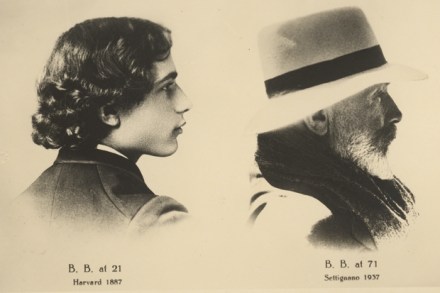
When the great Jewish-American art expert Bernard Berenson died in 1959, he had acquired the status of a sort of sage. He was the relic of a prewar culture that had vanished. He was an embodiment of the idea of connoisseurship that had at once given birth to a great boom in art collecting and yet that was, by the end of his life, being superseded. When Berenson embarked on the career that would see him widely accepted as the world’s foremost authority on Old Masters, the painters of the Italian Renaissance were barely regarded in the US. He died — at 94 — in the age of Andy Warhol. The very span of his life gives his story resonance.

Ceremonies of Bravery: Oscar Wilde, Carlos Blacker, and the Dreyfus Affair by J. Robert Maguire – review

From our UK edition

The life of Oscar Wilde is so wearily familiar that we assume that there is nothing new to think or say about him. This book proves us wrong. Carlos Blacker - the central figure of  J. Robert Maguire's research for more than half a century - rates, at best, a bare mention in Wilde's many biographies. Yet, as Maguire conclusively demonstrates, he is no footnote. Blacker, a handsome man of Latin extraction, knew Wilde in the days of his London pomp, was a witness at the writer's wedding to the long-suffering Constance Lloyd, and often saw his friend on a daily basis.

The art of deception

From our UK edition

Max Beerbohm, dandy, cartoonist and penetrating drama critic, was par excellence the observer of the glittering English period that stretched from the 1890s to the death of Edward VII, poking unsparing but mainly good-humoured fun at the peculiarities of its political and cultural leaders: Swinburne, Asquith, Lloyd George, Chesterton, Kipling and the King among them. At the same time he was himself part of the scene, the master of a carefully cultivated style. His fellow critic Desmond MacCarthy once wrote of him: I remember walking one night down Piccadilly behind that high-hat with its deep mourning band. It was then perched above a very long dark top-coat with an astrakhan collar... In a gloved hand this figure held an ebony stick with an ivory collar...