Oratory

Why Cicero’s life and times have never seemed more relevant

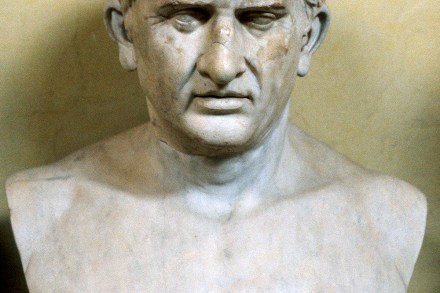
How should we think about Cicero? He was the orator who claimed that he did his best to save the Roman Republic from decadence. To more recent readers, he has come to seem regressive as well as ridiculous: he opposed the redistribution of land and loathed the idea of doling out grain rations. But it’s his self-promotion that makes us roll our eyes. Early in her biography, Catharine Edwards understates the obvious: ‘False modesty was never Cicero’s problem.’ What she does best throughout her surprisingly page-turning account is to reveal Cicero through his own words. (Admittedly, she has many, many words to choose from.) She quotes him reflecting on an early, junior role as a quaestor in Sicily: ‘What Sicilian quaestor has won greater renown or popularity?

The pedant’s progress through history

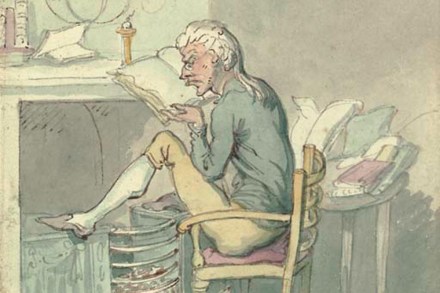
No one likes a pedant. But over the past few millennia, people have shunned pedants, bores and know-it-alls for a wide range of different, often conflicting, reasons. They have been accused of obscuring the path to true philosophical knowledge and of putting learning on too high a pedestal; they’ve been regarded as unfit to be democratic leaders; too unskilled in the aristocratic virtues; too keen to rise above their natural class; and as stubborn impediments to a true comprehension of the divine. At times they’ve been deemed too unmanly and too feeble; at others, far too boorish, charmless, unable to think for themselves and probably horrible at parties. Arnoud S.Q.

Keir Starmer and the lost art of political oratory

31 min listen

From Churchill to Thatcher to Blair to Farage, Parliament has seen some truly fantastic rhetoricians over the years. But last week came the news that – in a bid to improve his own oratorical skill – Keir Starmer employed a voice coach: former actress Leonie Mellinger. Mellinger has been at the centre of a fresh COVID-19 row, as the Prime Minister considered her to be so important that she qualified as a ‘key worker’ in 2020, visiting Labour headquarters in a mask on Christmas Eve 2020 to advise Starmer. It is not an unusual practice to employ a voice coach to improve a politician’s public speaking, and on the podcast Michael Gove is joined by his own former coach Graham Davies, to recover the lost art of political rhetoric.

The crude tirades of Cicero the demagogue

It is rare to read a book about Cicero that likens its hero to a demagogue. Rome’s prosecutor of conspiracy and corruption in the last years of the Republic is seen more commonly as a toga-draped crusader for virtue. Was he also a ranter steeped in violence, crude character-assassination, tendentious storytelling and racial stereotypes? Yes, argues Josiah Osgood, an American historian, whose book persuasively analyses a range of Cicero’s murder, fraud and extortion cases. Other men of the time were often no better, he writes, but, echoing Michelle Obama on Donald Trump: ‘Fortunately for Cicero, if his opponents went low, he knew how to go even lower.