Oil

Can Boris get the Saudis to pump more oil?

From our UK edition

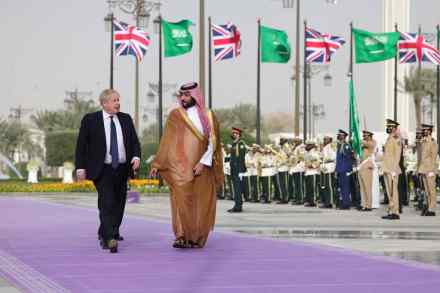
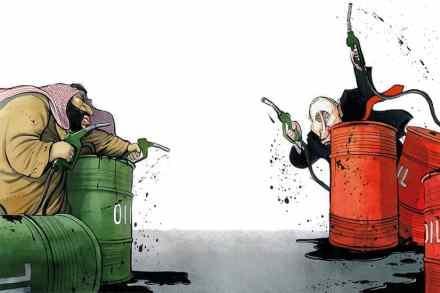
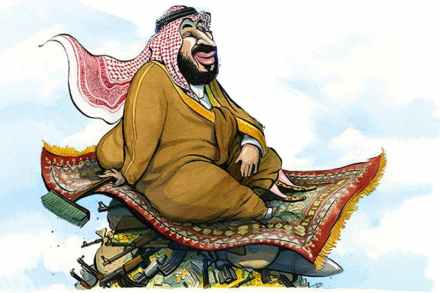
The oil price is up by more than 40 per cent since the start of the year. It is being driven up by the Russian invasion of Ukraine, the lack of investment in oil and turning the world economy on and off again: US production is still not back to pre-pandemic levels. In the immediate term, as I say in the Times today, pretty much the only way to bring the price down is to get Saudi Arabia – which has 1.5 to 2 million barrels a day of spare capacity – to pump more. The West’s relationship with Saudi Arabia has always been morally problematic.

Peru’s beauty has been a real curse

From our UK edition

As the planet gets more and more ravaged, the mind can begin to glaze over at the cumulative general statistics — so much rainforest lost, so many glaciers melted, so much less oil left. Joseph Zárate’s masterly new book reminds us that when it comes to fighting on the front line of the environmental wars, it’s all in the detail, and that nothing is quite as simple as might at first appear. Some years ago I went to a remote area on the border between Peru and Bolivia where a meteorite had landed on a small village and caused mass poisoning. The hospitals had filled up both with the locals and with the police who had been sent to investigate. Given that meteorites are not known to contain toxic materials, this seemed curious to say the least.

‘Let them eat Teslas’

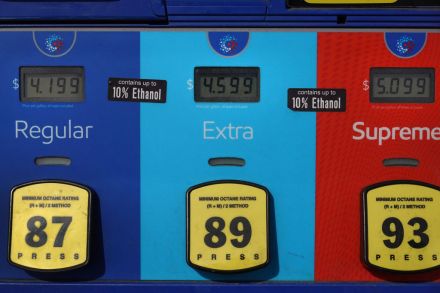
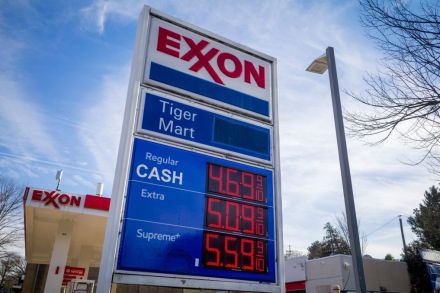
As gas prices soar, America’s elites have a message for the disgruntled masses: buy an electric vehicle, stupid. Transportation secretary Pete Buttigieg appeared at a press event with Vice President Kamala Harris on Monday where the dynamic duo lectured Americans on the importance of going green. Buttigieg proudly boasted from the podium, “Last month, we announced a $5 billion investment to build out a nationwide electric vehicle-charging network so that people from rural, to suburban, to urban communities can all benefit from the gas savings of driving an EV.” While some critics found the sermon tone-deaf, others applauded the secretary’s sentiment.

gas teslas

Is fracking the answer to the energy crisis?

From our UK edition

I’ll approach the hot topic of a ban on Russian oil by way of personal anecdote: I’ve never been a soldier or a spook but I have twice found myself ensconced in secure Nato conference rooms. The first occasion was a group visit to the military alliance’s Brussels headquarters 42 years ago, when an unsmiling American defence expert introduced us to the concept of ‘Mutually Assured Destruction’ – whose acronym was the key to the tense but relatively stable Cold War stand-off. In simple terms, it would have been utter madness for either side to fire the first nuclear missile. The odds on that happening by Kremlin order or error today are by no means as long as they were in 1980.

Why would the Saudis bail out Biden?

From our UK edition

Is Saudi Arabia shunning Washington? Mohammed bin Salman has reportedly been refusing to phone Joe Biden, who wants the kingdom to turn on its oil taps as the West desperately seeks alternatives to the Russian energy market.  Riyadh – the world’s largest oil exporter – has so far failed to accommodate Washington’s pleas. Ahead of the Russian invasion in mid-February, the US asked the Opec+ cartel – of which Saudi Arabia is the most important member – to produce more oil to slow the already rising prices. Opec+ stood firm, and said they would increase production by 400,000 barrels a day in April, a rise agreed before the threat of a Russian invasion of Ukraine.

economy

Sanctions on Russia will shake the world economy for years

The war in Ukraine will dominate the news for the foreseeable future. But while the bombings will eventually cease, the economic consequences for the world have just begun. That’s because in an era of increasing interconnectedness, economic impacts don’t stop at borders. Most attention has been focused on the immediate impacts of sanctions on Russia, and they are significant. In the past, sanctions have proven largely ineffective at punishing foreign enemies. President Barack Obama, for example, failed to use them effectively in 2014 during the last Ukrainian-Russian dispute. But this time, the actions taken against Russia were largely unprecedented, with even traditionally neutral countries like Switzerland and Sweden calling for restrictions that are “as big as they can be.

For all its absurdity, it delivers the goods: BBC2’s Louis Theroux’s Forbidden America reviewed

From our UK edition

In the latest episode of Louis Theroux’s Forbidden America, Louis asked a rapper called Broke Baby if ‘it’s important to keep it real’. ‘You have to play your role,’ replied Broke by way of apparent agreement. Given how stoned he was, this neat paradox — that you keep it real by pretending to — mightn’t have been wholly intended. Either way, however, it was hard not to apply it to Louis himself. More than 20 years into his TV career, does anybody know for sure whether his familiar schtick is genuine or faked? Certainly not, I’d suggest, Louis — whose elaborate stage-English courtesy, wide-eyed bemusement and spectacular naivety are now so practised as to have become completely ingrained.

Does Nicola Sturgeon care more about oil revenue or climate change?

From our UK edition

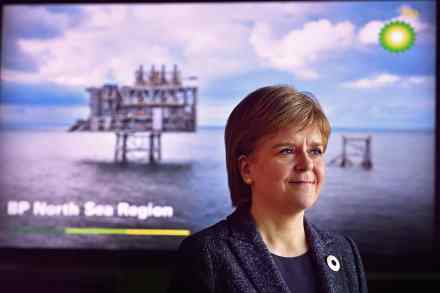
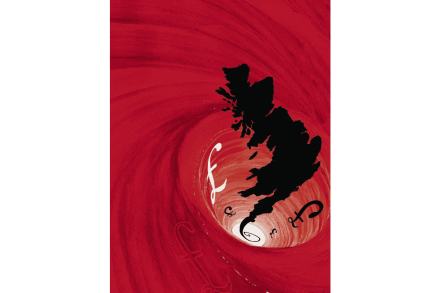
'Now, as I've hopefully made clear throughout all of my remarks, the North Sea will continue to produce oil for decades to come. It still contains up to 20 billion barrels of recoverable reserves. Our primary aim – and I want to underline and emphasis this – our primary aim is to maximise economic recovery of those reserves.' The words are from a speech made in June 2017, a few months after the Paris Agreement that aimed to limit climate change came into effect. A speech by a pro-oil Conservative, or perhaps the head of an industry group working on behalf of the oil sector? No. They are, in fact, the words of First Minister Nicola Sturgeon speaking at the Oil and Gas UK Conference that year.

Are we trapped in an inflationary spiral?

From our UK edition

Are we heading for a 1970s-style inflationary spiral? Not according to Catherine Mann, former chief economist at Citigroup, who argues that we are now less exposed to fluctuations in oil prices than we were then. She also makes the case that businesses are more reluctant to put up prices and that the link between inflation and wages is weaker than it was in the years of high inflation when wages often rose three or four times a year and prices in the shops were jacked up more frequently than now. Her opinion matters because she is the latest recruit to the Bank of England’s Monetary Policy Committee, which is charged with setting interest rates to try to keep inflation within set limits.

Trump sealed the deal last night

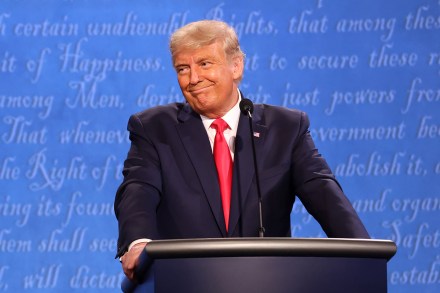
First, let me pay brief homage to Kristen Welker, moderator of Thursday night’s debate between Donald Trump and Joe Biden. A White House correspondent for NBC, she is pretty clearly not an enthusiast for President Trump. But unlike the wretched Chris Wallace, she did not make the debate a two-versus-one shouting match against the President. And unlike Steve Scully, who was scheduled to moderate the canceled second debate, she did not covertly consult with one of the President’s enemies and then lie about it when exposed.

trump

Could President Trump lose the oil war?

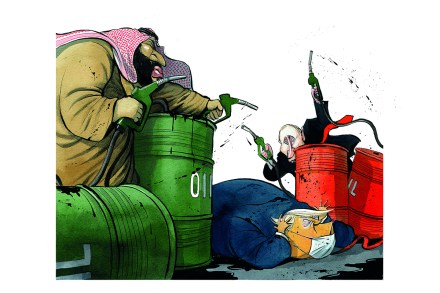
In a cover story for The Spectator that appeared just after Saudi Arabia launched an oil war against Russia in March, I wrote: 'One wonders how Donald Trump — who hates personal disloyalty more than anything — will react when he wakes up to the fact that the Saudi leader he has stuck with through thick and thin is now out to destroy the domestic industry Trump is most proud of.' Well, now we know. By the first week of April, Trump was so concerned about the impact of dramatically lower prices on the domestic fracking industry that he called the Saudi leaders and gave them a stark ultimatum. Unless they pressured OPEC members to cut oil production, he would be powerless to stop lawmakers from passing legislation to withdraw US troops from the kingdom.

oil

Rishi Sunak must stick to his guns

From our UK edition

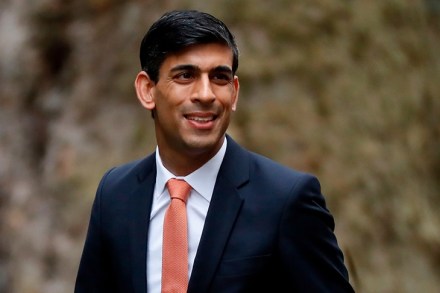
Was the Chancellor wrong to guarantee only 80 per cent, rather than 100, of ‘coronavirus business interruption loans’ to keep small- to medium-sized companies afloat? Rishi Sunak’s announcement this week of fully guaranteed micro-loans for the smallest companies seeking to borrow up to £50,000 was reported as a partial climbdown in the face of pressure from the CBI and many of his own MPs to do away with the on-risk slice of the larger scheme, which provides loans of up to £5 million through 40 accredited banks — but which many would-be borrowers have claimed is a bureaucratic nightmare. Readers certainly confirm that picture.

What is the US Navy doing in the Persian Gulf?

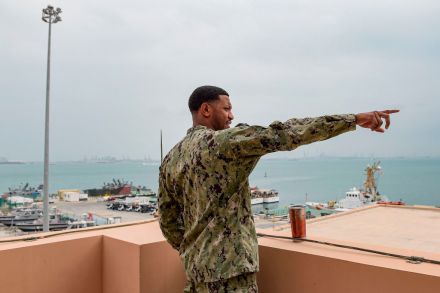
American alliances and security commitments tend to live on long after the world has changed. Many of our far flung military bases are legacies of a Cold War that ended decades ago. With the collapse of the Soviet Union, the Nato alliance became all but obsolete, so it eagerly embraced conflicts in the Balkans, Libya, Syria and other locations far from the Central European theater it was originally designed to protect. However, none of these holdover security commitments seem as absurd as US military operations in the Persian Gulf during a COVID-19 oil market.As recently as last month, the United States was keeping two aircraft carrier battle groups deployed near the Persian Gulf.

navy persian gulf

The price of oil just hit $0 a barrel. What’s going on?

From our UK edition

If you’ve ever wanted to own a barrel of oil, today might be your lucky day – for the first time in modern history, there are traders across the world who’ll let you have it for free. On Monday evening the price of oil futures plummeted, with one key oil price in the USA hitting $0 per barrel shortly after 7pm UK time. It sounds unbelievable – and illogical. Why go to such great efforts to extract oil, which was selling for $60 a barrel just three months ago – only to give it away for free? How did we get here?The collapse in the world economy has led to a collapse in demand for oil, and pretty big problems for those who are trying to sell it.

Saudi may have won an oil truce – but a greater conflict now looms

From our UK edition

For the first time in months, the coronavirus panic was briefly demoted as the main news story on Sunday when OPEC and oil-producing non-OPEC nations agreed a deal to cut oil production by 9.7 million barrels a day – initially to stabilise and then hopefully increase prices. It is the most dramatic production cut in history and of course not unrelated to the pandemic itself. Last month, demand collapsed as the global economy began to shut down but Russia shot down a Saudi opening proposal fearing it would give a boost to the American fracking industry.

Don’t blame oil and coal companies for climate change

From our UK edition

This year’s Nobel Prize for the silliest piece of scientific research must go to something called the Climate Accountability Institute, for revealing to the world that 35 per cent of all global carbon and methane emissions since 1965 can be traced to just 20 global companies. This week they were named and shamed in the Guardian and revealed to be, er, 17 oil companies and three coal mining companies. Scandalously, they have been pumping all this carbon into the air for their own self-enrichment while the rest of us suffer.

An oil price spike doesn’t mean a recession is on the way

From our UK edition

An oil price surge from $60 to $72 per barrel, as happened after the drone attack on Saudi Arabia’s Abqaiq refinery caused a sudden 6 per cent cut to global supply, would once have been taken as a sure signal of economic troubles ahead. A 1990s study of postwar oil prices plotted against employment and other data by Professor Andrew Oswald of Warwick University showed that every spike in energy costs had shortly been followed by recession. The theory still held in 2008: even though the ‘Great Recession’ was attributed to financial mayhem, it came soon after a speculative oil peak of $147.

If investors are fleeing to gold this is not the time to be smug

From our UK edition

It came as no great surprise that the UK economy contracted by 0.2 per cent in the second quarter, following a first quarter in which growth had been artificially boosted to 0.5 per cent by stockpiling ahead of the original 29 March Brexit deadline. It’s fair to claim, as our editorial did two weeks ago, that the UK has performed better than expected for the past three years — particularly in terms of job numbers, which rose again in April to June despite the growth setback. True also that we’re in no worse shape than our European neighbours, and that our flexible, if painful, exchange rate will help us cope with a downturn.

Iran trumps Trump

It’s not every day that global diplomat and ex-Swedish prime minister Carl Bildt makes a fool of himself on Twitter. On some days, Carl’s too busy to tweet. But on Friday, the Stockholm speculator went full wag-the-dog. https://twitter.com/carlbildt/status/1139117308838891520 ‘Are there state or non-state actors that have an interest in provoking a conflict between Tehran and the US? It is difficult to see any other motive behind the tanker attack.

oil iran

Russia and China are watching Iran, and waiting

As US-Iran tensions rise, America’s sway over its allies is falling. Last week, Major General Christopher Ghika, the British officer second in command of anti ISIS forces in Iraq and Syria, publicly contradicted the rationale behind American troop build-ups in the region. US Central Command was quick to rebuff Ghika, but Britain’s Ministry of Defence supported him. Other NATO allies, too, are balking at confrontation with Iran. Spain has withdrawn a frigate from the American-led, Gulf-bound carrier group. Federica Mogherini, the EU’s High Representative for Foreign Affairs, has called for ‘maximum restraint’. If there is to be a third Gulf War, the US might find itself with fewer friends than in the last.

iran