Nuremberg trials

Derided as ‘feminists’: the unsung witnesses of the Nuremberg trials

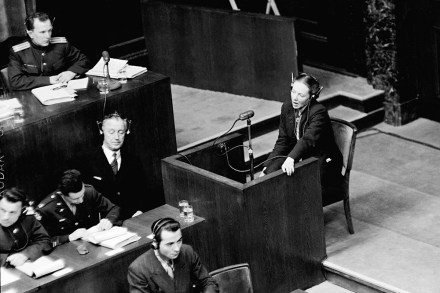
There are several things wrong with James Vanderbilt’s new film Nuremberg, least of all, some might say, the fact that it fails the Bechdel test. This 1985 metric assesses female representation in film by whether two named women have a conversation on screen about anything other than a man. If you are thinking, ‘So what? All the Nuremberg prosecutors were male, as was every defendant’, then you need to get hold of Natalie Livingstone’s revelatory book. While the public face of the trials was resolutely male, as were the indictments (there was no mention of rape, for instance, within the listed war crimes), the truth is that in the trials,

Why Hitler’s suave architect escaped the noose at Nuremberg

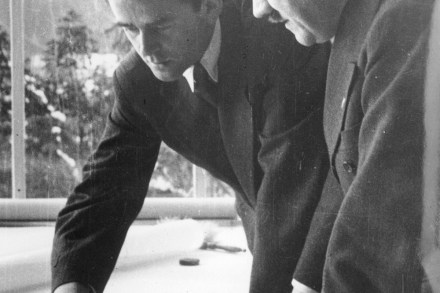
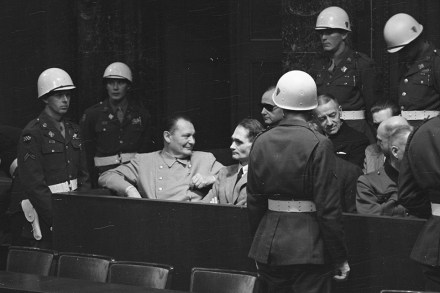
At the Nuremberg trial of the main Nazi war criminals, one man stood out: Hitler’s favourite architect and later armaments minister, Albert Speer. He cut a gentlemanly figure in a gallery of rogues. The strutting, smirking Hermann Goering reminded Rebecca West, who attended the trial, of ‘a tout in a Paris café offering some tourists a chance to see a black mass’. Julius Streicher, the Jew-baiting brute, was like ‘a dirty old man of the sort who gives trouble in parks’. On the same bench, all declaring their innocence in the face of overwhelming evidence of monstrous crimes, were the lantern-jawed SS leader Ernst Kaltenbrünner, the sour-faced ex-champagne salesman Joachim

Mrs Göring is far too sympathetic: Nuremberg reviewed

Nuremberg is one of those films that falls short on everything it wants to be and everything it could be. It’s a historical drama, set just before the trials, where an American psychiatrist (Rami Malek) is charged with assessing whether Hermann Göring (Russell Crowe), Hitler’s second in command, is fit to stand trial and to ascertain what his defence might be. This should be electric and terrifying and take us inside the Nazi mind. In other words, I had expected a tense two-hander. But it’s serviceable rather than inspired, plodding rather than tense, its running time (two and a half hours) trying. (Keep a Red Bull to hand.) It also

The tedium of covering ‘the greatest trial in history’

Three-and-a-half miles south-west of Nuremberg in the small town of Stein stands the Schloss Faber-Castell, a 19th-century neo-Renaissance castle built for a dynasty of pencil manufacturers. In October 1945 it became home to hundreds of reporters who were covering the trial of 21 high-ranking Nazis, including Hermann Göring, Rudolph Hess, Joachim von Ribbentrop, Alfred Rosenberg, Julius Streicher and Albert Speer, with Martin Bormann being tried in absentia. Alfred Döblin offered a first-hand account of the courtroom in which he never set foot Prominent among the reporters were internationally celebrated writers such as John Dos Passos, Rebecca West, Elsa Triolet, Erika Mann and Erich Kästner, as well as the future German chancellor