Nonfiction

How Jeannette Rankin became the first woman in Congress

Susan B. Anthony and Elizabeth Cady Stanton; Alice Paul and Sojourner Truth; Ida B. Wells and Carrie Chapman Catt. They may not be household names, but to anyone with a passing interest in US women’s history, they’re hardly obscure. They’re widely associated with America’s fight for women’s suffrage: a tribe of trailblazers who’ve made it into history books and onto overpriced tote bags. Some were popularized by the Tony Award-winning musical Suffs. Three are immortalized as statues in New York’s Central Park. But behind the scenes of their various campaigns, another woman charted her own course for the same cause.
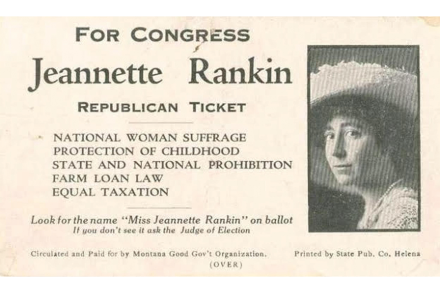
rankin

Did Robert McNamara know Vietnam was unwinnable?

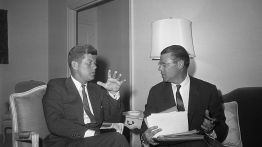
Former US defense secretary Robert McNamara was known in Washington as a relentless, humorless taskmaster or even “a computer on legs.” Then on February 9, 1962, a little over a year after taking office, McNamara made headlines when he danced the twist with Jackie Kennedy at a White House party. A few days later, the then-first lady sent by hand to McNamara a lighthearted Valentine collage she had made from the news coverage of their dance. After her husband’s assassination, their friendship deepened. Jackie’s opposition to the Vietnam War grew, as did her conviction that McNamara secretly opposed it.

mcnamara

Andrew Ross Sorkin reconstructs the 1929 crash

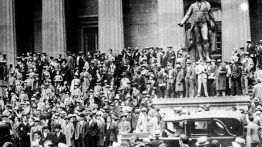
During the great financial panic of 1907, the banker J.P. Morgan locked the titans of the financial world in his lavish private study to determine which banks to rescue and which to let fail. This intervention saved the banking system, restoring public confidence. But trust in Wall Street was shaken to its core. Six years later, Congress passed the Federal Reserve Act, which sought to stabilize the American financial system by establishing a central bank to regulate credit and serve as lender of last resort. By the mid-1920s, the very mechanisms that were designed to promote stability had fueled a surge in stock market speculation.

1929 crash

Another collection of Harper Lee’s writings arises

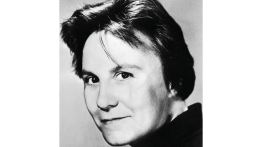
Harper Lee’s To Kill a Mockingbird hardly needs an introduction, as I expect everyone in the world has read it, or has seen the film starring Gregory Peck. (If you haven’t read it, perhaps you should.) Lee, incidentally, went to visit the film set, and had this to say about Peck: “an inspired performance. In some mysterious way, Gregory Peck’s Atticus Finch transcended illusion.” If that seems a tad clichéd and not especially insightful, then I’m afraid to say that this is the general tenor of the nonfiction pieces in The Land of Sweet Forever, alongside eight previously unseen short stories. Go Set a Watchman, a novel which was largely viewed as To Kill a Mockingbird in embryo, appeared ten years ago, to not much acclaim.