Nissan

Why real drivers prefer old bangers

Any loser can drive a posh car but it takes real character to drive a crap one. If a sports car is a penis extension, then a rust-bucket screams Big Dick Energy. Even, or especially, if you are a woman. I picked up my own crap car, a 2007-plate Nissan X-trail, five years ago because I moved to the countryside and needed a workhorse to replace my previous car, a Honda CR-V, which I’d bought for £500. Prior to this I had a Volkswagen Type 2, which cost £18,000, but every time you turned the key in the engine you still had to hold your breath.  My Nissan looks like it has just been in a fight – and lost. The heating has gone. The seat covers are ripped. The sunroof jams. The battery light flickers on and off like it’s trying to communicate in Morse code.

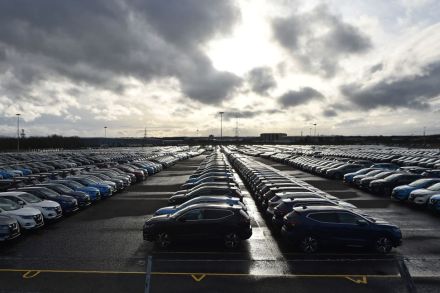
What happened to Brexit meaning the end of Nissan’s Sunderland plant?

It would have to close down its factories. Thousands of job would be lost. Suppliers would be abandoned, and the local economy would be shattered for a generation. It was sometimes a little hard to work out why a few hardcore Remainers cared quite so much about Nissan. Its range of mid-market, family SUVs were not the kind of cars they would usually be seen dead in. But somehow the company became emblematic of the whole bitter debate about how the British economy would suffer if we left the European Union. If we weren’t in the Single Market, we were told again and again, the business was doomed. So today’s news from the company is, to put it mildly, slightly surprising.

Britain is booming – despite Brexit

After the vote for Brexit, it was often said that our departure from the EU was most likely to harm the very people who voted for it: the industrial workers of the Midlands and North. Didn’t they know that a vote for Brexit would, in itself, lead to 500,000 more job losses? Couldn’t they see that Nissan was bound to wind down its operations in Sunderland and move business to mainland Europe? Almost four years on, it’s safe to say that most of the economic doom-mongering was nonsense. This week’s figures on jobs and earnings show that, since the referendum, employment is up by one million — and it is rising still. Unemployment in the UK is at its lowest since 1974. Unemployment in Wales is at its lowest since records began.

Is it worse to be an environmental polluter or a moral one?

From our US edition

So farewell Bernie Ebbers, former chief executive of WorldCom, the long-distance phone operator that became America’s biggest-ever bankruptcy case in 2002. Ebbers has died aged 78, having been released on health grounds in December from a 25-year jail sentence for his part in an accounting fraud that concealed the perilous state of WorldCom’s finances, misleading investors after a series of high-risk acquisitions by the bejeweled ‘telecom cowboy’ Ebbers during the dotcom boom. By repute, US justice aims to make examples of high-profile corporate miscreants, starting with the humiliating ‘perp walk’ into court and concluding with harsh sentences and scant hope of parole.

polluter

Is the Fed caving to the demands of the market?

From our US edition

Has ‘Jay’ Powell gone wobbly, or does he know something we don’t? That was the question being asked after the US Federal Reserve, of which Powell is chairman, kept dollar interest rates on hold last week — rather than continuing to notch them upwards as it has been doing for two years — and hinted that the next move might actually be downwards. Trade tension with China, the impact of Donald Trump’s government shutdown and the risk of a no-deal Brexit were all cited as ‘cross-currents’ affecting the decision, but pundits led by Wall Street ‘bond king’ Jeffrey Gundlach declared the Fed to be ‘caving in’ to the demands of the stock market and the President.

fed jerome powell