Nhs

Milburn on Lansley’s health reforms

Andrew Lansley’s health reforms have never been in the rosiest of health; but, as Pete observed yesterday, the current malaise may leave permanent damage. Paul Waugh has been speaking to Alan Milburn and the modernising former Health Secretary’s words speak volumes about Lansley’s trails: “I’m amazed they allowed themselves to get into talk about privatisation and cuts. Having originally said this was a revolution they’re now saying it’s just evolution of Labour’s reforms. Politically, it doesn’t make sense. “Look, a managed form of competition is fine. The problem is that the lynchpin of the reforms was GP commissioning. “It’s a good idea to get family doctors to be aware of

An alternative PMQs

With Libya in metaphorical meltdown and with Japan close to the real thing, it was remarkable how little foreign affairs impinged on PMQs today. Ed Miliband led on the NHS and facetiously asked if Cameron planned any amendments to his health bill following the LibDem spring conference. Cameron replied by accusing Labour of wasting £250m on phantom operations. Would he apologise for this scandalous blunder? Miliband, unsurprisingly, declined even to acknowledge the invitation. The session developed on these familiar, solipsistic lines. Keen to harry the PM on bureaucracy Miliband stumbled on a Cameron quote decrying ‘pointless topdown re-organisations’ of the NHS. He pulled it up by the roots, shook off

Rattled Cameron battles through PMQs

A testy PMQs today with Miliband trying to pin Cameron down on the specific question of whether the NHS is now subject to EU competition law, and Cameron responding by dubbing Miliband ‘son of roadblock’. The exchange revealed that although Cameron is not a details man, something that will cause him problems in time, he still has enough presence in the chamber to withstand tricky moments. But I suspect that Labour will be happy if Miliband’s parting shot of ‘you can’t trust the Tories on the NHS’ makes it into the news bulletins this evening. There were, as there so often are these days, a couple of questions from Tories

Another hurdle for Lansley’s health reforms

And so it came to pass. After sniping at Andrew Lansley’s health reforms from the day they were announced — at one point describing them as a “slash and burn approach” — the British Medical Association has today voted to call on the Health Secretary to withdraw his Bill entirely. The speech that the BMA Council Chairman, Hamish Meldrum delivered this morning captures the tenor of their opposition: “…what we have is an often contradictory set of proposals, driven by ideology rather than evidence, enshrined in ill-thought-through legislation and implemented in a rush during a major economic downturn.” So what to make of it all? Normally, another “union opposes coalition”

Tobacco and the Laffer Curve

Lefties like to think the Laffer Curve never applies; righties are too fond of thinking it must apply to any tax in almost any circumstances. Both views are mistaken. Cutting tax does not always increase revenue, but sometimes it can. As this excellent piece by Donna Edmunds observes, at least 80% of the £6.63 it costs to purchase a packet of smokes goes to the Treasury. At that level of taxation there is no shame in seeking ways to circumvent the Treasury. No wonder at least 10% and perhaps as many as 20% of all cigarettes bought in Britain (and perhaps 50% of rolling tobacco) is contraband, smuggled from abroad.

Promoting Cameron from a party leader to a national leader

Danny Finkelstein’s paean of praise (£) to Andrew Cooper, the PM’s new director of political strategy, contains several interesting lines.  Finkelstein says that his former flat mate’s biggest challenge is, ‘Devising a strategy for changes in the NHS so that a critical political battle isn’t lost disastrously’. This is yet another indication of how nervous Osborne and co are about Lansley’s reforms and reopening the NHS as a political issue. The second is him reporting that Cooper will tell ‘Cameron to be a national leader, rather than a party politician. Especially in the Commons.’ To date, Cameron has been — with some notable exceptions such as his statement on Bloody

50,000 NHS jobs to go, apparently

An anti-cuts campaign website, False Economy, claims that 50,000 NHS jobs will be lost over the next four years. It’s a bald, headline grabbing figure and the response has been predictably feverish.   But tug a little, and the numbers unravel. One of the key points is made by False Economy themselves: that “most of the cuts are likely to be achieved through natural wastage” – in other words, by people moving on, or retiring, of their own accord. In figures highlighted by the Department of Health, for instance, one foundation trust expects to shed 14 per cent of its workforce through natural wastage by 2013. The health service may

Reforming the NHS: accountability

Last week, Reform published its 2011 public service reform scorecard. It judged each major government department against the three criteria set out by David Cameron: accountability, flexibility and value for money. The report finds the Home Office’s policing reforms succeeding on all three fronts, but inconsistency across other government departments. The Government’s health reforms are awarded grade D overall, with an E for accountability, a D for flexibility and a D for value for money. Here’s how the coalition can get its NHS reforms back on track.   The government has recognised the need for fundamental reform of the NHS. The proposals announced in the July 2010 White Paper are

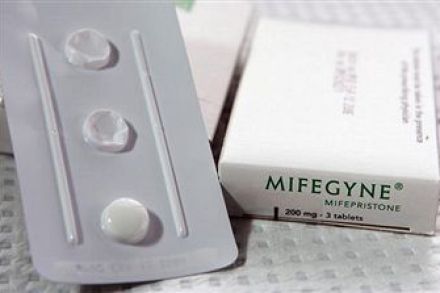
Abortion may be bad for a woman’s mental health. Discuss

Last November, Margaret Forrester, a mental health worker for the Central North West London Mental Health Trust in Camden was suspended for giving a colleague a charity booklet called “Forsaken – Women From Taunton Talk About Abortion” to a colleague –  they’d been discussing the information they offered to patients. It had the stories of five women who had experienced what the author describes as ‘post-abortion syndrome’, including depression, relationship issues, suicidal feelings and fertility problems. So, the downside of abortion, then. To begin with – no problem. Her colleague didn’t seem offended. But a few days later her manager told her she was being sent home on ‘special leave

Ten things you need to know about the NHS reforms

At last we have it: a defence of the coalition’s NHS reforms that is worthy of the name. It came courtesy of David Cameron, speaking on BBC Breakfast earlier, and you can watch it in the video above. Suffice to say, the Prime Minister dwelt on the endemic waste and excessive bureaucracy of the current system, yet he also found room to explain why choice matters, and why it won’t leave patients stranded. But, even then, the performance wasn’t perfect. Cameron may have thought he was being disarmingly honest by admitting that his brother-in-law’s fellow hospital consultants have qualms about the proposals, but one suspects it has served only to

Lansley needs to explain his reforms better

It is imperative that the coalition keeps its nerves and its composure during the months ahead. 2011 will try the coalition’s fortitude, its deficit reduction plan and its public service reform programme will both come under sustained attack. It is vital that the coalition continues to explain clearly and patiently why it is doing what it is doing. Watching the Andrew Marr show this morning, I was struck by how tetchy Andrew Lansley was during his interview. Right from the off, he seemed irritated at Marr’s questions. Some of this irritation was understandable. Lansley’s reforms are always treated as if they have come out of the blue, when Lansley talked extensively

The dangers of CameronCare

A consensus has formed in the commentariat that besides George Osborne’s stewardship of the economy, Andrew Lansley’s healthcare reforms could become the government’s vote-loser. The political facts are as simple as the forms are complex. One, David Cameron ran a campaign based on a promise to protect the NHS. Many people thought that meant from cuts and culls alike. The Health Secretary’s reforms look, whatever the truth may be, like they are going back on the PM’s promise. Second, the reforms can only be successful if a range of stakeholders – voters, practitioners, analysts – have been brought along, and had a chance to debate the issues. What Michael Gove

Winning in 2015

Danny Finkelstein’s column in The Times today (£) is well worth reading. Finkelstein sets out two worries, first that the Tories do not have enough of a strategy for winning re-election and second that the NHS reforms might compromise Cameron’s standing as a different kind of Tory. On the latter point, Finkelstein is echoing the views of an increasing number of Tory MPs and ministers. They worry that these poorly understood reforms have put the NHS back on the political table and that, as is so often the case when this happens, the Tories will suffer. Finkelstein’s first worry is that if the government sets out deficit reduction as its

A soporific session

Labour are on the up. They strolled Oldham. They’ve recruited great armies of Clegg’s defectors. And they’d win a majority if a general election were held tomorrow. There’s been a lot of excited talk in Westminster about Tom Baldwin, Labour’s new communications attack-dog, coming in with his fangs bared and sharpening up their tactics. Well, it ain’t working so far, if PMQs is anything to go by. Ed Miliband had his dentures in today. He was humourless, slow to react and sometimes inaudible. His questions didn’t resemble even the most basic PMQs battle-plan, namely, a pre-meditated onslaught culminating in a simple powerful message presented in a memorable one-liner. He asked

A radical step forward in the health of the nation

The coalition is facing more protests today over its plans to abolish Primary Care Trusts. But PCTs are ripe for abolition. Their bureaucracy and management costs have ballooned in recent years and they have been wildly unpopular in some parts of the country for their role in pushing for hospital closures. They have failed to make the NHS more efficient and innovative and they have been responsible for many of the heart-wrenching cases of patients failing to get drugs for conditions like cancer.   In contrast, GPs are one of the most trusted groups in the NHS. Yes, there are examples of poor practice, but generally patients have high respect

Cameron’s public service reforms are still stuck in New Labour’s intellectual territory

The man known to the Cameroons as ‘The Master’ casts a long shadow. David Cameron has re-launched his public service reform agenda and there was more of a whiff of Blair in the air. His speech was understated. He eschewed references to radicalism and appealed to continuity instead. The favoured phrase of the moment is ‘evolution not revolution’, and Cameron traced the lineage of his reforms to those of the thwarted Blair administration (and the market reforms of the Thatcher and Major years). He was so deep in New Labour’s intellectual territory that he was at pains to stress that the ‘spending taps have not been turned off’. As a

Too far, too fast?

It is hubristic of David Cameron to talk of his ‘legacy’ at this stage in his premiership, not least because he invites criticism that the government’s public service reforms are going too far, too fast. The leaders of six health unions have reacted to the imminent publication of the Health and Social Care Bill with a concerned letter to the Times (£); they argue that price competition is divisive and that the reforms promote cost above quality. Dissent has spread far beyond the usual union suspects. Dr Sarah Wollaston, the Tory MP for Totnes, has expressed her misgivings and there have been numerous accounts of GPs’ reluctance to embrace commissioning reforms

Totnes trouble for the Tories

If you want to know why party managers don’t like open primaries look at page 26 of today’s Guardian. There Sarah Wollaston, the GP who won the Tory open primary in Totnes, warns that Andrew Lansley needs to watch out if his NHS reforms are not to turn into privatisation by the back door. The piece is, to put it mildly, unhelpful from a Tory perspective. For a Tory MP, and one who was a GP, to suggest that Tory health policy could lead to a privatisation of the NHS is a gift to Labour. It is also the last thing that Andrew Lansley needs given the u-turn he has

Hard labour

More women than ever are having their babies by Caesarian section. Not the old last-resort emergency type, either; the ones where mothers howl for days, to the point of peril for self or child, until mercy descends in a scalpel — life-saving, but adding to existing trauma. No. This marked increase, by as much as 40 per cent in one year at the Liverpool Women’s Hospital, has been among women who elect a Caesarian; those who plan, often months in advance, to be delivered calmly, swiftly and relatively free of pain in a modern, controlled, 21st-century environment. In short: an increase in women who are aware that there is a choice and

Lansley gives us a nudge

Andrew Lansley’s rhetoric is strident: ‘It’s time for politicians to stop telling people to make healthy choices. Rather than lecturing people about their habits we will give them the support they need… we will support leadership from within communities.’ One could be forgiven for thinking that the Health White Paper will inaugurate a completely new dawn. It doesn’t. Many of Lansley’s initiatives are resuscitated Labour policies: taxes on alcohol and tobacco and incentivising healthy living through choice are tried and tested formulas that have had limited past success in every field bar raising revenue. Lansley’s White Paper is not a testament of radicalism, but it is quietly revolutionary nonetheless. Of