Nhs

Boris should keep copying Blair

From our UK edition

Having written here at least once before that Boris Johnson is the heir to Blair, my first thought on the Prime Minister's tax-to-spend announcement on the NHS and social care is a petty one: I told you so. The striking thing about making the Boris-Blair comparison is how resistant some people are to it. Among Bozza fans on the Leave-voting right, there is often fury at the suggestion that their man, the hero of Brexit, is anything like the Europhile they used to call ‘Bliar’. On the left, there is an almost pathological determination to believe that a Tory PM must, by definition, be a small-state free-marketeer intent on starving and privatising public services. That latter point is why Labour people sometimes struggle to respond to Johnson.

The red herring at the heart of Boris’s tax hike

From our UK edition

One of the most dubious and meaningless parts of today's health and social care plan is the pledge that the new tax will be a 'legally hypothecated levy' – ring-fenced so that the money raised can only go to health and social care services.  It's dubious in the same way that the Tory manifesto pledge not to raise taxes turned out not to be worth the paper it was printed on. And it's meaningless because a government that wants to unlink the tax could just pass a law doing that – and no legal ring-fence can stop it. It's also worth remembering that the ring-fence around health and social care is a red herring. What is really necessary is a barrier between the two.

Boris dodges a tax hike Tory rebellion – for now

From our UK edition

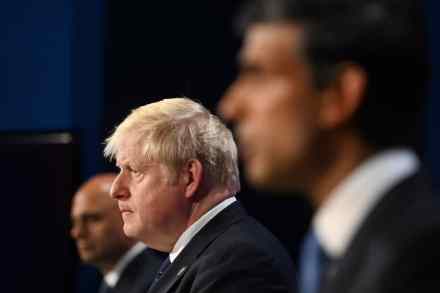
After emerging relatively unscathed from his appearance in front of MPs, Boris Johnson addressed the public in a bid to sell his plan to raise taxes as part of a a new health and social care levy. Given that polling suggests broad support for the proposals, the press conference was – at least on paper – the easier outing of the two. Appearing alongside Health Secretary Sajid Javid and Chancellor Rishi Sunak, the Prime Minister tried to justify his decision to break a manifesto pledge and raise national insurance in order to clear the NHS backlog and fund social care.  Johnson said he was fully aware it meant reneging on an election promise – but said 'a global pandemic wasn't in our manifesto either'.

Javid’s cash boost can’t fix a battered NHS

From our UK edition

The new £5.4 billion cash boost for NHS England is the easy bit of a very tricky situation for the health service and the politicians trying to work out how to deal with it. As Health Secretary Sajid Javid made clear on Monday, while the money will help deal with the backlog in treatment caused by the pandemic, it won’t do so immediately. He said that waiting lists would go up before they started to go down because people are still coming forward for treatment. Javid has been pitch-rolling for a dreadful winter ever since he took on the job, warning almost immediately that waiting lists could reach 13 million. Currently there are over five million people needing operations and other NHS services.

It’s time for NHS GPs to stop hiding behind their telephones

From our UK edition

Nye Bevan famously said that he was only able to persuade family doctors to support the creation of the NHS because he ‘stuffed their mouths with gold’. But at least he obtained good service from them — including home visits. Until Tony Blair awarded GPs hefty pay rises while allowing them simultaneously to opt out of night-time and weekend work, they were responsible for their patients’ care 24 hours a day, seven days a week — with practices often pooling resources to provide continuous cover. But the role of GPs has become increasingly unclear: do patients have a right to be seen in person? It was revealed this week that locum GPs are being offered £100 an hour to conduct telephone appointments from their own homes.

The NHS blood tube shortage should concern us

From our UK edition

One of the great lessons from the early stages of the pandemic was the need to shorten supply chains and make them more robust. This was especially true for medical supplies. Just-in-time supply chains have been developed over the years to increase efficiency, but had never been tested in a global crisis when demand for certain medical products is high and supply is weak. The government ended up paying huge sums for PPE which, in some cases, was not even suitable for use. The shortage raises eyebrows because a plastic tube is, after all, a plastic tube It seems the lesson has not entirely been learned. There is now a shortage of blood tubes – the small plastic tubes which are used for collecting samples of blood.

Will Alta Fixsler be allowed to die at home?

From our UK edition

If your severely disabled two-year-old daughter is dying, should you be allowed to take her home for her final hours? It sounds like the answer should be a simple ‘yes’. But in the law surrounding parents, children and healthcare, nothing is that simple. Alta Fixsler’s parents have been repeatedly thwarted in their efforts – as they see it – to do their best for their daughter. First, Manchester University NHS Foundation Trust sought to withdraw life-saving treatment for Alta. A judge subsequently agreed that it was in Alta's 'best interests for the treatment that is currently sustaining her precious life...to be withdrawn'. This was in spite of her parents seeking to take her to Israel for treatment.

Why shouldn’t we worship the NHS?

From our UK edition

For obvious reasons, stocks in ex-editors of The Spectator are experiencing an all-time low. But my own complaint is with Nigel Lawson. Lawson may say it’s hardly his fault that his remark ‘The NHS is the closest thing the English people have to a religion’ has been appropriated ever since by anyone who thinks it’s a clinching argument for privatisation. Actually, it’s the opposite — a clinching argument for the present arrangements. I’ve had to make a lot of visits to hospitals in the past year, far more often than I’ve been to the theatre or the cinema. By force, I’ve seen a great deal of the NHS at first hand. My conclusion is that if I were to follow a religion, the NHS would be top of my list.

Is letting Alta Fixsler die really in her ‘best interests’?

From our UK edition

There’s something grimly familiar about the case of little Alta Fixsler, the brain damaged toddler whose parents are contesting the decision of the Royal Manchester Children’s Hospital to withdraw her life support treatment. She hasn’t eaten or spoken since she was born, tragically prematurely, a misfortune that left her with permanent brain damage. The hospital wishes to turn off her support but her parents want her to be transferred to a hospital in the United States – her father has an American passport – or to Israel – her parents are Israeli citizens, as is she – where the leading paediatric hospital has volunteered to take her.

Will Covid turn into the common cold?

From our UK edition

Many experts and modellers thought that the 19 July reopening would be a disaster. So far, that has not been the case. Daily case numbers actually started falling within days after 19 July, although that was far too soon to have been caused by anything to do with ‘freedom day’. The question now is how the pandemic will play out for the rest of this year and the next? In trying to understand this, we need to understand some important things about the biology of coronaviruses and their interaction with their hosts: us. Sars-CoV-2, the virus that causes Covid, is not going away. Like other coronaviruses, it will likely infect us all repeatedly throughout the rest of our lives, probably about once every five years.

The NHS has never been the ‘envy of the world’

From our UK edition

Usually when the Commonwealth Fund releases its ‘Mirror, Mirror’ study of healthcare systems, it makes waves across the UK media. You might not recognise the formal title of the study, but you’ll be familiar with its findings: this outlier research tends to rank the UK National Health Service as one of the best healthcare systems in the developed world. It’s a hallowed report for much of the UK medical community and commentariat, reaffirming their unquestioning devotion to the NHS as a truly unique system and the ‘envy of the world’.

NHS delays could derail Boris’s re-election campaign

From our UK edition

What is the biggest single threat to the Tories being re-elected? The NHS waiting list, I say in the Times today. Already more than five million people are waiting for routine hospital treatment in England. Sajid Javid has warned that this number could rise to 13 million — which would be one in four of the population. Simon Stevens, the just-departed head of NHS England, has warned that this waiting list could take three years to clear which takes you right up to the next election. For Labour, the backlog list offers the easiest and most comfortable of attack lines: 'You can’t trust the Tories with the NHS'. If millions are stuck waiting for treatment, this line will have huge resonance.

What Amanda Pritchard’s appointment means for the NHS

From our UK edition

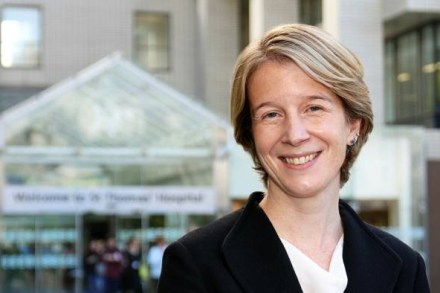
‘Deputy succeeds boss’ might not normally feel like a ‘hold the front page’ type headline. But the announcement that Amanda Pritchard is the new head of NHS England – replacing Simon Stevens – reveals a lot about the state of the NHS and the future direction of the health service. Firstly, the process. Despite concerns that the race to succeed Stevens would be politicised, Pritchard’s appointment (which I revealed on Thursday, thanks to a spot of digital and logistical sleuthing) is understood to have been wholly free of political nudging. Some of the credit for this goes to Number 10 health advisors and some to Lord David Prior, NHS England’s chair and a former Conservative MP.

What the NHS pay rise says about Boris Johnson’s priorities

From our UK edition

Well, that didn’t take long. Two days ago, a leaked report revealed that the government was considering using a national insurance tax hike to pay for the NHS backlog and social care. Now it looks as though the money could be diverted elsewhere.  The anticipated increase of at least one per cent on national insurance would transfer an additional £6bn from taxpayers to the Treasury. But today, the Times reports that £1.5bn of that sum may not go to hip replacements or speeding up the timeline for cancer patients to access treatment. Instead it could help fund the three per cent NHS pay raise, which has been promised by health secretary Sajid Javid.

Boris could easily curb the ‘pingdemic’, so why won’t he act?

From our UK edition

Was there ever a national crisis which was so easy to solve? There are reports of supermarket shelves emptying, petrol stations running out of fuel and panic-buying. This in not unprecedented. Yet on this occasion the government doesn’t have to deal with a bolshie trade union, enter difficult negotiations with an EU which is determined to punish us for Brexit or even handle the early, unknown stages of a pandemic. All the Prime Minister has to do is to announce that the changes to the Test and Trace system already earmarked for 16 August – when fully-vaccinated people will no longer be forced to self-isolate for ten days but could be advised to get tested instead – be enacted immediately. The panic would immediately be over.

Can Boris and his ministers agree on the point of the Covid app?

From our UK edition

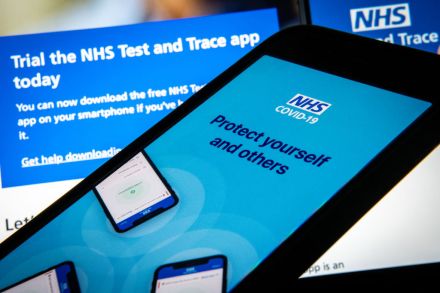
What is the point of the Covid-19 app? Ministers seem to be as in the dark about the answer to this question as the rest of us, with the government tying itself in knots over whether it means anything at all to get 'pinged' and told to self-isolate. Downing Street has contradicted Business Minister Paul Scully, who said this morning that there was no need to self-isolate if it was just the app that alerted you. He told Times Radio:  It seems that there is a genuine schism in Whitehall 'The app is there to give...to allow you to make informed decisions. And I think by backing out of mandating a lot of things, we're encouraging people to really get the data in their own hands to be able to make decisions on what's best for them, whether they're an employer or an employee.

Is Boris brave enough to confront the truth about the NHS?

From our UK edition

If a government does not wish to break a manifesto promise it should punt fewer such 'promises' into its manifesto. The modern mania for throwing everything possible into a manifesto – the better to proof it against interference from the House of Lords – renders manifestoes nothing more than a job lot of largely spurious pledges. The vision thing is notable for its absence and the vision thing is more important – and more revealing – than a grocery list of promises. Still, if you must break a promise it is no bad thing to start with a large and stupid one.

A tax rise for care won’t solve the problem

From our UK edition

The tax burden in the UK is nearing a 70-year high — but that’s not stopping ministers from mulling over plans to hike taxes further. According to reports this morning, Boris Johnson and Rishi Sunak are close to agreeing an increase to national insurance to help address the NHS backlog (five million patients in England, and counting). They also want to fill the long-standing black hole in the social care budget: something Johnson promised he’d address nearly two years ago to the day when he first entered Downing Street. The rumours have immediately led to criticism of the government’s willingness to break its manifesto pledge, not to raise income tax, national insurance or VAT.

Is the NHS about to be privatised?

From our UK edition

Is the NHS about to be privatised? That’s the charge from some campaigners as the Health and Care Bill starts its journey through parliament. Certain doctors, mainly on social media, are calling on MPs to scrap the Bill because they claim it will open up the NHS to more privatisation and allow private companies to skim profits off our healthcare system. It’s a big charge, albeit a familiar one, as it tends to pop up whenever there is legislation on the health service. But the strange thing is that it’s very hard to find the evidence for these social media claims in the actual legislation. In fact, these proposals are aimed at dampening much of the emphasis on competition introduced by Andrew Lansley’s controversial Health and Social Care Act in 2012.

Javid reveals his health priorities

From our UK edition

Effective cabinet ministers are ones who work out what they want to do in a department on arrival, and then stick to that very small set of priorities whatever the political winds and storms. Michael Gove had this approach in the Education department, setting himself three priorities and then focusing on getting them delivered. Not only did he then replicate this approach in his subsequent Whitehall briefs, but he also inspired other ministers to do the same. Jeremy Hunt, who largely modelled himself on Gove when he became health secretary, also gave himself a small list of things he wanted to do in his time overseeing that brief. Now, it seems Sajid Javid is following suit too.