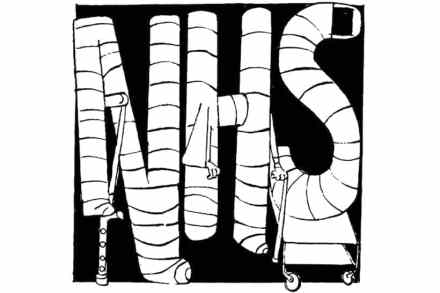
Nhs

Boris’s social care plans are hollow

From our UK edition

Boris Johnson promised to 'fix social care once and for all' as he became Prime Minister on the steps of No. 10. On the basis of today's social care white paper, he doesn't think it's particularly badly broken. Care minister Gillian Keegan launched the document in the Commons this afternoon, telling MPs that while this set out a 10-year 'vision', 'today's white paper is an important step on our journey to giving more people the dignified care that we want for our loved ones'. Those words — 'important step' — suggest that ministers don't think this is the sum total of their proposals to fix social care, which is just as well, as there are plenty of holes in the white paper.

Why is the Treasury blocking a helpful health reform?

From our UK edition

The Health and Care Bill is having a predictably stormy passage through parliament, popping up in the Lords next week for its second reading. If you'd paid only cursory attention to its closing stages in the Commons then you might be forgiven for thinking the legislation is largely about reform to social care and privatisation of the NHS. In reality, the social care policy was inserted at the last minute, and it's only an amendment covering the cap on care costs, while privatisation has become something left-wing politicians like to warn is about to happen regardless of what's in the bill before them (more on that here). It is not cheap to train a health worker.

Chris Whitty on the Omicron variant

From our UK edition

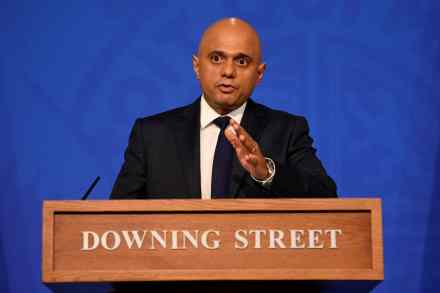
This is an edited transcript of Professor Chris Whitty's remarks at today's Downing Street press conference The existing situation is almost entirely Delta.  In terms of numbers of cases, it is broadly flat. In younger children, there is quite significant transmission at this point in time, and rates are increasing in many parts of the country. At the other end of the spectrum, as a result of the booster programme almost certainly, rates are beginning to drift downwards in people over 60 and particularly people above 70. So we're seeing an improvement in the group who are most vulnerable.  The numbers going to hospital are gradually decreasing. This is not a sudden drop. This is a gradual drifting down.

Frustration grows with Boris, but the social care cap passes

From our UK edition

MPs have approved the government’s social care cap in the Commons. But the vote doing so was narrow, and there seem to have been a lot of Conservative MPs either abstaining (which would be a rebellion against a three-line whip) or absent. Some will have been unwell, and ‘slipped’, as it is known, for other reasons. But some may have agreed with the whips that their car was due to break down or a tooth due to need emergency dental work, thus preventing them from voting against this controversial amendment.

It’s time to fix the NHS’s looming winter crisis

From our UK edition

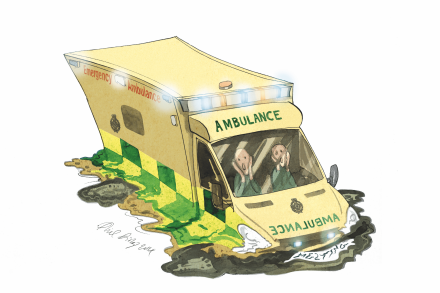
My patient has sepsis. The window for treatment is short; in less than an hour, he could die. In urgent care, the direct line to ambulance control bypasses 999: it lets the call handler know a doctor requires urgent attention for a sick patient. Ten minutes: no response. I’m on a second phone to central dispatch: what is going on? A critical incident has been called; the service is overwhelmed. Finally, after 15 minutes, the phone answers and help is on its way.  Worryingly, this is far from an isolated incident. Last week, it was reported that an ambulance service sent a taxi to a GP practice in Bristol to collect a patient with a broken hip after a nine hour wait.

The vaccine cheer is gone

From our UK edition

I am 45, which means I’ve now had my third Covid vaccine. The experience of getting that injection crystallises a thought: Britain is starting to take the miracle of vaccination for granted, and that spells trouble for Boris Johnson. I don’t use that word ‘miracle’ lightly. The development and distribution of working vaccines with such speed and scale is surely a historical event, and one that should give both big-state left-wingers and the free-market right pause for thought, since it relied on the partnership between public and private. The politics of the vaccine have always been slightly under-appreciated in the Westminster village.

Central planning won’t solve the problem of GP shortages

From our UK edition

Under plans being considered by ministers, GPs in affluent parts of England could be barred from taking jobs in wealthy areas to force them to work in deprived areas, in a bid to address health inequalities. The solution to doctor shortages, apparently, is to make the job less attractive. This would be the healthcare equivalent of the government taking charge of the hospitality industry and informing the owners of the Ivy that all new restaurants should be located in towns north of the Watford Gap, to ensure the pleasures of fine dining are evenly enjoyed across the country. And yet the Social Market Foundation (SMF) who put forward this proposal is suggesting that where GPs work should no longer be a matter for GPs and the practices that employ them.

Sleaze isn’t the biggest danger to Boris Johnson

From our UK edition

This week’s events have undoubtedly done the government damage. But I suspect that ultimately its fate will be determined by whether its gamble of raising taxes to put more money into the NHS results in much lower waiting lists — or just grumpy taxpayers. Reducing the backlog will require more capacity. So, it is worrying that the Department of Health doesn’t know how many extra doctors and nurses it will need to clear the backlog. The government is currently miles off even its pre-pandemic target of 6,000 extra doctors by 2024. Optimistic numbers suggest there might be 300 more than in 2019, but others think things have gone backwards.

Do you really need to see the GP in person?

From our UK edition

Only later, perhaps even a decade later, as the pandemic of 2020-22 shrinks in our rear-view mirror, may we be able to assess its enduring consequences. So I am only speculating when I suggest that one of these may be the beginning of the slow death of general practice in the United Kingdom. And, no, this will not be a column attacking Britain’s GPs, whom I think to be mostly dedicated and hard-working men and women whose careers are demanding, whose work is difficult, and who are not paid excessively for the hours and expertise they bring to their vocation. Rather as with the class for which we use the generic term ‘politicians’, public discontent about ‘GPs’ is felt towards the generality.

Three little words that could cost Boris

From our UK edition

Boris Johnson knows the value of three-word slogans. ‘Take back control’ and ‘get Brexit done’ helped propel him to his two greatest electoral triumphs. But another three words that no one would ever put on a campaign poster might determine the success of his premiership: public service reform. Johnson has taken an unusual decision for a Tory prime minister. He has chosen to raise personal and business taxes to put more money into public services. This gamble may pay off if people feel that services have improved. If they do not, he risks an angry electorate who are paying more tax yet not getting anything extra in return. No. 10 is aware of this danger, which is why Johnson puts such an emphasis on delivery. But this is more difficult than it sounds.

Boris has no answer to the backlog crisis

From our UK edition

Jeremy Hunt asked an entirely reasonable question of the Prime Minister today in the Commons — and got an entirely unreasonable answer. Hunt raised an amendment he is tabling which would require Health Education England to produce regular forecasts for the numbers of doctors and nurses that the UK needs to train. This is quite a small thing to ask for, but Johnson's response was first to dodge his way around the question, and then to turn the issue into a party political attack on Labour. He said: My right hon. friend is absolutely right that we have to ensure that our NHS has the staff that it needs. That is why there are 50,000 more healthcare professionals in the NHS this year than there were last year –—12,000 more nurses.

No. 10 moves to kickstart the booster campaign

From our UK edition

In a move that as important as any in the recent Cabinet reshuffle, Emily Lawson is returning to run the Covid vaccination programme. Lawson headed up NHS England's vaccination team during the rollout, and after its success, she was moved to take charge of the new Number 10 delivery unit. The hope was that she would bring the rollout mindset to public services more broadly. The delivery unit, modelled on its Blair era predecessor, is meant to ensure that the government actually does what it says it is going to do. Such is its importance that Lawson addressed the first meeting of the newly reshuffled Cabinet. The fact that she is now going back to the rollout shows how worried ministers are about the booster programme.

Javid says no to restrictions – for now

From our UK edition

Is the government considering activating its 'plan B' Covid plans? Not yet.  After the Business Secretary played down talk of new restrictions this morning, Sajid Javid used today’s press conference to confirm that he would not be implementing the back-up plan ‘at this point’. However, the Health Secretary suggested that further measures – namely vaccine passports, work-from-home orders and mask mandates – could not be ruled out if the data substantially worsens. The main message from the press conference: get vaccinated There was a marked change in tone from Javid since the days soon after his appointment as Health Secretary when he declared that there was 'no going back'.

Sajid Javid is right to make the NHS more accountable

From our UK edition

The health secretary has announced more money for the National Health Service. It’s a story we’ve heard time and time again – but this time the details are different. Sajid Javid has committed an additional £250 million for GP health practices to assist them in expanding their hours and upping the number of face-to-face appointments they offer. In-person appointments plummeted during lockdown and have never recovered: they are now hovering around 60 per cent, compared to 80 per cent pre-pandemic. So what’s new? In short, the money comes with more accountability. A league table is being created to rank surgeries on how many in-person appointments they offer.

‘I’m entitled not to listen to Sage’: an interview with Sajid Javid

From our UK edition

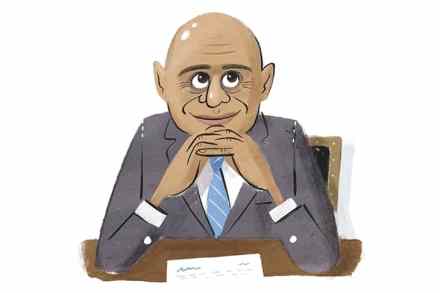
In six years Sajid Javid has had six cabinet jobs. He has been culture secretary, business secretary, communities secretary, home secretary and chancellor — and, just over 100 days ago, he was made Secretary of State for Health. When we meet on stage for an interview at Tory party conference, I ask him about his credentials for the job. He has none. ‘But that’s not unusual for a health secretary,’ he chirps. And experience? He has visited a few hospitals. He then offers the story of his early run-in with the NHS. As a child, he had his appendix removed in hospital. ‘Next thing I remember is being back at home in bed, being cuddled by teddy and feeling much better.’ Soon he was in pain again.

The SNP’s NHS meltdown

From our UK edition

When he’s not falling off his scooter like he’s auditioning for the role of Inspector Clouseau in the Pink Panther franchise, the gaffe-prone Scottish health minister, Humza Yousaf, is mired in a multitude of Scottish NHS crises. This month saw Britain’s armed forces parachuted in to prop up the Scottish Ambulance Service. Nicola Sturgeon was forced to call on the military after distressed patients had to wait hours, and sometimes even days, for an ambulance – one of the most harrowing cases involved a frail Glasgow pensioner who died after waiting 40 hours for an ambulance to arrive. Dig into the government statistics and the scale of the crisis facing the Scottish NHS is clear.

PMQs: Boris blustered his way out of trouble

From our UK edition

What were they? Model broomsticks? Mini cricket bats? The chewed ends of lolly-sticks? At PMQs today many MPs arrived with odd sprigs of material attached to their clothing. The badges turned out to be ‘wheat-pins’ which are part of ‘Back British Farming Day’. Sir Keir Starmer had attached his device firmly to his jacket. Very sensible. Boris had lazily shoved the thing into his breast pocket. It slowly descended into the depths of the lining and disappeared. The session began sombrely as members expressed their sympathy with Boris over his recent bereavement. Sir Keir Starmer took just three seconds to turn it into a story about himself. ‘I offer my condolences to the Prime Minister on the loss of his mother,’ said the Labour leader.

Why the NHS needs more bureaucrats

From our UK edition

If the NHS's cheerleaders and detractors can agree on one thing, it's this: we need fewer backroom staff. If the health service's doctors, nurses and cleaners are heroes, the pen-pushers, middle-men and legions of drab men in drab suits are sucking the vital lifeblood out of the NHS, while droning on about synergies in management. All this while claiming a salary that could have paid for another two nurses. This debate has re-emerged after it was reported that almost half of all NHS staff are managers, administrators or unqualified assistants. Helen Whately, the care minister, spoke for many when she said she feels 'strongly that the money we put into the NHS needs to go to frontline'.

Time to ditch the pension triple-lock for good

From our UK edition

Perhaps it’s finally dawned on the government that they have an intergenerational inequality problem on their hands. The decision to suspend the pension triple-lock for one year to avoid an 8 per cent increase to the state pension would suggest so. Asset wealth is already excessively concentrated in the over-55s. To even this spendthrift government, a massive bump in pensions while the rest of the economy languishes is a step too far. But that’s exactly what happens every year anyway under the triple-lock. The policy means that even when the rest of the economy stagnates, pensioners receive a boost. It is a feature of the system, not a bug, which came into place as part of the coalition in 2010 and has quite clearly run its course.

Tories brace for more tax rises to fund NHS

From our UK edition

Any Tory rebellion on social care is unlikely to be very big this evening when the Commons votes on a resolution introducing it. There are a number of reasons for this, not least that voting against a money resolution, particularly one on an issue that is as big as a budget, is a much bigger deal than rebelling on normal legislation. Then there's the prospect of a reshuffle, with everyone in Westminster busily trying to read runes about whether Boris Johnson will move around his front bench tomorrow. If it doesn't happen, disappointed MPs are hardly going to complain in public that they'd supported the policy in the hope of career glory. If the NHS won't willingly stop spending money, and the new care policy requires that money after three years, what's going to happen?