Nhs

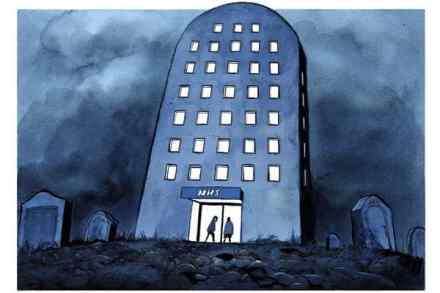
Britain is facing a cancer care timebomb

From our UK edition

As many as 100,000 patients had a cancer that was missed, or had their diagnoses or treatments delayed during the lockdowns of 2020 and 2021. That’s the shocking finding of a recent study by the Institute of Cancer Policy at King’s College London. The experts conclude that some patients will already have died, many still haven’t been diagnosed and others will already have a more advanced cancer as a result of the delays. And it is likely this figure of 100,000 will continue to rise as more data from 2021 and early 2022 is analysed. In other words, there could not be a more important time to fix cancer care in this country.

The problem with the UK’s transgender clinic

From our UK edition

This is not a good time to be a girl. Research from Steer Education last month showed that far too many girls are sad and anxious and concealing their troubles from others. In 2019, the Lancet published research showing girls’ rates of self-harm had tripled since 2000. Other studies show girls are much more likely to be depressed or anxious than boys. This might surprise. Aren’t today’s girls growing up in an age of equality, inheritors of girl power? They’re more likely than boys to go to university. They have better economic prospects than any generation of females that went before them. Empowered female role models are more visible than ever before, in culture, sport, media, science, business, even politics.

The surreal purgatory of A&E

From our UK edition

‘This is my father, and his pronoun is he,’ said the builder boyfriend, checking his dad into Accident and Emergency. ‘And how do we address you?’ said the personage at the reception desk. ‘You can address me as they,’ said the builder b, who was happy to go along with the way the hospital wanted to do things, if only to entertain himself during what was obviously going to be a long wait. His father had fallen on top of a gas canister in their building yard and he was now in so much pain they suspected he had broken his ribs.

Letters: In defence of the police

From our UK edition

A health-care disaster Sir: Kate Andrews’s piece on who really controls the NHS (‘Waiting game’, 12 February) gives us a flavour of how things have come to this: an unaccountable health service with a government attached. We are about to enter a new phase, with additional taxation in the form of increased NI based on promises which are already looking hollow — waiting lists will continue to rise. There is no sign that the 100,000 key workers who are needed are going to be found any time soon.

Revealed: how the NHS waiting list will hit 9.2 million

From our UK edition

Before the pandemic hit, NHS England waiting lists were at a record high of 4.4 million. Three lockdowns later, they’ve risen to six million: an unacceptable figure for a Tory government which has spent years trying to rebrand itself as the ‘party of the NHS’. Boris Johnson’s decision to break his manifesto pledge and raise taxes was directly linked to the idea that the money would first be funnelled into the health service to fix the backlog. So can he now deliver for patients? When Health Secretary Sajid Javid announced his ‘elective recovery plan’ in the House of Commons on Tuesday, he said that the waiting list would start shrinking by March 2024, though he stressed that the numbers will rise before then. By how much?

Portrait of the week: Queen Camilla, a cabinet rejig and NHS waiting list warning

From our UK edition

Home In a message for the 70th anniversary of her accession, the Queen said it was her sincere wish that ‘when that time comes, Camilla will be known as Queen Consort’. She signed the message: ‘Your servant, Elizabeth R.’ Rishi Sunak, Chancellor of the Exchequer, said that the government would pay energy suppliers to discount bills by £200 in October, but customers would then have to pay back £40 a year for five years. People living in houses of the A-D council tax bands would receive a £150 rebate. The regular Ofgem energy price cap adjustment meant that a typical household would pay £693 extra a year, a 54 per cent rise.

Exclusive: Leaked NHS report shows waiting list hitting 9.2 million

From our UK edition

Before the pandemic hit, NHS England waiting lists were at a record high of 4.4 million. Three lockdowns later, they’ve risen to six million: an unacceptable figure for a Tory government that has spent years trying to rebrand itself as the ‘party of the NHS’. Boris Johnson’s decision to break his manifesto pledge and raise taxes was directly linked to the idea that the money would first be funnelled into the health service to fix the backlog. So can he now deliver for patients? When Health Secretary Sajid Javid announced his ‘elective recovery plan’ in the House of Commons on Tuesday, he said that the waiting list would start shrinking by March 2024, though he stressed that the numbers will rise before then. By how much?

Downing Street’s growing problem

From our UK edition

In answers to questions following his statement in the Commons on Monday, Boris Johnson let drop an interesting statistic. He said that, ‘on busy days’, more than 400 officials work in 10 Downing Street. This figure explains a lot — why so many staff there got Covid, why, after long hours in overcrowded conditions, they might want to open bottles of wine, why factions struggle for mastery and leak against each other, and why the heart of government suffers from clogged arteries. With 400 rabbits in that warren, how can most of them know the Prime Minister personally, how can they feel much esprit de corps? The numbers are four times bigger than they were 30 years ago, to little visible benefit.

Why should I be sacked for refusing the Covid vaccine?

From our UK edition

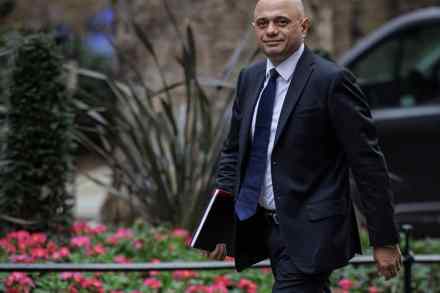
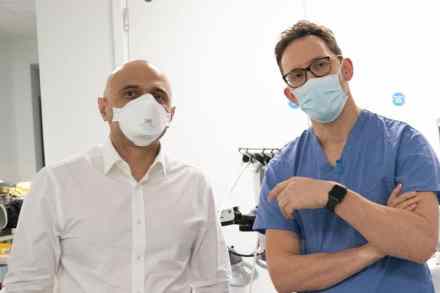
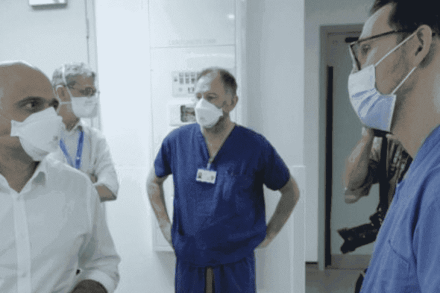
A few months ago, Sajid Javid was asked how he could justify sacking unvaccinated care home workers if they had been infected with Covid and had natural immunity. The Health Secretary replied as if such people were plainly idiots. ‘If they haven’t taken a vaccine — despite all the effort that’s been made to persuade them, encourage them, provide them with information, introduce them to trusted voices — then at some point you have to move on.’ By ‘move on’ he meant thousands of them should be fired. NHS staff are next in line: we have until 1 April to get jabbed or get out. On a recent visit to King’s College Hospital, Javid asked some of us what we thought of this.

When did the anti-vaxx movement begin?

From our UK edition

No vax There is nothing new about the anti-vax crowds supporting Novak Djokovic. Organised protest in Britain began with the formation of the Leicester Anti-Vaccination League in 1869. Vaccination of children against smallpox had been compulsory since 1853, but faith in the vaccine plummeted with an epidemic which erupted in the city in spite of vaccination — 314 died from the disease in 1871/72. There was also increasing anger at the jailing of vaccine refuseniks, 61 of whom were imprisoned between 1869 and 1884. Thousands gathered on 23 March 1885 for an anti-vaccination march from the Temperance Hall to the Market Place. In 1898 the law was revised to allow conscientious objection.

Masks in schools: how convincing is the government’s evidence?

From our UK edition

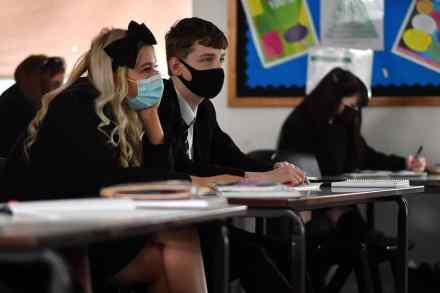
Why has the government changed its mind and asked children to wear masks in school? When Plan B was announced last month, there was no requirement. But that has changed. Nadhim Zahawi, the Education Secretary, was asked why on Monday. He replied that ‘we conducted a small observational study with 123 schools who had followed mask-wearing in classrooms before and saw that they made a difference'. He suggested it was quite a significant study. 'If you just think it through, with a respiratory disease that is aerosol-transmitted, if you are asymptomatic but wearing a mask, you're much, much less likely to infect other people.' The government has now published an ‘Evidence Summary' for the use of face coverings in education settings.

Watch: Sajid Javid confronted by unjabbed NHS doctor

From our UK edition

Since becoming Health Secretary there has been one big question Sajid Javid cannot answer: how can he justify firing a worker who has recovered from Covid, has antibodies and doesn’t want the vaccine? Javid first did this with unjabbed care home workers and now plans to fire unjabbed NHS doctors. Today he met one of them — and it didn’t go well. https://www.youtube.com/watch?v=hOlEYcd1nyI Javid’s answer? He didn’t have one During a visit to King’s College Hospital in south London, Javid was on camera talking to NHS staff asking them what they thought about his plans for compulsory vaccination. He presumably expected them to agree.

Why the Omicron wave won’t overwhelm the NHS

From our UK edition

Barely six weeks after it was first discovered in Britain, the Omicron variant has changed everything. Cases have soared far beyond records made in the first wave. Hospital admissions are surging and pupils are once again wearing masks in school. Modellers have produced terrifying figures — up to 25,000 hospitalisations a day, more than five times the last peak. It looks like a Covid groundhog day, a doom loop we seem unable to escape. Last summer, just before the end of lockdown, I wrote in this magazine about a ‘third wave’ of infections which could be just as big as the first. But my model also pointed to something else: that we could ride out this wave without the health service being overwhelmed and without the need for further restrictions.

My dog and the NHS have a lot in common

From our UK edition

We are considering privatising or selling off our dog, Jessie. She seemed a rather wonderful idea when we got her nine years ago. But since then she has become a hideously bloated, entitled creature who almost by herself determines how we live our lives. In winter she is particularly tyrannical — she has three walks a day, and with darkness falling at four o’clock that means almost every hour of daylight is spent servicing her needs. We cannot go out by ourselves without ensuring she will not be unduly inconvenienced, and as she has grown older so the costs of keeping her have spiralled — and will continue to spiral. Is she grateful? Not a bit of it. The food and treats we give her are never sufficient and so she follows us around demanding more, outraged.

Letters: Afghan interpreters deserve better from Britain

From our UK edition

Welcome changes Sir: Lloyd Evans’s sympathetic piece on the fate of Afghans once they arrive in the UK made for sobering reading (‘New arrivals’, 18 December). In the Sulha Alliance we are endeavouring to support those Afghans and their families who served with and alongside British forces in Afghanistan. That is not the totality of Afghan migrants, but of the former interpreters and their families it can be truly said ‘they are here because we were there’ — and we owe them. I will not go over the whole sorry saga of the UK’s mistreatment of this group, but we really need a step change in how they are looked after.

Boris Johnson rejects lockdown (again)

From our UK edition

Boris Johnson latest Covid press conference was slightly confusing. The Prime Minister spent nearly an hour saying nothing particularly new. He warned that there was ‘considerable pressure’ on the NHS at the moment and unveiled daily priority lateral flow testing for 100,000 essential workers so that key services, including healthcare, don’t seize up due to staff absences. But while he accepted that hospitals were feeling the heat, he also insisted that there was no data suggesting that a lockdown was necessary or helpful. Indeed, he argued:  ‘We have a chance to ride out this Omicron wave without shutting down our country once again. We can keep our schools and our businesses open, and we can find a way to live with this virus.

Most-read 2021: It’s time for NHS GPs to stop hiding behind their telephones

From our UK edition

We’re ending the year by republishing our ten most popular pieces from 2021. Here's number eight: a Spectator editorial written in September about the need for GPs to resume face-to-face appointments. Nye Bevan famously said that he was only able to persuade family doctors to support the creation of the NHS because he ‘stuffed their mouths with gold’. But at least he obtained good service from them — including home visits. Until Tony Blair awarded GPs hefty pay rises while allowing them simultaneously to opt out of night-time and weekend work, they were responsible for their patients’ care 24 hours a day, seven days a week — with practices often pooling resources to provide continuous cover.

Thousands of NHS managers earning more than MPs

From our UK edition

Throughout the pandemic there have been frequent demands for more investment in the NHS. In October, Rishi Sunak was forced to announce further investment of almost £6 billion  to tackle England’s record NHS waiting list. Between 2010 and 2025, the health budget is expected to have increased by 42 per cent; with NHS England’s resource budget set to rise to £162.6 billion over that period. But is all that money being spent wisely? For new figures from the Department of Health show that, while the public is crying out for frontline services, the number of well-paid NHS managers now run into the thousands.

How to cure what ails the NHS

From our UK edition

Wrong cure Sir: In referring to the UK as the highest-spending European nation in healthcare proportionate to GDP (‘Hospital pass’, 4 December), Kate Andrews paints an exaggerated picture which is based upon additional expenditure in the NHS during the Covid pandemic, partly accounted for by £38 billion spent on test and trace. The figures are further inflated by the UK suffering a relatively greater fall in GDP. In reality, the NHS has been woefully under-resourced compared to its European counterparts over the past decade, leaving it with approximately 50,000 fewer doctors compared to OECD averages, the second-lowest numbers of hospital beds per capita, and the lowest numbers of MRI scanners.

Punishing the unvaccinated threatens everyone’s liberty

From our UK edition

How should we treat the unvaccinated? Should we stop them from participating in normal life? Castigate them in the media? Mandate they get vaccinated or block them from accessing NHS services? It’s a creeping question across developed countries — asked on Good Morning Britain’s Twitter page yesterday, and then subsequently deleted. Germany has barred the unvaccinated from most aspects of public life, including shops and restaurants. Greece is charging the over-60s Є100 for every month they remain unvaccinated, with money going to top up the health services. In Singapore, the unvaccinated will no longer have their Covid care paid for by the state. A letter in the Times this week suggested the same should happen here too.