Nationalism

Why libertarians are wrong

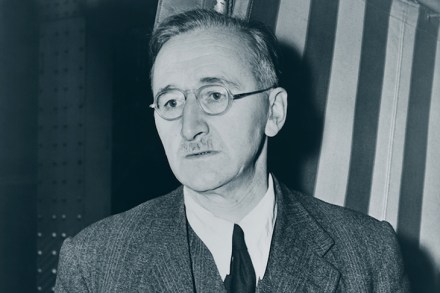
My libertarian friends object to some of my recent writings — in particular, an essay for First Things proposing a moderate economic nationalism as ‘A New Conservative Agenda.’ The various intellectual factions on the American right are all susceptible to utopianism and dangerously wishful thinking when they dwell too much in their own minds: they all need the benefit of a look through someone else’s eyes once in a while, even to see their own concerns more clearly. In the letter below, I respond to some friends’ objections and summarize — tidily, I hope — a few vital questions to which libertarians offer inadequate answers.

libertarians hayek

Candace Owens and the rise of the know-nothing public intellectual

Adolf Hitler ruined nationalism for everyone, says Candace Owens, which is something of a niche complaint. (She had nothing to say about the toothbrush mustache which, in the 1920s, was a sign of moral seriousness.) Owens is African-American, and a rising star in Trump circles in the way that if you are African-American, or gay, and a Trump supporter, you become a rising star, because the pool of talent is thin and the airwaves – I mean Twitter and Instagram - are fat. ‘Whenever we say “nationalism,”’ Owens said, like a woman reciting a wonky Wikipedia page from memory, ‘the first thing people think about, at least in America, is Hitler.

candace owens turning point usa

‘The Green Room’ Podcast from Spectator USA: the virtue of nationalism, with philosopher Yoram Hazony

From our UK edition

‘Patriotism is the exact opposite of nationalism,’ French president Emmanuel Macron said at last weekend’s Armistice Day ceremonies. ‘Nationalism is a betrayal of patriotism. In saying ‘our interests first, whatever happens to the others,’ you erase the most precious thing a nation can have, that which makes it live, that which causes it to be great and that which is most important: its moral values.’ You’d have to be a philosopher to make sense of that. My guest this week on The Green Room, Spectator USA’s Life & Arts podcast, is one: I’m casting the pod with the Israeli philosopher Yoram Hazony, an expert on the philosophies of both religion and politics.

The sound of Iceland

From our UK edition

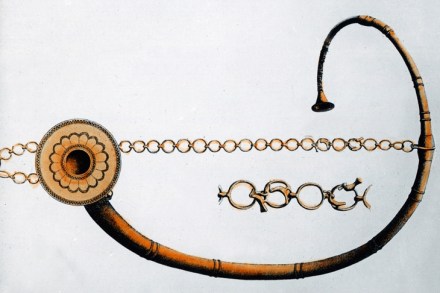
The lur is a horn, modelled in bronze after a number of 3,000-year-old instruments discovered at various archaeological sites across Scandinavia. Its unrefined yet distinctive sound — penetrating, direct and rough-edged — seems to rise up through the body rather than enter through the ears, like the stirring of a long-forgotten memory. The instrument, whose long neck reaches high above the heads of its players, is the first thing one hears in Jon Leifs’s second Edda oratorio. Two of them intone bare, open fifths, resonating against sustained low notes in the woodwind, rising up through the orchestral texture as it fills out. When the choir enters, they too sing in fifths, lurching from one bare harmony to another, incanting the coming of the Aesir, the Norse Gods.

High life | 22 February 2018

From our UK edition

Gstaad It was nostalgia time at Prince Victor Emmanuel’s birthday party here, with many old friends reminiscing about our youthful shenanigans in times gone by. Victor, the pretender to the Italian throne, and I go back a long way — more than 60 years. In a very roundabout manner, so do our families. His namesake and grandfather King Victor Emmanuel III facilitated Benito Mussolini’s rise to power, although he was the one who dismissed him in July 1943 and declared Italy no longer a combatant. My mother’s youngest brother wrote a fan letter to Il Duce, aged 12. Benito invited the boy to visit Italy as his guest, and sure enough my uncle went and stayed with him in Villa Torlonia for a fortnight.

Period drama

From our UK edition

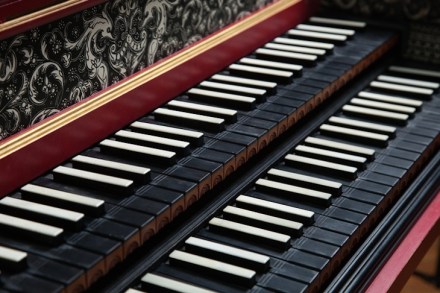
Harpsichordists are supposed to make love, not war: Sir Thomas Beecham famously compared the sound they make to ‘two skeletons copulating on a tin roof’. But now two masters of the instrument, the Iranian-American Mahan Esfahani and the German Andreas Staier, are locked in mortal combat. For connoisseurs of finely tuned insults, it’s riveting stuff. For their colleagues it’s a wretched business, because one of the two musicians is setting fire to his own reputation. Also, a third harpsichordist — a gifted young Frenchman, Jean Rondeau — has been cruelly dragged into the feud. It goes without saying in period instrument circles that Esfahani picked the fight.

High life | 9 March 2017

From our UK edition

A lousy fortnight if ever there was one. Two great friends, Lord Belhaven and Stenton and Aleko Goulandris, had their 90th birthday celebrations, and I missed both shindigs because of this damn bug. Lord Belhaven’s was in London, at the Polish Club, but flying there was verboten. Robin Belhaven is an old Etonian, served as an officer in Northern Ireland, farmed in Scotland, and has four children, eight grandchildren and one great-grandchild. He spent 35 years in the House of Lords when that institution was a responsible arm of the government and not a cesspool full of smarmy lawyers.

The Spectator podcast: May’s third way

From our UK edition

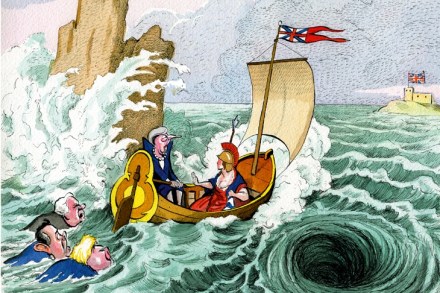
On this week's Spectator podcast, we discuss Theresa May’s Third Way, whether we could have an Uber for social care, and look at Mies van der Rohe’s unrealised plans for a Mansion House skyscraper. On the cover of this week's magazine, Theresa May plots a course through the twin perils of Scylla and Charybdis, as she creates a new centreground between nationalism and globalism. So says James Forsyth, who writes this week on the new binary that has emerged in international politics. James is joined to discuss this on the podcast by Spectator editor Fraser Nelson. On the emergent dichotomy, James writes that: "Forget left and right — the new divide in politics is between nationalists and globalists.

Liam Fox confirms that Britain now has a nationalist government

From our UK edition

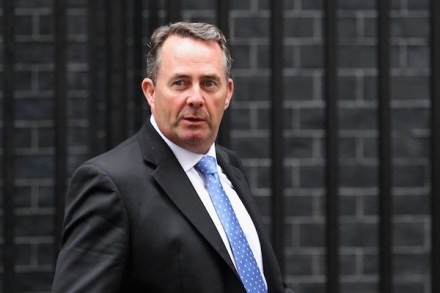
Unlike the boss, I thought Liam Fox's comments on fat and lazy British businesses that could be exporting more but aren't because, well, an afternoon on the golf course is more comfortable than striving for Britain were deplorable. But they were also telling. Because they were a further confirmation that the United Kingdom now has a nationalist government. The liberal Toryism of the Cameron era is gone, sunk with a whimper in record time. In its place is a Conservative nationalism that envisages SS Britannia buccaneering its way across the world's oceans. This, after all, was the animating spirit of what we might call the Brexit campaign's more cheerful wing.

The continent in crisis

From our UK edition

Sir Ian Kershaw won his knight’s spurs as a historian with his much acclaimed two-volume biography of Hitler, Hubris and Nemesis. He is now attempting to repeat the feat with a two-volume history of modern Europe, of which this is the opening shot.Inevitably, the figure of the Führer once again marches across Kershaw’s pages as they chronicle the years dominated by Germany’s malign master. First the Great War that gave Hitler his chance to escape obscurity, and then the greater one he launched himself. Opening with the continent’s catastrophic slide into generalised conflict in 1914, Kershaw apportions blame or the disaster more or less equally to all the combatant nations.

Merkel’s folly

From our UK edition

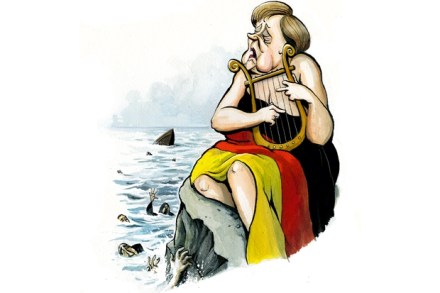
[audioplayer src="http://rss.acast.com/viewfrom22/merkelstragicmistake/media.mp3" title="James Forsyth and Holly Baxter debate Merkel's offer to Syrian refugees" startat=38] Listen [/audioplayer]Of all the irresponsible decisions taken in recent years by European politicians, few will cause as much human misery as Angela Merkel’s plan to welcome Syrian refugees to Germany. Hailed as enlightened moral leadership, it is in fact the result of panic and muddled thinking. Her pronouncements will lure thousands more into the hands of unscrupulous people-traffickers. Her insistence that the rest of the continent should share the burden will add political instability to the mix. Merkel has made a dire situation worse.

Diary – 20 August 2015

From our UK edition

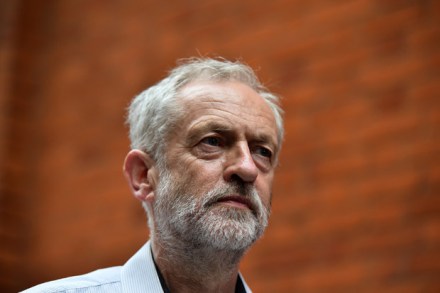
This is the Corbyn summer. From the perspective of a short holiday, my overwhelming feeling is one of despair at my own semi-trade — the political commentariat, the natterati, the salaried yacketting classes. Who among us, really, predicted that Jeremy Corbyn would be romping ahead like this? Where were the post-election columns pointing out that David Cameron’s victory would lead to a resurgent quasi-Marxist left? And that’s just the beginning: how many of the well-connected, sophisticated, numerate political writers expected Labour to be slaughtered in the general election? Not me, that’s for sure. Going further back, how many people in 1992 told us John Major was an election winner? That Parris, I vaguely recall, but anyone else?

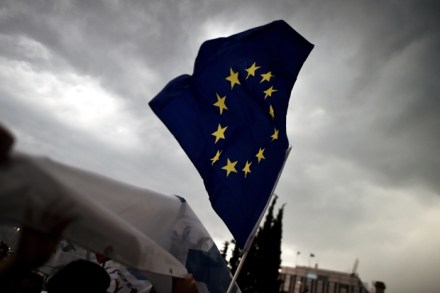
Does anybody still believe that the EU is a benign institution?

From our UK edition

Ever since Margaret Thatcher U-turned in the dying days of her premiership, there has been a kind of agreement between Left and Right on what the European Union is. Most Conservatives followed the late-vintage Thatcher. They stopped regarding the EU as a free market that British business must be a part of, and started to see it as an unaccountable socialist menace that could impose left-wing labour and environmental policies on a right-wing government. As many critics have said, the Tory version of British nationalism that followed had many hypocrisies. It did not want foreigners infringing national sovereignty when they were bureaucrats in Brussels but did not seem to mind them when they were generals at Nato or economists at the WTO.

Flanders

From our UK edition

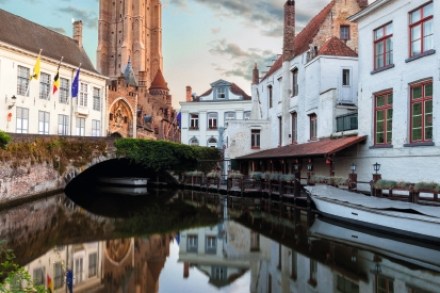
Usually, one of the first indications that you’ve entered a bilingual country is that the road signs are in two languages. At least this is the case in Ireland or Wales — but not in Belgium. In Flanders, the signs are written in Dutch. In Wallonia, they are all in French. French is spoken in Flanders, by the small local Francophone community, but more notably by the huge number of French people who descend on Brugge for the Christmas sales. The French registration plates and the gaggle of overly loud wanderers with cameras are giveaways, but don’t even think about trying French here yourself. It’s considered rude if it’s not your native language. You could, however, always make a stab at Dutch.

It may actually be in Ukip’s interest to lose the EU referendum

From our UK edition

Will the country be torn apart by the EU referendum? That’s the argument made by Chris Deerin on the capitalist running dog website CapX. Deerin, a Scottish Unionist, says it’s now Great Britain’s turn to go through the same painful and divisive process that Scotland endured last year. Personally I doubt that will happen, although it’s possible that a slender vote in favour of remaining in the EU may in the long term be divisive. The main problem with the analogy is that there is just no Ukip equivalent of the aggressive Scottish nationalists who shouted at Jim Murphy. There is a Kipper version of the Cybernats, but even online they are proportionally smaller, and less demented.

Gordon Brown has a brass neck to blame the Tories for tearing apart the Union

From our UK edition

Gordon Brown has popped up in the Guardian today to warn that the evil Tories are going to destroy the Union. The former Prime Minister laments in an op-ed the government's attitude towards Scotland and calls for a ‘constitutional convention’ to figure out the ‘rights and responsibilities of citizens’ in different parts of the Union. If we don't, Brown warns, the Union is in big trouble: ‘No union can survive without unionists and, after an election in which, to head off Ukip, the Conservative and Unionist party presented itself as the English Nationalist party, it is clear that the union is on life support … It is London’s equivocation over Scotland that is becoming the greater risk to the UK.

The risks of being an Englishman on Burns Night

From our UK edition

I’m rubbish at public speaking and detest it. Even the thought of reciting an English poem of my choice at a Burns Night Supper cast a long shadow beforehand, in spite of the strong probability that everyone at the table would be blootered when the time came for me to get to my feet. A further problem was: which poem should an Englishman choose to read at a celebration of Scottishness, if not of Scottish nationalism? Should it perhaps be an English riposte? Or would something amiable and irrelevant be more politic? A comic poem maybe? A comic poem in a comic dialect? Lewis Carroll? ‘’Twas brillig’, and so on?

Bruce Anderson’s diary: If you want to understand the SNP, it helps to be an ex-Trot

From our UK edition

An embarrassing confession: in the late 1960s, I was a Trotskyite. But that period of political adolescence has its uses. It made me aware of the methods employed by extremist parties such as the Scots Nats. Trots wanted to encourage ‘the workers’ to make impossible demands, including ludicrously high wage rates, in order to bring down capitalism. But the workers were too wise to fall for that, until Arthur Scargill came along. Now, the Nats are playing a similar game, discussing the terms on which they might support Ed Miliband — as if they would like a stable government in London. That is nonsense. They want confusion and chaos in London, which would inflame the English against the Scots and convince even more Scots that the Union is collapsing.

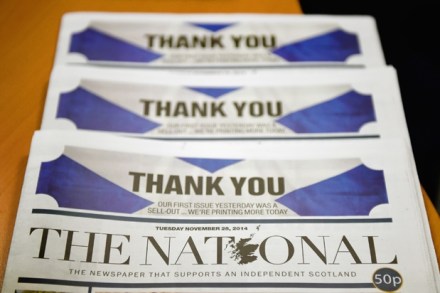
The National shows just how much danger the Union – and Scotland – is still in

From our UK edition

Nearly 20 years ago, during one of the many impasses on the road to ‘peace’ in Northern Ireland, Gerry Adams reminded his opponents that the republican movement would set the terms of any agreement. The IRA reserved a power of veto. ‘They haven’t gone away, you know,’ he said. Scotland is not Ulster, of course, but the Scottish nationalists haven’t gone away either. Anyone who thinks the referendum settled this country’s constitutional future hasn’t been paying attention. The long war continues, albeit — and mercifully — in figurative terms. If anything, defeat has encouraged the nationalists to redouble their efforts. The SNP is the only political party in Scotland that can credibly claim to be a mass organisation.

Patriotism isn’t uncivilised – it’s what makes civilisation possible

From our UK edition

Is it racist to be patriotic? Is patriotism, by definition, small-minded and exclusive? When you strip away the onion layers of sentiment about history and hymns, Shakespeare and lawn clippings, does it have a hateful heart? I ask because, as I’ve written before, I feel patriotic, and until recently I’ve considered this to be a good thing. I felt particularly patriotic at a service in Ravenstonedale, Cumbria, last week. I slid in late and guilty, amid snippy Sunday stares. After the sermon we trooped outside and in the suddenly sunlit graveyard the vicar whipped a trumpet from his cassock and began to play. A pair of starlings began their electric warble, the motes and midges were bright against the dark church wall.