Nationalism

I’ll take Jeremy Clarkson over a howling mob any day

From our UK edition

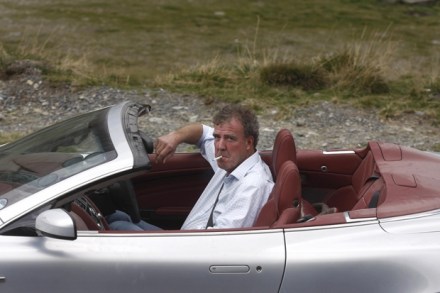
Perhaps it’s a glaring and personal flaw in my observational skills, but if somebody tried to insult me via a number plate attached to their car, I’m not at all sure I’d notice. I suppose if it was really obvious — ‘HUGO TWAT’ sort of thing — then the synapses would fire, but anything more subtle would pass me by. And I don’t think it’s just me. Imagine, for example, driving through Scotland in a car with the registration ‘H746 CLN’. How likely is it, do you think, that some super-observant thug would interpret this as a reference to the Battle of Culloden in 1746, and then gather together a posse to beat you up? ‘Come on lads!
Escape from Omnishambleshire: the case for the old county boundaries

From our UK edition

[audioplayer src="http://traffic.libsyn.com/spectator/TheViewFrom22_23_Oct_2014_v4.mp3" title="James Forsyth, Matthew Engel and Tom Holland discuss counties" startat=785] Listen [/audioplayer]Just over 35 years ago, in August 1979, Christopher Booker wrote a cri de coeur in The Spectator calling for the return of England’s ancient counties and the repeal of the 1972 Local Government Act, under which most of them had been either merged, mauled, mangled or murdered. It drew a large and almost wholly supportive response from figures as distinguished as Professor Richard Cobb (‘Booker has rendered us all a ray of hope’) and Michael Wharton, a.k.a.

When Irish nationalism meant sexual adventure

From our UK edition

One of the easiest mistakes to make about history is to assume that the past is like the recent past, only more so. It’s a natural human tendency to project the outcome of events backwards, ignoring the fact that the arc of history really doesn’t work like that. In the case of Ireland that tendency to see the past in terms of outcomes is particularly misleading. The state that came about less than a century ago as a result of the Easter Rising, the war of independence and partition was socially conservative and strongly Catholic. Roy Foster’s achievement is to show that this need not have been so. This book — the title is from W.B.

The parallels between Alex Salmond and Vladimir Putin

From our UK edition

Alex Salmond was criticised in the spring for endorsing certain admirable qualities in Vladimir Putin. Salmond told GQ magazine that Mr. Putin had ‘restored a substantial part of Russian pride and that must be a good thing.’ He was quick afterwards to lament that Russia's record on human rights needed improvement and to express solidarity with Ukraine, but as time goes on the parallels between Salmond and Putin seem to go deeper. Both bank on presiding over economies that are currently cash-rich from oil and gas – resources whose future may be shaky in the long term. And they both argue that Western military action in Syria or Iraq is wrong without the sanction of the UN Security Council.

Shock election in Sweden as the Sweden Democrats become no3 party

From our UK edition

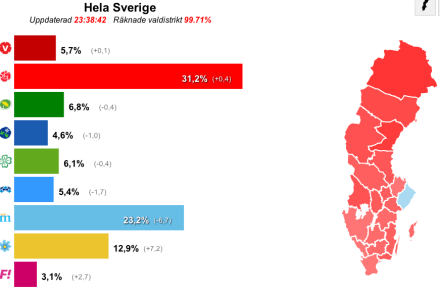
Yes, Britain is on the point of breaking up - but there are more ill winds blowing in Europe right now. The National Front is polling so strongly in France that Marine Le Pen would be president if an election was held tomorrow. And as I write, the populist Sweden Democrats seem to be the only real winners of the general election held there today. As far as I can tell, this hasn’t been picked up by the English-language media yet - they're focusing on the power transfer to the Social Democrats (this isn't the same as a victory: a victory means you actually win more voters). What follows is from the Swedish TV and websites, so please forgive the dodgy translation. The conservative Prime Minister, Fredrik Reinfeldt, is out*: but we knew he would be.

Why is nationalism OK when prefixed by the word ‘Scottish’ but not ‘British?’

From our UK edition

My second favourite religious joke is an old Jewish joke (which I read in the Harvard Review, so I assume it has passed the political correctness test). Two Jews pass a church displaying a sign promising $1,000 to all new converts. After much debate, one of the men decides to take up the offer and enters the church. An hour passes, then another as the friend waits outside. Finally he comes out of the church and his friend eagerly asks, ‘So, did you get the money?’ The first man glares back and says, ‘Is that all you people think about?’ You could transfer this punchline to the Scottish independence debate.

How independence will impoverish Scottish culture

From our UK edition

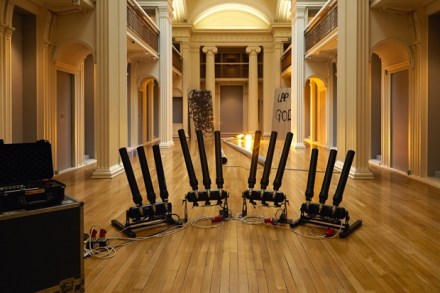
[audioplayer src="http://traffic.libsyn.com/spectator/TheViewFrom22_11_Sept_2014_v4.mp3" title="Fraser Nelson, Tom Holland and Leah McLaren discuss how we can still save the Union" startat=50] Listen [/audioplayer]An explosion of confetti will greet the announcement of Scottish independence. This isn’t another one of Alex Salmond’s fanciful promises, but an installation by a visual artist named Ellie Harrison. She wants Scotland to become a socialist republic. She has placed four confetti cannons in Edinburgh’s Talbot Rice Gallery. They will only be fired in the event of a Yes vote. Most artists in Scotland favour independence. Harrison’s installation is typical of the pretentious agitprop they produce. This isn’t a uniquely Scottish problem.

Alex Salmond is within sight of his promised land: Scottish independence is more than just a dream.

From our UK edition

I don't want to appear too immodest but, you know, I told you so. Back in February I wrote an article for this paper warning that Scotland's independence referendum would be a damn close run thing. That was true then and it remains true now. Today's YouGov poll reports that, once undecided voters have been removed from consideration, 47 percent of Scots intend to vote for independence while 53 percent will back the Unionist cause. If the odds remain against Alex Salmond it's also the case that the price on independence is shortening. Paddy Power's over/under calculation of a Yes vote now stands at 46.5 percent. A few weeks ago it was at 42.5 percent. It's a kind of quickening.

After Scotland, whither Britain? Divorce is a costly business.

From our UK edition

If, like me, you missed Andrew Neil's BBC programme exploring What the Hell Happens to the United Kingdom if Scotland Votes for Independence Next Month you might be interested to know that it remains available on the BBC iPlayer here. Prudently, dear reader, I liked it. It's a film best viewed as a companion piece to James Forsyth's Spectator cover story published last month. A call to arms to England - and Westminster in particular - to ponder the consequences and implications of Scottish independence. There is little sign that much thought has been devoted to these issues.

Kaiser Wilhelm’s guide to ruining a country

From our UK edition

The role of personality in politics is the theme of this awe-inspiring biography. This is the third volume, 1,562 pages long, of John Röhl’s life of the Kaiser. It has been brilliantly translated — the labyrinth of imperial Germany navigated by many headed subdivisions in each chapter — by Sheila de Bellaigue. The fruit of what Röhl calls a ‘dark obsession’ with the Kaiser, it had its origin when, writing about Germany after the fall of Bismarck at the apogee of social and institutional history in the 1960s, he realised that he was analysing not a modern government but a court society. Personalities and dynasties were as important as classes and parties.

Who cares whether English commentators like or respect Scotland?

From our UK edition

Because the Commonwealth Games are a thing and because newspapers need to fill their pages every day it is natural, even unavoidable, that they have in recent days been stuffed with pundits pontificating on the political significance of the games. Being a mere and humble freelance hack I wrote one such piece for the Daily Mail earlier this week even though I also stand by my suspicion that the political implications of these games are much too easily and keenly exaggerated. But that does not mean all such commentary is worthless or lacking interest. Here, for instance, is Lesley Riddoch writing in today's edition of the Scotsman: [A] subtle and powerful political point has been made with every waking moment of these Games.

It’s not Doublethink to support Scottish independence and Britishness

From our UK edition

I remember it well: It was in a 2008 debate on whether we should establish a ‘Britishness day’, when many of us were crammed into Westminster Hall to consider this question of great national importance. It was about the same time as Gordon Brown’s much mocked ‘British jobs for British workers’ and there were, therefore, many ongoing debates about what Britishness was supposed to mean and how it could be celebrated. During that debate I said that, (as we move towards independence) ‘all vestiges of Britishness may go and I don't know what Britishness is’. Pretty unremarkable, but these comments are now starring in any number of unionist productions, publications and columns (including Spectator blog posts) as the worst example of 'Nat' duplicity.

Scottish Nationalists have become Masters of Doublethink

From our UK edition

Let's be fair, however, UKIP have not cornered the market in weirdness. One of the odder elements of the Scottish independence campaign is the manner in which so many Yes voters deny being nationalists: I support independence but please don't make the mistake of thinking me a nationalist. I only support nationalist aims, like.  I suppose this is just about tenable if you are a member of the Green party or if you swim in one of the Yes campaign's other minor tributaries but it's a mighty rum thing to hear from members of the SNP. Which brings us to Pete Wishart, member of parliament for Perth and North Tayside. The other day he tweeted that he has "Never much cared for any 'nationalisms' whether Scottish, British or Whateverish.

Yes voters are the Union’s secret weapon

From our UK edition

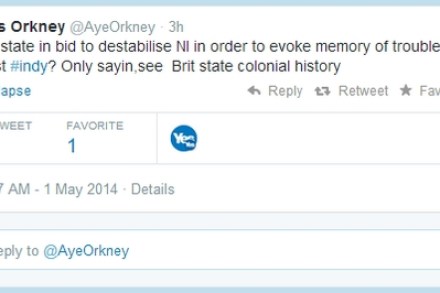
Well some of them are anyway. Consider the tweet above. It's since been deleted and you can see why. Gerry Adams' arrest might not be an obvious element of the Pan-Unionist Conspiracy but if you think that you lack the imagination necessary to be the wilder kind of Scottish nationalist. Then again paranoia is a consequence of monomania and breathtaking solipsism. Of course it's just a tweet and only a single one at that. But there are plenty others like it. And yes, for sure, there are loonies on the Unionist side too. There really are people who think Alex Salmond evil and, lord knows, there are any number of Unionists making daft claims about the consequences of independence. But it's nationalists - or Yes voters - who need to make the case for change.

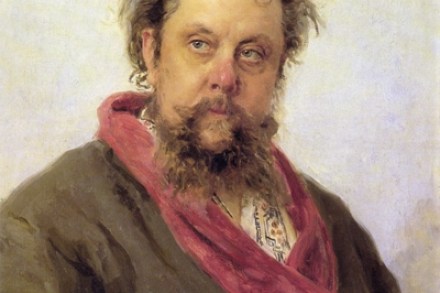
Why do we pounce on Wagner’s anti-Semitism, and ignore that of the Russian composers?

From our UK edition

Before ‘nationalism’ became a dirty word, it was the inspiration for all sorts of idealistic and reform-minded people. This was never more true than in the history of music. Clearly, subsequent events have discredited some of those 19th-century ideals. It is striking, however, that we have become uncomfortable with Wagner’s German nationalism while continuing to regard Smetana’s Czech nationalism as an admirable, even inspiring quality. At times one feels that some musical nationalists are given too easy a ride — as if what happened in the opera house couldn’t conceivably affect anything outside it.

Wales, England, and the prospects for a Five Nations classic

From our UK edition

‘Look what these bastards have done to Wales,’ Phil Bennett famously said in the dressing-room before a Five Nations match with their friends across the Severn in the mid-1970s. ‘They’ve taken our coal, our water, our steel. They buy our homes and only live in them for a fortnight every year. What have they given us?’ Someone could have piped up at that point, Life of Brian-style, and suggested the Severn Bridge. But they didn’t of course. Bennett, that maestro of a fly half, went on. ‘We’ve been exploited, raped, controlled and punished by the English — and that’s who you are playing this afternoon.