Narendra modi

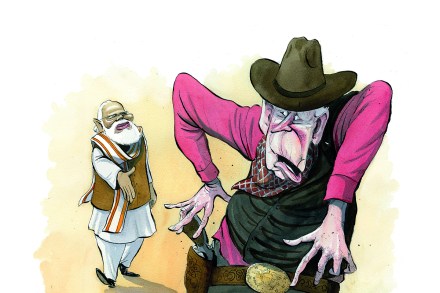
Why has Trump turned on India?

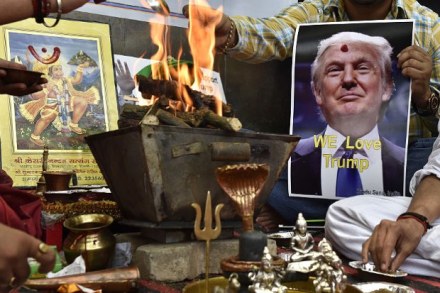
President Donald Trump, not someone to let a good insult go to waste, has caused outrage in India after sharing a social media post describing the country as a “hellhole.” Trump did not make the disparaging remarks himself, merely reposting the statement (without comment) on his Truth Social account. The words actually came from the conservative podcast host Michael Savage, as part of an attack on birthright citizenship. “A baby born here becomes an instant citizen, and then they bring the entire family in from China or India or some other hellhole on the planet,” the Savage said. He accused Indian immigrants in the tech industry of not hiring white native-born Americans, and also said that they lack proficiency in English.
India

Tariffs and the psychodrama of Trump diplomacy

A bleached white conference room, somewhere near Jeddah in Saudi Arabia. On one side sits Volodymyr Zelensky, the Ukrainian leader, in his soldier-boy outfit. On the other, Russian President Vladimir Putin in dark suit and tie. And in the middle, a beaming President Donald J. Trump. "People said this could never happen," he says, as Zelensky and Putin stare awkwardly at the floor. "But it’s a beautiful thing." A White House memo lands in inboxes across the world: "THE PEACEMAKER-IN-CHIEF..." Pure fantasy, perhaps, but Trump does have an almost cosmic ability to get what he wants – and he really wants to end the war in Ukraine. Last night, having spent weeks telling the world how "disappointed" he was with Putin, Trump abruptly announced "great progress" in US-Russia dialogue.

trump Steve Witkoff and Vladimir Putin shake hands (Getty)

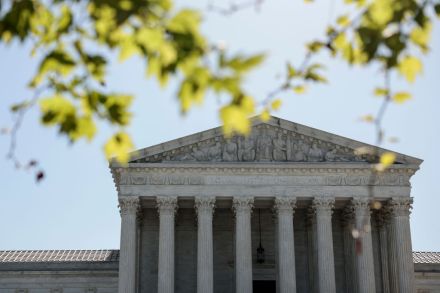
The Supreme Court is under fire — again

Some weeks it feels like the line between politics and the law has all but vanished. From Hunter Biden’s plea deal and Donald Trump’s ongoing criminal woes to the brouhaha surrounding gifts accepted by Supreme Court justices and John Durham’s appearance before the House Judiciary Committee to defend his report on the FBI and Russiagate, this is one such week.  For more on the Hunter story, check out my colleague Ben Domenech’s latest. Meanwhile, a fresh row about the Supreme Court bubbled up in an unusual way overnight.

Shinzo Abe was Japan’s indispensable conservative

Shinzo Abe, who was assassinated today while electioneering, was his country's indispensable man. Prime minister of Japan for much of this century, from 2006 to 2007 and 2012 to 2020, Abe's stature on the world stage eclipsed that of other post-war Japanese leaders, just as his time in office surpassed them all. For a taste of the shock of his murder, look back to the surprise and incredulity which met his resignation from office in the pandemic's worst days. Plagued by a debilitating health condition which had earlier caused him to leave office in 2007, Abe concluded he did not have the stamina left to rule.

Russia is sidestepping American oil sanctions

When the European Union finally made the decision to ban 90 percent of Russia’s crude oil imports by the end of the year, the bureaucrats in Brussels were jubilant. The EU’s adoption of oil sanctions was thought be a big blow to Russian President Vladimir Putin, who depends on the revenue generated by his country's oil exports to fund his war in Ukraine. It doesn’t take a genius to figure out why European officials were so thrilled. The EU imported 2.2 million barrels per day of Russian crude last year, amounting to tens of billions of dollars in profits for the Kremlin every month.

The US and India in a new world

The world’s center of gravity is shifting to the Indo-Pacific. The new global order will be shaped by developments in a sprawling region where interstate rivalries and tensions are sharpening geopolitical risks. Building a stable balance of power in the Indo-Pacific has become more important than ever, but China’s territorial and maritime revisionism, and its heavy-handed use of economic and military power, are causing instability and undercutting international norms. Against this background, the expanding strategic partnership between the world’s most powerful and most populous democracies — the United States and India — has become pivotal to equilibrium in the Indo-Pacific.

india
india

Can the India-US relationship last?

India and the United States have rediscovered each other after the cordial hostility of the Cold War. Those years of isolation have made India’s political and financial elites susceptible to flattery. America’s courtship of India, lubricated by the economics of globalization and the post-9/11 zeal to spread democracy, is now being consummated in the American search for a democratic counterweight to China. But India is a chaotic democracy in a volatile neighborhood. Can it hitch itself to America without forfeiting its autonomy? Foreign strategic experts exhort India, which is non-interventionist to its marrow, to act like a global power.

Joe Biden is letting India down

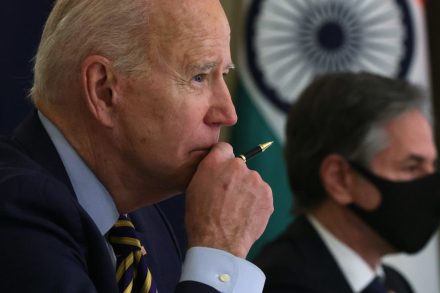
With 40 percent of the population vaccinated, a palpable sense of normalcy has returned to America. The young are now getting their turn at the COVID vaccine and in almost every city, restaurants and bars are back in full swing. But while selfies of joyful reunions with older relatives flood social media here, in India, the picture is grim. The country reported world record-breaking coronavirus infection rates for four days in a row. Hospitals in several cities are grappling with severe shortages of beds, medicines and oxygen. For a country widely seen as the pharmacy of the world (India produces 60 percent of the world’s total vaccines), it is a sad irony that just 8 percent of its own population has been vaccinated thus far.

india

Kamala Harris’s Indian summer

The Indian vote in American politics has been a lock for the Democrats in recent years. President Obama won the group in 2008 and many of them preferred him to Mitt Romney in 2012. Likewise, Hillary Clinton won the Indian vote in something of a landslide in 2016 against President Trump. Early polling indicates that Asian Americans in general still lean Democrat. But might Joe Biden’s selection of Kamala Harris put a meaningful portion of the Indian vote up for grabs? Kamala Harris represents something historic for the Indian-American community — she is the first person with Indian ancestry to run on either party’s presidential ticket. The Biden campaign have been quick to capitalize on this, forming an 'Indians for Biden' National Council.

kamala harris indian

The possibilities of a US-Indo alliance are YUGE

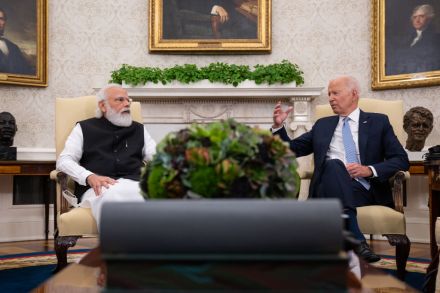
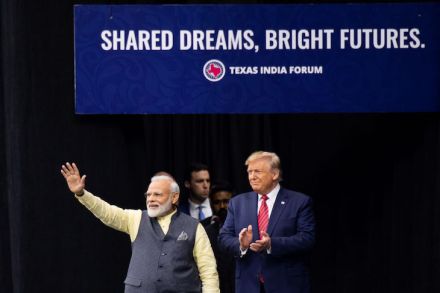
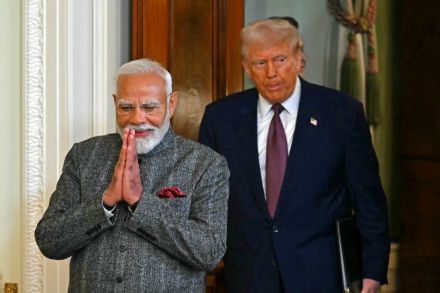
President Donald Trump is not all that fussed, one way or another, about vague concepts like human rights. He prefers realpolitik and semi-feudal pomp; the Maharaja of Queens is set to enjoy plenty of both during his visit to India this week. Indo-US relations are not as sclerotic as they were during the bleak, stagnating, Sovietized Eighties — an era which no one other than the New York Times remembers fondly. Since the Cold War, American presidents have conspicuously sought to align with New Delhi, as a counterbalance to a rising China, and have equally been courted back. The appeal of an alliance is not simply strategic, Indian Americans are the most successful minority community in the US. With Trump and Modi, their bonds look set to grow even stronger.

US-Indo alliance