Napoleon

The history of Moscow was one of extreme violence from the start

From our UK edition

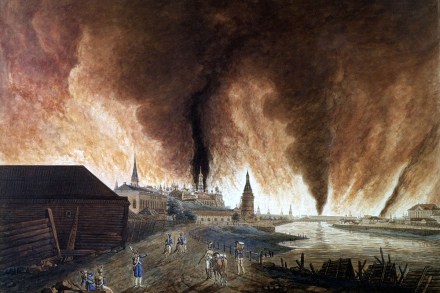
‘Moscow is hard to love,’ Simon Morrison writes at the beginning of this engaging book, ‘but I love it.’ He deliberately sets out unconstrained by academic pieties, despite holding the post of Professor of Music and Slavic Languages and Literatures at Princeton University. He says he wrote A Kingdom and a Village ‘out of nostalgia for pre-oligarch decrepitude, when the world looked at Moscow with pity’. The Orthodox Church and the security services have been conjoined from the 16th century to the present The book is tripartite. The first part begins in 1147, when a prince named Yuri built a fort on a hill above a river. (When the authorities unveiled a monument to Yuri in 1954, Morrison reveals, a Muscovite yelled: ‘Doesn’t look like him.
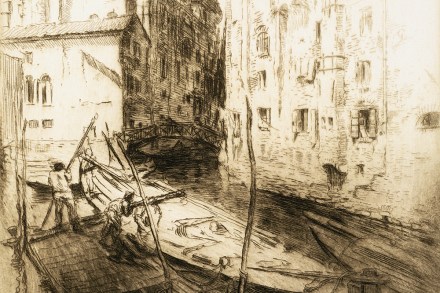
The Venice Ghetto was a landmark in the history of Jewish persecution

The word ‘ghetto’ is said to derive from the Venetian dialect term for ‘foundry’: ghèto. In the early 16th century, on the orders of the Doge, Jews were herded en masse from the centre of Venice to the Ghetto Nuovo, or New Foundry district, where metal workers had long cast cannon for the Venetian fleet. The Ghetto – the first of its kind on the Italian peninsula and anywhere in the world – became a model for segregated Jewish quarters throughout Europe. It was soon blighted by poverty, malnutrition and disease. The Ghetto Nuovo was a landmark in the history of Jewish persecution. In this fascinating history of the New Foundry and its inhabitants, Alexander Lee conjures the Adriatic seaport in all its strange glory.

‘Invalid’ has become invalid

“They should ask me. I’m a complete cripple,” said my husband, heaving himself from his chair with great determination to reach the whisky. Britain’s Department for Transport is asking disabled people whether the term invalid carriage in legislation should be changed and what term they might prefer was used instead. “Language has moved on and changed,” the UK government says, since 1970, when the legislation was first drafted. One problem is having to keep changing terminology. No one, even my husband, should be called a cripple. No one should be called handicapped. Now it has been decreed that no one should be called disabled, but rather a person with a disability. These changes are paralleled in the languages across Europe.

invalid

All that was bravest and best: William Miller, forgotten Victorian hero of South American independence

From our UK edition

John Hemming is the doyen of historians of South America. In his previous books he has revealed the tragic history of the Incan empire (The Conquest of the Incas); the impact of the arrival of Europeans on the Brazilian Indians (Red Gold); and the story of the Amazon (Tree of Rivers). Now he has produced a biography of a modest baker’s son from Kent who became one of the greatest figures in the liberation of Spanish South America. William Miller was born in 1795, and fought as a teenager in the Peninsular War against Napoleon. Then, like many other Englishmen, he travelled to South America to fight alongside some of the greatest commanders battling the Spanish and striving for independence.

Romantic fantasies of the French in India

From our UK edition

‘The English cannot assimilate any nation,’ declared the narrator of a French travelogue set in India and published in the aftermath of the uprising of 1857. ‘They can only dominate with brutality, squeezing every last drop of blood from the veins of the oppressed.’ Reduced to ‘slaves’ who ‘tremble before the Englishman’s whip’, the Indians in this tale yearn for the ‘heroic Dupleix and his deputy de Bussy’. Had Louis XV’s jealous court not betrayed those two men, ‘India would have been French, not British’. The book was a work of fiction. It had to be. In reality, scarcely anybody in India, barring a reactionary nawab here and an obscurantist sultan there, longed for French rule. The French were history’s losers.

Confection of sex, bad history and nonsense: Apple TV+’s Carême reviewed

From our UK edition

Antonin Carême was known as the ‘chef of kings and the king of chefs’. His patrons and employers included Talleyrand, Napoleon, the Prince Regent, Tsar Alexander and the then richest man in France, James Rothschild. He popularised the tall ‘toque’ hat worn by chefs; he either invented or perfected culinary classics including the vol-au-vent, the profiterole and the mille-feuille, as well as sauces including velouté and béchamel. All this he managed to achieve despite having come from a desperately poor background, raised in a shack in revolutionary France and sent off as a young lad to help make ends meet as a kitchen boy and later as apprentice to Paris’s best patissier. A fascinating rags to riches story, you might think.

‘Death is a very poor painter’: the 19th-century craze for plaster casts

From our UK edition

On the morning of 7 May 1821 an urgent task was performed at Longwood House on St Helena. A day and a half previously, the celebrated prisoner for whom this dwelling had been built had died. Obviously it was necessary to make his death mask, and fortunately a British military doctor, expert in such matters, was at hand to do so. So it was that in times to come every bourgeois home in France ‘had its plaster Napoleon’, as Alain Corbin writes in this brief but highly original book. The proliferation of such casts was a feature of the age. Some homes became ‘virtual museums of the dead’. Artists’ sitting rooms and studios frequently contained a moulding of the emaciated features of Théodore Géricault; musical households would naturally have one of Beethoven.

The rollercoaster ride of the world’s most reckless investor

From our UK edition

For a few days in February 2000, Masayoshi Son was the richest person in the world. A risk-taker and showman, universally known as Masa, he had long been disdainful of Japan’s staid ‘salaryman’ business culture and was riding the wave of dot-com mania. His company SoftBank, founded in 1981, had bet big on the growth of online shopping. The bullish mood didn’t last, and Masa slunk away from the limelight – but only for a while. A techno-optimist, the now 67-year-old has repeatedly reinvented himself, urging doubters to see beyond the immediate: ‘You’re limiting your field of vision to 30 years... Start bold and think 300 years ahead.

Following Napoleon: my exile in St Helena

From our UK edition

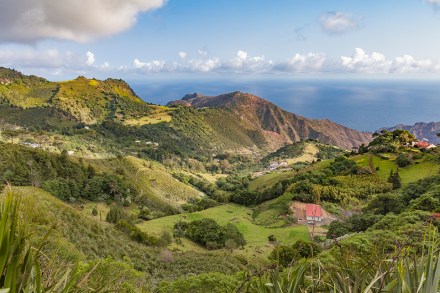
St Helena In an attempt to escape from the world, I have come with friends to St Helena. It is quite a good place for the exercise. Until a few years ago the only way to get to the island was a five-day boat voyage from Cape Town. Shortly before Covid, an airport for this British overseas territory was finally completed at UK taxpayer expense. To protect some local insects the runway was put at a slightly wrong angle, making it difficult – sometimes impossible – to land. The weekly flight from Johannesburg therefore refuels in Namibia in case landing is impossible and the plane has to about-turn. A lifesize statue of Napoleon stands on the balcony.

Harry Mount, Lara Prendergast, Catriona Olding, Owen Matthews and Jeremy Hildreth

From our UK edition

29 min listen

On this week's Spectator Out Loud, Harry Mount reads his diary, in which he recounts a legendary face-off between Barry Humphries and John Lennon (00:45); Lara Prendergast gives her tips for male beauty (06:15); Owen Matthews reports from Kyiv about the Ukrainians' unbroken spirit (12:40); Catriona Olding writes on the importance of choosing how to spend one's final days (18:40); and Jeremy Hildreth reads his Notes On Napoleon's coffee. Produced by Cindy Yu, Margaret Mitchell, Max Jeffery and Natasha Feroze.

When you Wish upon a star: is the Disney shine fading?

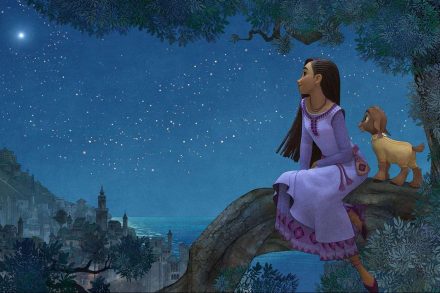
Did you see Wish last weekend? Chances are, according to the box office receipts, you didn’t. The latest big-budget Disney extravaganza, with the voices of Ariana DeBose and Chris Pine, was expected to be a hit, grossing a decent $50 million on its opening weekend. Instead, to the studio’s chagrin, it came in third with a comparatively measly gross of $31.7 million, bested not only by the second weekend of the Hunger Games prequel, The Ballad of Songbirds and Snakes, but, considerably more surprisingly, Ridley Scott’s Napoleon, which soared past early estimates to come in with an impressive $32.5 million. Not bad for a film without any bankable movie stars (sorry, Joaquin), mixed reviews, a B- CinemaScore rating and a subject with which American audiences are not intimately familiar.

wish

A bit too short: Napoleon reviewed

From our UK edition

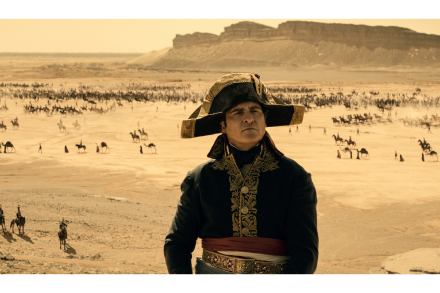
Ridley Scott’s Napoleon, starring Joaquin Phoenix, has a running time of two hours and 40 minutes, which is scant by today’s standards, but don’t worry: a four hour-plus director’s cut is on its way. So this is Scott’s Napoleon Abridged, you could say, and it does have the feel of a film that’s been scissored to death. The battle sequences are spectacular but the jackhammer cutting-style – hang on, how did he get from there to here? – means the storytelling is hurried and confusing. I’m not too sure about this Napoleon either. Did you know one of the greatest military leaders in world history was essentially a man-child? Phoenix, always a strong, intense screen presence, plays Napoleon as petulant rather than as a brilliant strategist.

Sir Ridley Scott and the subtle art of not giving a damn

Most men approaching the age of eighty-six would be forgiven for taking it easy. Not so Sir Ridley Scott: legendary filmmaker, director of the eagerly anticipated epic Napoleon and, it appears from the recent interviews he has given, someone who does not give a single solitary cuss about how he, or his film, are received. He is fresh from telling historians who have criticized his film’s factual accuracy that they should “get a life” and that “when I have issues with [them], I ask: ‘Excuse me, mate were you there? No? Well, shut the fuck up then.

ridley scott

The best of this year’s gardening books

From our UK edition

What makes a garden is an increasingly pressing question, in the light of what Jinny Blom, in her witty and wise What Makes a Garden: A Considered Approach to Garden Design (Frances Lincoln, £35), calls ‘hairshirt hubris’. By that she means the refusal of some gardeners to call any native plant a weed or any slug or aphid a pest. She wishes to inject a little sense into what has become an ill-tempered dialogue between ‘traditional gardeners’ and the self-deniers who cannot see gardens as anything but parcels of sacrosanct earth, in which any major intervention by a human is to be regretted. But to Blom, garden-making is one antidote to the modern curse of solipsism. ‘Gardens insist we care for them as much, or more, than ourselves.

What does Dune: Part Two’s postponement mean for the movies?

The news that Denis Villeneuve’s keenly anticipated Dune sequel is to be delayed from its previously announced November release date until next March is both unwelcome and far from unexpected. It also brings back memories of the pandemic, when films were routinely postponed for months, even years; it is not hard to remember how the Bond film No Time To Die ended up having its original release date of April 2020 put back until October 2021, by which time Billie Eilish’s theme song had acquired all the familiarity of a much-loved old standard, and the film’s trailers had long since melted into ubiquity. And countless equally delayed pictures simply flopped at the box office, as audiences stayed away, bored by seeing the same marketing materials forever.

dune part two

Napoleon heralds the return of the man’s movie

The trailer for Ridley Scott’s eagerly awaited magnum opus Napoleon has finally arrived — and it does not disappoint. Boasting what looks like another Oscar-worthy performance from Joaquin Phoenix, the trailer teases an intoxicating mixture of full-throttle battle scenes, executed and shot on a scale unparalleled in modern cinema, as well as insight into the complex psyche of the French emperor, to say nothing of his often-tortuous relationship with his wife Josephine (played here by Vanessa Kirby.)  https://www.youtube.com/watch?

napoleon

Graham Robb deserves to be a French national treasure

From our UK edition

This is a ceaselessly interesting, knowledgeable and evocative book about France over thousands of years. Is it at all likely to have been produced by a French writer? Though it’s about some deeply serious subjects, it’s very amusing; it makes no attempt to constrain itself within an overarching theoretical framework; it would be impossible to extract from it a grand statement beginning ‘The French are all…’; it is pragmatic, full of enterprising scholarly initiative and a gift for observation without intruding. Most strikingly, it’s a book about France in which the author has profitably spent a good deal of time outside Paris.

New tactics are needed for the wars of the future

From our UK edition

The strategic bankruptcy of the West has twice so far this century demanded that our brave soldiers risk their bodies and minds to fight unwinnable wars. The lessons to be learnt from Iraq and Afghanistan, and indeed from Libya, Syria and the Sahel, are many; but the original sin was hubris, born of post-Cold War military preponderance and successes in Sierra Leone, Ulster and Kosovo. The consequence of our arrogance, when 9/11 demanded action, was that we failed properly to interrogate, and so to grasp, either the character of the specific conflicts into which we jumped, or the fundamental nature of war itself.

Don’t ask a historian what history is

From our UK edition

E.H. Carr’s 1961 book What is History? has cast a long shadow over the discipline. I recall being assigned to read it as a teen-ager, and it has prompted multiple reconsiderations over the years — as acknowledged by the editors in their introduction to this book. Reappraisals and conferences on ‘What is History?’ are launched with regularity. (One of the editors of this volume is Carr’s great-granddaughter.) Aside from the reappraisal of Carr’s original work, the fact that books like this continue to be produced in academic history says something about the slipperiness of defining it in the first place — and the discipline’s own anxieties.

Fiction’s most famous Rifleman returns — and it’s miraculous he’s still alive

From our UK edition

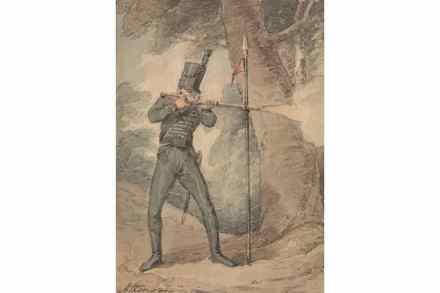
It has been 15 years since the last Richard Sharpe novel, and it’s a pleasure to report that fiction’s most famous Rifleman is still thriving, miraculous as that may seem after his long and suicidally dangerous career. Sharpe, a foundling child from the East End of London, brings street fighting skills to the business of soldiering. He has risen slowly and painfully through the ranks, campaigning in India during the 1790s and in Spain during the Peninsular war. At the start of this book, he has just saved the day at Waterloo with a typical combination of tactical skill, reckless courage and unorthodox thinking (in this case shooting the Prince of Orange, a British ally but a disastrous general).