Mythology

An ill-fated romance: Dark is the Morning, by Rupert Thomson, reviewed

As a prolific writer of literary fiction, Rupert Thomson has had plenty of practice in creating a good story. In Dark is the Morning, he seems drawn to the question of whether a satisfactory narrative structure can be imposed on life. The tug between the meaningless, chaotic nature of reality and the more conventional art of storytelling is at the centre of the novel, which concerns the ill-fated romance between the narrator, Gino, and the enigmatic Franca. Thomson even appears awkward about how neatly fabular this tale turns out to be in his opening chapter: ‘I still find the whole thing hard to believe.’ This self-consciousness is apparent throughout, with Thomson making repeated reference to the power of storytelling in his characters’ lives.

The surprising truth about old myths

I visited Mycenae for the first time this autumn. While the ruins of classical Athens can seem almost familiar, the ancient hillfort of a millennia earlier truly feels as though it belongs to the world of gods and heroes, of Homer and the Trojan War. If my imagination hadn’t been destroyed by decades of television, I could almost imagine myself there. One of the curiosities of findings in archaeology and DNA is that many of the old myths appear to be true Walking past ancient burial mounds and gazing at Argos in the near distance, I liked to think that I was in the footsteps of a real Agamemnon – and perhaps I was, and there really was a king of that name who led a war across the sea.

The juicy history of the apple

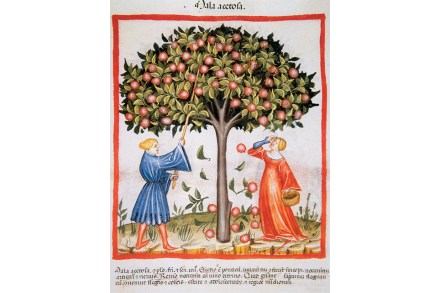
In Food for Life, Tim Spector’s book on the science of eating, the author gives the chemical makeup of a mystery food, listing more than 30 scary-sounding E numbers, sugars, acids and chemicals, before revealing that it is an… apple. Sally Coulthard’s book shows that it’s the apple’s complexity as well as its familiarity, that makes it the ideal punchline for Spector, and, for Coulthard, a perfect vehicle to carry the history of how we grow, trade, cook and eat together and take responsibility for each other and the environment (or not).

Waging war through poetry

From our US edition

Poetry is politics in the Yemen. When the last imam of Yemen, who was also the hereditary ruler, was deposed in a coup in 1962, it was a local poet who announced the change of regime on the radio, in verse of course. And the current al-Houthi regime in the north of the country, like all its predecessors, asserts its legitimacy, confounds its enemies and rallies its supporters through poetry. As an aspect of their cause, they have consciously avoided high-Arabic poetry — a literate, urban cultural form — and have made use of the zamil tradition, which immediately speaks not of the palaces of emirs and princes, but takes the listener to sit beside the farmers and Bedouin shepherds in the villages and hills.

poetry

Do the gods drive current affairs?

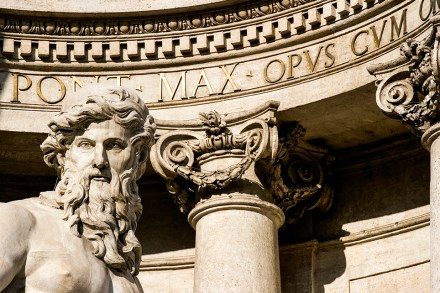
To judge from current events in the Middle East, the god of Israel appears to be battling the god of the Palestinians, even though they both seem to be the same god. But are they guiding events? And if not, why not? The Greek historian Thucydides (d. c. 400 bc) had no truck with the idea. In his account of the long war between the two most powerful Greek city states of their time – democratic Athens and oligarchic Sparta (431-404 bc), each with their respective allies – Thucydides was the first historian we know of to discount divine intervention in human affairs. Naturally he reported on the widespread phenomenon of religious belief among the Greeks and the use to which it was put.

Faeries and queens

From our US edition

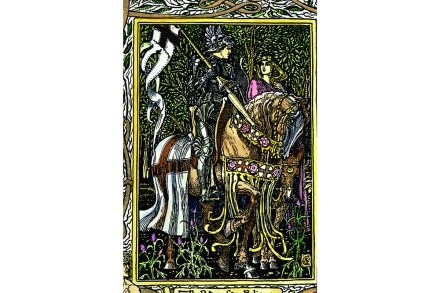
Flint and Mirror, John Crowley’s engrossing and elegant latest book, is set in a sixteenth century where angels and demons watch over human quarrels and sometimes even intervene. History and magic entwine, and yet are opposed. There is the ongoing conflict between Catholicism and Protestantism, as the Catholic Spaniards eye up invading England. The novel is also about the beginnings of modernity. As the reign of Queen Elizabeth I of England comes to an end, we progress gradually toward exploration of the globe and the Enlightenment. Farewell rewards and fairies, indeed. Elizabeth, serpentlike, broods in her English fastness, sending spies both physical and metaphysical throughout the land. Her personal magician, Dr.

crowley

The Great God Pan is all things to all men

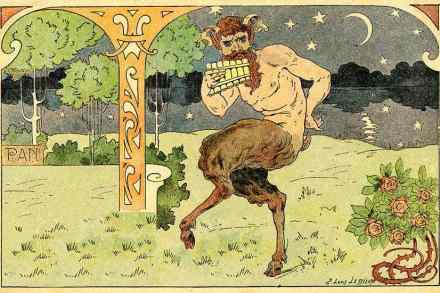
Pan’s name is thought to derive from ‘paean’, the ancient Greek verb meaning ‘to pasture’. His half-man, half-goat form reflected his role in protecting flocks of goats and those who herded them among the wild hills of Arcadia. Panic was his superpower, freaking out mortals in the woods with distorted sounds, even neutralising hostile armies. This might seem like an adequate portfolio of godly aspects, but, as Paul Robichaud demonstrates in Pan: The Great God’s Modern Return, it didn’t take long for things to get more complicated.

The symbolism of Orion, the hunter of the heavens

What happened in the rites of Eleusis is a mystery. So are all the unwritten parts of human history. Our pre-literate past is a history without a clear story: excavated stones and waste pits, fragments of myth and philological association. The early literate past is little clearer. The later Bronze Age of the Myceneans, the Minoans and Moses is a speculative assembly. Later, the surfaces of the Athens of Plato and Pericles are solid in marble and rational in thought, but the myths remain strange and violent memories, subject to an alien, evasive logic we cannot quite follow. ‘These Greeks,’ Hugo von Hofmannsthal mused as he climbed up to the Acropolis in 1908, ‘where are they?

How scary is dairy?

For tens of thousands of years, humans have been domesticating other mammals — cows, buffaloes, sheep, goats, camels, llamas, donkeys, yaks, horses — and keeping them for their milk. This has generated myriad products, from yoghurt and buttermilk through butter and cheese to toffee and ice cream, in many varied, culturally specific and resourceful forms. A sign of the elemental importance of this foodstuff is that our galaxy is called the Milky Way — and indeed the word ‘galaxy’ is derived from the Greek word for milk, gala. In Ancient Greek mythology, the Milky Way was formed when Hera, the goddess of womanhood, spilled milk while breastfeeding. Each drop became a speck of light, known to us as a star.

dairy Milk! A 10,000 Year Food Fracas by Mark Kurlansky reviewed