Musical theatre

Why is this Tudor drama full of swearing?

1536, by Ava Pickett, is set in a wheatfield near Colchester during the final months of Anne Boleyn’s life. Three peasant women, Jane, Mariella and Anna, meet to discuss the latest news as it trickles in from London. When Anne is imprisoned in the Tower, they try to imagine her state of mind. ‘Terrified,’ says Mariella. ‘Furious,’ says Anna. ‘Starving,’ says Jane. After her execution, Jane shrugs, ‘She deserved it.’ The others are more sympathetic but their commentary is hard to care about because they can’t influence the events they’re discussing. Nor does Anne’s experience affect their lives in any way so their chitchat is narratively pointless. They’re far more interested in two local lads, William and Richard, who represent the extremes of male behaviour.

Swing for me

From our US edition

Lots of folks go to swingers’ parties; fewer go by accident. I achieved this distinction, once — and in my defense, I will plead only that my ignorance of the situation was so extreme, my credulity so extensive, that it took my asking one couple, in complete earnest, the most hilarious and incidentally incisive questions a person in my situation could ask — “How did you two meet?” and “How do you know the host?” — in order to set the record straight. To the first, the one said that the other’s husband had introduced them. The answer to the second was the old chestnut about “college roommates,” et voilà! At parties nowadays, I just ask people what they do for work.

company

Nanny bait

From our US edition

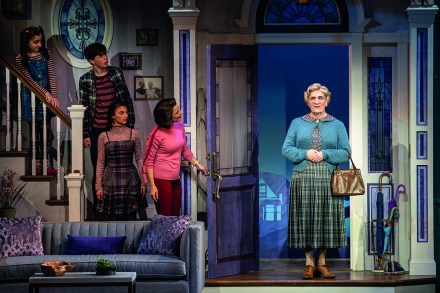
Was Mrs. Doubtfire a children’s movie? You might think so after seeing the new musical version, which opened at the Stephen Sondheim Theatre in early December. The 1993 Robin Williams classic hails from that glorious era of made-to-end-up-on-TV blockbusters at the end of the twentieth century — the movies that so many millennials first came to know piecemeal, catching a scene or two with dad while mom clucked disappointment from the other room. In films like these, each scene is designed to stand on its own, which may explain why the creators of the Doubtfire musical thought they could drop so many of them, barely laundered, right onto the stage.

doubtfire

Truth in Duluth

From our US edition

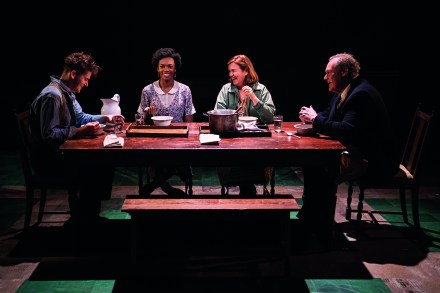
The Venerable Bede writes of a pagan priest in seventh-century England who, sizing up the meager life of man, compares it to a sparrow flying through a well-warmed dining hall on a stormy winter night. The priest admits to knowing nothing about the cold darkness before or after the brief passage. He can only speak to the time the bird spends in the light. In Girl from the North Country (open run at the Belasco Theatre), the season is the Great Depression in 1933, and the dining hall is a flophouse in Duluth, Minnesota, where down-and-outers blow through like so many birds on the wind. The innkeeper, Nick Laine (Jay O.

north country

Broadway’s back(side)

From our US edition

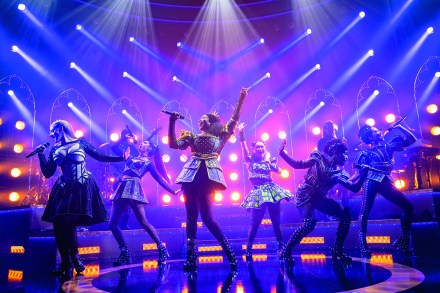
Six, a British musical about the wives of Henry VIII, is a scrupulously specious masterclass in frivolity. These onetime queens, blinged and bedazzled as fabulous pop-diva Kweens, undertake a six-way singing competition to decide who had “the biggest, the firmest, the fullest... load of B.S. to deal with” from their kingly husband. Backed by a live band, the sextet’s set amounts to the love child of RuPaul’s Drag Race and the Super Bowl halftime show. Those hoping for revisionist revenge fantasy will leave disappointed. Those seeking dramatic tension, character development, tragedy — anything having to do with the second half of the phrase “musical theater” — won’t find it here.

six

Promising material squandered: BKLYN – The Musical reviewed

BKLYN — The Musical gives itself a headache for no reason. What does ‘BKLYN’ mean? Perhaps it’s a random jumble of letters caused by a muffin landing on the keyboard. A punter who sees the title once and later looks it up online is unlikely to recall the precise order of the letters, and his search will probably fail. And he’ll have trouble discussing the show with his friends because he won’t know how ‘BKLYN’ is pronounced. It turns out that the show’s heroine is called Brooklyn, and the writers decided to capitalise her name and extract three of its letters. Sensible theatre-makers don’t create problems like this for themselves.