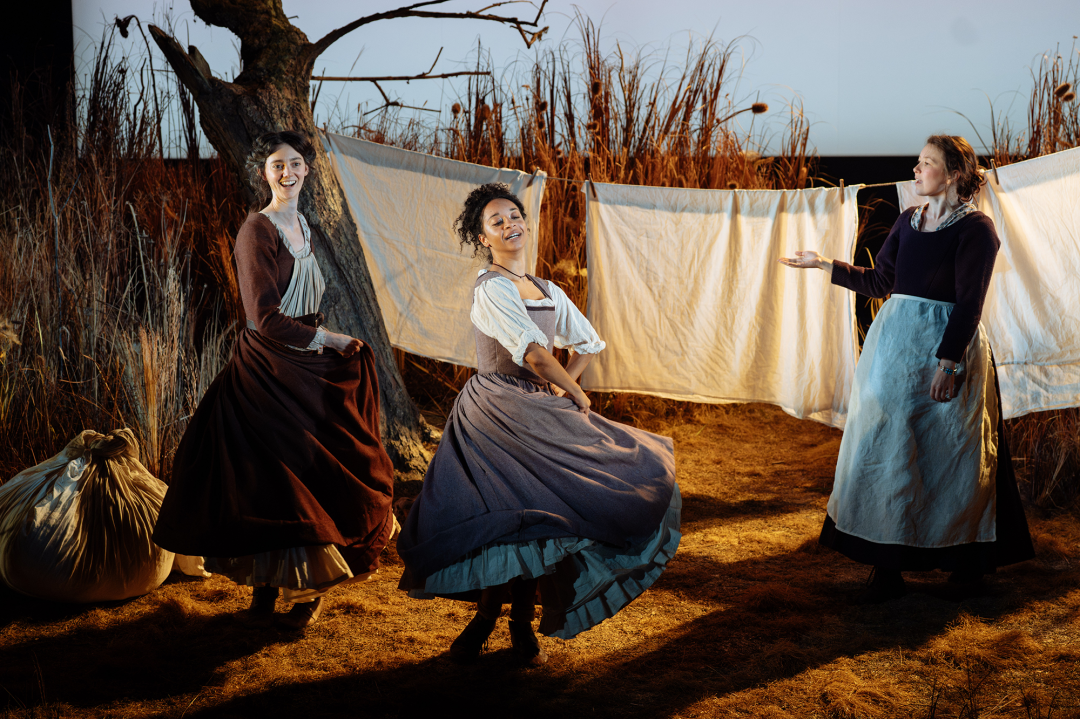


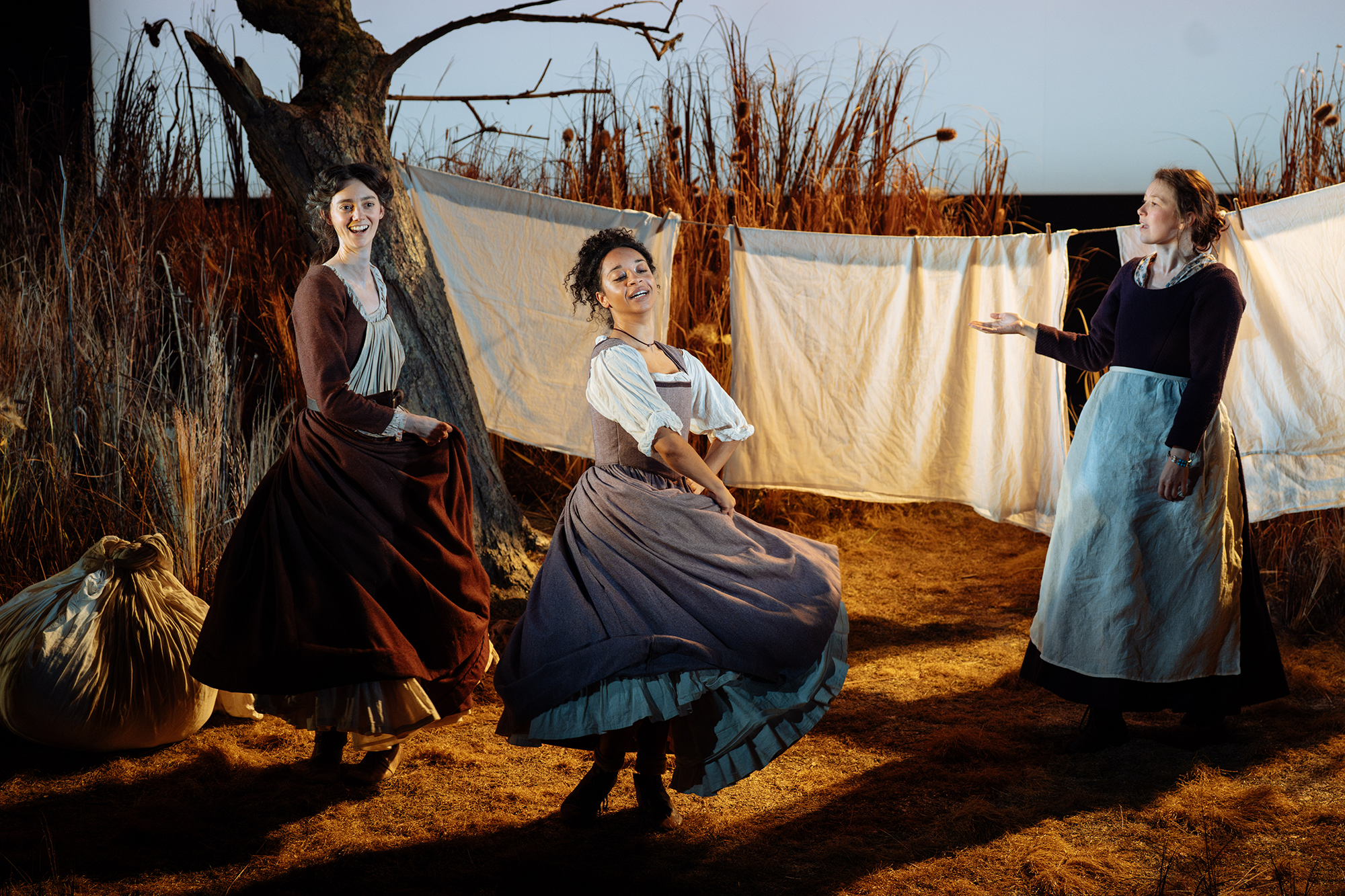
1536, by Ava Pickett, is set in a wheatfield near Colchester during the final months of Anne Boleyn’s life. Three peasant women, Jane, Mariella and Anna, meet to discuss the latest news as it trickles in from London. When Anne is imprisoned in the Tower, they try to imagine her state of mind. ‘Terrified,’ says Mariella. ‘Furious,’ says Anna. ‘Starving,’ says Jane. After her execution, Jane shrugs, ‘She deserved it.’ The others are more sympathetic but their commentary is hard to care about because they can’t influence the events they’re discussing. Nor does Anne’s experience affect their lives in any way so their chitchat is narratively pointless.
They’re far more interested in two local lads, William and Richard, who represent the extremes of male behaviour. William is a handsome wimp who regrets his hasty marriage and longs to seduce Mariella. Richard is a dashing cad who proposes to Jane while pursuing a secret affair with Anna. These brittle and tiresome romances are the true focus of this play, and the tragedy of Anne Boleyn has been hijacked to create an atmosphere of historical significance.
If you’ve been stuck on a train next to a group of teenage drama students, you’ll know how this show feels
Despite their peasant garb, the women seem thoroughly middle-class. Jane announces that pigeon is her favourite meat dish. Mariella calls her job as a midwife ‘effing horrible’ and blames her family for forcing her into a career she dislikes. Anna arranges her hair to resemble Anne Boleyn’s and she dreams of cashing in her savings and starting a new life in London.
Did female bumpkins think like this in Tudor England? Despite their superficial friendship, the women struggle to hide their competitive instincts. Anna claims that men are always forcing themselves on her, but Jane affects scepticism. ‘You’re not the kind of girl who gets raped, are you?’ The bulk of their talk concerns village tittle-tattle. A servant broke a plate. A squire lost his temper. Someone got kicked in the face. Someone else had a nasty cough that was cured by a dead fish.
All their aimless witter is crammed with ugly curse words. The writer seems to realise that the script has too much yakking and too little action and she compensates by adding random bits of movement. Two scenes begin with Anna and Richard mating vigorously on an oak stump. In another scene, the women peg cotton sheets out on to a washing line. Left alone for a moment, Anna picks up a fence post and thrashes a bush to pieces. Later, she finds a stuffed crow hidden in a tuffet of grass. And there’s a weird subplot about a turquoise bracelet that peters out.

The show climaxes with a peculiar scrummage in the wheatfield. All five characters maul each other for several minutes and the fight ends when someone gets punched in the head. The blow is fatal. The corpse lies in the grass, panting heavily. The survivors stand up, dust themselves off and scream abuse at each other for ten more minutes. Calling this ‘dialogue’ would be an exaggeration. ‘Throat noises’ might be better. If you’ve ever been stuck on a train next to a group of teenage drama students, you’ll know how this show feels.
The Boy Who Harnessed the Wind is a musical set during an economic slump in the 1990s. William, aged 13, lives in a remote village where money is so scarce that his family have to skip meals. At a junkyard, William tinkers with spare parts and dreams of building a turbine that might generate free power. Everyone tries to stop him. ‘How does a dynamo work?’ he asks his teacher. ‘Magic,’ says the teacher.
At the village library, he asks a female employee to explain electromagnetism. ‘That’s not English,’ she says. He attaches a plastic propellor to a motor but his friends mock him and predict that his gadget will fail. ‘Stupidness,’ says his father, smashing his prototype to bits and ordering him to grow more vegetables in the family allotment. William asks to borrow his dad’s bike chain for the gearing mechanism but the request is refused. Enthused by the prospect of violence, William’s friends threaten to beat his father unless he hands over the chain. ‘Fight me,’ says his father.
The story ends happily when William finally bodges together a motor that produces a trickle of electricity. Hurray. And yet the story might have turned into a bloody altercation over a spare part. Perhaps the naivety and brutishness of William’s community is being exaggerated for dramatic effect. The show, directed by Lynette Linton, works well enough. The singing might be better. The dancing is rudimentary, if enthusiastic. The cast have an amazing spirit and they seem to believe that this is the greatest musical ever staged. The press-night crowd appeared to concur. Ecstasies greeted the curtain call. But if you dislike folksy theatre, this may not suit you.




Comments