Music

Whatever happened to Alice?

From our UK edition

In 1987, the art of opera changed decisively. John Adams’s opera Nixon in China was so unlike the usual run of new operas in its concept that many people, on first hearing about it, assumed it had to be a joke of some sort. Turning the preposterous and reviled figures of Richard and Pat Nixon and Henry Kissinger into operatic heroes — they were all still alive in 1987 — seemed preposterously at odds with the dignity of the form. It was entirely serious. Though the concept was in part that of Peter Sellars, the opera director, the exquisite refinement of treatment was that of the librettist, Alice Goodman. Unlike almost all contemporary operas, it quickly spread across the world.

Acid reign | 10 August 2017

From our UK edition

In 1988–9, British youth culture underwent the biggest revolution since the 1960s. The music was acid house, the drug: Ecstasy. Together they created the Second Summer of Love — a euphoric high that lasted a year and a half and engulfed Britain’s youth in a hedonistic haze of peace, love and unity. At the end of a decade marked by social division and unemployment, acid house transcended class and race, town and country, north and south. Amid the smoke and lasers, an entire generation came up together. How did it happen? The story starts in Ibiza, which by the mid-1980s had outgrown its roots as a hippie commune and was attracting beautiful people from all over the world.

Classy and classic

From our UK edition

The Edinburgh International Festival began with a double helping of incest. Curiously, Greek — Mark-Anthony Turnage’s East End retelling of the Oedipus myth, which was greeted with universal acclaim at its premiere in 1988, and which has gone on to be one of British opera’s biggest export success stories — was tagged on the Festival website as being suitable for ‘risk takers’. Whereas Wagner’s Die Walküre — which ends its first act in ecstatic celebration of a sex act so transgressive that even in 2017 it can draw appalled gasps from an audience — was described as being ideal for ‘traditionalists’. Bizarre. Perhaps brothers and sisters sleep together all the time in Morningside; I couldn’t say.

Time to end authenticity

From our UK edition

They say the first step towards recovery is admitting that you have a problem. So I’m staging an intervention and asking the BBC Proms to admit what they’ve known for some time: they have a big problem when it comes to early music. How to perform it, where to perform it, even who should perform it — these are all questions that, year after year, remain unsatisfactorily, inconsistently or superficially answered, and there’s little in this year’s programming to suggest that 2017 will be any different. Up until now the festival’s conversation about early music has been dominated by the red-herring question of venue.

His dark materials | 3 August 2017

From our UK edition

Randy Newman is already struggling to keep up with himself. His dazzling new album, Dark Matter, was written before the changes of the last year, and no matter how pointed and current some of it is, there’s something missing. ‘There was a newspaper article that said Donald Trump is like a character in a Randy Newman song,’ he says. ‘I didn’t think there were any real people like the guy in “Political Science” or “My Life Is Good”. But he’s close.’ He’s had a bash at something for the Potus. ‘I just had an idea for a Trump song,’ he says, sounding rather like Yogi Bear’s rather smarter brother. ‘But then I didn’t do anything about it.

Losing our religion

From our UK edition

Sir James MacMillan’s European Requiem, performed at the Proms on Sunday, isn’t about Brexit. The composer had to make this clear in a Radio 3 interview just before the broadcast, because the BBC was just itching to cast the work — a melancholy score, despite its thunderous drumbeats — as a lament for us leaving the EU. That would have been neat, given that the second half of the concert consisted of Beethoven’s Ninth, whose ‘Ode to Joy’ has been clumsily appropriated by Brussels. Incidentally, some Remainers in the audience chattered through the symphony’s first three movements, impatient for their Big Tune.

No pain, no gain

From our UK edition

It is an unexpected pleasure when fiction has a soundtrack to accompany the work of reviewing. H(A)PPY is ‘best enjoyed in conjunction with Agustin Barrios: The Complete Historical Guitar Recordings’, Nicola Barker advises before her text gets underway. It’s tempting to dismiss this as a gimmick. But Barrios’s music strikes a deep chord with the rebellion at the heart of Barker’s 12th novel. Born in the 1880s, the Paraguayan’s playing was ridiculed because he preferred his guitar strings to be made of steel rather than fashionable gut. His dissonant art, like Barker’s today, could not be accused of courting admiration.

The morality of conducting

From our UK edition

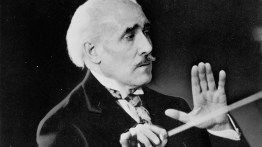
Now he is the greatest figure for me, in the world. [Toscanini is] the last proud, noble, unbending representative (with Salvemini) of the Risorgimento & 19th-century ideals of human liberty... not just a great conductor but a symbol of discipline and spontaneity in one — the most morally dignified & inspiring hero of our time — more than Einstein, (to me) more than even the superhuman Winston [Churchill]. That is Isaiah Berlin writing in 1952, two years before his hero’s last concert, and as quoted by Harvey Sachs in this magnificent biography. Though Berlin’s encomium is extreme, it isn’t unrepresentative of the kind of things that were being written about Arturo Toscanini for many years before his death in 1957.

Balkan brass

From our UK edition

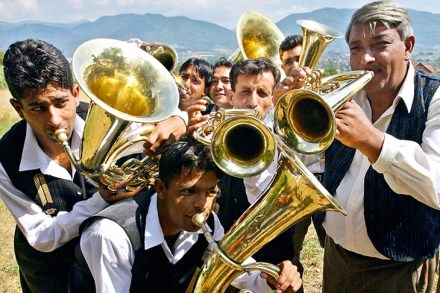
When brass instruments with button-operated valves were introduced in the first half of the 19th century, music-making changed. Once requiring a semi-professional approach, it could now be quickly mastered by large groups of working people. A noisy result were Britain’s colliery bands: but a more spirited upshot was Serbia’s trumpet tradition. Like the colliery bands, Serbian brass music had a political imperative — re-weaving national identity after 500 years of Turkish occupation. The leader who first hit on trumpets as a vehicle for this joie-de-liberté was Prince Milos Obrenovic, who created the first Serbian brass ensembles in 1831. They took swift hold, providing an outlet for everyday south Slav exuberance.

Beethoven: Missa solemnis

From our UK edition

When you first encounter it, Beethoven’s Missa solemnis can sound like the Ninth Symphony with more singing but no tunes. But the more I listen to it, the more I agree with the composer that it’s his greatest work — or, at least, up there with the last two piano sonatas and his String Quartet Op. 131, my other nominees. Despite its titanic scale, the Missa solemnis inhabits their intimate sound world: it is built from the harmonically ambiguous motifs of Beethoven’s ‘third style’. Nothing in it is as catchy as the ‘Ode to Joy’.

Down – if not out – in Paris

From our UK edition

Virginie Despentes remains best known in this country for her 1993 debut novel, Baise-Moi, about two abused young women who set off on an orgiastically murderous road-trip round France. In 2000, she became notorious when she collaborated on the hardcore film of the book, which ran into certification problems, with Alexander Walker fulminating about the complete collapse of public decency. Despentes has now published some 15 novels altogether, celebrated in France as grunge or ‘trash’ fiction — and a polemical, erratically feminist, memoir, King Kong Theory, describing her own experience of rape and prostitution, and calling for a new aggression in female sexuality.

Hadyn recreated

From our UK edition

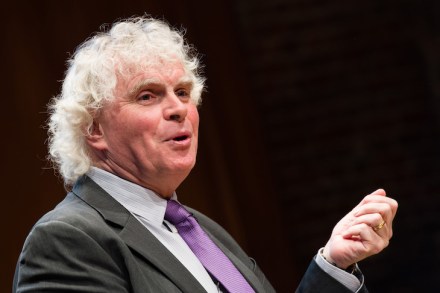
‘Rarely, rarely, comest thou, Spirit of Delight!’ wrote Elgar, quoting Shelley, at the top of his Second Symphony. He should have listened to more Haydn. Sir Simon Rattle certainly has. Rattle becomes music director of the London Symphony Orchestra in September, and for the last concert before their union becomes official, he’d trawled through Haydn’s immense back-catalogue to assemble an unbroken 55-minute sequence of orchestral movements from Haydn’s symphonies, oratorios and half-forgotten operas.

Let there be light | 13 July 2017

From our UK edition

If you’ve never heard the John Wilson Orchestra, it’s time to experience pure happiness. Buy their 2016 live album Gershwin in Hollywood — seriously, just do it. Play the first track: a medley arranged by Ray Heindorf for Warner Brothers’ 1945 Gershwin biopic Rhapsody in Blue. One by one the great melodies glide past and you’ll already know them, of course: ‘Swanee’, ‘Embraceable You’, ‘I Got Rhythm’. There’s something different, though, about the way they sound here. The brass swaggers; the strings melt and swoon. It’s a sound that most of us have only ever heard through the crackle of a vintage-movie soundtrack, or on a Capitol-era Sinatra LP. But this is fresh — in fact, it gleams.

Jay-Z: 4.44

From our UK edition

Grade: B – All criticism is pointless, I suppose, given the sheer magnitude of the Shawn Corey Carter machine — his billions of dollars, his millions of sales, his ubiquity. This is the rapper even whitey can git down to, big pal of the Obamas, bad-ass Bedford-Stuyvesant gangsta made good. But even when Jay-Z and the genre have been comprehensively subsumed by the mainstream, there is still stuff about it that grates. Not the familiar homophobia or the championing of criminality. Not even the misogyny — hell, if it’s misogyny you’re after, check out The Eagles. Crackers do misogyny just as vigorously. It’s the relentless, self-obsessed, cock-clutching braggadocio — and, when it’s not braggadocio, whining.

Match made in heaven | 6 July 2017

From our UK edition

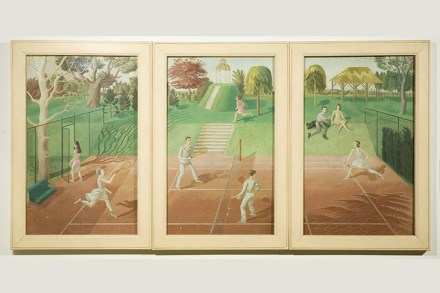
Tennis is best played with a wooden racket on a shady lawn somewhere close to Dorking. There is no need for trainers, an umpire, or a scoreboard. No need for rules at all. After Wimbledon, the tea-and-jam, grass-stained, Sunday-afternoon scenario from A Room with a View is the only one to emulate. In 1908, when E.M. Forster published his novel, lawn tennis was not yet 50 years old. Although the origins of the game reach back to the 12th century, the version played by Miss Honeychurch and Reverend Beebe and most of us today was said to have been pioneered on a croquet lawn in Edgbaston in 1859.

Beth Ditto: Fake Sugar

From our UK edition

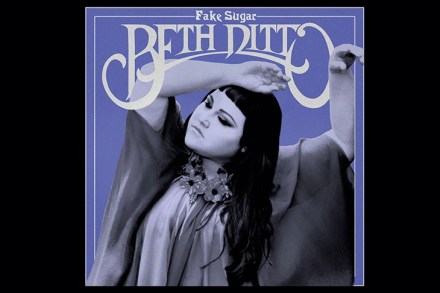
Boy is she fat, and getting fatter. I realise this is something we’re not meant to mention when talking about Beth — but it’s kinda the elephant in the room. Literally. And I worry about the lass. These days she makes Mama Cass look like Edie Sedgwick. Of course, we should accept her as she is — a lesbian-identifying, very hefty babe from good ol’ down-home Ar-kin-saw. Her difference, then, is part of the schtick, breaking the mould, etc. — and that’s just fine and (Jim) dandy, providing something palpably ‘different’ actually emanates from the stuff she does. That the proud revelling in difference is not merely a cosmetic exercise designed to shift units. And while perhaps once she could claim this, not any more.

Back to the future | 29 June 2017

From our UK edition

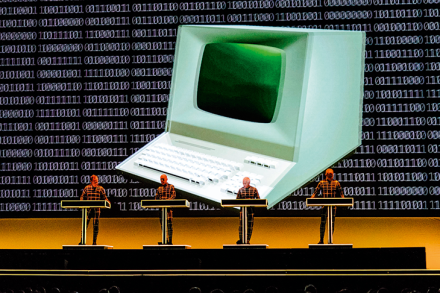
As Kraftwerk took their 3D show around Britain last week, a document from 2013 surfaced online, purporting to be their requirements for car transportation while on tour, necessitated by ‘rather bad driving experiences in the recent past in various parts of the world’. Kraftwerk, it said, should only be driven by ‘suave gear changers (if car is not automatic)’ and ‘suave breakers’. Both radio and aircon should be turned off, and on no account should the driver talk to the band. It had the effect of making the Düsseldorf quartet — long since down to one original member, Ralf Hütter — look like grumpy old men who would rather be at home tinkering with their racing bikes.

Despite everything, I love Glastonbury – and I wasn’t the only one booing Jeremy Corbyn

From our UK edition

'You don't look like Radiohead fans, lads,' said the old fashioned Northern lady as she served Boy and me our post gig donuts and plastic cups of proper Tetley tea. I suspect that like us, but unlike most of Glastonbury, she had this time last year voted Brexit. 'What do Radiohead fans look like?' I asked. She nodded towards a thirty-something walking past in chinos and one of those trendy woollen tops with the zip on the top. Ah. She meant 'wankers'. And I did see her point. I felt it particularly strongly during that moment in one of the gaps in Radiohead's Pyramid Stage set when their audience broke into a spontaneous chant of 'Oh, Jeremy Corbyn'.

His Master’s Feet

From our UK edition

Gerald Barry once licked Beethoven’s carpet. At least, that’s what he told me, and I’m as sure as any interviewer of Gerald Barry can be that he wasn’t pulling my leg. While showing him round a museum, a guide pointed out said floor-covering. Whereupon — Barry being Barry — he was overcome by an urge for tangible, physical contact with a relic that had, after all, once been trodden by the Master. ‘So, once everyone was out the room, I got down and had a quick lick.

Art of darkness | 15 June 2017

From our UK edition

Brett Dean’s new opera for Glyndebourne is a big-hearted romantic comedy, sunny and life-affirming. Only joking — this is contemporary opera, after all. It’s about the usual stuff: neurosis, violence and toxic sexuality. Those seem to be the emotions most naturally suited to the language of mainstream contemporary classical music, and Dean speaks that language as brilliantly as Richard Strauss handled the idiom of an earlier generation. Whatever else this operatic adaptation of Hamlet might be, it’s a polished piece of work. That takes some doing: Shakespeare isn’t naturally suited to the opera house.