Music

Christmas carols don’t need modernising

From our UK edition

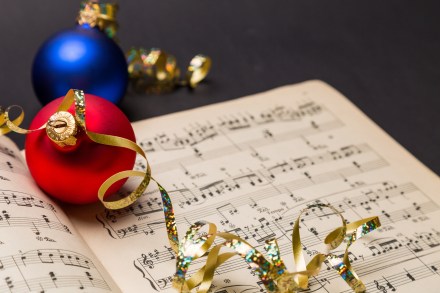
Like Ebenezer Scrooge, we are all visited by the Ghost of Christmas Past. At this time of year, people and events that have gone before feel closer at hand – both the personal and the historical. One of the main ways we experience this is through our tradition of Christmas carols. A recent YouGov survey showed that 14 per cent of Britons usually attend a carol service. Not as high as one would hope, but attendance rates are rising: in 2023, Church of England Christmas services alone saw a 20 per cent leap in attendance. I sense 2025 is already continuing the trend. Yet many churches will be pointlessly squandering the opportunity by continuing a fad which both turns off newcomers and lets down regulars: modernised Christmas carols.

The pleasure of not knowing

From our UK edition

A few years ago the podcaster Lex Fridman published a list of books that he was hoping to read in the year ahead. It included works by George Orwell, Fyodor Dostoyevsky, Hermann Hesse and others. If he had published this in the world of print media he might have got back some encouraging noises. But because he put the list online – worse, on the platform then still known as Twitter – he received mostly mockery. ‘Who hasn’t read Animal Farm?’ was the general tenor of the blowback, as though a man who had been a researcher at MIT was next to being a neanderthal.

Let the Beatles be

From our UK edition

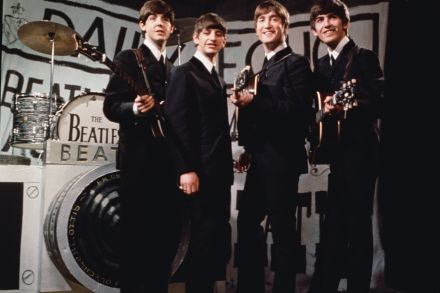
Like most freelance writers, I have a notepad full of jottings which come under the loose category of ‘Ideas I Probably Won’t Get Round To Doing As I Doubt Anyone Will Be Interested, They’re A Bit Rubbish Anyway And It Probably Wouldn’t Pay Much’. Around halfway down this list is a book provisionally entitled A Hard Day’s Fight, in which I espouse my opinions on a plethora of Beatles-related debates, and add a few new ones of my own.

Songs of murder, rape and desertion

From our UK edition

A century ago, the Orkney poet George Mackay Brown was settling into his first term at Stromness Academy. His schooldays were to prove a dismal grind, but English lessons brought moments of magic. He was especially intrigued by poems – ballads, mostly – signed simply ‘Anon’. The name of the poet was lost – and perhaps there hadn’t been just one but a host of craftsmen in the making of each of these wonders. They were the creation of a tribe, the inheritance of a community, songs ‘seraphically free/ Of taint of personality’. Today, as publishers bust themselves to promote the cult of individual authors, it’s a thrilling, liberating notion.

Nostalgia for the 1980s New Romantic scene 

From our UK edition

It is hard to write the history of a subculture without upsetting people. Events were either significant or inconsequential depending on who was there, which leads to absurdities. When Jon Savage wrote England’s Dreaming, his history of punk, Jenny Turner berated him in the London Review of Books for being ‘a bit of a Sex Pistols snob’. Ironically, the most exclusive British subculture of them all seems to have escaped infighting over who or what mattered, possibly because so few people were part of it. The Blitz, Steve Strange and Rusty Egan’s much mythologised early 1980s nightclub, had a brutally selective door policy.

Bring back the album

From our UK edition

Usually when my tweenage sons ask about relics from my 1990s adolescence – ‘What’s a landline?’ ‘What’s a phone book?’ – we’ll have a good laugh about these obsolete artefacts of the not-so-distant past. But last year when my ten-year-old asked about ‘Immigrant Song’, which he’d heard on the soundtrack to a Marvel movie, and I replied, ‘Oh, I think it’s on the third Led Zeppelin album’, his response left me winded: ‘What’s an album?’ What’s an album? The horror! How had this abject failure of parenting happened? I’ve raised my kids in as analogue a household as possible, with piles of books, newspapers and magazines on every surface. I’ve limited screen time and kept them away from smartphones.

Childhood illnesses and instability left Patti Smith yearning for ‘sacred mysteries’

From our UK edition

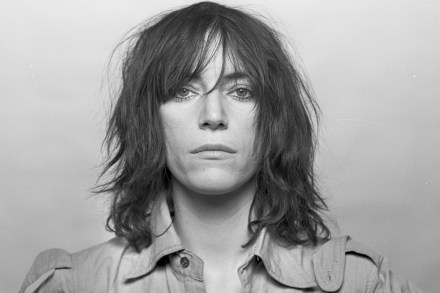
The punk icon Patti Smith’s latest memoir stretches from 1940s Michigan to present-day Nice, weaving around and complementing her other works of autobiography in its rendering of formative scenes. These include descriptions of periods of childhood illness, displays of sibling loyalty, powerful encounters with art and poetry, attachment to beloved clothes, marriage to Fred and the deaths of people close. Smith looks ahead to a time when she and her dwindling companions are gone: ‘Write for that future, says the pen.’ Our attention is periodically drawn to the pen’s motion as it ‘scratches across the page’, conjuring a lifetime of fluctuation.

What makes a ‘survivor?’

Are you a survivor? We are not, luckily, all Gloria Gaynors. She declared in 1979: “I’ve got all my life to live, and I’ve got all my love to give/ And I will survive.” Gaynor has, so far, made good on her promise. Surviving afflictions unscathed is not always an unmixed virtue. “She would be earning a good living somewhere… The Mary Taylors of the world were natural survivors,” wrote P.D. James in Shroud for a Nightingale in 1971. Now, even a new biography of Lady Margaret Beaufort (1443-1509) is subtitled Survivor, Rebel, Kingmaker. But what of those poor people who have gone through the misery of child sexual “grooming?” Are they victims or are they survivors? Or should they be neither?

content potash survivor fresh hell

James Heale, Margaret Mitchell, Damien Thompson, Rebecca Reid & Julie Bindel

From our UK edition

26 min listen

On this week's Spectator Out Loud: James Heale considers the climate conundrum at the heart of British politics; Rebecca Reid explains why she's given up polyamory; Damien Thompson recounts the classical music education from his school days; Margaret Mitchell asks what's happened to Britain's apples; and Julie Bindel marvels at the history of pizza.  Produced and presented by James Lewis.

Drowning in the neon swamp of Tron: Ares

Sitting in the nearly empty movie theater at which I saw Tron: Ares, I found myself swamped by neon. Its hues are unappealing in real life – redolent of dive bars, arcades and other unsavory venues – but neon is downright unbearable when experienced in a movie theater, where you have no choice but to stare at the screen unless you want a perfectly good $21.51 to go to waste.

tron ares
los angeles

Has Los Angeles killed America’s imagination?

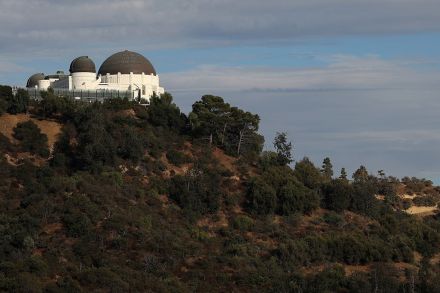
The magnificent Griffith Park Observatory turned 90 this year and, as fans of nonagenarians, my wife and I hiked up the south slope of Mount Hollywood – well, our rental car did the hard work – to pay our respects. The city of Los Angeles sprawled out before us; the Hollywood sign loomed ominously above us. I suppose I should hate this city, the Typhoid Mary of cultural imperialism, infecting and deadening imaginations from Bangor to Bend. As Morrissey crooned: “We look to Los Angeles for the language we use/ London is dead.” But I dunno: it’s my wife’s hometown, I love her Armenian relatives and I’ve always been a sucker for the movies, at least in their pre-CGI, pre-Marvel, pre-woke, pre-franchise age.

Satanic verses: the origins of Roman Catholic black metal

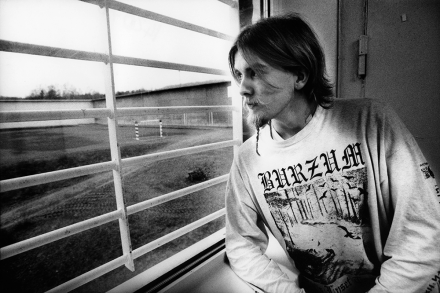
In his youth in the early 2000s, Emil Lundin became obsessed with the idea of recording the world’s ‘most evil album’. The lanky, long-haired Swede formed a black metal band and set to work. He faced an immediate obstacle. In making history’s most nefarious musical creation, he could hardly use Swedish, with its sing-song tones. English was also out of the question: he didn’t want to sound like Abba. That left Latin, the native tongue of the occult and, it is said, of demons. In a quest for suitably devilish lyrics, he pored over arcane texts. That led him to Latin editions of Sayings of the Desert Fathers – bad-ass early Christian monks – and St Augustine’s Confessions.

Admit it: ‘Bohemian Rhapsody’ is terrible

From our UK edition

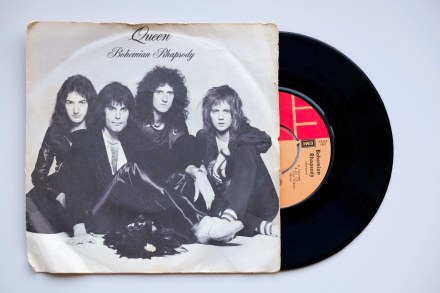
Queen’s ascendency began at around the same time as the first residents were moving their Axminster carpets and Party Sevens into Tower Hamlets’ Robin Hood Gardens, the Smithson-designed Brutalist estate that would go on to become a typical example of how post-war ‘streets in the sky’ concepts were almost always doomed to fail. Five decades on, just one small section of Robin Hood Gardens has survived for posterity. It’s been acquired by the Victoria and Albert Museum to, presumably, warn future generations of what can happen to a neighbourhood when you combine too much cheap concrete with not enough public consultation. Thanks to Freddie Mercury and co., one solitary example of the very worst excesses of overblown 1970s musical bad ideas persists, too.

My debt to the teacher who introduced me to Wagner

From our UK edition

We saw the world end in Berlin, again. Another Ring Cycle – hurrah! – in the beautiful Staatsoper theatre on Unter den Linden. Christian Thielemann led the house’s superb orchestra from the dawn of Creation in Das Rheingold to the downfall of the Gods in Götterdämerung. It was a brisk Ring, coming in at seven minutes over 14 hours. The playing was magnificent, the singing of a very high order and the anti-mythological staging by Dmitri Tcherniakov startling. Particular praise must go to the Sieglinde of Lithuanian soprano Vida Mikneviciute – try saying that after a few scoops of pilsner. Thrilling hardly does her justice.

Taylor Swift’s new album balances glitter with grit

With The Life of a Showgirl, Taylor Swift set out to do the opposite of her previous record, The Tortured Poets Department. Critics had called that sprawling 31-track project “unrestrained” and “imprecise,” and Swift herself admitted it was a “data dump.” This time, she wanted precision: a lean, 12-track pop record where every beat and lyric fit “like a perfect puzzle.” When Swift announced that music industry legends Max Martin and Shellback were producers on her 12th studio album, fans wondered whether this might herald a repeat of her 2014 smash-hit album 1989.

Showgirl
The Who

The Who’s farewell tour marks the end of an era

The Who are our last great rock ’n’ roll band. More than 60 years after four working-class boys from west London formed a humble R&B combo, the two surviving members look to be hanging up their spurs for good. The Who have named their latest string of engagements – a farewell tour which concluded early this month – “The Song Is Over.” When I caught them in Long Island, rumors of geriatric struggles were soundly put to rest: Pete Townshend, 80, and Roger Daltrey, 81, were in cracking good form. Most concertgoers that night were male, working-class and in their late fifties or early sixties.

Young

A Neil Young concert in the waning days of summer

By the time we got to Woodstock… actually, we never got to Woodstock. Bethel, the town in which the fabled festival of mud and myth took place, is about 50 miles as the crow flies from the famous musical happening’s eponym, and it was at the Bethel Woods Center for the Arts that we saw and heard Neil Young in the waning days of summer, when melancholy always spices the air. It boggles the mind that half a million kids – the youngest of whom are now hoary-headed septuagenarians – flooded Sullivan County on a rain-soaked weekend in August 1969, but it is almost as remarkable that despite the drugs and unhygienic conditions, only three concertgoers died.

Yoga is slow-motion pole-dancing for grannies

From our UK edition

It’s hard work being rich. I gave up trying years ago. You must waste money on everything, even the basics, to advertise your status as a big spender. Food and drink are easy. You buy organic veg from a dim-witted aristocrat at a farmers’ market. And you choose sparkling water filtered through the porous flanks of a Malaysian volcano. A tougher challenge is oxygen. The rich need top quality air as well. But how do you let people know that your breaths are costlier and more refined than the inhalations of the mob? Well, yoga. Yoga turns breathing into a five-star indulgence. You hire a servant (known as a ‘guru’ to make her feel important) who stands in attendance while you fill and empty your lungs for 45 minutes.

The closest look yet at David Bowie’s mind and imagination

What would David Bowie say? The much-missed musician – dead a decade next January – is the beneficiary of a new, bespoke space inside the Victoria & Albert Museum’s East Storehouse outpost. Although Bowie is by no means Britain’s most commercially successful rock star, he is surely its most interesting – and certainly the most chameleonic, making his legacy ripe for serious re-evaluation. Now, thanks to the David Bowie Centre, the curious public can get its closest look yet into the artist’s mind and imagination. And as a bonus, it’s free, too. The space is composed of one room with nine rotating displays showing about 200 items.

Has Taylor Swift broken music’s last taboo?

From our UK edition

As a woman in my early thirties, it is my God-given right – arguably my duty – to have an opinion when Taylor Swift releases an album. And it’s a role that I’ve always performed without compunction. But on this occasion – the release of album 12, The Life of a Showgirl, my ability to get into the weeds (does ‘The Fate of Ophelia’ represent close text analysis of Shakespeare?) was hampered by my shock at one particularly audacious lyric.  Previous albums have had the the odd raunchy moment. So when, on this new album, she sang ‘His love was the key that opened my thighs’ in a song titled ‘Wood’, I was unmoved.