Murder

The death of cosy Christie

From our UK edition

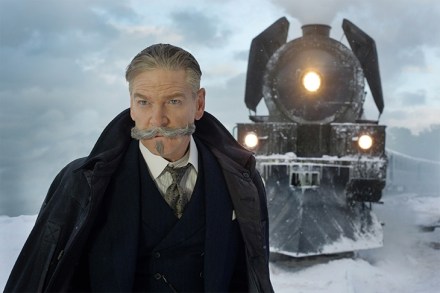
This is not Midsomer Murders. The new film adaptation of Agatha Christie’s Murder on the Orient Express is thick with violence and sexual innuendo. It elevates Hercule Poirot, the diminutive, fastidious Belgian detective, with his egg-shaped head and pot belly, to part-time action figure, a man who chases bad guys down dizzying descents in exotic snowscapes before straightening his magnificent moustache with a twinkle in his eye. This is less cosy, golden age detective fiction than a cross between Daniel Craig’s 007 and Scandi noir. Kenneth Branagh, who stars and directs, has brought his experience playing the dejected Swedish police inspector Wallander to the fore, giving the usually reserved detective unusual passion and vulnerability.

Candid camera?

From our UK edition

Channel 4’s Catching a Killer offered the rare TV spectacle these days of a middle-aged white male copper leading a murder inquiry. Then again, it was a documentary rather than a drama. In its resolutely sober way, it also proved a riveting one, if at times piercingly sad. The programme followed the Thames Valley police as they investigated the killing of Adrian Greenwood in April 2016. The fact that Greenwood was an Oxford historian and book-dealer, and that the motive was the theft of a first edition of The Wind in the Willows, led one detective to suggest early on that ‘It’s like an episode of Morse.’ In the event, it proved a lot more straightforward, and a lot grimmer, than that.

Vice guys

From our UK edition

In 1981, an FBI team visited Donald Trump to discuss his plans for a casino in Atlantic City. Trump admitted to having ‘read in the press’ and ‘heard from acquaintances’ that the Mob ran Atlantic City. At the time, Trump’s acquaintances included his lawyer Roy Cohn, whose other clients included those charming New York businessmen Antony ‘Fat Tony’ Salerno and Paul ‘Big Paul’ Castellano. ‘I’ve known some tough cookies over the years,’ Trump boasted in 2016. ‘I’ve known the people that make the politicians you and I deal with every day look like little babies.’ No one minded too much. Organised crime is a tapeworm in the gut of American commerce, lodged since Prohibition.

Two dark tales

From our UK edition

Just over halfway through this grim and gripping book, the author describes herself and her girlfriend ‘lying on my bed kissing’. She says: ‘I love kissing her.’ And: ‘We kissed and kissed, and soon my hands were at her shirt and I was tugging it off.’ And: ‘I kissed her again.’ And: ‘I reached down between her legs.’ And: ‘She reached down to touch me and then we were moving together and it felt good and I moaned and it felt good again.’ Then she says: ‘And then it didn’t.’ The sex feels good. Then it doesn’t. Something has happened to the author, deep in her past, and it comes back to haunt her. ‘I realised I was going under, into the memory,’ she tells us.

The evil that men do

From our UK edition

Early one summer’s morning in 1994, Paul Jennings Hill, a defrocked Presbyterian minister, gunned down a doctor, John Britton, as he arrived for work at an abortion clinic in Florida. Unrepentant by the time of his execution nine years later, Hill (who I really don’t recommend Googling) was associated with the Army of God (ditto), which urges the murder — or ‘justifiable homicide’ — of abortion providers in the United States. Given how often Joyce Carol Oates’s awesomely prolific output concerns male violence and women’s bodies, it’s no surprise to find her using this as material; with Trump vowing to undo Roe vs Wade, it’s timely.

Signs and spellsnich

From our UK edition

On 25 February 1980, Roland Barthes, the great French intellectual, was run over by a laundry van in Paris. He died from his injuries a month later. This book — Laurent Binet’s second novel — proposes that it was not an accident; that Barthes had just come from lunch with the Socialist candidate for the forthcoming French presidential elections, François Mitterrand, and that he was in possession of an extremely important document, one which gave detailed instructions on the seventh function of language.

Wild life | 4 May 2017

From our UK edition

Laikipia, Kenya On my way home to the ranch, I stopped for a beer with my neighbour Martin. It was twilight and large herds of cattle were being brought into the yards around Martin’s house for the night. Pokot militias had been attacking for days, trying to rustle cattle and shooting at anybody in sight. Gunmen had a few days before shot Athaju Eloto, one of Martin’s farm workers. Doctors extracted a bullet from near Eloto’s spine but he later died. The bandits had also killed a police officer on the farm during operations to remove the attackers. In a nearby village full of smallholders, Pokot attackers had murdered a policeman and taken two others hostage; their bodies were later discovered burned and stripped of weapons and uniforms.

The curse of the Yeti

From our UK edition

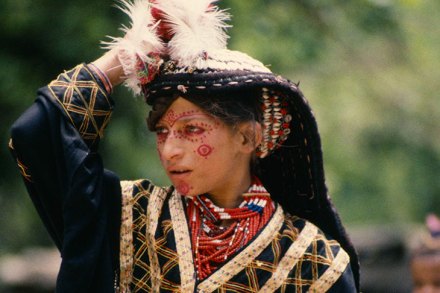
This book, according to its author Gabi Martínez, is ‘a non-fiction novel’. It tells the story of Jordi Magraner, a Morocco-born Spaniard who grew up in France. A largely self-taught zoologist and naturalist, Magraner worked on humanitarian convoys in Afghanistan before devoting his life to searching for the Yeti among the Kalash people in the Hindu Kush. He was, according to Martínez, ‘Proud. Enigmatic. Multifarious. Pagan. Passionate. A beast.’ The book opens with his murder (which remains unsolved). The Yeti, possibly a version of Neanderthal man, are the monsters of the title. In north Pakistan they are known as barmanu. These bipeds never make an appearance. But Magraner kept the faith.

A choice of first novels | 20 April 2017

From our UK edition

If you go down to the woods today… That is the starting point for Idaho by Emily Ruskovich, who grew up on Hoodoo mountain in the Idaho panhandle. A family — mother Jenny, father Wade, daughters May and June — leave their little house in the big woods and drive a pick-up truck to a clearing where they chop birch wood, squabble and drink lemonade that attracts the flies. You want them to find something wonderful there. A teddy bears’ picnic. A magic faraway tree. A Piglet. But this is Idaho, not our friendly day-tripping woods. Nature is vast and hostile. In winter the house is cut off for months at a time, the paths too steep for a snowplough. In summer you sweat and sweat and tempers frazzle. Leave the windows open and the beetles get in.

Shame and scandal in the American west

From our UK edition

In the early 1920s, while the United States was entering its crazed phase of prohibition and prosperity, a group of Native Americans had also just struck it rich. The Osage were a tribe who had been driven west (like others), and had settled in a rocky region of northwest Oklahoma. Unlike other Indian nations, they purchased their new land (which meant the federal government couldn’t move them along again), and in 1906 they had the foresight to include a covenant to the title of what became the Osage nation. Land could be sold, but no matter who owned an individual plot, all mineral rights were retained by the Osage. In Killers of the Flower Moon, David Grann describes in detail how the subsequent oil boom made the Osage the richest group in America per capita.

Perilous times

From our UK edition

Helen Dunmore’s new novel concerns lives, consequential in their day, that pass away into utter oblivion. Appropriately, the ‘solitary and no doubt rather grim middle-aged man’ of the opening pages is unnamed and never appears again, once he discovers a forgotten grave near the pathway of the title. Bearing the image of a quill, the headstone commemorates a radical 18th-century writer, Julia Fawkes, who died in Bristol in 1793. The stone was ‘Raised… in the Presence of her Many Admirers’. But who was this Julia, wife of an equally obscure pamphleteer, and what is left of the works that, the stone optimistically proclaims, ‘Remain Our Inheritance’?

Beyond belief | 23 March 2017

From our UK edition

As we know from all those newspaper articles and actress interviews, there’s a scandalous lack of high-profile British TV dramas starring women over 40. Indeed, if it wasn’t for No Offence, Unforgotten, Silent Witness, Last Tango in Halifax, The Fall, NW, Agatha Raisin, Broadchurch, Happy Valley and Apple Tree Yard, there’d really only be Vera, which returned to ITV on Sunday. The Vera in question is DCI Vera Stanhope, who, in the teeth of fierce competition, may well be the most implausible cop on television — even if she does fit snugly into a thriving sub-genre featuring sharp but kindly policewomen whose male colleagues spend much of the time shaking their heads in disbelieving admiration.

Wild life | 9 March 2017

From our UK edition

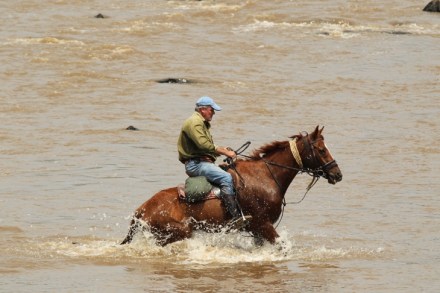
Laikipia On Tristan Voorspuy’s hell-for-leather riding safaris across Kenya’s savannah, he cracked a bullwhip at predators that tried to eat his guests. One time a lion chased American actress Glenn Close on her horse and Tristan said, ‘We nearly lost her.’ They all joked about it that night around the campfire. Tristan was among the last of the stylishly mad people in Kenya. He once rode his horse into the bar at the Muthaiga Club during a stag party. From the saddle, he toasted the groom, his steed defecated on the parquet and off he trotted between astonished drinkers into Africa’s night. Tristan was a gentleman and well read.

Amphibious assault

From our UK edition

David Spicer’s farce Raising Martha opens with a skeleton being disinterred on a frog farm by animal-rights activists. They hope to force the frog farmer, an ageing dope fiend, to set his amphibious livestock free. Got all that? It’s complicated. And there’s more. The skeleton turns out to be the long-dead mother of the farmer, who alerts his shifty brother and calls in the cops as well. A loquacious twerp, Inspector Clout, arrives to investigate and the tangled narrative starts to unfold. This is an uneven play but the good bits are excellent. Stephen Boxer is amusingly deranged as the hallucinating frog man. The animal-rights activists are wittily portrayed as misanthropic nuisances.

Accentuate the positive | 26 January 2017

From our UK edition

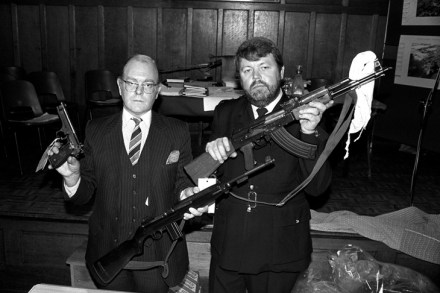
How does a town like Hungerford, tucked into the Berkshire hills, with its sleepy canal running through it and high street of tea shops and antique arcades, recover from that day in August 1987 when Michael Ryan ran amok with a semi-automatic gun, killing 16 and injuring many others? The memorial to those who died, not in the heart of the town but at the entrance to the football ground, just gives the date and their names (Ryan, who also killed himself, is not mentioned). No one wants Hungerford to be thought of as the place where that tragedy occurred, the first such mass killing in the UK. ‘You don’t need to know what the tragedy was?’ asked Alan Dein.

Killer plots

From our UK edition

We all love to mock Bond villains for their hilarious ineptitude at killing the hero. The ‘genius’ Dr No has a tarantula placed in Bond’s bed — though as it happens, tarantula bites do not kill humans except via anaphylaxis; he tries to have Bond run off the road, irradiated, and boiled alive in a nuclear cooling tank. Time and again, Bond is in the clutches of Smersh or Spectre or that chap with three nipples, and time and again they pass up the obvious bullet to the head in favour of crowd-pleasing stunts involving sharks, poison--tipped shoes, alligators, and men with giant metal teeth. Such things would never happen in the real world, we think.

A truly monstrous regiment

From our UK edition

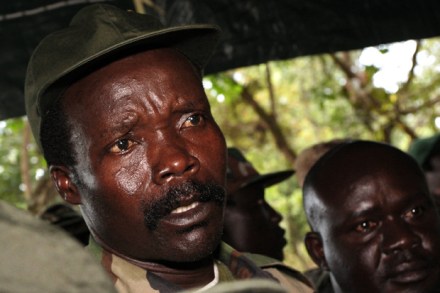
When George Omona first saw soldiers in the infamous Lord’s Resistance Army, he was amazed. The scary fighters who had terrorised people for decades across a big chunk of Africa turned out to be emaciated teenagers with dirty clothes who could hardly hold the big guns they carried. Some were unarmed children, barely ten years old. He felt sorry for them. ‘They could not have known anything else but living in the forest like wild animals.’ Soon he had joined their pack, a reluctant member of one of the world’s most notorious rebel groups. A bright boy who dreamed of becoming a teacher, George ended up a bodyguard to one of the world’s most bloodstained killers.

A marvel and a mystery

From our UK edition

In 2013, Pavel Dmitrichenko, disgruntled principal dancer of the Bolshoi, exacted a now infamous revenge on the company’s artistic director, Sergey Filin, for overlooking his girlfriend in casting the starring role in that most Russian of ballet classics, Swan Lake. The circumstances surrounding the acid attack, which seemed to combine ballet’s glamour with a murky underworld of intrigue, conspiracy, villains and victims, quickly became a contemporary metaphor for the Bolshoi itself. It’s irresistible as a lens through which to consider this intriguing institution at the heart of Russian politics, culture and life.

Where there’s a will…

From our UK edition

‘Clonakilty, God help us,’ my Irish mother would say automatically when we drove into the town, in pious remembrance of those who had died there during the famine. Clonakilty acquires another corpse in Closed Casket, Sophie Hannah’s second novel to feature Agatha Christie’s Hercule Poirot, which is set mainly in a country house nearby. The continuing success of the Christie brand is one of the marvels of the modern entertainment industry. Estimates of her global book sales start at two billion. Only last August, the BBC announced that it had commissioned seven new Christie adaptations over the next four years.

Northern brag

From our UK edition

The last thing we need right now, in these divisive times, is a series that spends all its time crowing about how special the North is, that continually insists it’s the fount of English art, faith and civilisation and also the region where our notions of justice and equality have been forged.