Murder

The Murdaugh trial is twisted true crime at its peak

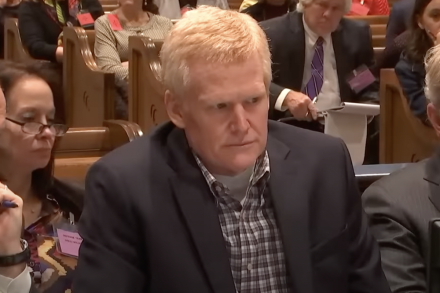
The murder trial of prominent South Carolina patriarch Alex Murdaugh has it all: two deaths, a lethal drunken boat accident, a suicide-for-hire plot, the mysterious death of the family's housekeeper and a suspicious hit-and-run. That's why the case has caught the attention of true crime fanatics and the national media — ABC News, Discovery, HBO, CNN and Netflix have all taken a stab at various documentaries and podcasts. Others still might find themselves lost in the schadenfreude of watching a powerful and wealthy family descend into tragedy. The Murdaugh family has long exercised a significant amount of legal influence in the Low Country region of South Carolina.

alex murdaugh

Does your mass shooting suit my worldview?

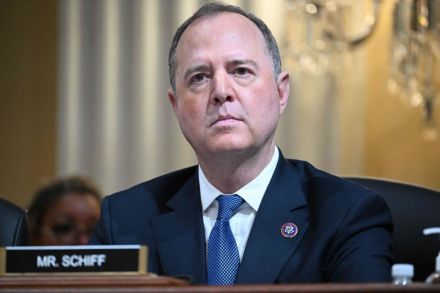
In the wake of Saturday’s horrific shooting at a Lunar New Year celebration in the heavily Asian neighborhood of Monterey Park, California, Democratic lawmakers sprang into action, speculating that the violence may have been racially motivated. Hours later it emerged that the shooter was himself also Asian. The frequency of mass killings in this country is harrowing. But Cockburn finds such tragedies are made all the more gruesome when politicians so often jump ahead of the facts, ascribing motivations or reasons to the violence that are politically beneficial to them or fit their ideological framework. Representative Adam Schiff, for example, pegged “bigotry towards AAPI individuals as a possible motive.

monterey

AP conveniently forgets to mention that politician accused of murder is a Democrat

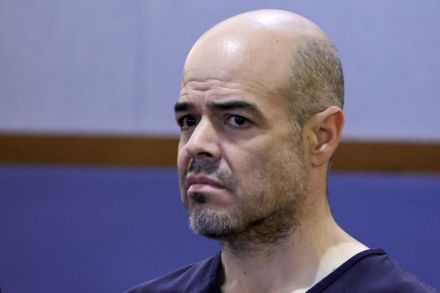
Cockburn is partial to a murder mystery, but in some cases it seems that the mainstream media are going out of their way to hide relevant facts. The Associated Press, for example, serves the important function of scribbling up neutral versions of smaller local stories and syndicating them nation- and worldwide. It's intriguing, therefore, that when the wire service reported on the trial of the Clark County public administrator Robert Telles allegedly killing a Las Vegas investigative journalist, they conveniently forgot to mention that he’s a Democrat. While Cockburn is sure that the AP made an honest mistake, like every yuppie he has found himself on his fair share of crime scenes. Getting a sense of things is generally pretty easy: Colonel Mustard with the dagger in the library.

robert telles nevada ap

Why women shouldn’t run in the dark

Eliza Fletcher was abducted and murdered on her morning run last Friday. The mother of two young boys was up at 4:30 a.m. to squeeze in a workout before a hectic day of prepping her kids for school and teaching kindergarten. Many working moms understand why Fletcher was out running so early. There was probably no other time in her day to do it. Many runners understand why she was running in the dark. Training takes time and discipline, so pre-sunrise hours are popular to get in necessary miles. Fletcher was a serious runner who had qualified for the Boston Marathon and was heavily involved in the running community online. A chilling video image of Fletcher, dressed in purple shorts and a pink sports bra just before the abduction, left female runners nationwide gripped with fear.

eliza fletcher

Murder most foul: The Marriage Portrait, by Maggie O’Farrell, reviewed

From our UK edition

There’s a moment near the end of Robert Browning’s dramatic monologue ‘My Last Duchess’ when it becomes clear that the duke, whatever he might claim, did kill his wife: ‘I gave commands;/ Then all smiles stopped’, he lets slip. In The Marriage Portrait, Maggie O’Farrell’s sombre, haunting novel based on the historical couple described in Browning’s poem, this revelation comes rather earlier. The young Lucrezia knows with ‘a peculiar clarity’ that her husband ‘intends to kill her’ right from the first page. After leaving Florence to begin her married life with Alfonso II, Duke of Ferrara, Lucrezia died within a year.

A flag under foot

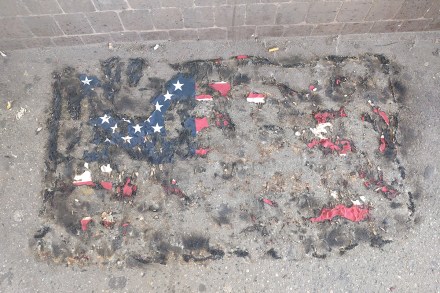
On my way to work in Midtown Manhattan each day, I pass down 50th Street. Near the corner of Broadway, not long ago someone glued an American flag to the sidewalk and set fire to it. The scorched remnants cry out in resistance to the attempted insult and erasure. I have no idea what protest prompted this indignity, or whether the person who sealed the flag to where pedestrians would trample it was the same who decided to set it on fire. I haven’t noticed any passersby taking special note of Old Glory reduced to such an inglorious state, surrounded by cigarette butts and other debris. This isn’t New York City’s fault. We are amid more pressing crises. The subway entrance nearby — one of the main points of access to Midtown — reeks of urine and sometimes worse.

flag

Why are crime writers so weird?

From our UK edition

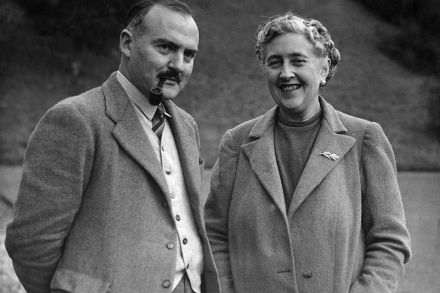
What a weird lot crime writers are. I don’t come to this conclusion lightly, since I’m a crime writer myself, but on the evidence of this magisterial but wickedly entertaining book the conclusion is inescapable. As you turn the pages, the evidence mounts up. One crime writer has been considered a serious candidate for sainthood and another has been convicted of murder. Wilkie Collins simultaneously maintained two mistresses and their children but never bothered to marry either. Mary Roberts Rinehart, an early 20th-century queen of American suspense fiction, narrowly escaped being murdered by her chef because she wouldn’t promote him to butler. Agatha Christie famously engineered her own disappearance, and Dorothy L.

Murder, suicide and apocalypse: Here Goes Nothing, by Steve Toltz, reviewed

From our UK edition

Angus Mooney is dead. Freshly murdered, he’s appalled to find himself in an Afterworld, having always rejected the possibility of life after death. Moreover, he can observe his murderer getting on increasingly well with his innocent widow. Mooney’s Afterworld is a deeply unsatisfactory mixture of computerised bureaucracy and urban chaos. In a landscape undreamed of by Dante, his guide is no cicerone but a woman with a welcoming bed and good contacts in Management, who knows her way around the local drinking spots. The Australian novelist Steve Toltz specialises in the blackest of comedy. His first novel, A Fraction of the Whole, was shortlisted for the Booker in 2008. Here Goes Nothing, his third, plays with murder, suicide and apocalypse. Laughter in the dark.

Will Macron surrender to the mob?

From our UK edition

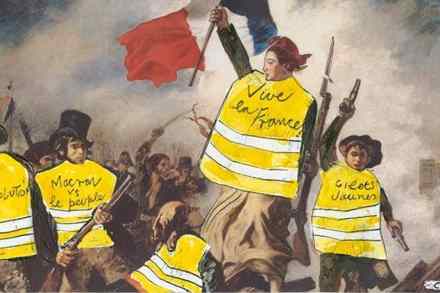
It has been a torrid few days in France. In the early hours of Saturday morning, a former Argentine rugby international, Federico Aramburú, was shot dead on a chic Paris street after an altercation in a bar. The suspect is a notorious far-right activist who allegedly told Aramburú that he didn’t belong in France. On Monday Corsican nationalist Yvan Colonna died, three weeks after he was beaten into a coma by fellow prisoner and infamous extremist, Franck Elong Abé, an Islamist who was captured fighting for the Taliban a decade ago. It is alleged that Abé justified his attack on the grounds that Colonna ‘had bad-mouthed the Prophet’.

The deep conservatism of Agatha Christie

Some fiction, regardless of how intimately tethered to a time and place, is timeless. And the work of Agatha Christie certainly seems that way. Christie's novel Death on the Nile is now receiving renewed cinematic treatment under the expert hand of Kenneth Branagh, with the film scheduled for release on February 11. This follows the success of Branagh’s 2017 adaption of Murder on the Orient Express, which grossed $351 million against a production budget of $55 million. “Rest assured," says Belgian detective Hercule Poirot in Christie’s novel Five Little Pigs. "I am the best!” The same might be said of Christie herself, the world’s all-time bestselling fiction author.

When progressives side with criminals

The father of a UCLA grad student, Brianna Kupfer, who was stabbed to death last week, is giving voice to the gut-wrenching human toll of the violent crime wave ravaging the nation — and the social and political forces enabling it. “What’s endemic in our society right now is that everyone seems oriented on giving back rights and bestowing favor on people that rob others of their rights,” said the grieving dad on Fox News. Brianna, a graduate student and design consultant, was found dead by a customer at the furniture store where she worked. On Wednesday, Los Angeles police identified her suspected killer, a 31-year-old career criminal named Shawn Laval Smith who was out on $1,000 bail for a misdemeanor.

criminals

The false mystery of motives

Faced with some high-profile crimes, our law enforcement authorities are finding it hard to say what has prompted “suspects” to pursue deadly violence. Even President Biden found himself baffled by what would lead a known Islamist terrorist to invade a synagogue on Saturday night and hold a rabbi and other members of his congregation hostage. The FBI likewise for a period expressed its bewilderment. The hostage taker had demanded the release of Aafia Siddiqui, a convicted Islamic terrorist held in a Texas prison, but the FBI wasn’t about to draw any inferences from his choice of hostages or his principal demand. The FBI professed to know nothing of his motives — and President Biden nodded in agreement.

motives

The crime which inspired Crime and Punishment

From our UK edition

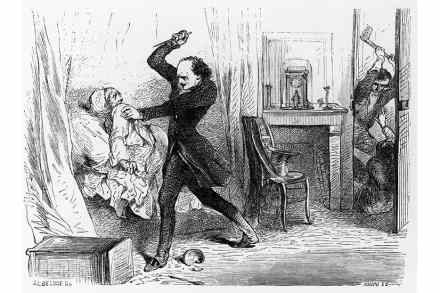
‘Whether I am a trembling creature or whether I have the right…’ The much quoted words of Rodion Raskolnikov, the protagonist of Crime and Punishment, encapsulate the novel’s main question. Fyodor Dostoevsky first pitched the idea of ‘the psychological account of a crime’ to a publisher in 1865. Three decades earlier, a real-life murderer, Pierre François Lacenaire, waiting for his execution in a French prison, wrote: ‘Only I can decide whether I have done wrong or right to society.’ As Kevin Birmingham shows in his new book, this is but one detail of Lacenaire’s story mirrored in Dostoevsky’s masterpiece; moreover, Dostoevsky’s reflections on the case influenced the way he understood the nature of evil.

Why local crime hurts Democrats nationally

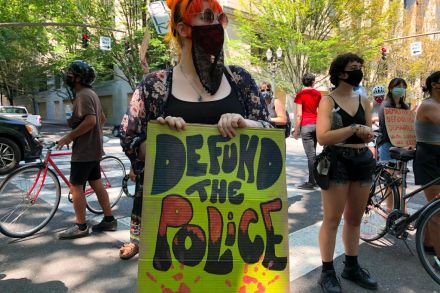
Preventing crime and punishing offenders is primarily the responsibility of local authorities. They have no greater obligation to the citizens who elected them and who fund the government. It is up to local police, supervised by political leaders and subject to the law themselves, to provide a safe environment for citizens to go about their lives, pursuing their own goals in peace and security. It is up to local politicians to ensure that police are adequately funded and properly trained. It is up to local prosecutors to follow up all justified arrests and prosecute offenders when the evidence is adequate. When police overstep their limits, prosecutors should pursue them too. The goal is a safe environment, subject to the rule of law.

crime

A long-forgotten tale of sorcery and a severed head

From our UK edition

Laikipia Plateau, Kenya Our local chief Panta wore a government-issue khaki uniform with epaulettes, beret and swagger stick. On a pleasant stroll to our farm springs, he observed how plenty of blood had been spilled over this water. We sat on the glassy-smooth black rocks around the water pools and the chief retold for me a story more infamous in its day than the Happy Valley tale of Lord Erroll’s murder, but now completely forgotten. Welshman Dicky Powys, from a family of authors and philosophers and cousin of our ranching neighbour Gilfrid, arrived in Kenya in 1931 to farm. Young Dicky learned the local Maasai vernacular fluently and got on with everybody. His employer had rented pasture in Laikipia around our springs for a vast flock of sheep and Dicky pitched camp here.

A glimpse of the real Patricia Highsmith through her diaries and notebooks

From our UK edition

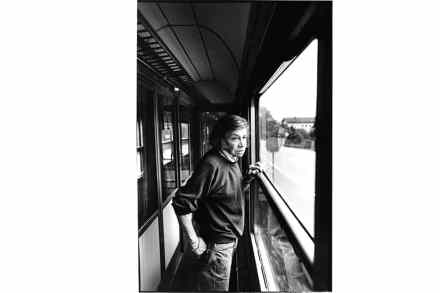
There are three ways of knowing Patricia Highsmith. First, of course, she was the author of 22 novels and several story collections published between 1950 and 1995, the year of her death. Then the woman herself: Mary Patricia Plangman, born in Dallas in 1921, long-term resident of New York City, when young a socially and sexually active lesbian, later in life a mostly solitary literary figure in almost constant movement around Europe. Much biographical work has been written about her. And, finally, a revelation: she was the keeper of not only an intimate diary for most of those years, but also workbooks she called ‘cahiers’, all now published in a single volume.

More penny dreadful than Dickensian: Lily, by Rose Tremain, reviewed

From our UK edition

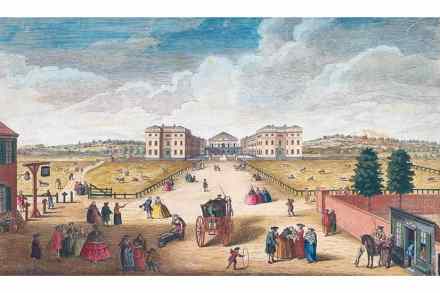
Rose Tremain’s 15th novel begins with a favoured schmaltzy image of high Victoriana: it is a night (if not dark and stormy, then certainly dark and wet) in the year 1850, and a baby has been left at the gates of Victoria Park. Then we have an uncanny detail: the baby is sniffed out by a pack of wolves, one of which bites off her little toe. Thankfully, a police constable finds her and walks through the night to Coram’s Fields to deliver her to the Foundling Hospital. From there she is sent to be fostered by a loving family on a farm in Suffolk for six years, only to return to the Hospital for a childhood of cruelty and abuse at the hands of the staff. We have already encountered her working as a wig-maker by day and dreaming at night of her execution by hanging.

Should we forgive Penelope Jackson?

From our UK edition

The most poignant detail, I think, about the story of Penelope Jackson – jailed for 18 years for stabbing her husband to death – was the reaction of her late husband’s younger brother Alan. He said he intended to visit her in prison:  'I want to say to her, ‘What you’ve gone through I can quite imagine. I know what he was like towards me and my wife. You’re not on your own’.'  Alan Jackson was estranged from his brother – whom he described as an 'arrogant bully' – and said:  'No one deserves to die the way he did but I can believe Penny would have been pushed to her limits.

The Met must face the truth about Sarah Everard’s murder

From our UK edition

‘We are sickened, angered and devastated by this man’s crimes which betray everything we stand for,’ said the Metropolitan Police in response to the sentencing of Wayne Couzens. He is the former police officer who, when in service, kidnapped, raped and murdered Sarah Everard, later setting fire to her body. The case in March sparked national outrage about the levels of male violence towards women and girls. Not only do significant numbers of police officers spectacularly fail women when it comes to sexual and domestic violence, but they commit these crimes themselves. The two things are connected. If male police officers see women as worthless, and if there is little accountability when it comes to violence against women, they will feel double impunity.

The man who made Manhattan: The Great Mistake, by Jonathan Lee, reviewed

From our UK edition

What makes a city? The collective labour of millions packed into its history; the constant forgetting of incomers who arrive to create their own version of a place, their own versions of themselves; the desires of great men, whose improvements are partly intended to secure a better life for their less fortunate fellows, and partly a plea for their own immortality. This is a novel about all three, disguised as one about Andrew Haswell Green. According to one of the few memorials to him still standing, he was the ‘Directing Genius of Central Park in its Formative Period’ and ‘Father of Greater New York’.