Munich security conference

Vance Derangement Syndrome

From our US edition

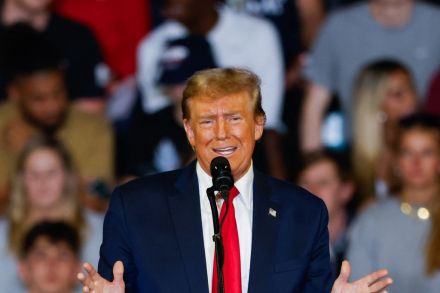
Bret Stephens has come a long way in his estimation of Donald Trump. Back in 2016, when Trump was first running for the presidency, Stephens wrote in the Wall Street Journal that “the candidacy of Donald Trump is the open sewer of American conservatism.” As the election season progressed, Stephens mostly dropped the sewer talk, sliding into its place evocations of Trump’s “darker antipathies” and warnings that his “candidacy is manna to every Jew-hater.” A “Trump administration,” he explained,“would give respectability and power to the gutter voices of American politics.” At one point he giddily announced that Trump’s chances of victory were “next to nil.
Vance

Vance is right — Britain really has ‘thoughts-and-prayers’ policing

From our US edition

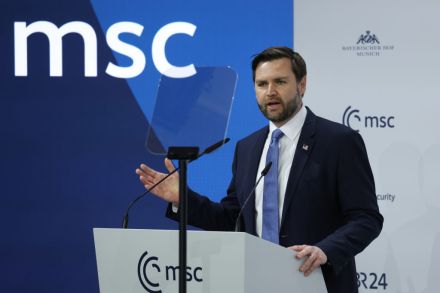
"Free speech, I fear, is in retreat," said Vice President J.D. Vance to an audience of world leaders at a security conference in Munich on Friday, with a rhetorical punch comparable to Reagan's "Mr. Gorbachev, tear down this wall!" Vance pointed to various censorial "hate speech" policies spewed out from Brussels and across Europe, and to the troubling arrest of a Christian in Sweden who used his freedom of expression to burn a Qur’an. Building to a crescendo, Vance then highlighted the "most concerning" case of Adam Smith-Connor — the British army veteran and father of two who was convicted in November 2024 for praying silently, for a few minutes, on a public space across the road from an abortion facility.

j.d. vance

The UK’s balancing act over Trump’s ‘Ukraine peace plan’

13 min listen

Leaders from around the world are gathering at the Munich Security Conference, with the UK represented by Foreign Secretary David Lammy. All attention has turned to Ukraine, given statements this week by President Trump that he had spoken to Putin (and later Zelensky) about ending the Russia-Ukraine war. Trump's statements, for example that NATO membership should be off the table, put him at odds with European allies. The UK signed a joint statement with leaders from France, Germany and others, that Ukraine's independence and territorial integrity are unconditional. Is the UK walking a tight-rope between the US and Europe? Where does this leave the NATO alliance? And, with a strategic defence review underway, what should the UK's approach to defence spending be?

Alexei Navalny won’t be the last of Putin’s martyrs

From our US edition

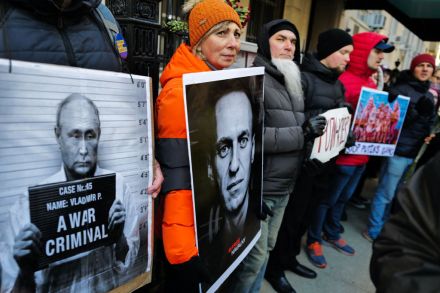
Alexei Navalny, Russia’s most prominent opposition leader and a constant irritant to Russian president Vladimir Putin’s regime for more than a decade, has died in a remote penal colony in the Arctic Circle at the age of forty-seven. The news was greeted with shock, outrage and sadness across the US and Europe and came at a time when the West’s most high-profile politicians and security figures were in Germany for the annual Munich Security Conference.   There’s no denying Navalny’s bravery. Most high-profile Russian figures who criticize Putin and live long enough to tell the tale choose to live a life in exile. Navalny, however, was never interested in that option.

alexei navalny

Trump says he will let NATO down. How will Kamala Harris respond?

From our US edition

When Donald Trump declared that Russia could do “whatever the hell it wants” to NATO countries, he was espousing his own lifelong credo. Trump has done whatever he pleases for most of his life. It was generous of him to extend the same carte blanche to the Kremlin, which is presumably pleased with his offer but has yet to comment on it publicly.  Once upon a time, conservatives used to raise an eyebrow over the notion over doing whatever the hell you want. They were in a more censorious mode, arguing that this amounted to moral relativism. Now it seems that anything goes.  The old certitudes are gone.

donald trump nato