Moon

How Artemis II returned to Earth

The key event in the return of the Artemis II crew was the moment of real drama during what mission controllers call Entry Interface. The capsule is 400,000 feet above the Earth and still traveling at 25,000 miles an hour. They were among the fastest humans even though they did not break the incoming speed of the Apollo 10 mission. It is only fourteen minutes until splashdown in the Pacific, there is no turning back, no second chance, re-entry will happen no matter what. A few hours earlier the crew donned their orange so-called crew survival suits and lowered their visors. In essence these are personal spacecraft providing everything they need to survive for up to six days. Their water-cooled inner suit was keeping them cool even though the cabin temperature was normal.


Artemis II

Why Artemis II matters

Weren’t those images beamed back from the Artemis II mission something to catch the breath in the throat? If something in you wasn’t stirred by the sight of Earth, glimpsed through the window of the space capsule past the silhouetted face of the astronaut Christina Koch, I don’t think you can be fully alive. And what about the thought that for the first time in history, human eyes will look directly on the dark side of the moon; or that the inhabitants of that spacecraft will travel farther from our home than any humans have ever done? That for a few tens of minutes before earthrise, they will be wholly out of contact with home as they travel through the vast dark? Stir the soul it might; but why, some will reasonably ask, should we be doing it at all?

Will Artemis II fulfill our Space Age dreams?

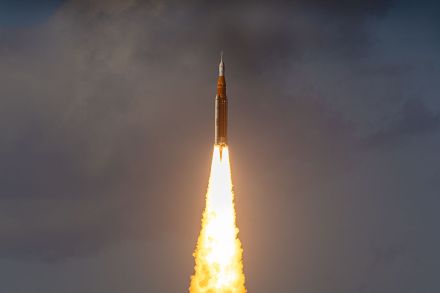
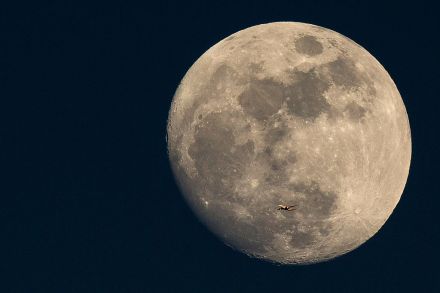
As the Artemis II mission thundered into the sky last night, a full moon rose above Cape Canaveral. It was no coincidence: the timing of the lift-off was ordained by lighting requirements and the mechanics of the Moon's orbit. The mission set off not in the direction of the Moon, but towards where the Moon will be in five days’ time when the spacecraft swings around it in what is called a "free-return trajectory." The crew of four are the first in almost 54 years to go to the Moon. In a way, things have not changed so much since then.

Will Bezos beat Musk to the Moon?

Even Elon Musk has to face a dose of reality every once in a while. Technology and politics have forced him to turn his gaze away from Mars, for the moment at least, to put Americans back on the surface of the Moon before China gets there. But it might already be too late. If America has any chance of beating China, it now seems inevitable that the next American human landing on the Moon will not be by Musk’s Starship but using a craft being developed by his rival Jeff Bezos. Announcing the pivot, Musk wrote on X: “For those unaware, SpaceX has already shifted focus to building a self-growing city on the Moon, as we can potentially achieve that in less than 10 years, whereas Mars would take 20+ years.

Bezos

The Artemis II mission is an exercise in wonder

When the Artemis II mission eventually blasts off, it will take humans back to the Moon for the first time in more than 50 years. Americans Reid Wiseman, Victor Glover, Christina Koch and Canadian Jeremy Hansen will travel further out into space than anyone before when they loop 4,700 miles beyond the Moon, seeing parts of it never before glimpsed by human eyes. The flight is designed to put the powerful Space Launch System rocket and the Orion capsule, with its European-made Service Module, through their paces. Three hours after launch, the crew will monitor a procedure not performed since 1972, so-called TLI – Trans-Lunar Injection. Only five of the 24 astronauts who have experienced that are still with us.

What is a perigee-syzygy?

My husband was so excited about learning the term perigee-syzygy that he kept saying it over and over, until the words blended into his regular breathing and he dozed off in his chair. The compound word describes what the vulgar press calls a supermoon. A syzygy happens when the Moon, Earth and sun line up, creating a full moon (or a new moon, which we can’t see because only the far side gets lit up). The perigee is when the moon comes closest to Earth (its farthest point is called the apogee). The distance changes because the moon’s orbit around Earth is oval-shaped.

perigee-syzygy

The culture war inside the space program

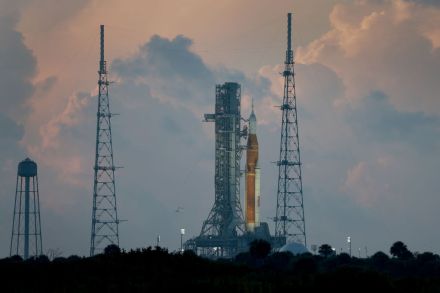
For many, the upcoming launch of NASA’s Artemis 1 (after a botched attempt earlier this week) undoubtedly seems the start of a new and exciting era in space exploration. Not only is the US finally planning to return to the Moon — this time to build a permanent outpost on the lunar surface — but in just a few months Elon Musk’s SpaceX will be sending its gigantic Starship, theoretically capable of carrying 100 astronauts, into Earth orbit. “Space is sexy again,” as astrophysicist Paul M. Sutter recently put it. “After the excitement of the initial Apollo missions dwindled into a subject only discussed by ultra-nerds, and the cool factor of the Space Shuttle gave way to the realization that it didn’t really do much, people generally lost interest in space.