Moon

Why Artemis II matters

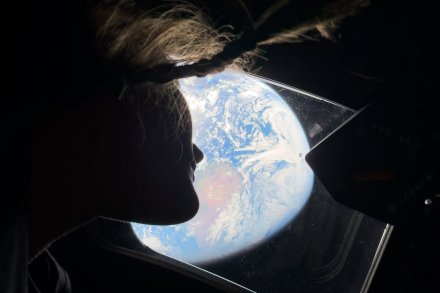
Weren’t those images beamed back from the Artemis II mission something to catch the breath in the throat? If something in you wasn’t stirred by the sight of Earth, glimpsed through the window of the space capsule past the silhouetted face of the astronaut Christina Koch, I don’t think you can be fully alive. And what about the thought that for the first time in history, human eyes will look directly on the dark side of the moon; or that the inhabitants of that spacecraft will travel farther from our home than any humans have ever done? That for a few tens of minutes before earthrise, they will be wholly
Will Artemis II fulfill our Space Age dreams?

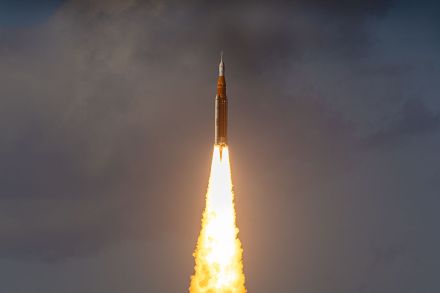
As the Artemis II mission thundered into the sky last night, a full moon rose above Cape Canaveral. It was no coincidence: the timing of the lift-off was ordained by lighting requirements and the mechanics of the Moon’s orbit. The mission set off not in the direction of the Moon, but towards where the Moon will be in five days’ time when the spacecraft swings around it in what is called a “free-return trajectory.” The crew of four are the first in almost 54 years to go to the Moon. In a way, things have not changed so much since then. Over the ten-day Artemis II mission, when the crew

Will Bezos beat Musk to the Moon?

Even Elon Musk has to face a dose of reality every once in a while. Technology and politics have forced him to turn his gaze away from Mars, for the moment at least, to put Americans back on the surface of the Moon before China gets there. But it might already be too late. If America has any chance of beating China, it now seems inevitable that the next American human landing on the Moon will not be by Musk’s Starship but using a craft being developed by his rival Jeff Bezos. Announcing the pivot, Musk wrote on X: “For those unaware, SpaceX has already shifted focus to building a

Bezos

The Artemis II mission is an exercise in wonder

When the Artemis II mission eventually blasts off, it will take humans back to the Moon for the first time in more than 50 years. Americans Reid Wiseman, Victor Glover, Christina Koch and Canadian Jeremy Hansen will travel further out into space than anyone before when they loop 4,700 miles beyond the Moon, seeing parts of it never before glimpsed by human eyes. The flight is designed to put the powerful Space Launch System rocket and the Orion capsule, with its European-made Service Module, through their paces. Three hours after launch, the crew will monitor a procedure not performed since 1972, so-called TLI – Trans-Lunar Injection. Only five of the