Monarchy

70 years on: the making of Queen Elizabeth II

From our UK edition

Princess Elizabeth was 25 when her father died. She was on the first leg of a Commonwealth tour and she spent the night of 5 February 1952 at Treetops Hotel, set in the branches of a large fig tree in Aberdare National Park in Kenya. ‘For the first time in the history of the world,’ wrote the British naturalist Jim Corbett, who was a guest at the hotel at the same time, ‘a young girl climbed into a tree one day a princess and, after having what she described as her most thrilling experience, she climbed down from the tree next day a Queen.

The meritocrat and the aristocrat

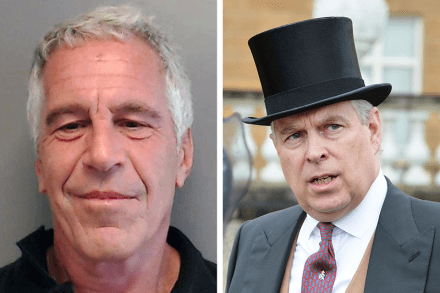
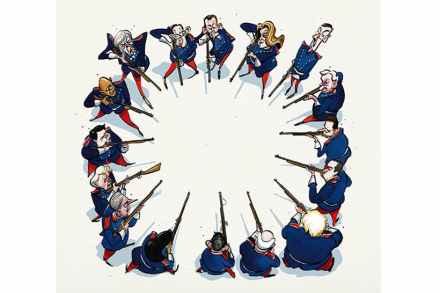
What a pair are Jeffrey Epstein and Prince Andrew — like peanut butter and petroleum jelly, like pepper and road salt. With Epstein conveniently self-strangulated, it's Andrew's turn to face the music now, as a US judge ruled on Wednesday that the civil case against him can proceed. Andrew stands accused of sexually assaulting a then-underaged American named Virginia Giuffre. He's alleged to have violated her multiple times, in New York, in London, and on Epstein's eponymous Pedo Island. So while the grand old duke of York might have 10,000 men, they're about to square off against one of the most hellish forces ever to prowl this earth: American lawyers. And cheers to the unwashed hordes in this case.

The delicate business of monitoring the monarchy

From our UK edition

This very readable account of relations between the British intelligence services and the Crown does more than it says on the tin. Although subtitled ‘Spying and the Crown, from Victoria to Diana’, it quite properly begins with Queen Elizabeth I and the intelligence network masterminded by Francis Walsingham, whom MI6 regard as their historical progenitor. It also quite properly makes the point that ‘spies and royal statecraft were episodic and opportunistic partners’. Unlike other major powers, Britain had no permanent intelligence services until 1909. There weren’t even any permanent military intelligence organisations until the late 19th century.

The enduring power of the monarchy

From our UK edition

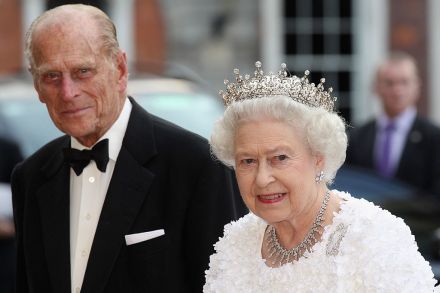
Fourteen prime ministers; 18 general elections; seven changes of government. Even in a stable country like Britain it is remarkable how much political water has flowed under the bridge in the 69 years since the late Duke of Edinburgh became consort to Elizabeth II. Britain has gone from a country of outside lavatories to one of conspicuous wealth, from an independent nation to a member of the EU and back again, from an empire to a champion of global trade. Some see the past seven decades as a period of national decline, yet the quality of life has improved hugely. In 1952, life expectancy at birth for Britons was 69; now it is 81. To have lived for almost a century is still an impressive feat, but is a lot more common now than it was at the beginning of the second Elizabethan age.

War of the Worlds is as bad as Doctor Who

From our UK edition

Edwardian England deserved everything it got from those killer Martian invaders. Or so I learned from the BBC’s latest adaptation of The War of the Worlds (Sundays). Everything about that era, apparently, was hateful, backward and ripe for destruction: regressive attitudes to women and homosexuality; exultant white supremacy (cue, a speech from a government minister on the superiority of the Anglo-Saxon race); a general prevailing bone-headedness and stuck-upness; stiff, stuffy, relentlessly brown clothing with superfluous belts; and as for those ridiculous bristling moustaches… Still, I don’t think H.G. Wells would have been totally appalled by this travesty of his 1898 potboiler.

The truth about the Cambridges’ anniversary video

From our UK edition

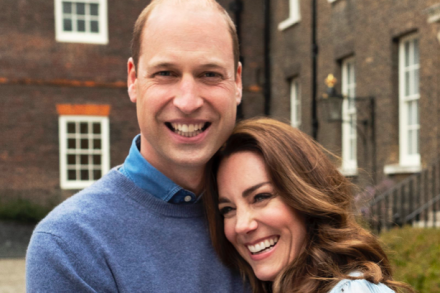
In celebration of their tenth wedding anniversary, the Cambridges have released a 40 second vignette of their painfully British existence. It’s all Barbour jackets, laughing children and windswept beaches. It is, in other words, a John Lewis nightmare. But who wants an aspirational royal family? That’s kind of the point isn’t it, that they’re not like us? No, apparently the focus groups have spoken and Britain wants a set of Boden models to represent the nation. https://twitter.com/KensingtonRoyal/status/1387778071319781378?ref_src=twsrc%5Etfw The Cambridges' performance is arguably just as confected as anything Harry and Meghan said on Oprah’s sofa Why can’t we just have a nice formal photo of the family together with the Queen?

The madness of Charles III

From our UK edition

Republicans hate to admit it, but the stability brought by the long reign of that most careful of monarchs Elizabeth II has helped Britain manage the decline from empire to middle-ranking power surprisingly well. As the Treason Act of 1351 is no longer in force, and to ‘compass or imagine’ the death of the sovereign no longer carries the death penalty, I can state the obvious. Her Majesty is 92. She is entering her last days as Brexit threatens the peace in Ireland and the union with Scotland, and divides England and Wales into hostile camps. A vigorous PR campaign is underway to persuade us that now is not the worst possible moment for her zealous and under-educated son to succeed. The Prince promised the BBC that he would stop interfering in politics when he became king.

The Spectator Podcast: plots, politics, and the pains of leadership

From our UK edition

This week, Tory in-fighting comes to the fore, but could the party be even more divided than we thought? Meanwhile, across the Pond, Donald Trump continues to cause backlash. Is he to blame for an ideological shift to the left in the country? Thankfully, our own Head of State isn’t on Twitter, though that doesn’t stop people speculating about her Majesty’s personal opinions. Is the Queen a Eurosceptic? First, the Conservative Party is taking up arms against each other. This week, back room plotting came to the fore with the Brexiteer group the ERG openly discussing Mrs May’s demise and Boris Johnson dominating headlines. But James Forsyth reveals in this week’s cover piece that there are more fractures in the party than merely a Chequers/Brexiteer divide.

The Spectator Podcast: Bluffers and Royals

From our UK edition

We often complain that our politicians are all bluffers who know very little about a lot. But is the very structure of our political institutions at fault? And speaking of bluffers, Theresa May is so far successfully fudging her way through the Brexit negotiations, but can she survive after March 2019? And last, maybe all this politics has made you long for the good old days of monarchy. With Prince Charles’s art collection on exhibit, we talk about how it reflects Charles’s One Nation Toryism. PPE – that notorious Oxford degree that ostensibly teaches its students Philosophy, Politics, and Economics – and apparently, how to govern a country. Or at least, how to sound like you’re governing.

The genius of constitutional monarchy

From our UK edition

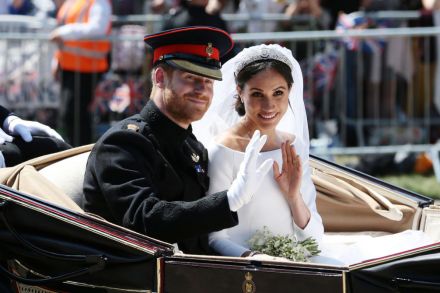
George Orwell famously wrote that an English intellectual would rather be caught stealing from the poorbox than be seen standing to attention for God Save the King. Such intellectuals must have had a terrible time last weekend when much of the nation's gaze was fixed on the wedding of two young people who are part of an institution we think of as quintessentially British. The newlyweds have shown early commitment to those qualities we celebrate as particularly British: duty, charity and the service of others. Whether it is the two tours in Afghanistan served by Prince Harry, or the charity work that the couple has embraced, the hallmarks of the monarchy reflect the nation at its best.

The Spectator Podcast: The New Arrival

From our UK edition

In this week's podcast, we discuss Meghan and the monarchy – is Meghan Markle good news for the Establishment? And what are we to make of her anyway? We also discuss the potential for Tory rebellion on the customs union, and ask, does economic research back up higher government spending? As the royal baby is born earlier this week, all eyes are on the monarchy. But he’s not the only new arrival to the family in recent times – Meghan Markle will be formally joining the monarchy in less than a month’s time. So what are we to make of the new Princess? For this week’s cover, Jenny McCartney thanks God that Meghan is not a spoilt, entitled Chelsea Sloane, and Julie Burchill writes that Meghan is a modern ‘adventuress’.

Drama queen | 7 December 2017

From our UK edition

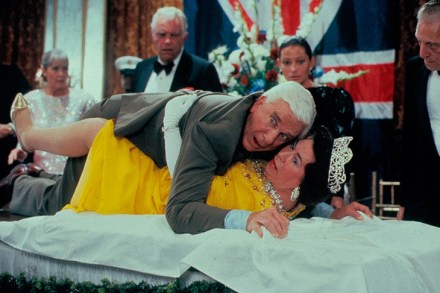
If cinema is propaganda, Elizabeth II can be grateful to it. Film is a conservative art form, and almost nothing has attempted to thwart or mock her. (The Daily Star once printed that Princess Margaret would appear in Crossroads, but Crossroads was not cinema, and it was not true. Instead the award for tabloid lie of the year was named the Princess Margaret Award.) I could not find an art film with the Queen weeping under a table in her nightgown, although she did appear in The Naked Gun: From the Files of Police Squad! (1988), and was mounted by Leslie Nielsen. She also appeared in the disaster film 2012 (2009), attempting to flee a tsunami in an ark built by China, with the dogs. This is less preposterous than the Leslie Nielsen scene. She would not go to China to die. But that is it.

Out of sorts at the RSC

From our UK edition

The RSC’s summer blockbuster is about Queen Anne. It’s called Queen Anne. It opens at the Inns of Court where drunken wags are satirising the royals with a naughty sketch about boobs and beer guts. Everyone on stage pretended this was hilarious. A few audience members did too, out of politeness. The principal characters arrive with their dramatic goals on display. Queen Anne wants to rule wisely. Her general, Marlborough, wants to conquer widely. His wife, Sarah, wants to help her monarch to rule wisely and her husband to conquer widely. And Sarah’s scheming cousin, Abigail, wants to befriend the Queen so that she can marry a steady salary. These characters are neither very admirable nor very wicked and their objectives don’t cohere into a single narrative.

Prince William is just a chip off the Charles block

From our UK edition

Generally, I am the last person to advocate modesty, sobriety or duty. But then, I have been supporting myself financially, with no assistance from any other source - spouse or State or taxpayer - since I was seventeen years old, and am free to do as I please. The same, sadly, cannot be said of Prince William, who swerved this year’s Commonwealth Day service in favour of dad-dancing, Jägerbombing and high-fiving party-girls on a four-day jolly with his mates in Verbier. And this after spending a surprisingly modest thirteen days performing his official duties this year.  It’s no secret that I was one of the late Princess of Wales’ most rabid cheerleaders so naturally I was favourably inclined towards the poor bereaved Diana-faced boy.

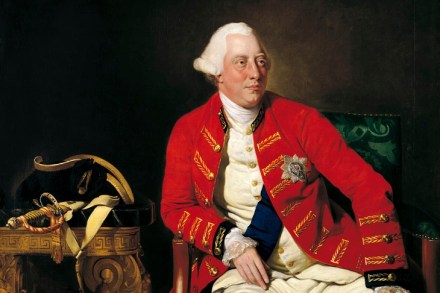
The real George III

From our UK edition

Before he died aged 44 (probably of a pulmonary embolism, poor chap), Frederick, Prince of Wales, compiled a list of precepts for his son, the future George III. ‘Employ all your hands, all your power, to live with economy,’ was one. ‘If you can be without war, let not your ambition draw you into it,’ was another. The result of such sensible parentage is that today, about the only things we know about our third-longest-reigning monarch are that his nickname was ‘Farmer George’, that he lost America, and that he went bonkers, providing a lucrative franchise for the significantly more famous playwright Alan Bennett.

Drama queen

From our UK edition

God, what a dusty old chatterbox Schiller is. Like Bernard Shaw, he can’t put a character on stage without churning out endless screeds of cerebral rhetoric. But unlike Shaw, he has no sense of humour, nor any instinct for the quirks and grace notes that create a personality. Mary Stuart is a psychological drama with a single issue. How soon, and with what political consequences, can Elizabeth execute her treacherous cousin Mary? Schiller’s characters sound and feel identical: super-brainy, highly confident know-alls who treat each problem like a gang of Chancery briefs discussing a particularly knotty insolvency case. Director Robert Icke’s regimented production imposes high-street fashions on England in the 1560s.

Put out more flags

From our UK edition

Did you know that 190 out of 200 nations in the world have either red or blue on their flags? (The wheel in the middle of India’s flag is blue, for example, and the Vatican flag has a red cord hanging from the keys.) Did you know that four of those 190 — Andorra, Chad, Moldova and Romania — have pretty much the same blue-yellow-red tricolour? Or that the stripes of the French flag are not of even width, but are proportioned 30-34-37? It’s an optical illusion: if the red, white and blue are of equal breadth, the flag looks curiously unbalanced. These are among the facts that you won’t find in Tim Marshall’s Worth Dying For, a vexillological miscellany. I bring them up in no carping spirit.

Long life | 17 November 2016

From our UK edition

I started watching The Crown, the £100-million television series on the early years of the Queen’s reign, on Netflix but turned it off during the second episode because I couldn’t bear the endless coughing by her father, George VI, as he died of lung cancer. The coughing, performed with eager realism by the actor Jared Harris, who played the king, was made harder to bear by the fact that he kept on smoking at the same time. The link between cancer and smoking may not then have been established, but it is well known now; and exposure to both at the same time is not for the squeamish. For me, however, there was another reason for discomfort — the memory of George VI’s death in 1952 when I was 12 years old, a boarder at a prep school in Berkshire.

Cortana

From our UK edition

At the Queen’s Coronation, the Duke of Northumberland carried the Sword of Mercy called Cortana. I mention this for three reasons: by way of a holiday, since it is as far from the American elections as we can get; because I am worried that the sword might not be carried at the next Coronation; and because I was surprised to find the word cortana in the 20-volume Oxford English Dictionary. The OED does not include proper names, so in 1893, when it reached the letter C, it pretended that cortana was a common noun. It notes that the sword has no point and that its name comes simply from Latin curtus, short, which in Old French was extended to cortain and in Anglo-Latin cortana (feminine, agreeing with spatha, ‘sword’).

Introducing Jeremy Corbyn’s new spokesman: the ex-Labour aide who called the Queen a ‘scrounger’

From our UK edition

Although Jeremy Corbyn managed to survive the Queen's Speech relatively unscathed last week, his republican beliefs are likely to be called into question once again thanks to a new appointment to his press team. Steerpike understands that Matt Zarb-Cousin has been chosen as the winning candidate to fill the 'leader’s office media spokesperson' vacancy first advertised last month. Cousin -- who currently works as a consultant for the Campaign for Fairer Gambling -- is an interesting choice given that he is already a familiar name in Labour circles thanks to an incident that occurred when he worked as a staffer for Andy Slaughter.