Monarchy

Prince Andrew finds refuge in video games

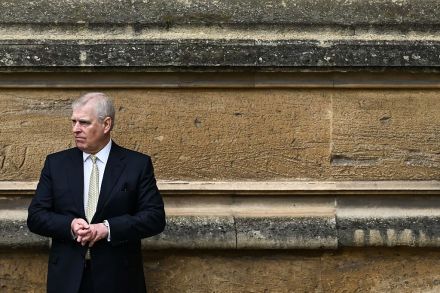
Oh God, not that. That’s all we need, I thought, reading in a long account of Britain’s Prince Andrew’s current travails that “according to visitors to Royal Lodge,” he now “spends much of his time playing video games.” Even before all the unpleasantness with the child-rape allegations against Jeffrey Epstein, one of the Prince’s more embarrassing qualities was his appearing as an “ambassador” for this or that – usually accompanied by a helicopter trip to a golf course. Now he’s reduced – no chopper, no putting green; woe is him – to being an ambassador for adults who play video games. As an adult who plays video games, and even writes about them from time to time, I generally welcome news of figures in public life who do the same. Not on this occasion.

prince andrew

Have the Virginia Giuffre revelations got Prince Andrew sweating?

It is a staple of Gothic fiction that the malefactor is often caught out by a document or apparition that appears from beyond the grave. And so it appeared for Britain’s scandal-riddled Prince Andrew, ever since it was announced that Virginia Giuffre, who the now-former Duke of York allegedly had sexual relations with when he was 41 and she was 17, was posthumously publishing a memoir, entitled Nobody’s Girl, in which she offered candid accounts of what, precisely, happened with Andrew, courtesy of the disgraced sex offender Jeffrey Epstein. Everyone – including the royal family – braced for impact, and the decision to remove Andrew’s title and Order of the Garter must surely have been dictated by this latest humiliation.

King Charles’s cancer and the future

On September 23, 1951, King George VI was operated on for cancer. It was a grueling, dangerous procedure, conducted at Buckingham Palace by Clement Price Thomas, a leading chest surgeon. The king, unsurprisingly, was miserable at the idea, saying, “if it’s going to help me get well again, I don’t mind, but the very idea of the surgeon’s knife again is hell.” Yet he was kept unaware of the seriousness of his illness, instead being informed that the cause of his health problem was nothing more urgent than obstruction in one of his bronchial tubes, which would require a “resection” of the lung, and that it would cure the “pneumonitis” that he believed he was suffering from.

Charles

The king and queen who saved the British monarchy

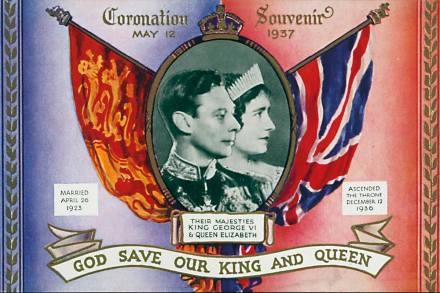
In some ways, the world of George VI and his consort Elizabeth, the future Queen Mother, from 1936-52 was very different from how we envision that of today’s British royal family; its rituals seem to belong to an era of Jurassic antiquity. In George’s day, Britain was still a global power, and its monarch ruled over both an empire and an elaborate court system with a “Page of the Backstairs” and a “Yeoman of the Pantry” — not to mention a fully staffed, oceangoing yacht — at his disposal. His coronation in May 1937 was as protracted as that of any maharajah. The Edwardian braid and sashes on display during more recent military pageantry look sadly Ruritanian by comparison. In other ways, their lives resonate more clearly with our own.

George queen

The brilliance of British civilization

The day after the death of Queen Elizabeth II, I received a note from a friend in the Midwest asking whether I thought the British monarchy would survive her by more than a decade. I replied that of all British institutions the monarchy is the strongest — and that I expect it to last as long as Britain herself. Everything I witnessed in the week after the Queen died seems to me to justify this judgment, in particular the conduct of King Charles III, about whom my friend was skeptical. The events also confirmed my lifelong opinion that British civilization is the finest the world has ever seen; so fine, indeed, that I suspect that the citizens of most countries today are unable to appreciate the nature of its greatness, and how it came to be great; Americans, perhaps, especially.

british

What kind of king will Charles III be?

In 1988, Prince Charles asked the late Peregrine Worsthorne, then editor of the Sunday Telegraph, what he should do in public life. Perry told Charles he should restrict himself to public duties and never ever air his private thoughts. The prince buried his head in his hands, moaning, “But then I’m just a cipher.” And that, indeed, is what he has just become, as King Charles III. At the end of September, his cipher — the symbol of his reign — was unveiled. The elegant combination of a C, an R (for Rex) and the Roman numeral III come together to symbolize King Charles III. In time, the cipher will appear on government buildings, state documents and new postboxes. Perry Worsthorne was right all those years ago.

charles

What Americans can learn from the monarchy

September 8, 2022 will go down in history as the date we lost Her Majesty Elizabeth II, Queen of the United Kingdom of Great Britain and Northern Ireland, Canada, Australia, New Zealand, and of her other realms and territories, Head of the Commonwealth, Defender of the Faith. Her son Charles, Prince of Wales, has now succeeded her as King Charles III. For the first time in this writer’s life, the anthem is to be sung as "God Save the King." To write about the accomplishments of the sole public figure remaining from one’s earliest memories is a daunting task. The Queen in her turn inherited an institution that is difficult for Americans — especially of a conservative stripe — to understand.

She lived her best life

CNN and Fox were fine, but you had to tune in to the British news channels to get the full weight of the Queen's death on Thursday. Every anchor, every reporter, spoke in a voice burdened by grief. So it was easy to forgive one Sky News commentator when she said, "At a time when it's all about having a brand, the Queen stood in defiance of that trend." In fact, it's hard to think of anyone who had a more cultivated brand than Elizabeth II. Her every public appearance, every utterance, every twitch was carefully calibrated toward the image of a stately monarch. Yet you can also understand what the Sky commentator meant.

Russiagate nut prematurely announces the Queen’s death

Cockburn was shocked and saddened to learn of Queen Elizabeth II's death on Twitter this morning. Until he realized the tweet’s author was Louise Mensch, noted liberal conspiracy theorist. As journalists the world over hover over their keyboards, Mensch, a former British MP, just went for it. She then did what the left does best: rewrote the narrative by deleting her tweet and blaming it on someone else. Thankfully, notes Cockburn, the internet is forever: The WSJ? Cockburn can't help but think this is really all the fault of the Marshal of the Supreme Court. Mensch may have been jumped the gun, but then her tweet was far from the most offensive of the day.

The meritocrat and the aristocrat

What a pair are Jeffrey Epstein and Prince Andrew — like peanut butter and petroleum jelly, like pepper and road salt. With Epstein conveniently self-strangulated, it's Andrew's turn to face the music now, as a US judge ruled on Wednesday that the civil case against him can proceed. Andrew stands accused of sexually assaulting a then-underaged American named Virginia Giuffre. He's alleged to have violated her multiple times, in New York, in London, and on Epstein's eponymous Pedo Island. So while the grand old duke of York might have 10,000 men, they're about to square off against one of the most hellish forces ever to prowl this earth: American lawyers. And cheers to the unwashed hordes in this case.