Modern manners

I second that emoji

From our UK edition

On the way home from dinner with girlfriends I composed my usual thank-you text. Smashing company, delicious food, must see you all again. A couple of kisses. Feeling this wasn’t enough, I added a line of coloured pictures: an ice cream in a cone, a slice of cake with a strawberry on top, a bar of chocolate, a cup of steaming coffee — near enough representations of the puddings we had shared. The replies came back: smiley faces, rows of hearts, bowls of spaghetti (it had been an Italian), martini glasses. My friends and I are in our late twenties and early thirties, yet we communicate using emoji: the sort of cute, pastel-coloured symbols that we’d have been embarrassed to have in our primary school sticker albums.


Dear Mary | 28 May 2015

From our UK edition

Q. I felt uncomfortable during a dinner for 20 in a private house. The young man on my left had failed to turn to the woman on his left when it was time to do so and instead stared vaguely down the table with his back slightly turned to her. She looked devastated. I wonder what I could have said, without sounding nanny-like, to remind this youth of his manners and his special duty, as one of those staying in the house, to make those locals who had been invited in feel particularly welcome. I know the man’s parents vaguely and they know how to behave, but I had never seen him in this context before. — Name and address withheld A. You might have broken his narcissistic spell by whispering, ‘Is it true that the woman on your left is the second richest person in Europe?

Your problems solved | 14 May 2015

From our UK edition

Q. I have a friend who can be shy and inhibited. Recently, he was invited to stay on a Caribbean island by a generous and rich host, so wanted to take the host and his wife and the other members of the house party out to dinner. The host suggested a beach restaurant which, despite its informal appearance, then produced a bill for £700, with no facility for credit cards. My friend had £600 in cash but had to borrow £100 from the host. Unfortunately, this resulted in the other members of the party thinking that the host had paid for dinner. How could my friend, without appearing vulgar, have conveyed that in fact he had been astoundingly generous? — E.S., London W11 A.

Your problems solved | 7 May 2015

From our UK edition

Q. As a writer I find working at home too distracting. I am a longstanding member of the London Library where rules and conditions allow one to concentrate in perfect peace. My problem is that the library has become so popular recently that, to secure one of my favourite desks, I have to arrive at St James’s Square almost as the doors open in the morning. I find the whole palaver of getting out of the house on time with everything I need and then travelling heavily loaded by tube or bike so draining that I am too exhausted to work by the time I get to my quiet desk. What do you suggest? —R.J., London W11 A. Others have complained along the same lines.

In praise of the pit bull

From our UK edition

Last night I saw a woman dancing with a pit bull terrier. It was about 9 p.m. and her curtains were open, lights on. Music must have been playing, though I couldn’t hear it through the glass, because she was singing as she danced the dog about, leaning back to balance his considerable weight. Her arms made a seat for him, as you might carry a child, his paws on her shoulders. The woman gazed down lovingly at the dog, who looked embarrassed but patient, as if this wasn’t his first dance and wouldn’t be his last. I watched them for a while, standing unseen in the street, half-wondering whether to take a photo — not for fun or for Facebook, but to show to all the crosspatch busybodies who support the ban on ‘devil dogs’.

Tinder feelings

From our UK edition

Through some freak accident of PR, I was invited to an event organised by Tinder. If you’re over 40 or have become prematurely married, you might not know what Tinder is. It’s the mobile-phone app that facilitates courtship by allowing people to signal their interest in other users within a certain radius — you can set it to just a mile, if you’re in a real hurry to ‘connect’. It’s the modern human version of mating calls and frog croaks. A million Londoners are said to use it. But Tinder is now under threat. Trendy dating apps such as Happn or Hinge, which present themselves as a bit less nakedly Darwinian, are growing in popularity. In response, Tinder is launching Tinder Plus, and the venue for the launch is a boutique gym called One Rebel.

The roots of the matter

From our UK edition

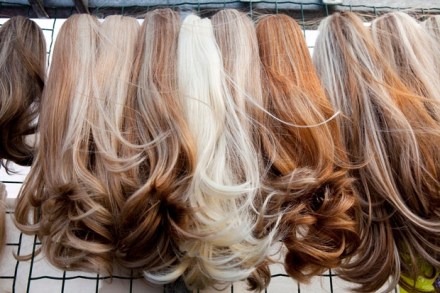
[audioplayer src="http://rss.acast.com/viewfrom22/panictimefordavidcameron-/media.mp3" title="Lara Prendergast and Louise Bailey, a hair extensions specialist, discuss the hair trade" startat=1622] Listen [/audioplayer]Perhaps you recall the moment in Les Misérables when Fantine chops off all her hair? The destitute young mother sells her long locks, then her teeth (a detail often excluded from child-friendly adaptations) before she is eventually forced into prostitution. It would be nice to think that her experience was no longer a reality, that the business of human hair had gone the way of the guillotine — but the truth is, it’s booming. The modern market for extensions made of real human hair is growing at an incredible rate. In 2013, £42.

Shrunk

From our UK edition

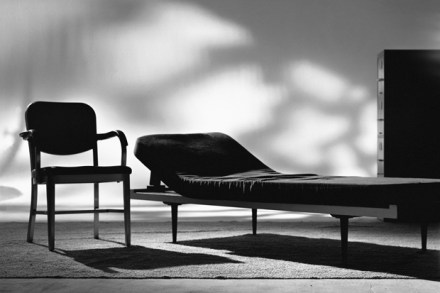
 New York City Nothing says New York like a psychoanalyst’s couch. Think Woody Allen or those New Yorker cartoons. It fits our perception of east-coast Americans as all neurotic and self-obsessed. But that mental picture needs updating, because traditional psychoanalysis is in dramatic decline in its traditional heartland. Across the urban US, in fact, the profession is dying out or having to change drastically. New figures from the American Psychoanalytic Association reveal that the average age of its 3,109 members is 66, up four years in a decade. More seriously, the average numbers of patients each therapist sees has fallen to 2.75. Some shrinks now never meet patients, dealing with them only via the phone, Skype or email.

Dear Mary | 16 April 2015

From our UK edition

Q. I have moved from London to the centre of a historic market town, now becoming famous as a foodie destination. For some reason people who would never have dreamt of dropping in without ringing when I lived in Kensington now think it almost de rigueur to knock on my door without warning when they are staying locally for the weekend. I like many of these people — but such unplanned visits are disruptive. Can you suggest a way I might retrain people to give me notice without seeming middle-aged and crusty? — Name and address withheld A. Make it a policy to always put on a coat and hat or sunglasses before answering the front door and to be holding your keys.

Easy virtue

From our UK edition

Go to a branch of Whole Foods, the American-owned grocery shop, and you will see huge posters advertising Whole Foods, of course, but — more precisely — advertising how virtuous Whole Foods is. A big sign in the window shows a mother with a little child on her shoulders (aaaah!) and declares: ‘values matter.’ The poster goes on to assert: ‘We are part of a growing consciousness that is bigger than food — one that champions what’s good.’ This a particularly blatant example of the increasingly common phenomenon of what might be called ‘virtue signalling’ — indicating that you are kind, decent and virtuous. We British do it, too. But we are more sophisticated, or underhand.

Fat chance

From our UK edition

[audioplayer src="http://rss.acast.com/viewfrom22/theriseofleft-wingpopulism/media.mp3" title="Julie Burchill and Katie Hopkins discuss whether you can be fat and happy" startat=924] Listen [/audioplayer]I’m a very off-message type of fat broad; one who gladly admits she reached the size she is now solely through lack of discipline and love of pleasure, and who rather despises people (except those with proven medical conditions) who pretend that it is generally otherwise. I’m not attached to my fat in any but the most obvious way; would I lose it if I could snap my fingers? Without doubt. Would I work at losing it? Not a chance, Vance. ‘But it’s not about vanity,’ the weight bores bleat, ‘it’s about health.’ Hmm.

Dear Mary | 9 April 2015

From our UK edition

Q. For ten years, I have made a reasonable freelance income working from home. During this time my husband has gone out to an office to work, leaving home in the early morning. Now my husband has announced that he is going to retire and will be at home with me all day. I feel guilty and disloyal saying this, but the truth is it means the end of my reasonable freelance income. Our marriage has been great for many years but I know it won’t survive this kind of annoyance. My husband just chuckles and says I am being neurotic and must learn to be more tolerant. I can’t afford to rent an office anywhere near where we live. — B.B., London W11 A. Don’t feel guilty. No woman wants her husband or partner at home by day.

The age of the Skype Dad

From our UK edition

Could you be a useful and loving father to your children if you only ever saw them on a computer screen? Most of us would say no. So much of being a parent is about being physically there. It’s curious then that our courts seem to think the opposite — that a chat via Skype or on an iPad is all a father needs to bond with and care for his child. British judges, like American ones, have to deal with increasingly complicated custody cases every year. We travel more these days, and so we meet our partners abroad. When these marriages break up (as four in ten marriages do), a foreign wife often longs to take the kids and head back home.

Hell on wheels

From our UK edition

How many of the people driving mobility scooters these days actually need a mobility scooter? The invention of the vehicle was a great move forward (literally) for those who genuinely needed it: the disabled and the infirm. But then another group of users appeared. Rather slowly, admittedly, and wheezing as they did so, before settling their vast backsides into the soothing embrace of the scooter’s seat. Once there they sighed happily, popped another Kit Kat into their gob and contemplated a life where movement from A to B required a mere flick of the wrist, rather than all that tedious leg business. This supersized scooter squadron has conquered Britain with an ease that the Romans in their chariots could only have dreamed of.

Dear Mary: How I can I avoid being invited to any more country house weekends?

From our UK edition

Q. Someone I was at university with but hadn’t seen much of over the ten years since invited me to come for a weekend at his country house. I went once and, although it was perfectly fine and they are perfectly nice, wouldn’t want to go there again. Life’s just too short to spend weekends with people you can’t really talk to. But now his wife has identified me as a ‘spare man’ and is keen for me to come again. I have given excuses for not accepting subsequent invitations but she is really persistent and has now said they are going to be there all of July and August and can I just name any weekend. How can I give a permanent refusal without being rude? —Name and address withheld A. Turn this bullying to your advantage.

What happened to Julie Burchill on silent retreat

From our UK edition

When I told my friends that I was planning to attend a silent retreat, they all laughed. It’s true that I am something of a convivialist; my idea of heaven is a big table in a warm restaurant, the table shimmering with the laughter of friends and the glugging of wine, and me picking up the bill. On the other hand, I was a solitary only child and I look back on those days with great fondness. Before the long stagger up the primrose path of pleasure started, the only companion I needed was a book; I well remember my mother crying because I preferred to sit in my room reading rather than hang around on street corners getting drunk and/or pregnant like a normal teenager.

Dear Mary | 26 March 2015

From our UK edition

Q. When sending wedding invitations, does one put the full titles on the card, or can one just put, for example, Jane and John having addressed the envelope to Mr and Mrs John Smith? Isn’t it strange that all one’s old wedding invitations are nowhere to hand when one needs them? I would really appreciate your advice. — K.T., Sherborne, Dorset A. I have it from the highest authority that these days first names on the cards themselves are perfectly acceptable. Q. A client whose wife has left him invited me to dinner at his new flat. He presented me with three fairly disgusting courses, all ‘cooked’ by himself, one of which featured raw giant prawns (still grey) in unheated cook-in sauce (I saw the packet in the kitchen bin).

Wines to toast a warrior saint

From our UK edition

Towards the chimes at midnight, a few of us left a — respectable — establishment near Leicester Square. Eight or nine youngsters were brawling vigorously, boots and fists. 999 was dialled, and the response was admirably fast. The cops would no doubt have recorded it as just another trivial incident in the life of a British inner city. But how squalid. That day, there was a story about undergraduettes moonlighting as lap-dancers or strippers, or worse. We have suffered a loss of civilisation since Newman: most of the ‘universities’ to which those girls were accredited should never have received that status. Until the day before yesterday, they would have been called the Haltemprice Mechanics’ Institute or somesuch, and done useful work.

In praise of messy old kitchens

From our UK edition

‘I love my new kitchen heart of the home let’s fill it with friends happy.’ So says the thought bubble in the current ad for the estate agents Rightmove, part of their ‘Find your happy’ campaign. Don’t even get me started on the lack of punctuation — or the use of ‘happy’ as a noun. What I’m worrying about is the kitchen itself. Glimpsing Ed Miliband’s second kitchen last week, we came face to face with the drabness of today’s hyper-hygienic kitchen. Is the kitchen really ‘the heart of the home’ in Rightmove’s imaginary domestic paradise, or is it in fact one of those spotless, minimalist, metallic kitchens, all hard surfaces and sharp corners?

How weird is it to have a second kitchen?

From our UK edition

Cooking statistics Ed Miliband was photographed in a miserable kitchen, but it turned out to be only a snack preparation room which he has in addition to a large kitchen downstairs. What is the state of the nation’s kitchens? — The average size in England, according to official data, is 11 square metres. Five per cent of homes have a kitchen smaller than five square metres and 17 per cent have kitchens large than 15 square metres. Some 13 per cent have, like Ed’s, a separate utility room or second kitchen. — 955,000 English homes are estimated to have a hygiene problem, and in 4 per cent of these the cleanability of the kitchen is deemed to be an issue.